


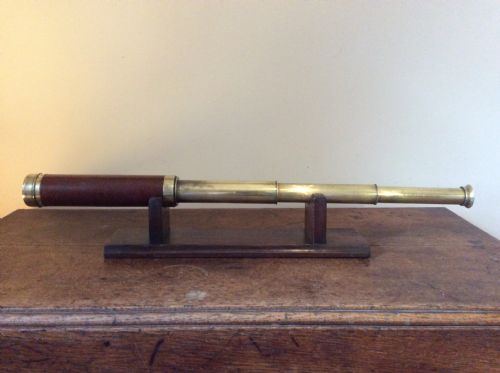


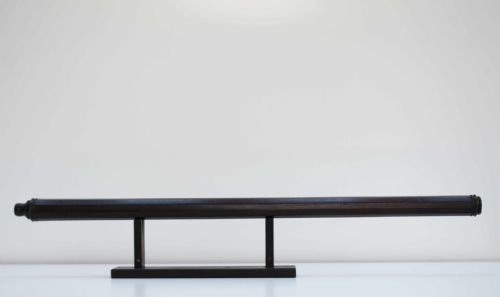
Brass Desk Telescope
These brass desk telescope pieces combine optical utility with maritime heritage, offering a tactile connection to historical navigation.
Brass Desk Telescope
A brass desk telescope brings scientific instrumentation into domestic spaces, appearing in forms ranging from compact pocket spyglasses to substantial library and tabletop models. When exploring brass desk telescope examples, buyers frequently encounter pieces from the Georgian, Regency, and Victorian periods.
Makers designed these optical instruments for both terrestrial viewing and marine navigation, often mounting them on stands or housing them in fitted boxes. Surviving examples span simple single draw tubes to complex multi draw configurations, including unusual decagonal and hexagonal barrel shapes.
English workshops produced the majority of these instruments, utilising durable metals and optical glass suitable for serious observation. The selection on this page reflects centuries of optical engineering, from mid eighteenth century non achromatic designs to later nineteenth century marine models.
Materials and construction methods
Manufacturers relied heavily on polished brass for barrels and fittings, frequently combining the metal with glass lenses to achieve magnification. Many domestic and travel instruments also incorporated leather dressing, mahogany, oak, or fruitwood to protect and enhance the exterior.
Makers turned and shaped metal and timber components with precision, creating tight joints between sliding drawers and secure housings for delicate optics. Skilled craftsmen inscribed maker signatures and details directly onto the brass draw tubes, identifying workshops such as Ross of London, Cary London, John Gilbert, and Dollond.
Listings feature instruments constructed from brass, glass, leather, oak, mahogany, and fruitwood across the Georgian, Regency, Victorian, and Edwardian periods.
Distinctions in quality and finish
Quality in these instruments depends upon the precision of the optical glass and the tightness of the draw tube fit. Finer examples exhibit crisp maker signatures, smooth mechanical movement, and well preserved wood or leather coverings.
The sophistication of the barrel geometry and the inclusion of original stands or fitted boxes separate standard production items from workshop masterpieces. Early non achromatic designs and multi sided barrels demonstrate advanced metalworking skill that elevates an object above everyday utility.
Ross of London·Cary London·John Gilbert·Dollond
The Brass Desk Telescope Glossary
- Achomatic
- An optical lens designed to correct chromatic aberration so that colours appear correctly aligned. This development improved image clarity in later instruments.
- Draw
- A sliding tube section within a telescope that extends to focus the image. Multi draw designs allow a long focal length to collapse into a portable size.
- Spyglass
- A small, portable handheld refracting telescope used primarily for terrestrial or marine viewing. These pieces usually feature leather or wood wrapped outer barrels.
- Decagonal
- Having ten sides in cross section. Makers occasionally produced multi sided brass barrels to prevent the instrument from rolling on a flat surface.
- Terrestrial
- An optical instrument configured to show upright images for land viewing rather than inverted celestial views. These models incorporate erecting lenses inside the tube.
Brass Desk Telescope: Frequently Asked Questions
How do I clean a brass desk telescope?
Dust the brass and wood components gently with a soft, dry cloth to prevent the accumulation of grit. Avoid harsh chemical polishes that can remove historical patination and erase engraved maker inscriptions on the draw tubes.
For the glass lenses, use professional optical cleaning tissue and fluid rather than household glass cleaners. Take care not to apply pressure that might dislodge historic lens settings within the barrel.
Were these telescopes used indoors?
Library and tabletop versions were designed specifically for interior use on desks, tables, and near windows overlooking gardens or streets. Owners used them to inspect distant landscapes and passing ships from the comfort of a study.
Portable spyglasses and officer models saw active service at sea or in the field before finding permanent homes on domestic desks. Their sturdy brass construction allowed them to transition easily between travel and indoor display.
How do I tell periods apart?
Eighteenth and early nineteenth century instruments often feature simpler barrel forms, distinctive maker signatures, and occasionally non achromatic optics. Regency and Georgian pieces frequently display hand finished brass components and specific London workshop engravings.
Victorian and Edwardian examples tend toward standardised production methods, incorporating nickel plating, hexagonal or round maritime designs, and specialised leather dressings. Examining the typography of the signature and the style of the wood or leather work helps clarify the date.
Can I still use these to view distant objects?
Many surviving instruments retain functional optical glass and adjustable draws that allow for actual magnification of terrestrial views. The clarity depends on the preservation of the lenses and the absence of internal fogging or alignment shifts over the centuries.
Because historical optics lack modern coatings, viewing conditions are best in natural daylight. Collectors treat them primarily as historical artefacts while still enjoying their mechanical operation.