
Victorian Brass Holders
Victorian brass holders are practical hearth and hall accessories designed for utility, bringing heavy cast and sheet metalwork into nineteenth-century domestic interiors.
Victorian Brass Holders
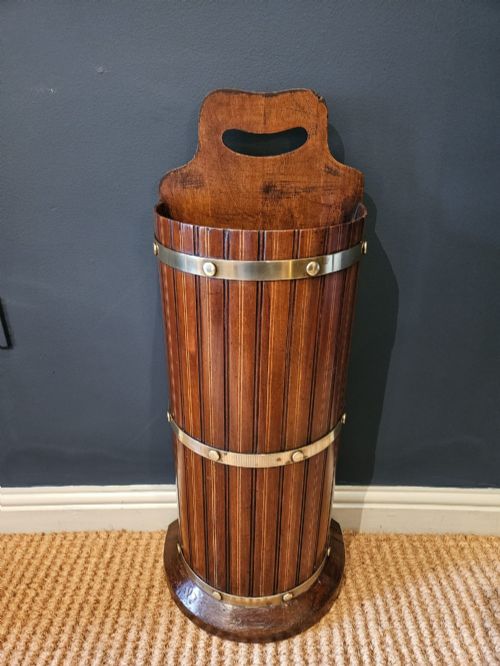
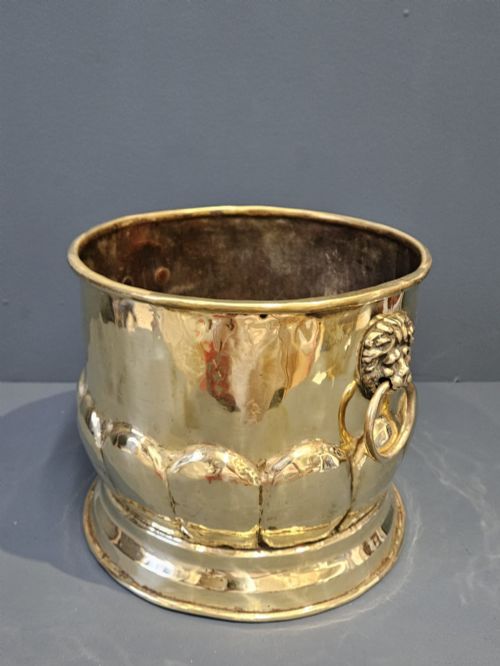
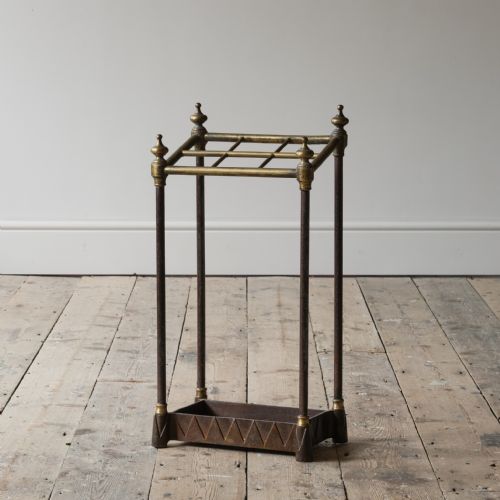
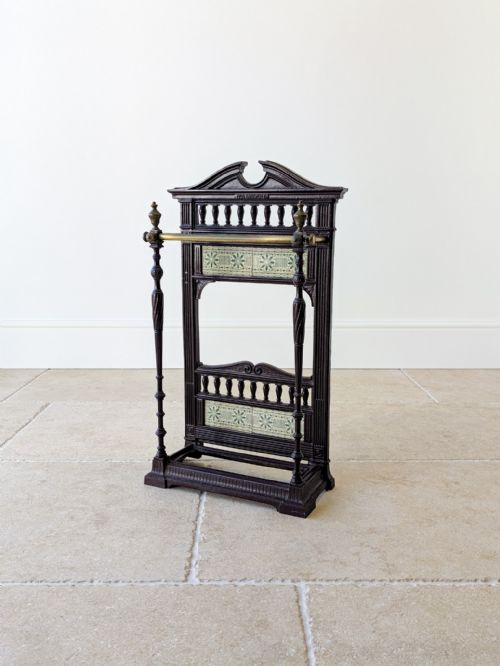
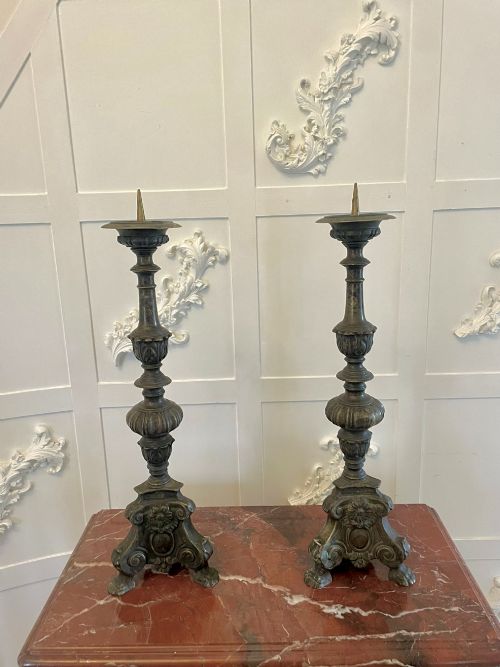
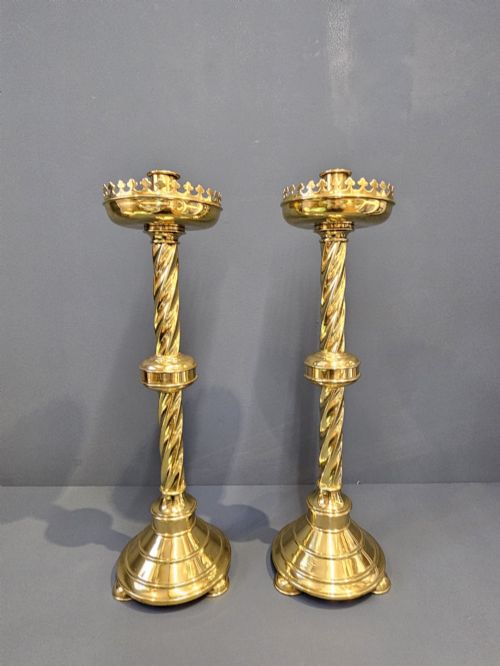
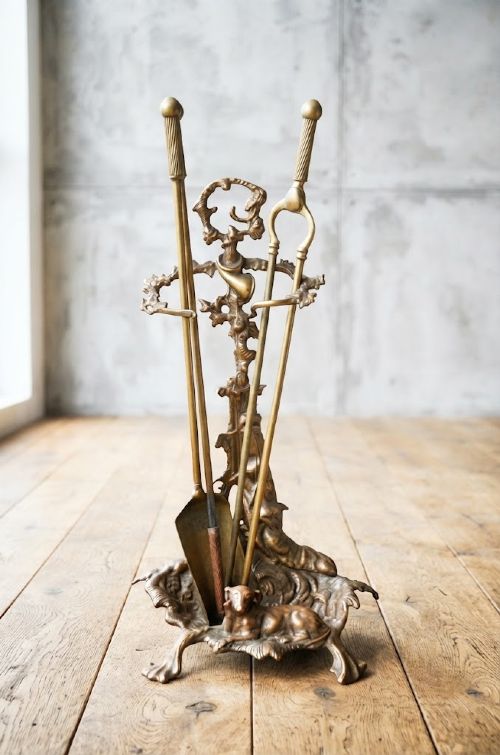
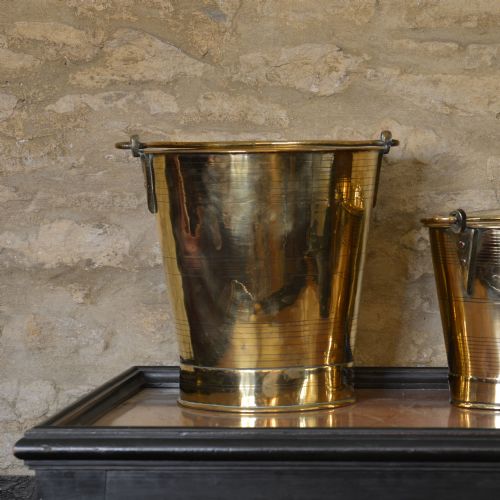
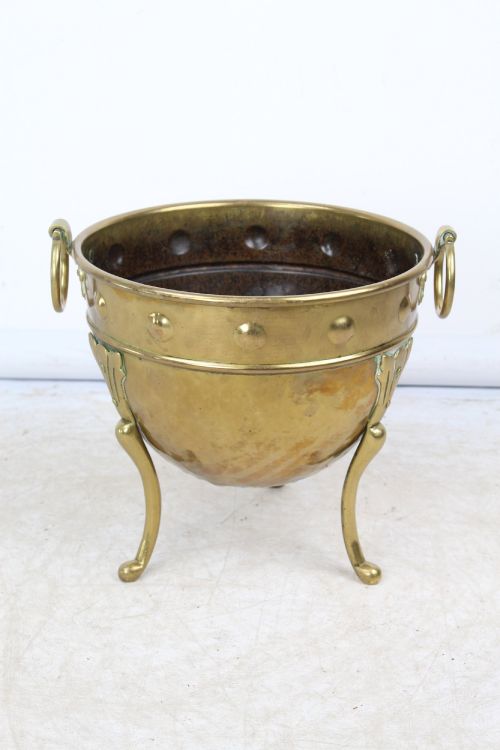
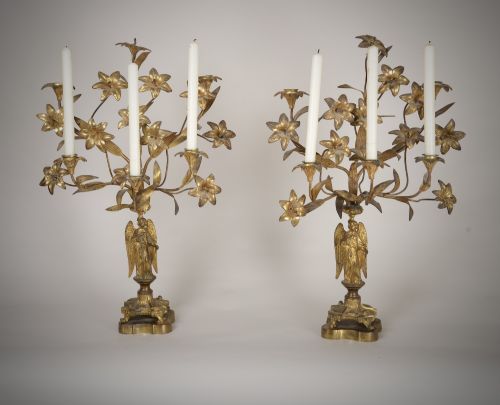
When searching for victorian brass holders, buyers encounter a diverse group of domestic metalwork spanning stick stands, umbrella stands, jardinieres, log bins, and heavy church or domestic candlesticks. These items served functional roles in the nineteenth-century home, from containing walking canes in the entrance hall to burning wax tapers in principal rooms.
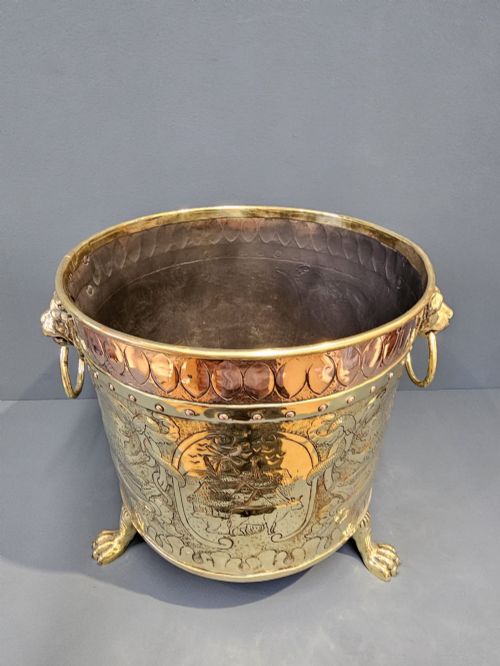
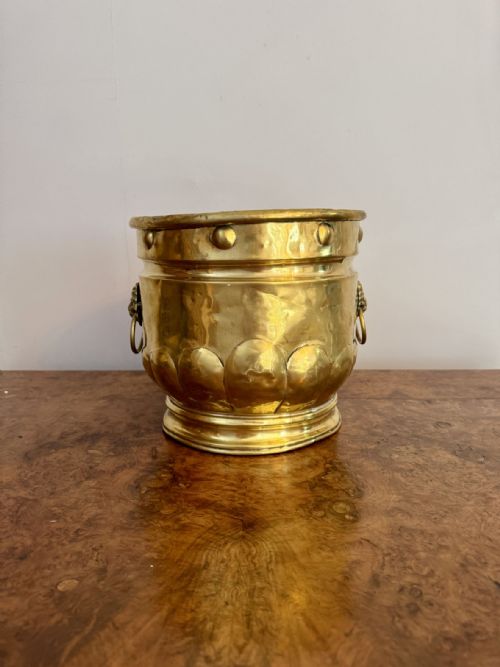
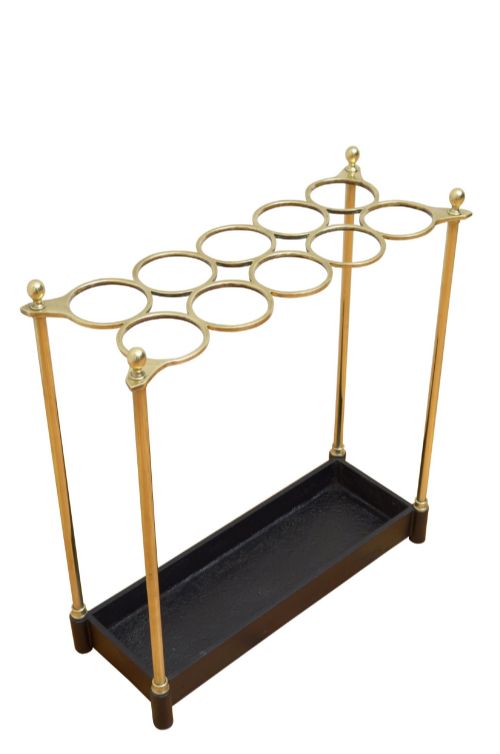
The objects most frequently met on this page belong to the Victorian and nineteenth-century periods, alongside adjacent Edwardian examples, appearing in forms such as half-moon umbrella racks and riveted planters. Workshops produced these pieces in substantial metals designed to withstand heavy daily use while offering decorative surface detail.
Stylistic influences range from mainstream Victorian ornamentation to Gothic Revival motifs, Aesthetic Movement designs, and Anglo-Indian production. Buyers find both utilitarian hall furniture and ornate display pieces suited to period and eclectic interiors alike.
Materials and construction methods
Makers utilised brass as the primary material, frequently combining sheet and cast components to achieve structural rigidity and decorative relief. Many items integrate cast iron frames, copper banding, or coopered oak staves to provide weight and stability, particularly in umbrella stands and log bins.
Surface decoration relied on techniques such as embossing, piercing, and hand-finishing to create relief patterns, armorial crests, and hunting scenes. Metal components were often joined with visible rivets or secured with decorative ball finials, reflecting the industrial capabilities and manual assembly methods of the period.
Listings demonstrate that nineteenth-century makers frequently combined brass with cast iron, copper, and oak to build durable hall furniture.
Judging quality in metalwork
Quality in these pieces rests upon the thickness of the metal gauge, the crispness of the chased or embossed detail, and the integrity of the structural assembly. Superior examples demonstrate substantial weight in the brass and iron components rather than thin sheet construction that flexes under pressure.
The articulation of decorative elements, such as cast heraldic crests, applied copper bands, and turned finials, distinguishes standard utilitarian items from ambitious workshop productions. Metal surfaces retain honest patination and tactile depth where subsequent aggressive polishing has not erased original tool marks.
Coalbrookdale·Henry Loveridge·Barbedienne·Bruce Talbert·Gillows
The Victorian Brass Holders Glossary
- Jardiniere
- A decorative pot or stand designed to hold growing plants or flowers. These vessels often feature embossed brass or copper bodies raised on feet.
- Cachepot
- An outer decorative flower pot that conceals a plain inner plant container. The term typically describes smaller brass or ceramic vessels used on tabletops.
- Log bin
- A large container used to store firewood near a fireplace. Nineteenth-century versions frequently combine brass bodies with copper bands and riveted seams.
- Pricket candlestick
- A candleholder featuring a central spike rather than a socket to secure the candle. These taller brass examples frequently derive from ecclesiastical contexts.
- Aesthetic movement
- A late nineteenth-century design style emphasising visual beauty over narrative meaning. Pieces from this movement often display disciplined geometric or naturalistic brass ornamentation.
Victorian Brass Holders: Frequently Asked Questions
How were umbrella stands used?
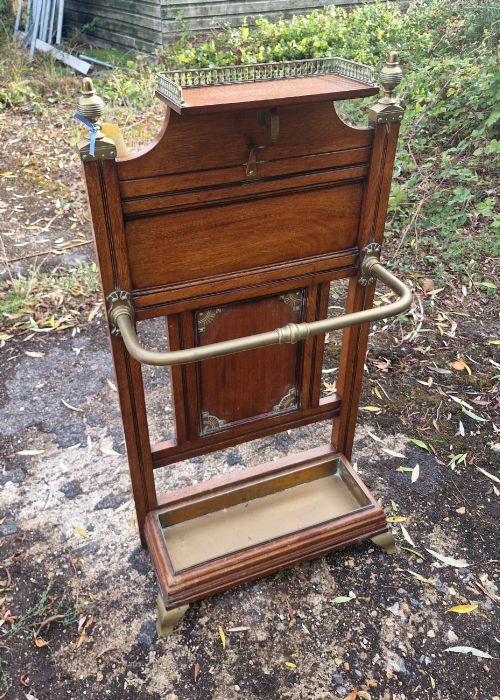
Umbrella and stick stands were placed in nineteenth-century entrance halls to hold wet umbrellas, walking canes, and riding crops. They kept dripping water off wooden floors through the inclusion of integral metal or ceramic drip trays at the base.
These hall pieces combined structural iron or oak frames with brass panels, serving as both functional furniture and the first decorative statement visitors encountered upon entering a home.
Where should I place a jardiniere?
Jardinieres suit placement on low tables, sideboards, or directly on the floor depending on their scale. In nineteenth-century interiors, they held indoor ferns and flowering plants to bring botanical interest into principal rooms.
Because these brass vessels often lack internal drainage holes, a secondary liner pot is typically placed inside to protect the metal from moisture and soil contact.
How do I clean antique brass?
Antique brass requires minimal intervention to preserve the dark patination accumulated over decades or centuries. Gentle dusting with a soft dry cloth is usually sufficient for regular maintenance.
Aggressive metal polishes strip away the historical surface skin and diminish the visual depth of embossed details, so cleaning should be approached with restraint.
What distinguishes Gothic Revival designs?
Gothic Revival metalwork incorporates architectural motifs drawn from medieval buildings, including pointed arches, quatrefoils, and heraldic shields. These pieces often feature heavier cast brass and iron construction with solemn, structured profiles.
Such items reflect nineteenth-century romanticism and a deliberate turn away from classical symmetry toward medieval craftsmanship.
Are log bins water resistant?
Log bins were constructed to hold dry firewood rather than to act as liquid containers. While their riveted copper and brass bodies appear robust, interior seams are not sealed for standing water.
Using them for logs, kindling, or as magazine holders keeps the historic construction dry and prevents internal corrosion of the base.