

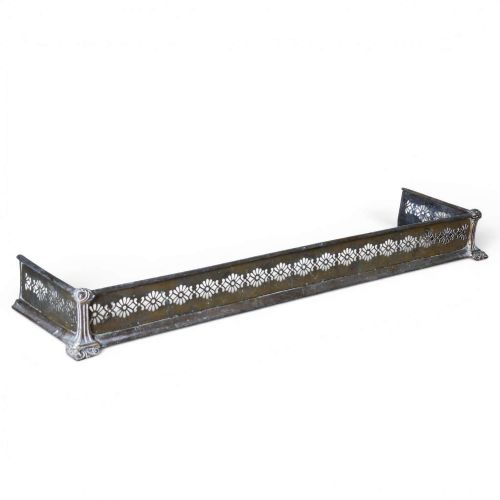
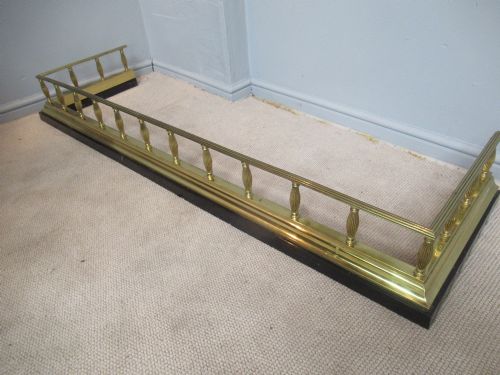
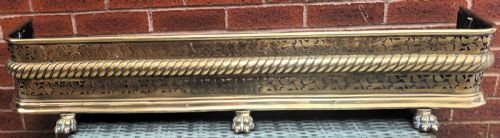
Victorian Brass Fireplace Guard
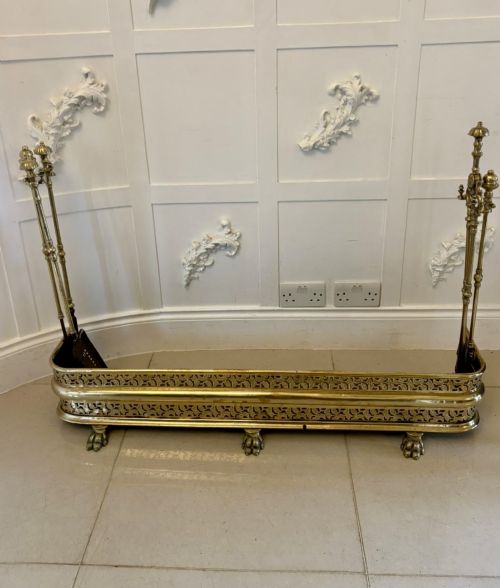
When you search for a victorian brass fireplace guard, you find hearth protection that combines functional safety with ornate metalwork.
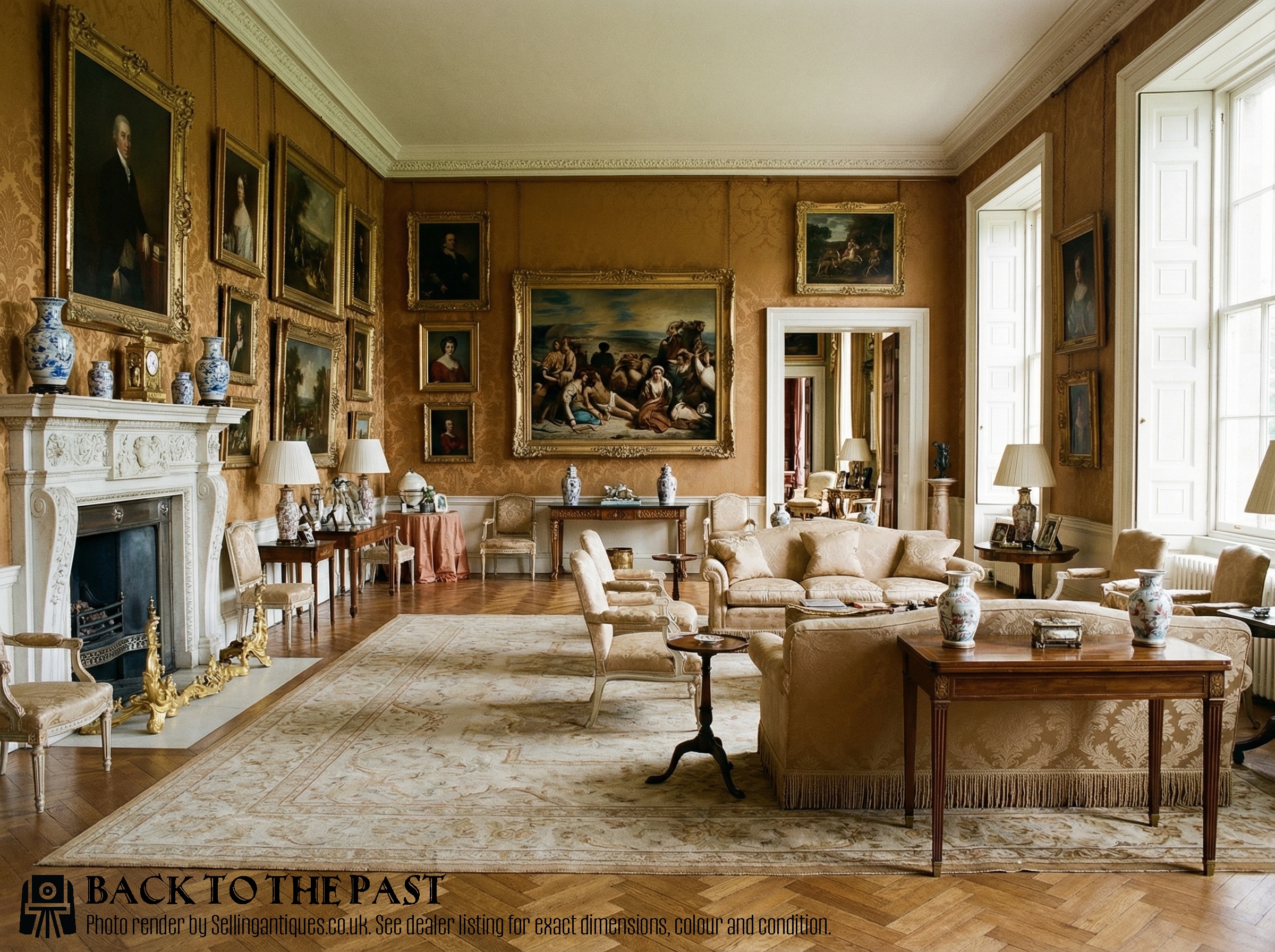
Victorian Brass Fireplace Guard
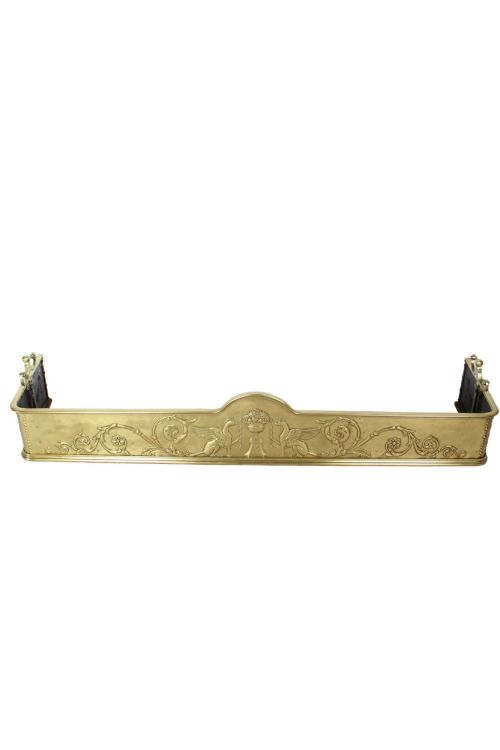
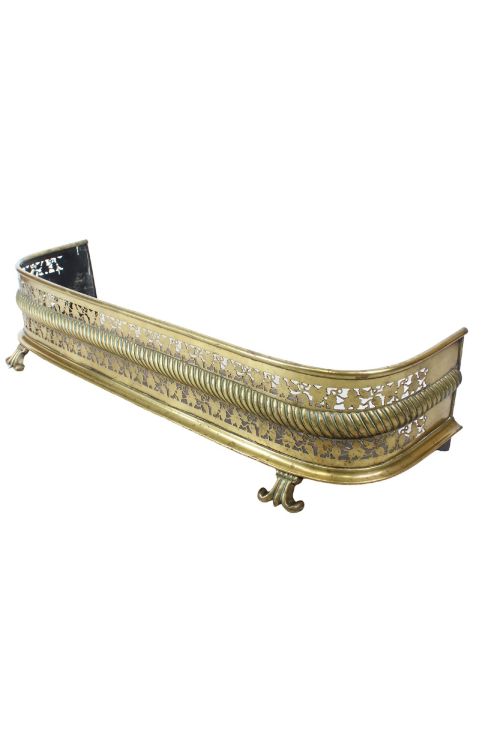
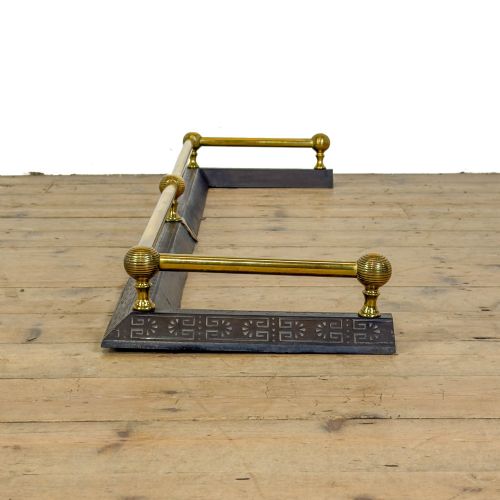
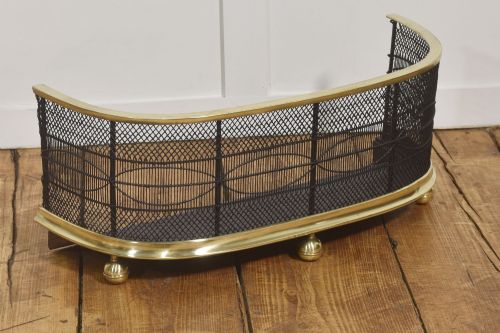
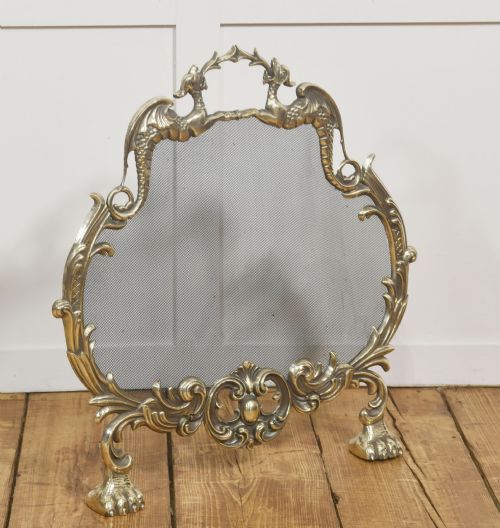
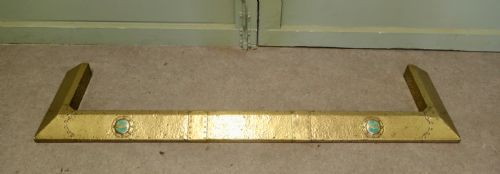
Forms vary from pierced brass fenders and club fenders to expansive folding screens with multiple sections. These pieces originate primarily from English and French workshops, utilising period designs ranging from Rococo Revival to Arts and Crafts.
Buyers encounter sturdy nursery fenders alongside decorative folding screens meant to cover dark grates during warmer months. Each configuration reflects the domestic needs of nineteenth-century interiors.
How they were made
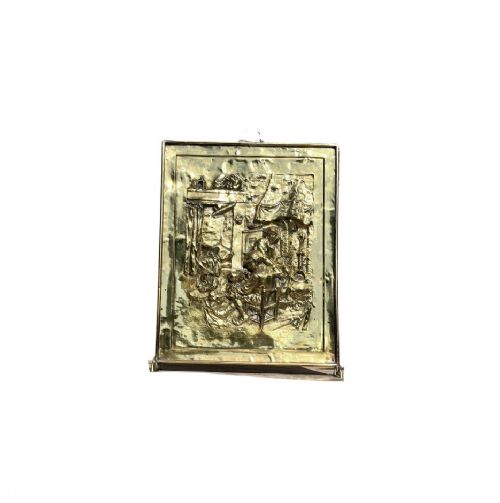
Maker construction relies on brass combined with iron, steel, wire mesh, and occasionally bronze or copper. Metal components undergo piercing, casting, embossing, and chasing to achieve intricate surface patterns.
Folding fire screens utilise articulated joints and fan mechanisms, while fenders incorporate adjustable frames or leather upholstery on club seats. Surface finishes range from polished brass to patinated bronze and black enamel details.
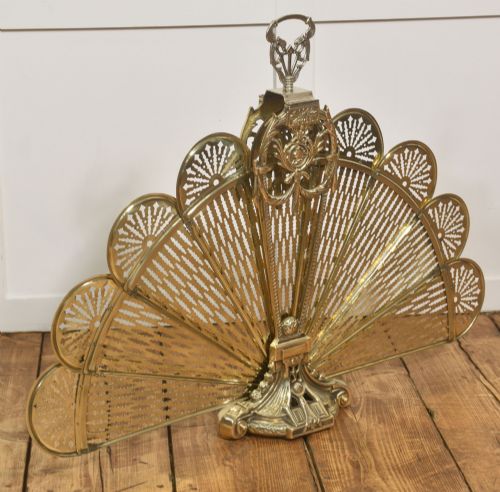
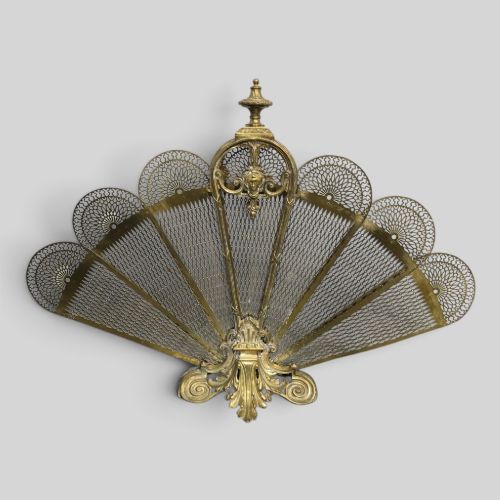
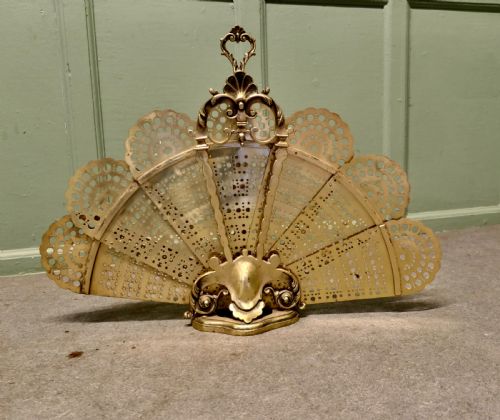
Some folding brass screens feature up to four sections designed to fan open like a peacock's tail.
What varies in quality
Quality shifts between standard production items and pieces displaying superior hand-chased ornamentation or substantial cast brass thickness. Fenders with integrated seating or detailed pierce-work demonstrate higher craftsmanship than plain wirework guards.
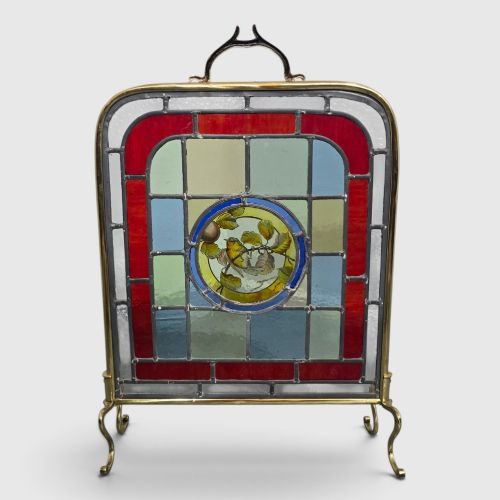
The integrity of folding joints on peacock screens and the presence of original components like fire irons or stained glass panels distinguish finer examples. Patination and the crispness of embossed crests or neoclassical motifs indicate the skill invested during manufacture.
The Victorian Brass Fireplace Guard Glossary
- Fender
- A low metal guard placed around the hearth to contain ash and rolling logs. They often feature pierced brass galleries or adjustable frames.
- Club fender
- A specialised fender incorporating padded leather seats on either end. Victorian examples provide convenient fireside seating.
- Fire screen
- A decorative barrier placed in front of the fireplace when not in use. Styles include folding peacock fans and glazed panels.
- Nursery fender
- A tall protective guard designed to keep children safely away from open flames. They typically combine a robust iron frame with a brass top rail.
- Pierced brass
- Metal sheet perforated with decorative patterns using punches or saws. This technique lightens the visual weight of heavy hearth accessories.
Victorian Brass Fireplace Guard: Frequently Asked Questions
What is a club fender?
A club fender is a hearth guard featuring low upholstered leather seats built into the frame. These pieces allowed Victorians to sit close to the fire while containing stray embers.
They appear in various nineteenth-century widths and often include adjustable brass mechanisms to fit specific hearth dimensions.
How do peacock fan screens work?
Peacock fan screens consist of multiple hinged brass blades that expand outward into a semi-circular fan shape. They fold flat when not in use to save space.
Victorian homes utilised these screens to conceal dark, empty grates during summer months while adding polished metallic decoration to the room.
Are nursery fenders taller than standard fenders?
Nursery fenders are built significantly taller than standard hearth fenders to prevent children from coming into contact with the fire. They typically combine iron wire mesh with a sturdy brass top.
These functional pieces prioritise safety while maintaining the polished brass aesthetics characteristic of the period.
What materials are used besides brass?
While brass dominates these listings, makers frequently incorporated iron, steel, copper, wire mesh, and leather. Some examples also feature stained glass panels or ceramic cabochons.
Combinations of brass and iron provide structural durability for working hearths, whereas bronze and ormolu appear on decorative French revival screens.