



Antique Bronze Fire Surround
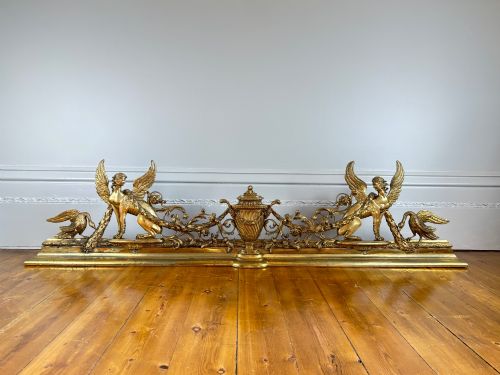
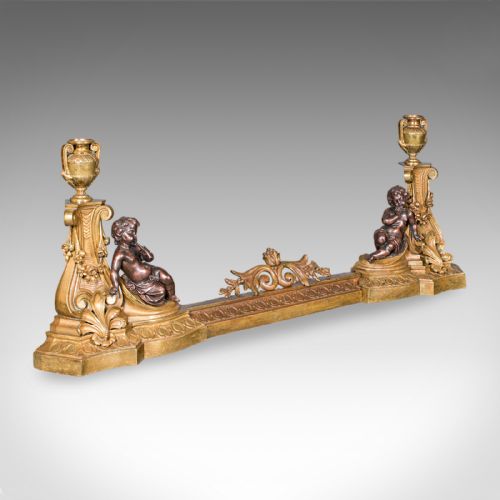
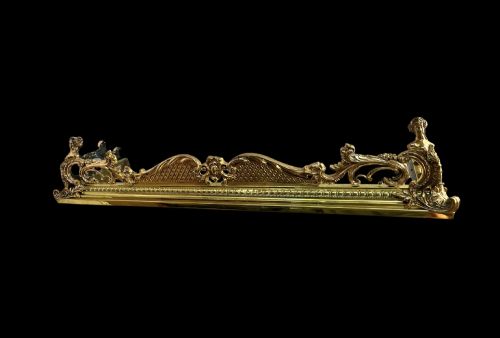
These antique bronze fire surround pieces bring nineteenth-century metalwork into the hearth, offering adjustable forms and detailed castings.
Antique Bronze Fire Surround
An antique bronze fire surround centres on nineteenth-century hearth furniture, predominantly comprising adjustable fireplace fenders, chenets, and andirons. These items originate from English and French workshops, capturing Victorian and continental revival tastes.
The most common form met on this page is the fireplace fender, often adjustable in width to fit various hearth openings. Alongside these, buyers encounter chenets and fire grates designed to frame the open fire.
Periods represented stretch across the nineteenth century, taking in Victorian designs alongside French Louis XV, Louis XVI, and Rococo Revival pieces. These hearth furnishings served both a protective and a decorative function in period rooms.
How They Were Made
Maker workshops utilised cast bronze, gilt bronze, and ormolu, frequently pairing the primary copper alloy with iron, polished steel, or brass components. This combination provided both the decorative surface finish and the structural weight needed at the hearth.
Surface treatments included patination and parcel gilding to highlight the cast ornament, which featured cherubs, neoclassical motifs, and rococo scrolls. Many pieces incorporated mechanical adjustment mechanisms to alter the width of the fender kerb.
Listings feature items from the nineteenth century, incorporating materials such as gilt bronze, ormolu, polished steel, and iron.
What Varies in Quality
Quality depends on the crispness of the bronze casting and the depth of the hand-chasing applied after the metal leaves the mould. Finer pieces display sharply rendered detail in foliage and figures, whereas simpler examples show softer contours.
The preservation of original surface finishes, such as parcel gilding, ormolu, and patinated bronze, marks the distinction between ordinary and superior specimens. Additionally, the robustness and smooth operation of adjustable mechanisms indicate the standard of manufacture.
E F Caldwell New York
The Antique Bronze Fire Surround Glossary
- Ormolu
- Gilt bronze, where a finely ground high-carat gold mercury amalgam is applied to a bronze object and heated. This technique produced a durable golden finish seen on nineteenth-century French and English decorative metalwork.
- Fender
- A low metal kerb placed on the hearth in front of an open fire to contain sparks and rolling embers. They are frequently adjustable in width and form a key part of the fire surround assembly.
- Chenet
- An alternative term for an andiron, used to support logs in an open fireplace or to stand decoratively at the front of the hearth. French examples often incorporated cast cherubs and rococo scrollwork.
- Patinated Bronze
- Bronze that has undergone a chemical or natural treatment to alter its surface colour. This process deepens the tone of the metal over time.
- Louis XVI Neoclassical
- A style originating in late eighteenth-century France and revived during the nineteenth century, characterised by geometric symmetry, classical urns, and restrained ornamentation.
Antique Bronze Fire Surround: Frequently Asked Questions
How do I measure for a fire fender?
Measuring for a fender requires taking the width and depth of your hearth opening to ensure the metal kerb fits the floor space correctly. Many nineteenth-century fenders feature adjustable widths to accommodate varying dimensions.
Checking the internal and external measurements ensures the piece sits properly against the chimney breast without obstructing the fire grate.
What is the difference between ormolu and bronze?
Bronze is an alloy of copper and tin used for casting structural and decorative hearth objects, while ormolu specifically refers to applied gold gilding on bronze. Ormolu surfaces exhibit a bright golden lustre.
Plain bronze relies on its natural metallic tone or chemical patination for colour, whereas ormolu involves the bonding of gold to the bronze substrate.
How do I care for antique bronze?
Caring for antique bronze involves gentle dusting with a soft, dry cloth to prevent the accumulation of dirt on the cast ornament. Avoiding harsh chemical cleaners preserves the original patination and gilt surfaces.
If the piece is placed near an active fire, keeping it clear of ash and moisture prevents long-term corrosion of the metal alloys.