


French Ormolu Chenets
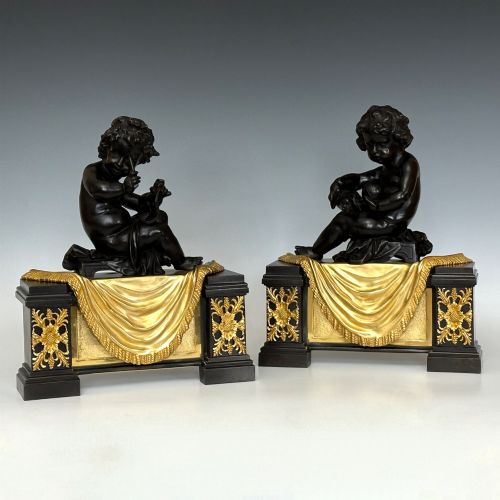
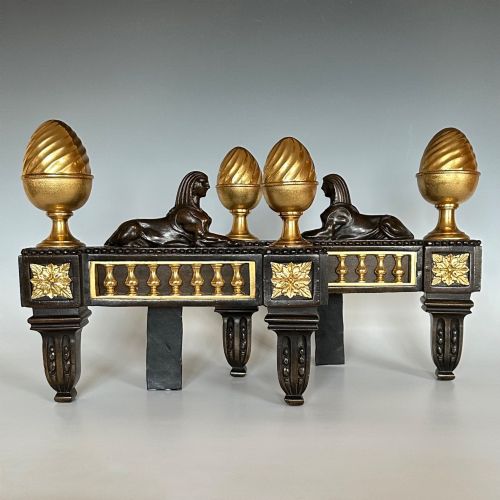
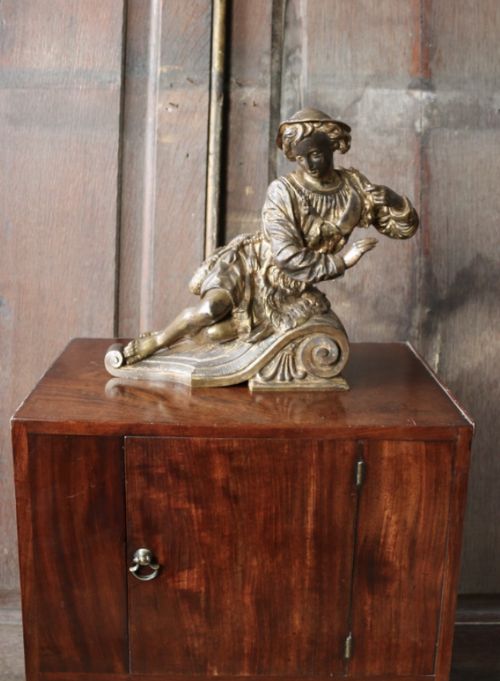
French ormolu chenets bring monumental hearth presence, combining gilded metalwork with sculptural fire dogs.
French Ormolu Chenets
French ormolu chenets are heavy metal fireplace accessories designed to support logs within a hearth while framing the opening with decorative metalwork. When buyers search for french ormolu chenets, they encounter pairs dating from the eighteenth and nineteenth centuries, often styled in the revival tastes of Louis XIV, Louis XV, Louis XVI, and Regency periods.
Alongside standard matched pairs, the selection includes adjustable fender forms and individual andiron statuettes. Their origins sit firmly within French foundry traditions, though Regency examples reflect British adaptations of continental design motifs.
What Varies in Quality
The depth and durability of the gilding also distinguish the range, alongside the weight and stability of the underlying bronze or brass construction. Original pairing and matching patination further elevate the status of individual sets.
Listings span the eighteenth and nineteenth centuries, featuring materials such as ormolu, gilt bronze, patinated bronze, and cast iron.
The French Ormolu Chenets Glossary
- Ormolu
- Gilt bronze produced by applying a gold amalgam to a bronze base and heating it. This technique creates a rich, lasting golden surface common on decorative metalwork.
- Chenet
- A decorative firedog or andiron placed at the front of a hearth. They support logs and provide a finished appearance to the fireplace opening.
- Patinated Bronze
- Bronze treated with chemicals or heat to produce a dark, stable surface colour. It frequently provides contrast against bright ormolu sections.
- Rococo Revival
- A nineteenth-century design movement mimicking the asymmetrical scrolls, shells, and natural motifs of the eighteenth-century French style. It dominates many Victorian fireplace ornaments.
- Andiron
- A horizontal iron bar supported on legs, used to hold firewood off the hearth floor. Decorative versions feature elaborate front standards like figural chenets.
French Ormolu Chenets: Frequently Asked Questions
What is the difference between a chenet and an andiron?
Chenets and andirons perform similar structural roles in holding firewood, but the term chenet typically emphasises the decorative front element used in French hearths.
Traditional andirons often combine the front decorative standard with a long horizontal bar, whereas some French chenets focus purely on the ornamental frontispiece.
How do I measure for adjustable chenets?
Measure the internal width of your fireplace opening and the depth of the hearth floor before selecting a pair.
Adjustable width designs allow the metal elements to span varying hearth sizes, but ensure the base rests securely on non-combustible material.
Can these be used in a working fireplace?
Many nineteenth-century pieces feature robust iron bars designed to support burning logs within an active hearth.
However, fragile ormolu surfaces and delicate figural mounts require careful placement to avoid heat damage from smoke and direct flames.
How do I identify a Louis XV style chenet?
Louis XV style pieces rely heavily on asymmetric scrollwork, C-scrolls, acanthus leaves, and naturalistic shell motifs.
They avoid rigid symmetry and often integrate playful figural elements like cherubs or animals into the cast metal design.