


Adjustable Hearth Surround
These adjustable hearth surround pieces adapt to fit different fireplace openings, bringing period brass and bronze character to your hearth.
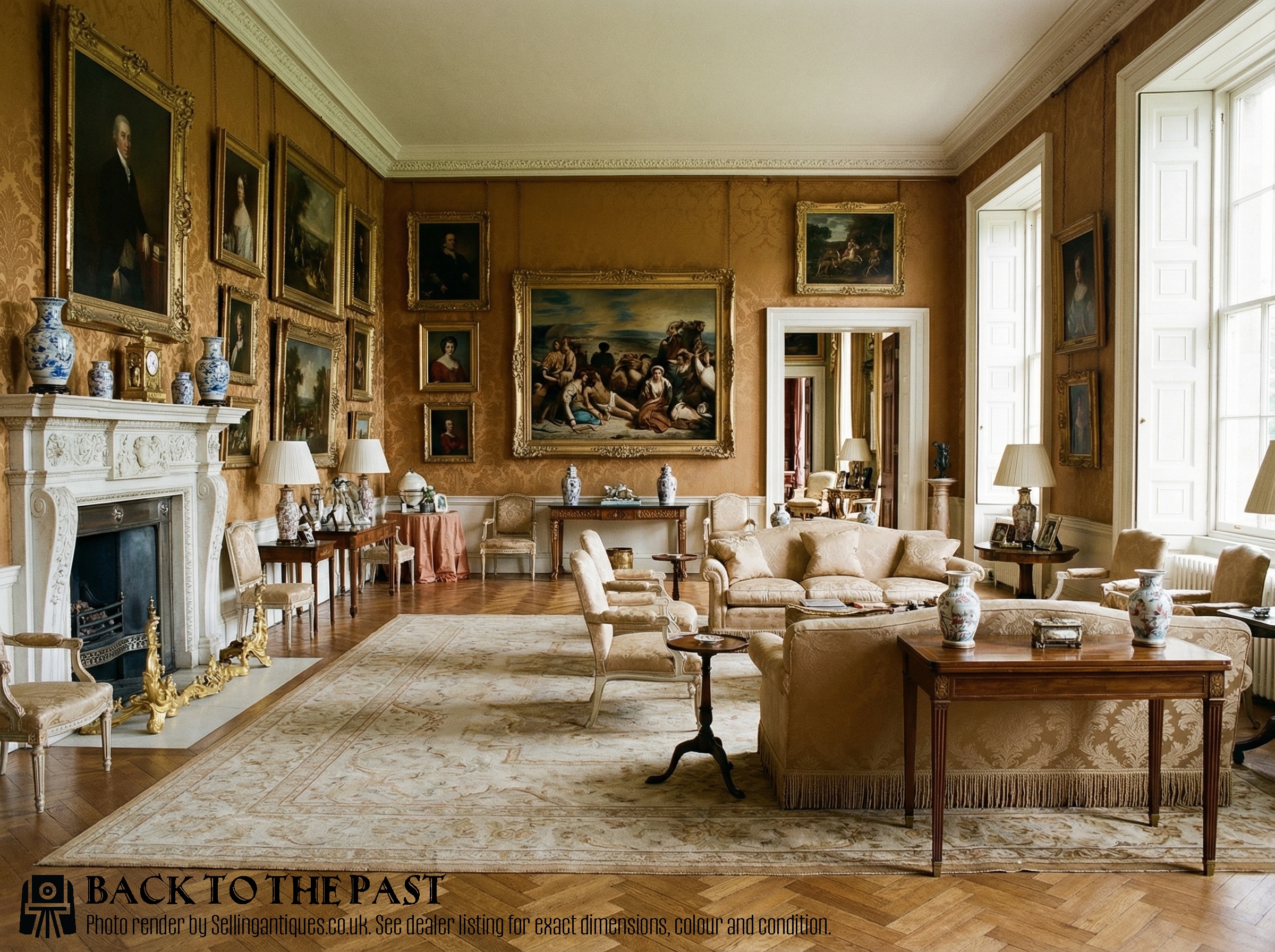
Adjustable Hearth Surround
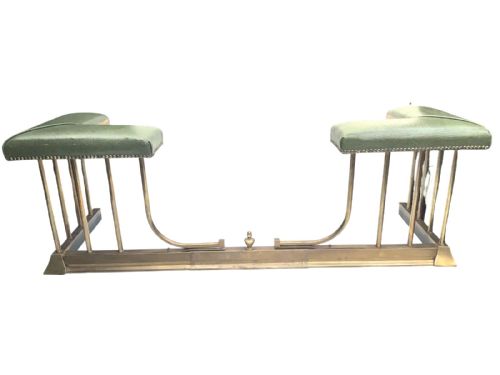
An adjustable hearth surround acts as a fire guard and fender, designed to enclose the front of an open fireplace and protect the room from stray embers. These functional pieces range from simple extending brass rails to elaborate club fenders incorporating leather seats.
The versions met most frequently on this page belong to the Victorian and Edwardian periods, constructed in England and France. They span various forms including club fenders, fire curbs, and extendable frames.
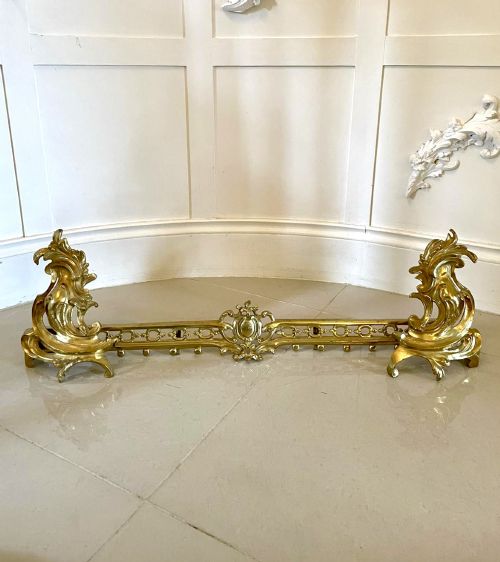
Makers and designers drew upon a diverse vocabulary of styles, ranging from restrained Arts and Crafts interpretations to exuberant French Rococo and Louis XV designs. This variety allows a surround to anchor either a formal period drawing room or a simpler hearth.
Materials and construction
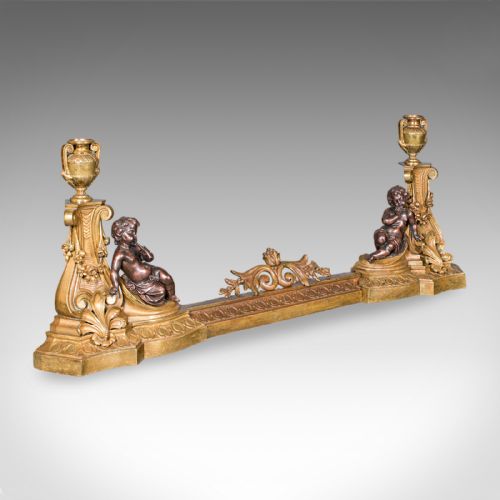
Makers relied primarily on cast and polished brass, often finished as gilded brass or ormolu to achieve a rich metallic sheen. Heavier examples incorporate bronze and solid oak frames, providing the structural heft necessary for everyday fireside use.
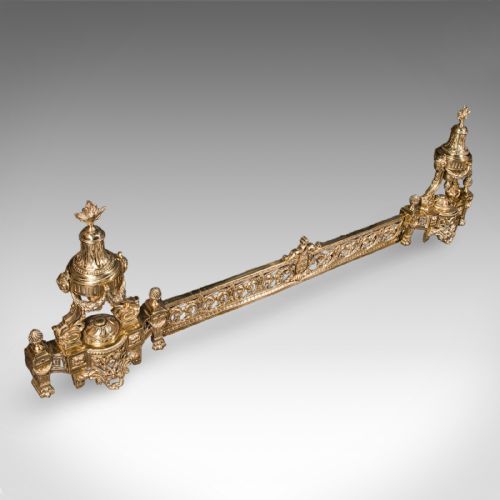
Extending mechanisms rely on sliding internal bars or overlapping channels that allow the frame to expand and lock at custom widths. Upholstered club fenders add bound leather Chesterfield seats atop the metal framework, combining metalwork with traditional saddlery.
Leather Chesterfield seats on club fenders were designed so gentlemen could warm their shins without blocking the entire fire.
Distinctions in quality
The top of the range is distinguished by substantial weight, thick gauge metal, and crisp casting detail in the scrolling foliage and rococo mounts. Simpler extending rails utilise lighter components and minimal ornamentation.
Fine examples show meticulous hand-chasing on the bronze or brass surfaces, alongside high-grade leather upholstery secured with individual brass tacks. Poorer quality pieces lack this depth of finish in the metalwork and rely on stamped rather than cast elements.
The Adjustable Hearth Surround Glossary
- Club fender
- A low, padded-seat surround framing the hearth, allowing people to sit close to the fire. These originated in gentleman's clubs.
- Fire curb
- A low metal barrier containing the hearth area and preventing fuel from rolling onto the floor. It forms the structural base of the surround.
- Ormolu
- Finely ground high-carat gold applied to a bronze base using mercury amalgamation, or cast bronze finished to imitate gold. It provides a durable, lustrous surface on French period pieces.
- Chenet
- An alternative term for firedogs or ornamental metal supports placed at the sides of a hearth. Some adjustable designs incorporate chenet forms into their extendable framework.
- Louis XV style
- A decorative aesthetic characterised by asymmetrical scrollwork, C-scrolls, and naturalistic plant motifs. It heavily influenced nineteenth-century brass and bronze fireplace accessories.
Adjustable Hearth Surround: Frequently Asked Questions
How do adjustable hearth surrounds work?
These surrounds feature a telescoping or sliding mechanism built into the metal rail, allowing the left and right sections to pull apart and lock at the desired width.
This design lets the piece adapt to different fireplace openings while maintaining a secure barrier around the hearth.
What is a club fender?
A club fender is a hearth surround topped with low, leather-upholstered seats running along the sides. It allowed people to sit directly beside the fire for warmth.
Victorian and Edwardian versions often paired polished brass frames with deep-buttoned leather cushions.
How do I date a brass fender?
Dating relies on stylistic clues, casting techniques, and materials such as the presence of oak framing or leather upholstery styles. Victorian examples often display heavier cast brass and rococo revival motifs, while Edwardian pieces lean towards polished brass club forms.
Makers frequently utilised specific decorative revivals, including Louis XV and Arts and Crafts, which help narrow down the period.
Can these surrounds fit any fireplace?
The telescoping mechanism accommodates a range of widths by extending the central frame to match the opening. You should measure both the hearth width and the surrounding floor space to ensure the extended dimensions suit the room.
Heavier bronze and oak models require adequate clearance on the hearth stone.
What is the difference between brass and ormolu?
Brass is an alloy of copper and zinc used extensively for its bright metallic appearance and durability in fireplace accessories. Ormolu refers to gilded bronze, where a layer of gold is applied to a bronze base to produce a richer, deeper lustre.
Ormolu appears more frequently on French decorative pieces from the nineteenth century.