
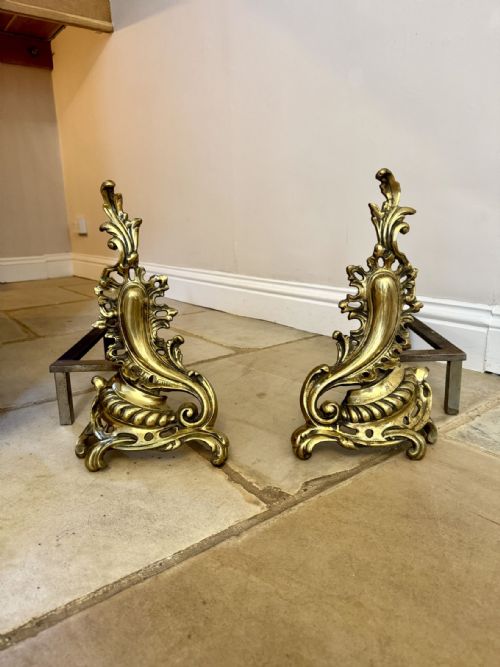
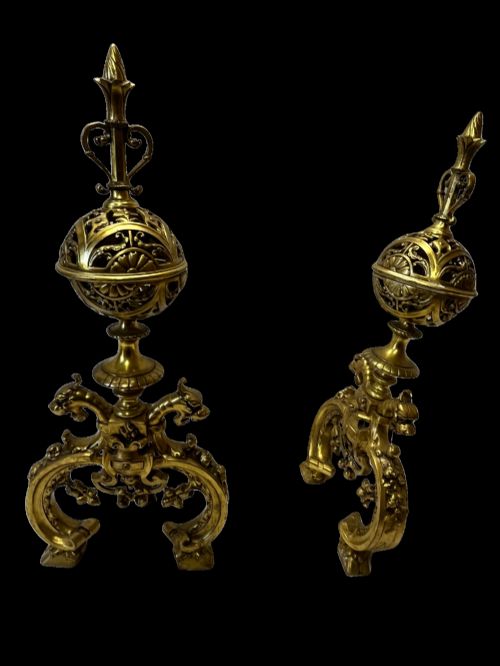


Rococo Fire Dogs
These rococo fire dogs bring exuberant scrolls and asymmetric warmth to a hearth, shaped by French and Italian hands across the nineteenth century.
Rococo Fire Dogs
When you search for rococo fire dogs, you encounter heavy hearth furniture designed to support logs above the floor while framing an open fire. Most examples seen here date to the nineteenth century, drawing heavily on earlier French Louis XV models and Italian Baroque influences.
The objects typically appear as pairs of chenets or andirons, sometimes accompanied by adjustable fenders or tool rests. They combine utilitarian cast iron frames with decorative bronze, brass, or ormolu fronts that project the sculptural curves characteristic of the style.
How they were made
Foundry work relied on casting bronze, brass, and iron into intricate moulds that captured the asymmetric foliage and scrollwork of the style. Heavier structural components utilised cast iron for durability against the heat of the hearth, while decorative frontispieces used bronze or brass.
Surface finishes combined fire gilding or ormolu with patinated bronze to create contrast between bright metallic highlights and darker recessed areas. Gilt highlights emphasised the sweeping lines and cherub figures often integrated into the metalwork.
Cherubs occasionally peer out from between the acanthus scrolls, keeping a watchful eye on the hearth.
What varies in quality
Quality rests upon the crispness of the chased detail in the metalwork and the weight of the casting. Finer pairs exhibit deep, undercut foliage and hand-finished chasing that softens the rigid lines of the mould, whereas simpler pieces rely on flat, repetitive surface stamping.
The choice of materials also separates the grades, with substantial ormolu and patinated bronze mounted pairs sitting above lighter cast brass alternatives. Integration of functional elements, such as robust log bars and adjustable widths, distinguishes practical domestic items from purely decorative showroom pieces.
The Rococo Fire Dogs Glossary
- Chenet
- An alternative term for a fire dog or andiron, used widely in French inventories. These decorative supports sit at the front of the hearth.
- Ormolu
- Finely ground high-carat gold mercury-gilded to a bronze object. It provides a rich, warm lustre that resists tarnishing over decades of fireside heat.
- Patinated Bronze
- Bronze treated with chemical solutions to darken the surface colour. This technique creates visual depth by contrasting with gilded highlights.
- Louis XV Style
- A design movement characterised by asymmetric C-scrolls, shell motifs, and naturalistic foliage. It forms the primary aesthetic foundation for these pieces.
Rococo Fire Dogs: Frequently Asked Questions
How do I clean them?
Dust gently with a soft dry brush to protect delicate gilt and patinated surfaces from abrasive wear. Avoid harsh metal polishes that strip historical finishes.
Water and chemical solvents should be kept entirely away from antique bronzes and ormolu. A professional conservator should handle any deeper restoration work.
Can I use them with a real fire?
Most pairs function adequately with a working hearth provided the iron log bars remain structurally sound and solid. Weight and stability are essential when supporting burning wood.
Many buyers choose to place them before gas grates or decorative fireplace surrounds instead. Assess the iron back bars carefully before exposing them to direct flame.
What is the difference between chenets and fire dogs?
The terms are largely interchangeable across nineteenth-century listings and refer to the same hearth furniture. Chenet is the traditional French term.
Some regional variations apply to the exact configuration of the rear bar or tool rests attached to the main decorative front.
How do I date a nineteenth-century pair?
Examine the casting quality on the reverse and the method used to join the decorative front to the iron support bar. Hand-cut screws and heavy sand casting point towards earlier nineteenth-century production.
Stylistic cues also help narrow the decade, shifting from strict revivalism towards heavier architectural proportions by the end of the century.