


Victorian Blue Transferware
Victorian blue transferware brings deep cobalt imagery to domestic earthenware, offering collectors a rich slice of nineteenth-century ceramic history.
Victorian Blue Transferware
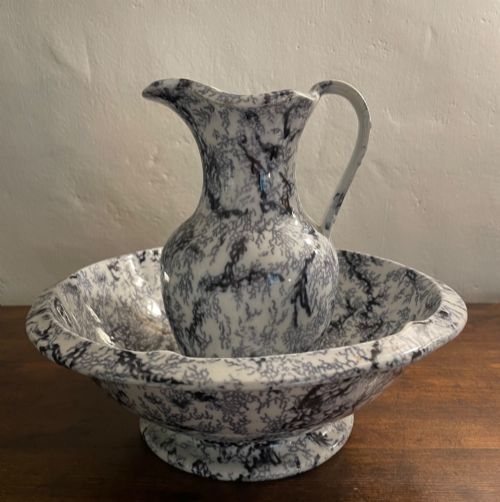
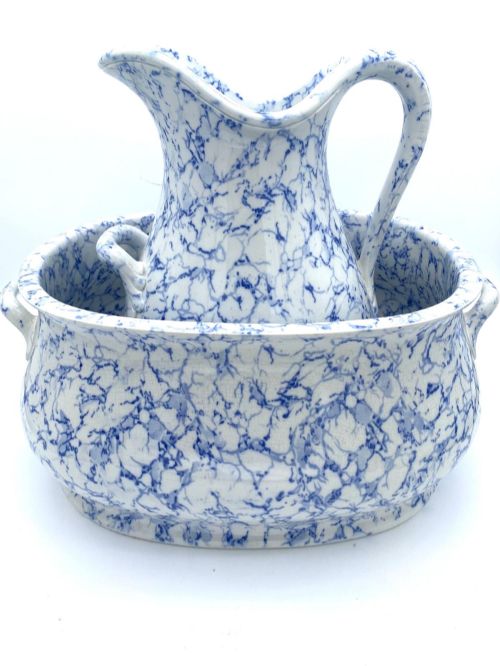
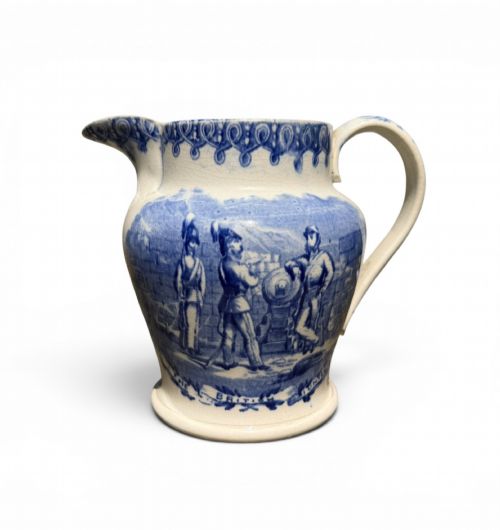
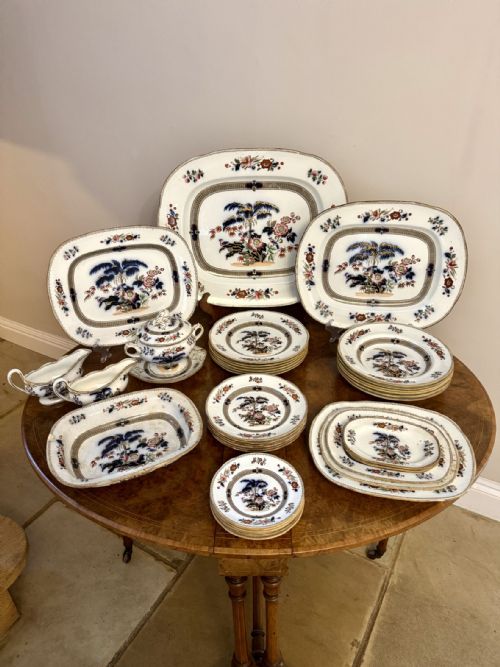
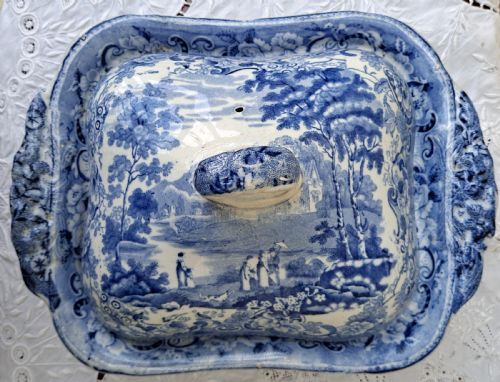
Victorian blue transferware encompasses functional and decorative domestic ceramic items produced across the nineteenth century, including large meat platters, footbaths, soup tureens, plates, and washstand jugs and basins. When searching for Victorian blue transferware, buyers encounter pieces decorated with cobalt prints depicting British scenery, classical ruins, and exotic chinoiserie patterns.
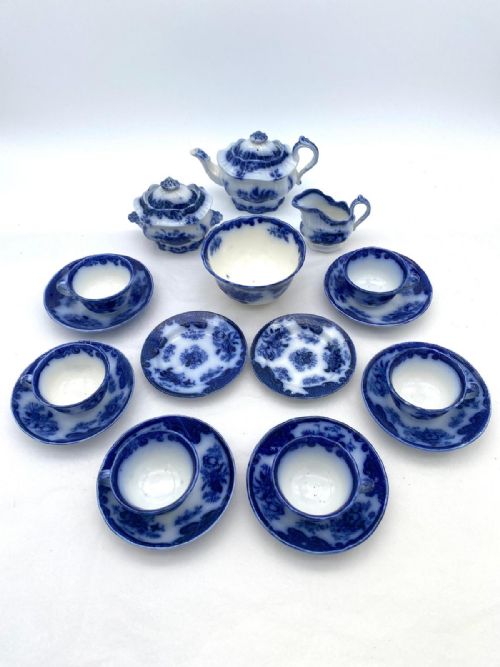
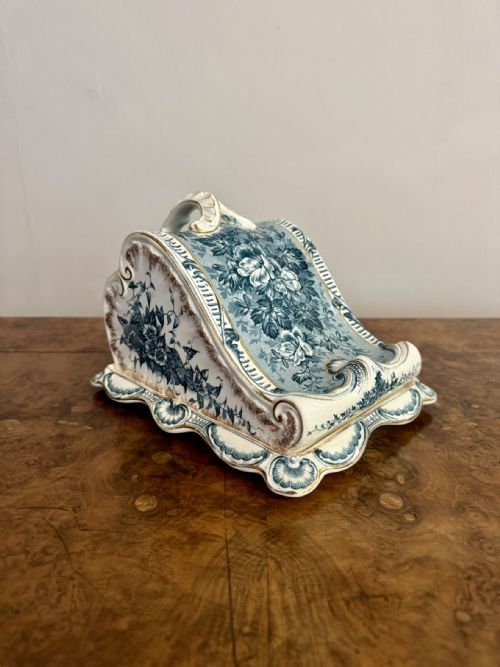
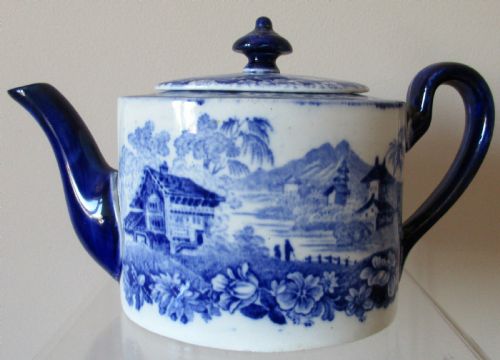
The domestic table and the Victorian washstand provided the primary settings for these wares, generating practical forms like cheese dishes, teapots, custard sets, and toilet sets alongside grand presentation pieces. Meat platters and vegetable tureens dominate the surviving tableware, while child sets and child tea services demonstrate the scale of production for domestic use.
Makers utilised earthenware, ceramic, and stoneware bodies, applying copper-plate transfer printing to achieve crisp blue designs beneath clear glazes. Pieces range from utilitarian kitchen and tavern mugs to refined porcelain-like china services bearing named patterns and manufacturer marks.
Materials and Transfer Printing Technique
Potters formed these items from earthenware, ceramic, or stoneware bodies, shaping them on wheels or pressing them into moulds to create plates, jugs, footbaths, and tureens. The raw clay bodies received a smooth white or cream slip before printing to ensure a clean ground for the cobalt design.
Workers engraved copper plates with detailed pictorial scenes, inked them with cobalt blue pigment, and transferred the design onto tissue paper. This printed paper was pressed onto the biscuit ceramic surface, transferring the blue pattern before the piece underwent glazing and firing in kilns to fix the colour permanently.
Victorian Blue Transferware Retail Price Guide 2026
Typical asking prices for victorian blue transferware among the pieces listed under this phrase on Sellingantiques today, from the lower quarter to the upper quarter. They describe what is for sale here now, not the wider market.
Materials recorded across the inventory include earthenware, ceramic, stoneware, porcelain, and glazed surfaces enhanced with gilt and gold leaf.
Quality Variations in Blue Transferware
Quality rests upon the clarity of the transfer print and the crispness of the engraved lines, where top-tier items show sharp cobalt detail without smudging, blurring, or dry patches in the glaze. The sophistication of the underlying ceramic body also sets pieces apart, distinguishing fine earthenware and porcelain-like china from heavier, coarser utilitarian pottery.
Makers' marks and named patterns elevate the standing of a piece, separating unmarked utility wares from documented factory productions by firms such as Minton, Wedgwood, Spode, and Doulton Burslem. Furthermore, the complexity of the form - such as moulded handles, applied details, and large multi-component footbaths or toilet sets - dictates the original skill and labour invested in the manufacture.
Minton·Wedgwood·James Wallace and Co·Mintons·Copeland·Doulton Burslem·John Ridgway·Spode·Carlton Ware
The Victorian Blue Transferware Glossary
- Transfer printing
- A method of decorating ceramics by engraving a design onto a copper plate, pulling an ink impression on paper, and pressing it onto the pottery body before glazing. This technique allowed factories to produce intricate pictorial patterns rapidly across large dinner services.
- Flow blue
- A nineteenth-century ceramic glazing style where lime or chloride vapour was introduced into the kiln during firing, causing the cobalt blue transfer print to blur and bleed softly into the white glaze. The resulting hazy, atmospheric effect became particularly popular on mid-Victorian plates, jugs, and tea services.
- Footbath
- A large, deep ceramic vessel designed for washing feet, featuring twin handles and generous proportions. These substantial pieces frequently display elaborate transfer-printed landscapes and rank among the grandest domestic items produced by Staffordshire potteries.
- Meat platter
- A large serving dish shaped to hold joints of meat, often featuring a recessed well and drainage channels to collect juices. Many examples survive from the nineteenth century in various sizes to suit large dining tables.
- Prattware
- Earthenware associated with the Pratt family of Fenton, known for multi-coloured underglaze printing rather than single-colour cobalt transfer. These wares often depict historical portraits, commemorative scenes, and popular subjects of the period.
Victorian Blue Transferware: Frequently Asked Questions
What is Victorian blue transferware?
Victorian blue transferware is nineteenth-century pottery decorated by transferring a copper-plate engraving inked in cobalt blue onto a ceramic body before glazing and firing. The process allowed factories to produce uniform, highly detailed pictorial designs ranging from pastoral landscapes to architectural scenes.
These pieces served everyday domestic functions in the dining room, kitchen, and bedroom. Surviving items include plates, meat platters, teapots, footbaths, and complete washstand sets.
How do I care for antique transferware?
Antique transferware requires gentle hand washing in lukewarm water using mild detergent to protect the historic glaze and ceramic body from thermal shock and abrasive damage. Dishwashers should be avoided because harsh detergents and high heat will craze the glaze and dull the cobalt print over time.
When displaying meat platters, tureens, or washstand basins, ensure they rest on stable surfaces away from direct sunlight and heavy foot traffic. Proper support prevents accidental chipping on the rims and handles of these ceramic pieces.
How can I date blue transferware?
Dating relies on identifying manufacturer backstamps, impressed registry marks, ceramic body types, and stylistic indicators such as border patterns and shapes. Mid-nineteenth-century pieces often feature specific registry diamonds or factory marks that pinpoint the exact year or batch of production.
The style of the transfer print and the evolution of ceramic manufacturing techniques also provide chronological clues. Flow blue and heavy earthenware bodies typically point to the earlier and middle decades of the nineteenth century, while later Victorian and Edwardian items exhibit different glaze properties and floral motifs.
Were these pieces used daily?
Many items were made for rigorous daily service in Victorian households, including heavy meat platters, dinner plates, soup tureens, and kitchen jugs. Their durable earthenware and stoneware bodies allowed them to withstand regular use in bustling kitchens and dining rooms.
Other forms, such as large footbaths, toilet sets, and children's tea services, served more specific domestic rituals or nursery use. Despite their utilitarian origins, many survived intact due to careful preservation by households across generations.