


Victorian Blue Glassware
Victorian blue glassware brings deep cobalt, rich turquoise, and pale opaline tones to the table, offering rich colour and historic charm.
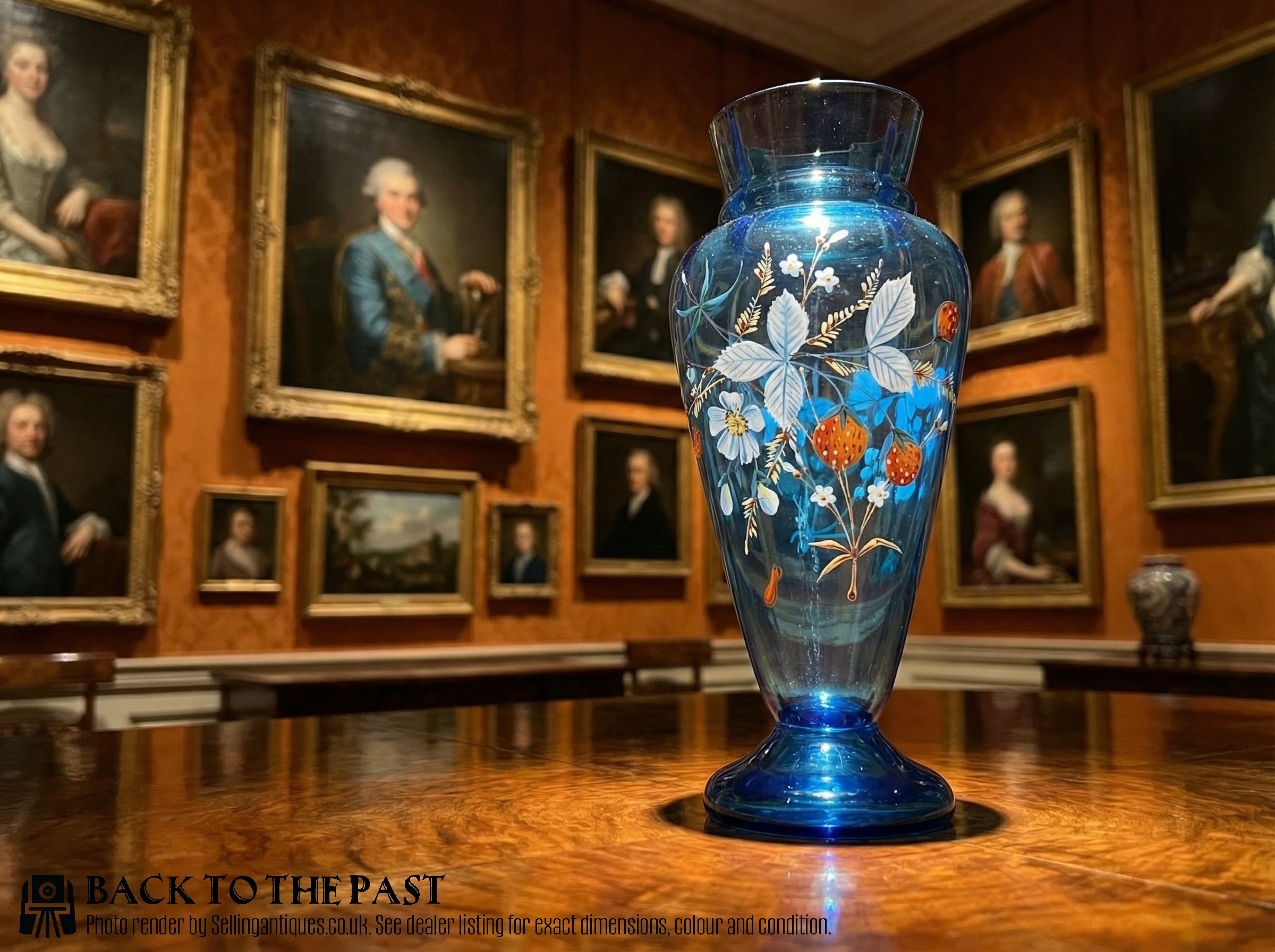
Victorian Blue Glassware
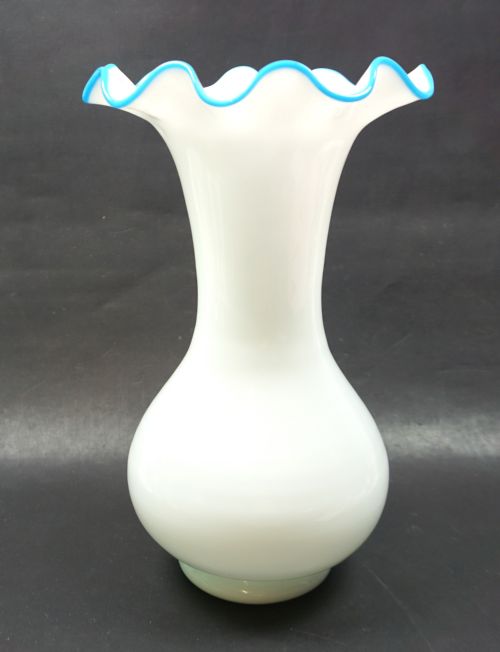
Victorian blue glassware encompasses a rich variety of decorative and functional vessels produced throughout the nineteenth century. Buyers searching for victorian blue glassware will encounter decanters, vases, wine glasses, tea sets, and apothecary bottles spanning different European origins. These items range from deep cobalt serving bottles to pale opaline and enamel-painted presentation pieces.
The objects on offer reflect diverse stylistic influences, including Venetian Revival, Bohemian, French classical, and Scottish regional designs. Vases and decanters dominate the selection, often featuring hand-painted details or mould-pressed patterns such as pearline. Pieces typically date from the mid-nineteenth century through to the year nineteen hundred.
How they were made
Glassmakers utilised traditional free-blowing and mould-blowing techniques to shape the molten metal into vases, decanters, and tableware. Cobalt oxide was frequently added to the batch to achieve the characteristic deep blue coloration seen in Bristol glass and related wares. Artisans then finished these pieces by applying hot-worked handles, rims, and optical twists.
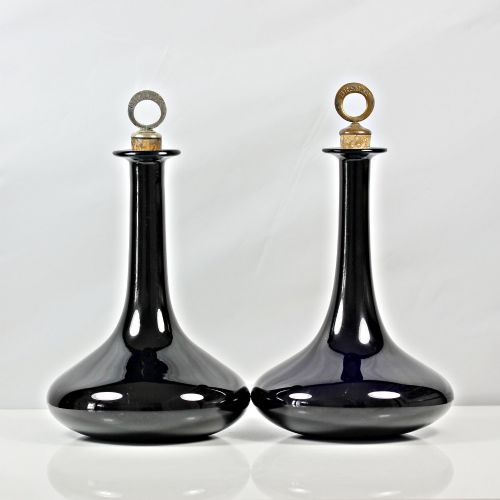
Decoration involved several distinct workshop practices, including white enamel painting of figures, intaglio engraving, and hand-applied gold leaf. Moser and Fritz Heckert applied elaborate gilt and enamelled motifs, while Davidson utilised pressed pearline glass techniques. Cork stoppers and metal mounts occasionally completed functional items like decanters and serving bottles.
Listings for victorian blue glassware feature items spanning from the mid-nineteenth century through to nineteen hundred, encompassing English, French, Italian, and Bohemian origins.
What varies in quality
Quality in victorian blue glassware rests upon the crispness of the mould work, the depth of the metal colour, and the precision of any surface decoration. Finely executed intaglio engraving and clean hand-gilding elevate a piece above standard factory production. Hand-painted enamel scenes, particularly those attributed to known glasshouses, show superior draftsmanship and refined detail.
The weight and clarity of the glass itself also distinguish finer examples, alongside the integrity of applied elements like rims and handles. Pieces retaining original stoppers or possessing documented workshop attributions demonstrate higher desirability among collectors. The balance of the form and the richness of the cobalt or opaline hues ultimately determine the standing of each item.
Baccarat·Salviati·Fritz Heckert·Moser·Davidson
The Victorian Blue Glassware Glossary
- Bristol Blue
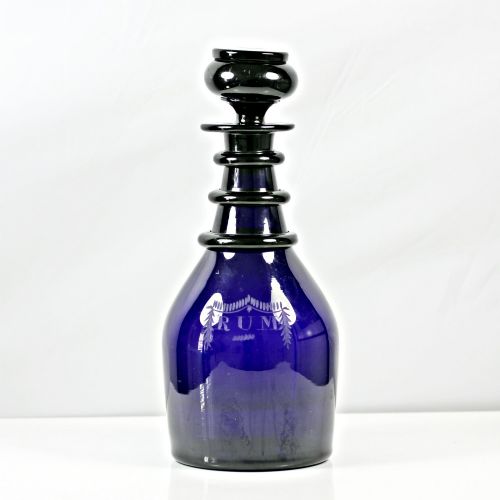
- A deep cobalt blue glass traditionally associated with the English city of Bristol during the eighteenth and nineteenth centuries. It was frequently used for decanters, finger bowls, and apothecary bottles.
- Mary Gregory
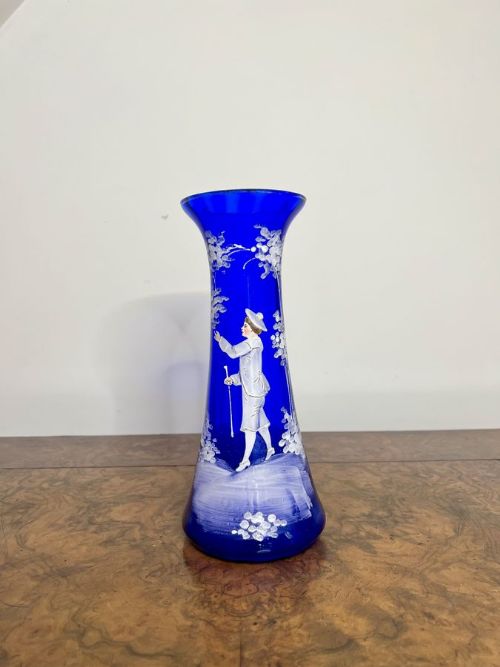
- A style of glass decoration featuring white enamel silhouettes of children amidst foliage or landscapes. This technique was widely utilised on Bohemian and English blue glassware during the late nineteenth century.
- Pearline
- A pressed glass technique patented by Davidson in the late nineteenth century that combined opalescent colour with moulded geometric or ribbed patterns. It reacts strongly to light, showing shifting tones across the surface.
- Mell
- A specific regional form of decanter characterised by a heavy, rounded body and narrow neck, frequently produced in Scotland and England. These bottles were designed to hold spirits securely on the dining table.
- Intaglio
- A method of engraving where the design is carved directly into the surface of the glass rather than raised in relief. It requires immense skill from the lapidary to achieve clean, translucent lines.
Victorian Blue Glassware: Frequently Asked Questions
How do I identify Mary Gregory glass?
Mary Gregory glassware is easily recognised by the distinctive white enamel painted figures of children, usually set against a contrasting background of blue glass. These figures often depict Victorian children playing outdoors amidst tinted foliage or natural elements.
The enamel work is fired onto the surface, creating a slightly raised texture that can be felt by gently running a finger across the decoration. Authentic pieces generally date from the late nineteenth century and appear on vases, decanters, and matching glassware sets.
What is Bristol blue glass?
Bristol blue glass refers to deep cobalt-tinted glassware produced historically in the English manufacturing hub of Bristol. The rich blue colour is achieved by adding cobalt oxide to the molten glass mixture during production.
This vibrant material was commonly utilised for utilitarian and decorative items such as ringed decanters, apothecary bottles, and finger bowls. Genuine Victorian examples often feature hand-applied gilt lettering or decorative gilding around the neck and body.
Are apothecary bottles collectible?
Apothecary bottles hold strong appeal for collectors due to their historic utility and varied forms. Originally used by chemists and pharmacists to store medicines, oils, and dry ingredients, they showcase practical nineteenth-century glass manufacturing.
Many survive in collections as matched sets or individual display pieces, often retaining remnants of their original labels or ground glass stoppers. Their simple, functional shapes contrast pleasingly with the more ornate decorative vases of the period.