




Coloured Glass Wine Goblets
These coloured glass wine goblets bring brilliant hues and historic character to the table, offering a vibrant alternative to plain crystal.
Coloured Glass Wine Goblets
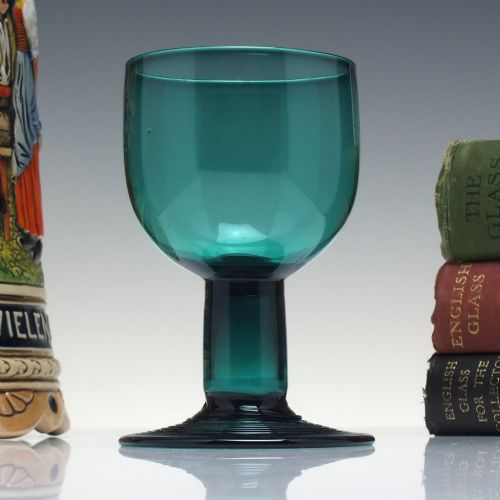
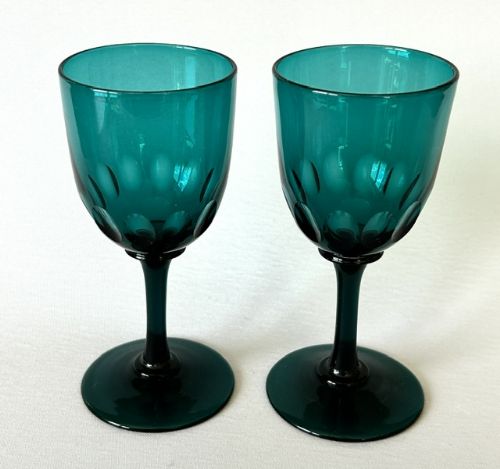
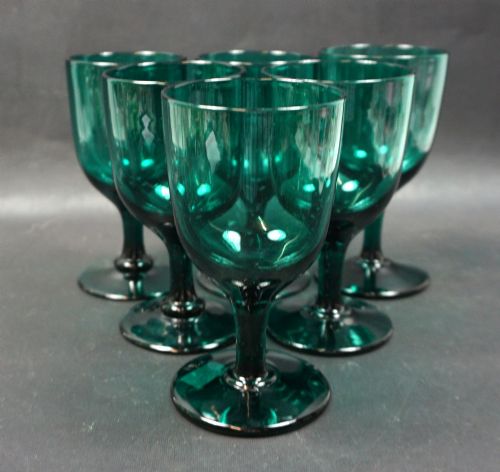
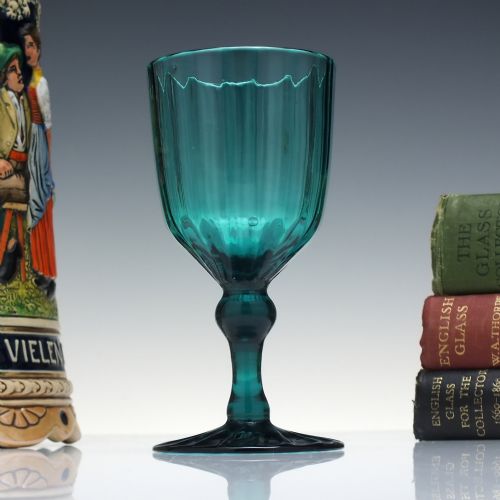
Coloured glass wine goblets span drinking vessels produced across the Georgian, Victorian, and Edwardian eras, encompassing diverse shades from deep cranberry and turquoise to vibrant emerald and amethyst. Buyers encountering this selection will discover individual glasses alongside matching sets intended for historic dining.
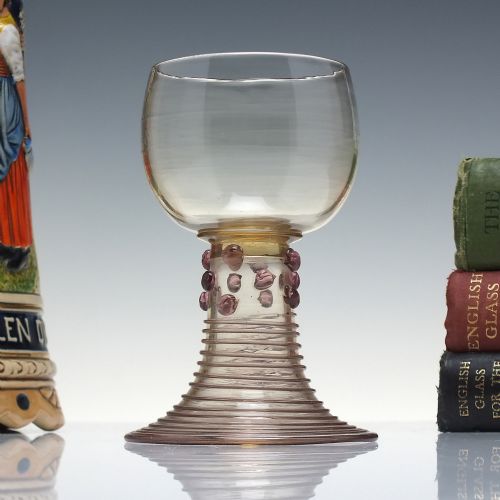
The assortment includes regional specialities such as Bristol green pieces, Bohemian hook glasses, and Venetian Revival creations from Murano. Forms range from tall Edwardian stems and rummers to compact dram glasses and dessert wine vessels.
Originating from British, Italian, and wider European workshops, these items demonstrate how historical makers utilised distinct metallic oxides to achieve striking colour saturation. Each piece reflects the prevailing decorative tastes of its specific period, from Georgian rib moulding to Victorian hand-blown stemware.
Making the Glass
These vessels rely on lead glass, clear glass, and specialist coloured compositions shaped through hand-blowing and rib moulding techniques. Artisans introduced various metallic oxides into the molten batch to produce distinct hues like cranberry, aqua, and turquoise.
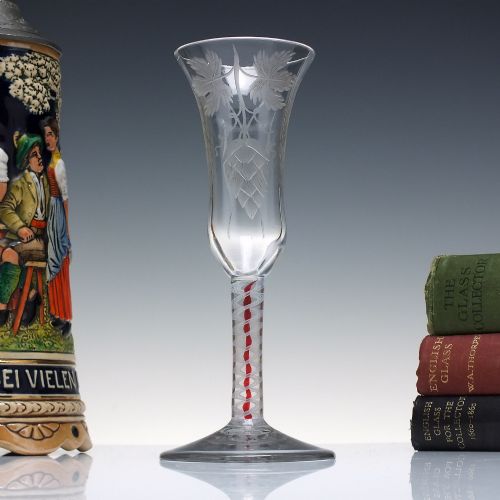
Makers shaped bowls and stems by hand, sometimes applying cuts or engravings to the surface once cooled. Cut crystal examples display precise facets that catch the light, contrasting with smoother blown forms.
Coloured Glass Wine Goblets Retail Price Guide 2026
Typical asking prices for coloured glass wine goblets among the pieces listed under this phrase on Sellingantiques today, from the lower quarter to the upper quarter. They describe what is for sale here now, not the wider market.
Georgian drinkers occasionally required rummers, sturdy glasses designed for heavy spirits rather than delicate vintages.
Assessing Quality
Quality rests upon the depth and consistency of the glass colour, the precision of the hand-blown form, and the balance of the stem. Superior examples exhibit uniform thickness and rich saturation without unintended cloudiness.
The finesse of any engraved or cut detailing separates finer output from simpler utilitarian wares. Complete sets matched in colour and size command particular attention among table glass.
The Coloured Glass Wine Goblets Glossary
- Cranberry Glass
- A rich red glass produced by adding gold chloride to the molten batch. It became especially popular during the Victorian period for tableware and stemware.
- Roemer
- A traditional Germanic drinking vessel featuring a wide bowl atop a cylindrical stem decorated with applied prunts. These often appear in green or amber glass.
- Rib Moulded
- A vessel form created by blowing glass into a patterned mould to impart vertical or spiral ridges before finishing by hand. This technique adds texture to Georgian and eighteenth-century glasses.
- Colour Twist
- A stem formation enclosing opaque coloured threads within the glass rod. It represents an intricate Georgian glassmaking technique.
- Cut Crystal
- Glass shaped and patterned by abrasive wheel cutting rather than solely by blowing. This process creates sharp facets that enhance optical brilliance.
Coloured Glass Wine Goblets: Frequently Asked Questions
Can I use these goblets for daily dining?
Many buyers choose to use these robust hand-blown and lead glass vessels for special dinners and modern entertaining.
Careful handling remains essential given the age of the pieces and the irreplaceable nature of nineteenth-century stemware.
What periods do these glasses come from?
The selection spans Georgian, Victorian, and Edwardian eras, alongside pieces attributed to early twentieth-century European makers.
Design characteristics such as rib moulding, bobbin stems, and specific colour palettes help indicate the likely period of manufacture.
Why do some green glasses bear the Bristol label?
The term Bristol green refers to a distinct deep green hue traditionally associated with glasshouses operating in the Bristol area during the Georgian period.
While many pieces share this characteristic colour, the designation often describes the palette rather than a single specific factory.