

Victorian Blue Ceramics
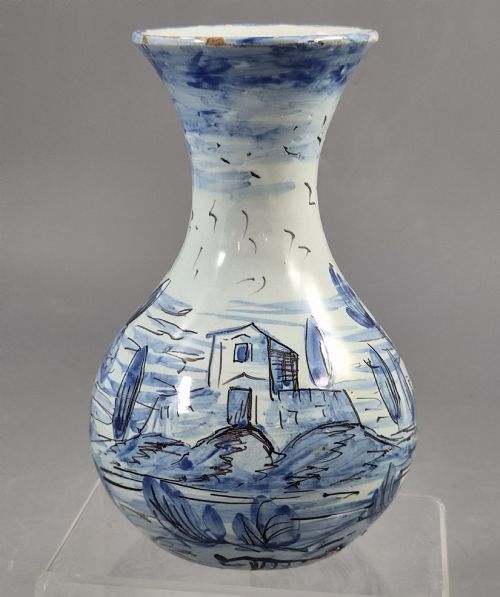
Victorian blue ceramics bring together deep cobalt glazes, hand-painted patterns, and rich earthenware and porcelain forms from the nineteenth century.
Victorian Blue Ceramics
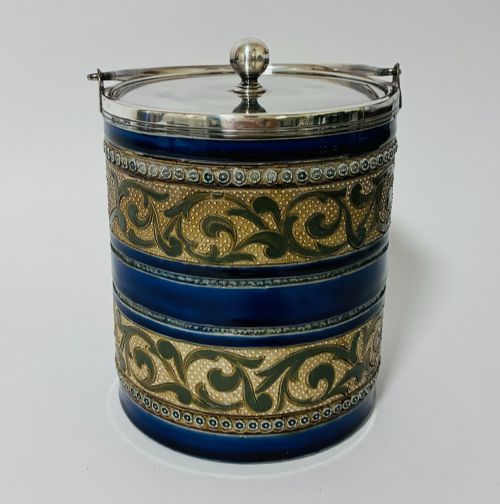
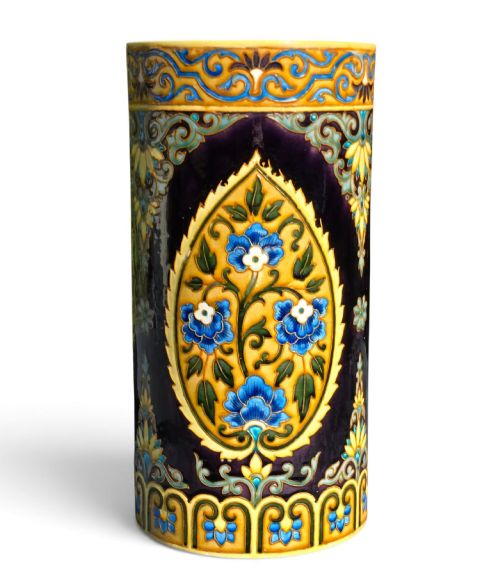
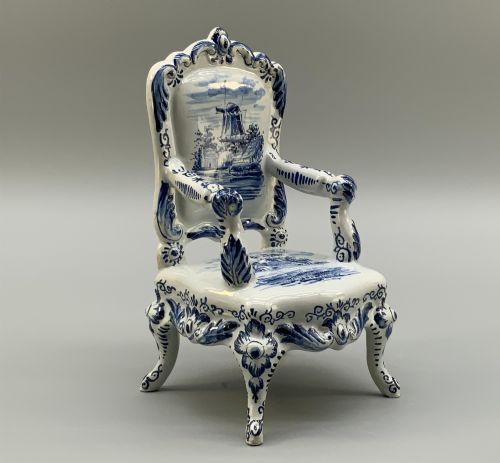
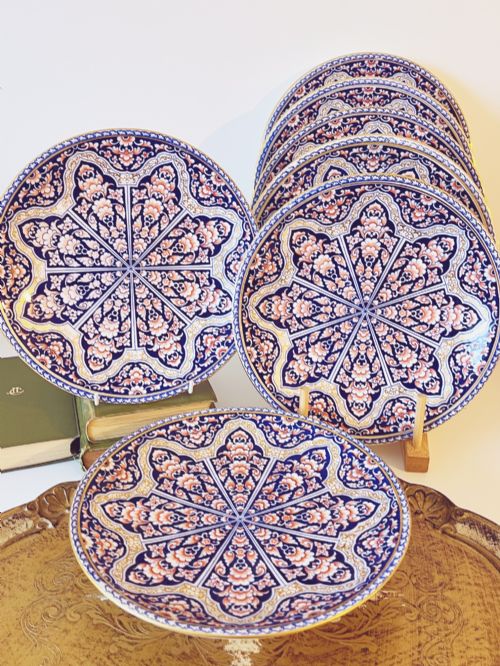
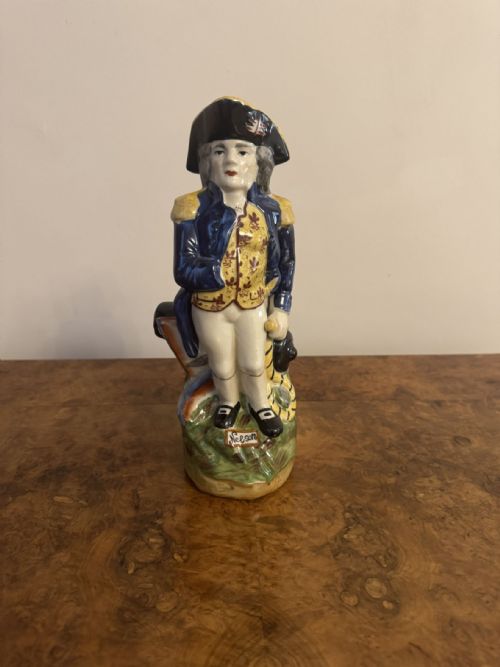
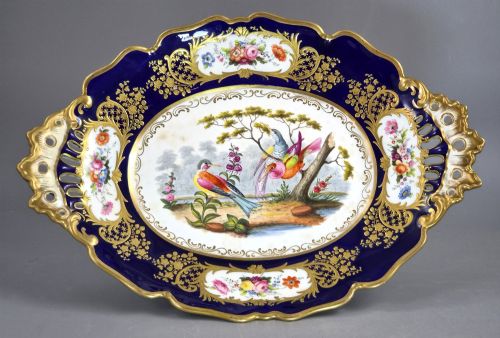
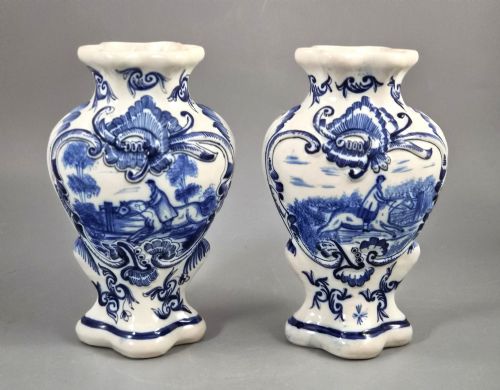
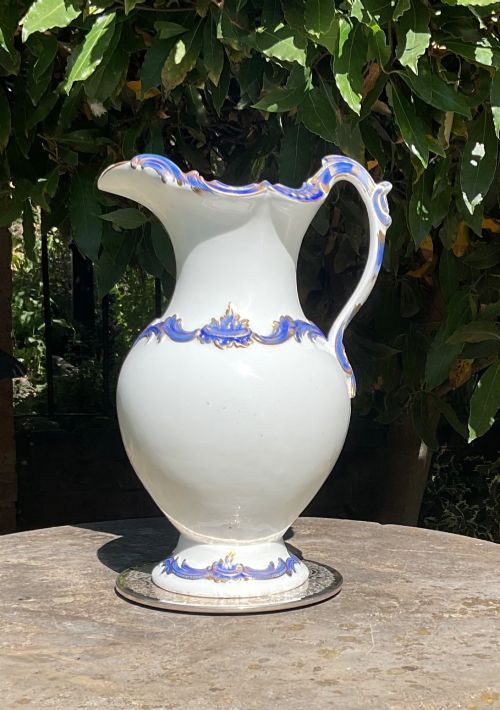
When you search for Victorian blue ceramics, you encounter a diverse array of nineteenth-century decorative and utilitarian objects spanning earthenware, stoneware, and porcelain. The selection ranges from robust Staffordshire jugs and flowing blue basins to delicate dessert services and large architectural umbrella stands.
The pieces on this page lean heavily towards domestic and display items produced across English, continental European, and Asian workshops. You find domestic wares such as cheese domes, footbaths, and tea sets alongside ornamental vases, chargers, and figures dating from the 1800s to the turn of the twentieth century.
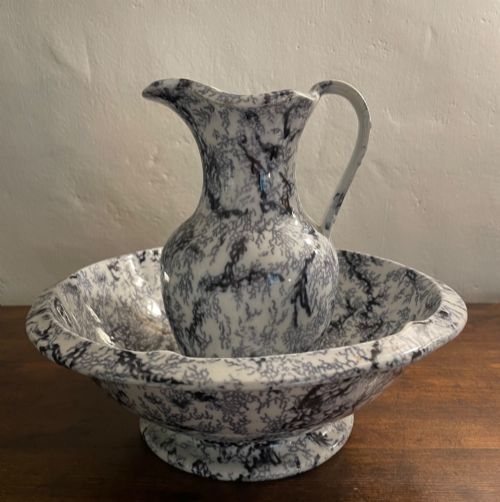
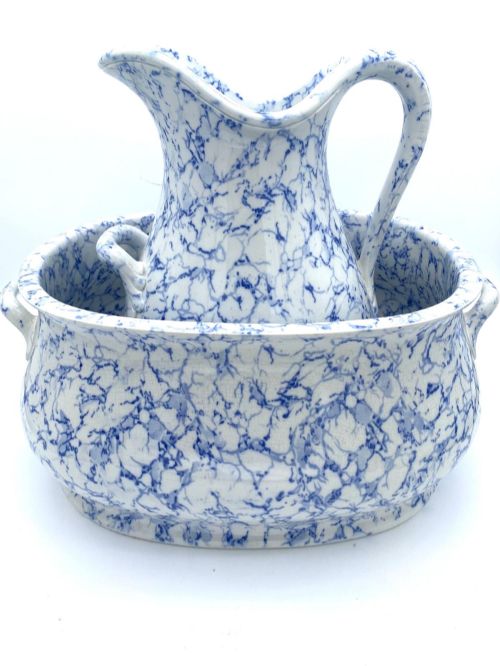
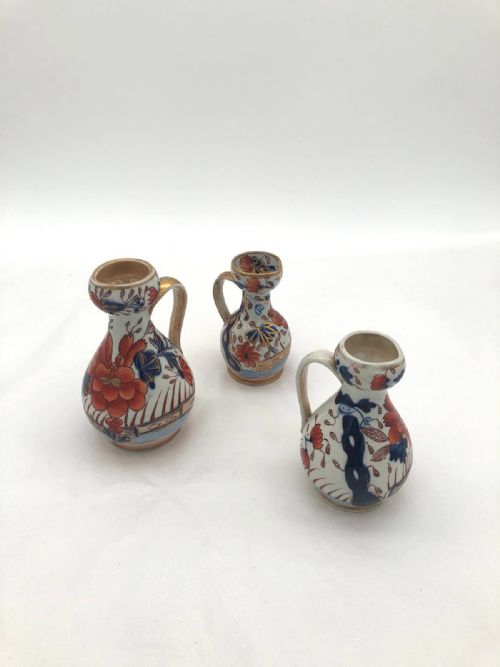
Regional styles show distinct character, from the blurred cobalt of flow blue transferware to the vibrant palettes of Gaudy Welsh patterns and the Japanese Meiji pieces traded widely during the period. The common thread is the prominent use of blue tones across varied ceramic bodies and revivalist aesthetics.
Materials and methods
Potters built these items using earthenware, ironstone, stoneware, and fine porcelain bodies, shaping them on the wheel, in moulds, or through press-moulding techniques. Cobalt oxide served as the primary pigment for deep blue decoration, applied either by hand-painting directly onto the clay or via copper-plate transfer printing before glazing.
Glazes included clear lead formulations, tin opacifiers for majolica and faience, and salt glazes applied to stoneware during high-temperature firing. Many pieces received secondary decoration of enamel colours or gold leaf highlights fixed during a subsequent low-temperature kiln run.
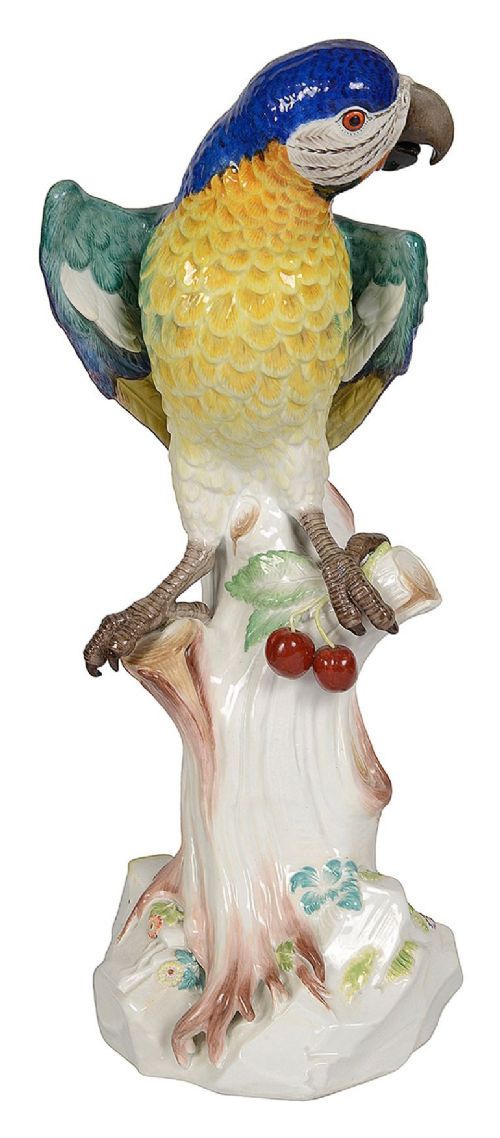
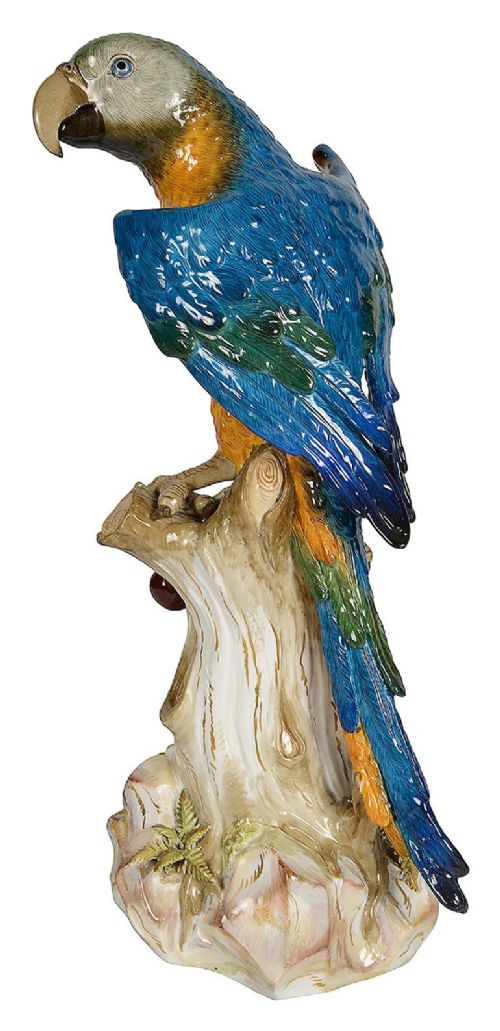
Ceramic parrots with intense gazes perch quietly beside cheese domes shaped like giant apples.
Evaluating quality and execution
Quality rests upon the crispness of the transfer print or the brushwork control in hand-painted motifs, where finer pieces display sharp outlines and depth within the cobalt washes. The refinement of the ceramic body itself, whether a heavy ironstone or a translucent porcelain, dictates the structural elegance of the form.
Finishing touches differentiate standard production wares from superior examples, visible in the precision of gilt bronze mounts, the evenness of the glaze without excessive pooling, and clear factory stamps or impressed registration marks indicating the maker.
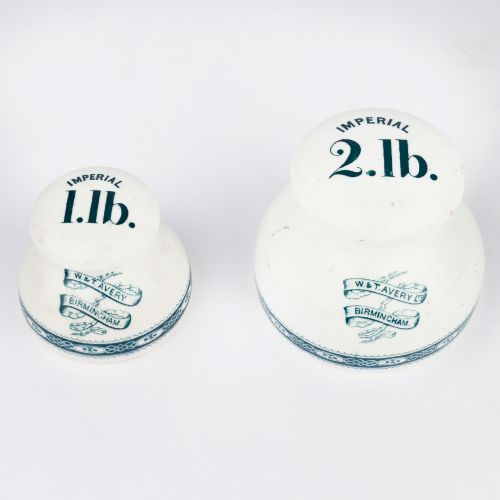
Cantagalli·Théodore Deck·Royal Crown Derby·Coalport·W & T Avery·Minton·Meissen·Mason's·Fourmaintraux-Courquin·Royal Bonn·George Jones·Wedgwood·Doulton Lambeth·Copeland
The Victorian Blue Ceramics Glossary
- Flow blue
- A nineteenth-century transfer printing technique where cobalt blue intentionally bled into the surrounding white glaze during firing to create a soft, hazy effect. This style became particularly popular for large dinner and toilet services.
- Ironstone
- A patented ceramic body developed in the nineteenth century as a durable, dense alternative to porcelain. It combined earthenware clay with feldspar and slag to withstand heavy daily use.
- Majolica
- A type of earthenware coated with an opaque tin-lead glaze and painted with metallic oxide colours. Victorian makers utilised it for richly coloured, naturalistic relief-moulded serving pieces.
- Jasperware
- A fine-grained, unglazed stoneware developed by Josiah Wedgwood, characterised by a coloured vitrified body and applied white relief figures. Cobalt blue provided the most common contrasting ground colour.
- Charger
- A large decorative plate designed primarily for display on a wall or sideboard rather than for dining. These pieces often showcased elaborate painted scenes or transfer-printed commemorative designs.
- Comport
- A raised dish or bowl elevated on a foot or pedestal, used historically to serve fruit as part of a dessert service. They frequently appeared in matched sets alongside decorated plates.
Victorian Blue Ceramics: Frequently Asked Questions
What is flow blue pottery?
Flow blue pottery is a nineteenth-century ceramic type where the cobalt blue transfer print intentionally blurred into the surrounding white glaze during the kiln firing. This created a misty, atmospheric aesthetic that appealed to Victorian households.
Potters achieved the effect by introducing lime or ammonia chloride vapours into the kiln atmosphere during firing. The resulting softness transformed standard geometric and floral patterns into painterly, cloud-like designs.
How were nineteenth-century ceramic services used?
Nineteenth-century ceramic services, including dessert sets, tea services, and toilet sets, formed an essential part of formal dining and domestic hygiene. Dessert services featuring comports and plates were brought out after the main meal for fruit and sweet courses.
Toilet services comprising jugs, basins, and slop pails equipped bedrooms before indoor plumbing became universal. These items matched the interior decor of the home and demonstrated the host's social standing.
How do I care for Victorian blue ceramics?
Caring for Victorian ceramics involves gentle hand washing in lukewarm water with mild soap rather than using automated dishwashers. The harsh detergents and thermal shocks of modern machines can damage delicate nineteenth-century glazes and fragile enamel or gilt highlights.
Display pieces with dry stoneware bodies or metal mounts require dusting with a soft, dry brush. Keep items out of direct sunlight to prevent any secondary enamel colours from fading over time.
How can I distinguish ironstone from porcelain?
Ironstone is a heavy, opaque ceramic body developed for durability, while true porcelain is thinner and exhibits translucency when held up to a strong light source. Porcelain yields a high-pitched ring when tapped gently, whereas ironstone produces a duller, more solid sound.
Under magnification, the fracture or unglazed foot of porcelain shows a fine, vitrified structure. Ironstone displays a slightly more granular, porous-looking body beneath its glaze layer.