
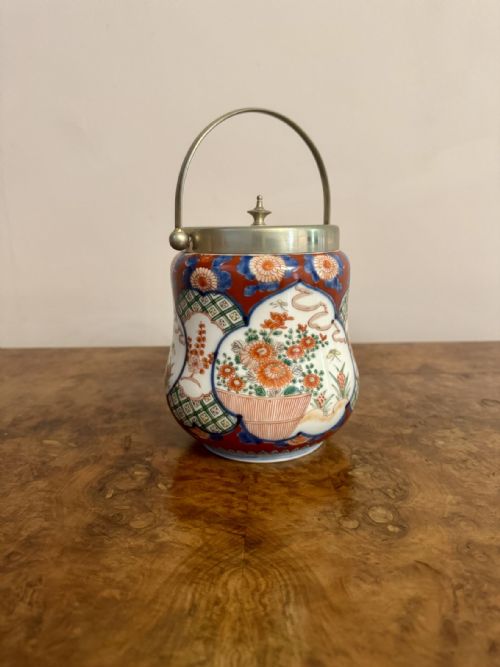


Victorian Biscuit Jar
A victorian biscuit jar sits on the sideboard to hold dry treats, combining practical lidded storage with heavy decorative metalwork and glass.
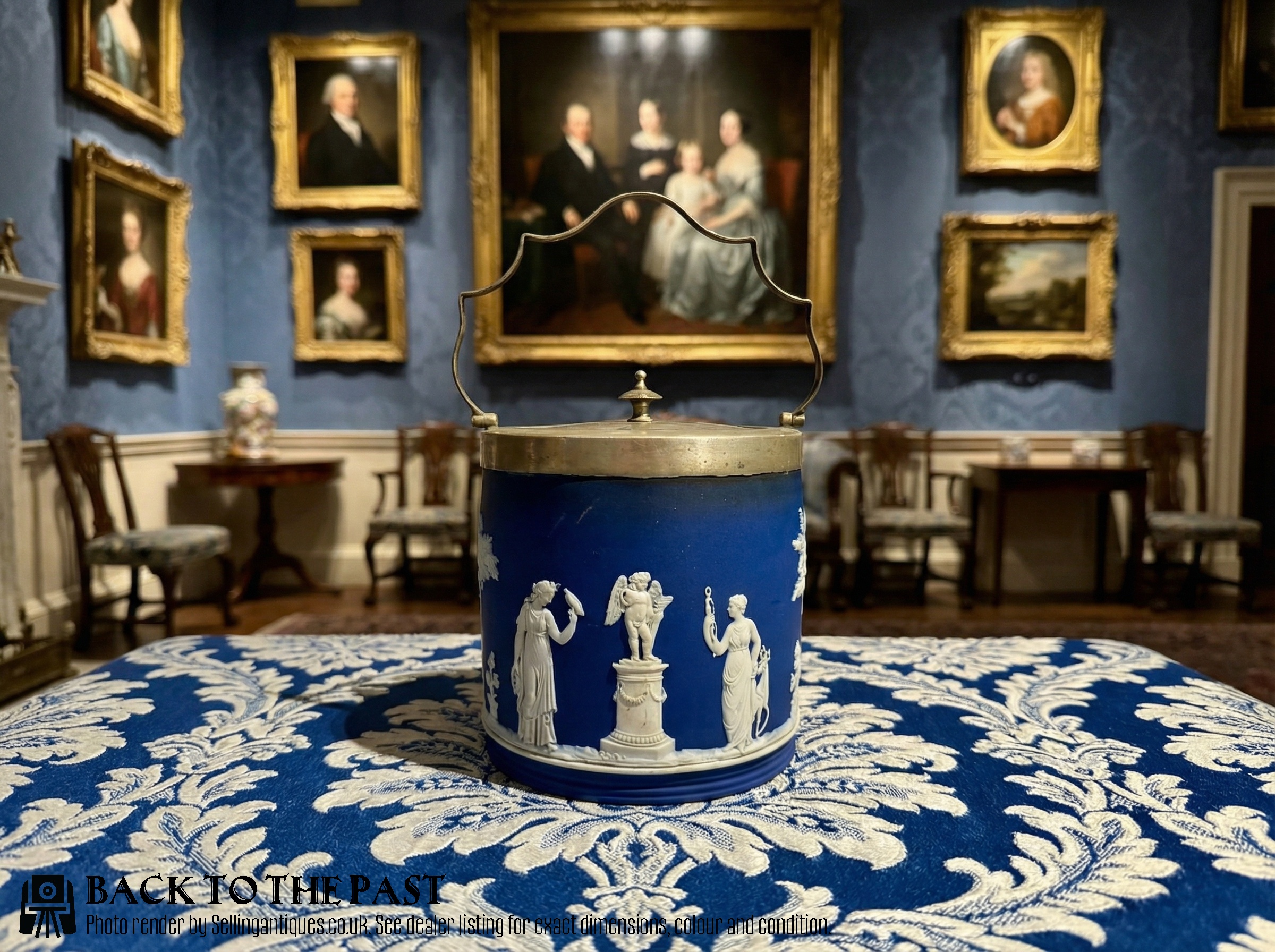
Victorian Biscuit Jar
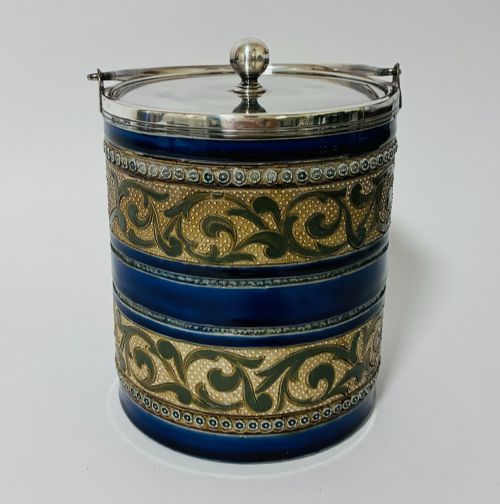
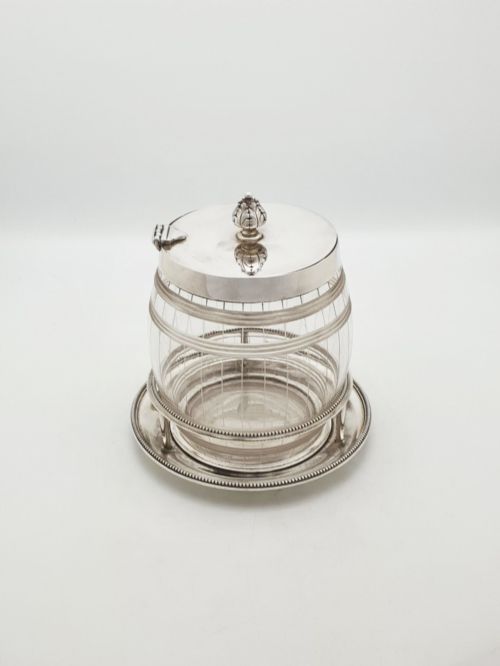
A victorian biscuit jar typically takes the form of a cylindrical barrel, box or drum designed to keep baked goods fresh in the drawing room or dining room. Most examples on this page date from the later nineteenth century into the Edwardian period, spanning ceramic bodies, glass vessels and wooden forms fitted with metal covers.
Makers produced these containers in several distinct styles, ranging from classical stoneware and jasperware to cut glass and vibrant cranberry glass. Novelty shapes appear alongside traditional cylindrical barrels, including drum forms and containers styled as heavy merchant weights.
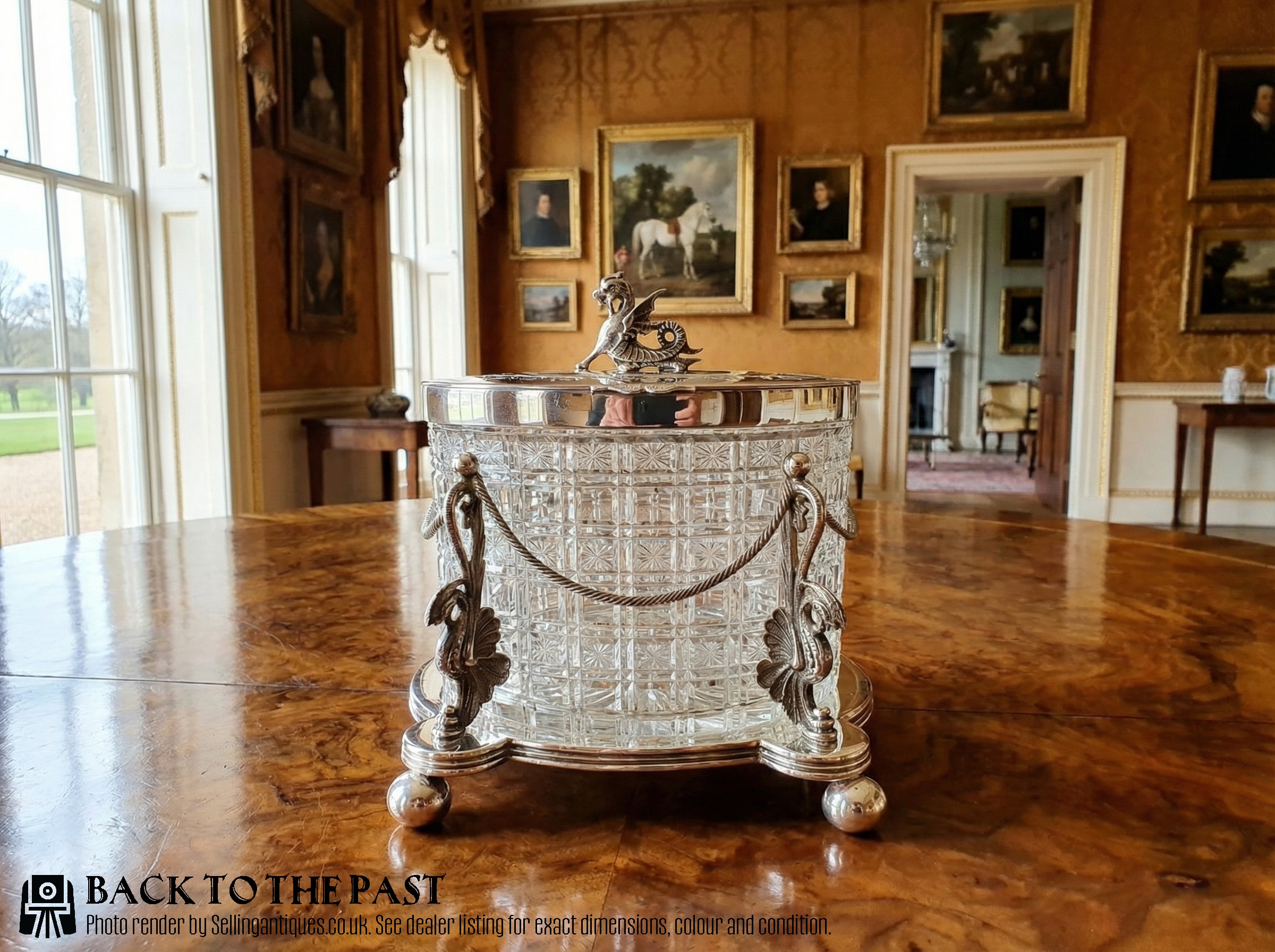
How They Were Made
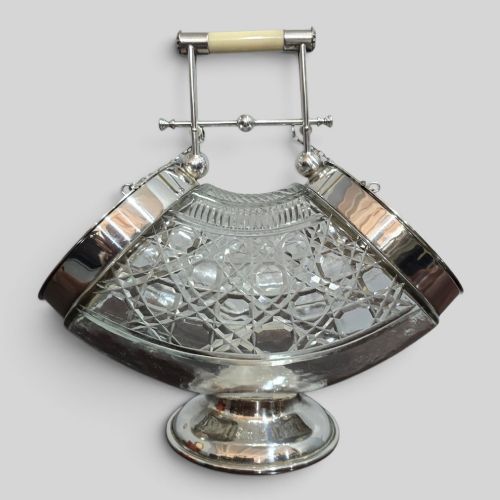
Silversmiths and manufacturers utilised silver plate and sterling silver for lids, mounts, handles and swing frames, combining metalwork with heavy moulded glass or ceramic bodies. Glass vessels feature hobnail cutting, engraving or twisted forms, whilst ceramic bodies utilise stoneware, glazed earthenware and applied jasperware reliefs.
Oak timber provides a sturdy wooden alternative to glass and ceramic, frequently bound or fitted with silver plated rims and hinged lids. Makers applied enamel painting or heraldic finials to enhance the decorative finish of the metal mounts.
Listings feature silver plate, cut glass, cranberry glass, oak, and jasperware across Victorian and Edwardian periods.
What Varies in Quality
The weight and gauge of the silver plate or sterling silver mounts set the upper tier apart from simpler production, alongside the crispness of hobnail cutting in the glass and the detail in applied jasperware reliefs. Makers such as Elkington, Mappin and Webb or Doulton Lambeth demonstrate superior control over materials and decorative balance.
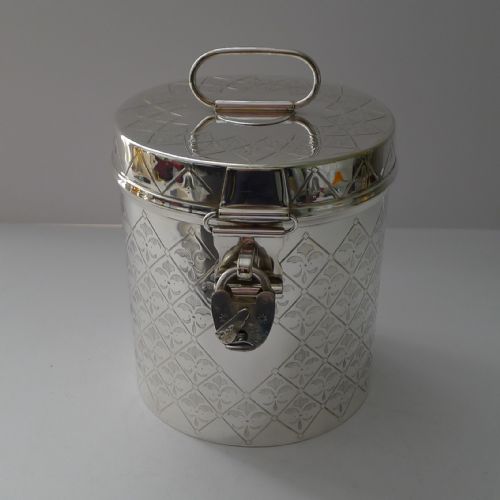
Complexity of form distinguishes standard cylindrical drums from exceptional pieces, such as novelty weight designs or automated locking mechanisms. The integration between the ceramic or glass body and the metal hardware dictates the overall structural integrity.
Mappin and Webb·Elkington and Co·Robert and Belk·Walker and Hall·John Grinsell and Sons·James Dixon and Sons·Doulton Lambeth·Thomas Bradbury·Carlton Ware·Wedgwood
The Victorian Biscuit Jar Glossary
- Jasperware
- A fine stoneware developed by Wedgwood, characterised by a matte coloured body with contrasting white raised classical reliefs.
- Cranberry glass
- A rich pinkish red transparent glass created by adding gold chloride to the molten batch, popular for Victorian tableware.
- Silver plate
- A base metal such as nickel silver or Britannia metal coated with a thin layer of pure silver through electroplating.
- Hobnail cut
- A sharp, faceted geometric glass-cutting pattern resembling the hobnails used on heavy boots.
- Finial
- A decorative knob or ornamental feature attached to the top of the lid.
Victorian Biscuit Jar: Frequently Asked Questions
What is a victorian biscuit jar?
A victorian biscuit jar is a lidded container created to store dry biscuits and dry goods on the dining table or sideboard.
These pieces combine functional ceramic, glass or wooden bodies with ornate metal mountings and hinged lids.
How were biscuit barrels used?
Households used these vessels during afternoon tea and formal dinners to serve biscuits whilst keeping them protected from moisture.
The hinged lids and secure mountings allowed hosts to present treats elegantly to guests.
How do I identify the period?
Periods are identified through a combination of manufacturing marks, material styles and decorative motifs like neo-classical reliefs or arts and crafts details.
Victorian and Edwardian examples often feature registration numbers or maker stamps on the silver plated mounts.
Can these jars still hold food?
These containers can store dry goods provided the interior surfaces remain clean and free from old residue.
Glass and ceramic bodies wash easily, but plated metal mounts require gentle care to preserve the finish.