

Victorian Bedside Chests
Solid mahogany, burr walnut and pine Victorian bedside chests provide compact storage beside the bed while anchoring a bedroom with period character.
Victorian Bedside Chests
Victorian bedside chests are compact case pieces designed to stand beside a bed, housing small personal items and night-time necessities within multiple drawers or a cupboard. When searching for Victorian bedside chests, a buyer encounters practical small pieces of furniture built to serve the domestic routines of nineteenth-century households.
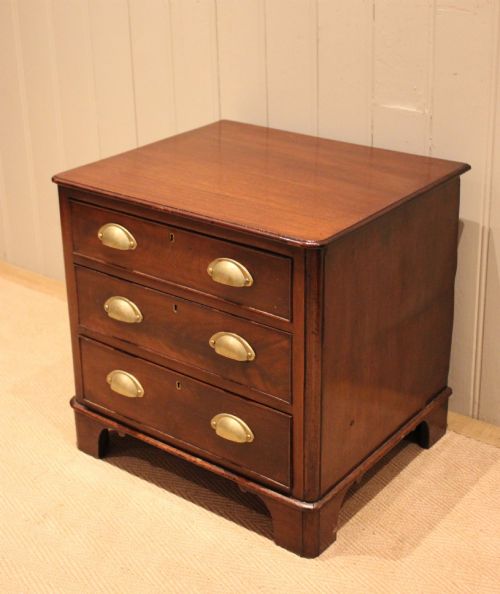
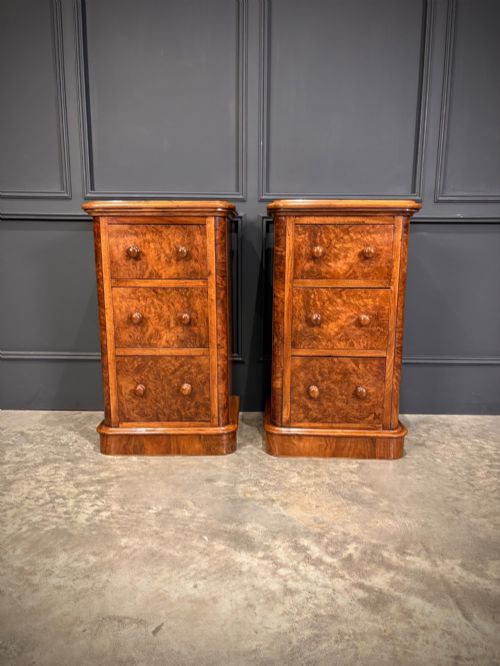
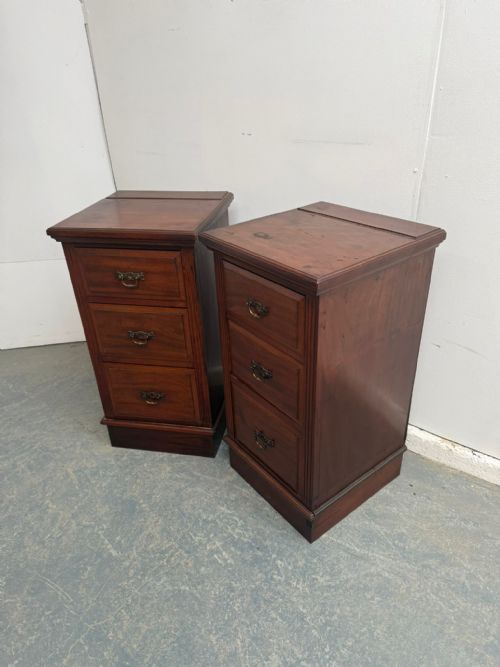
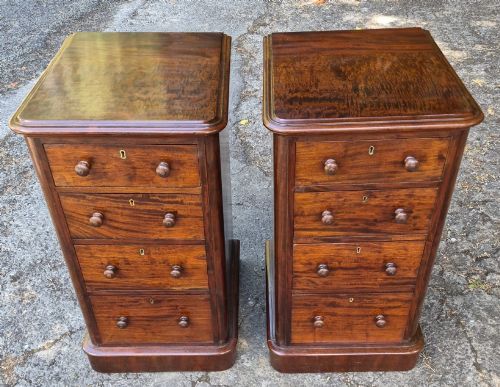
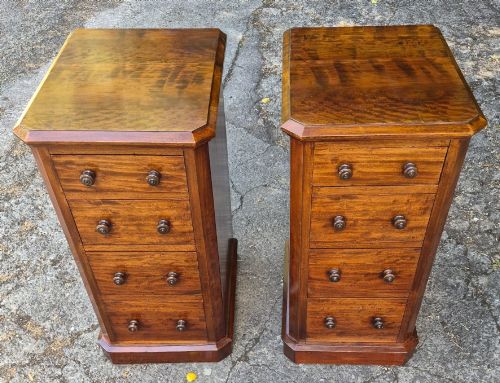
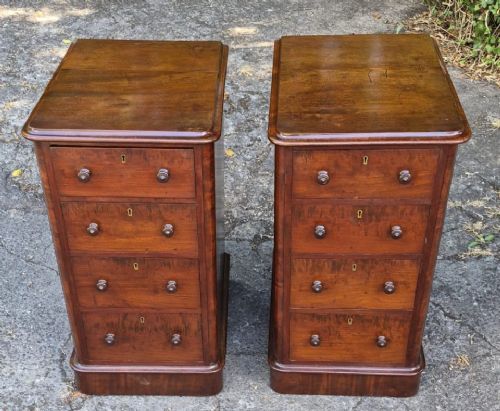
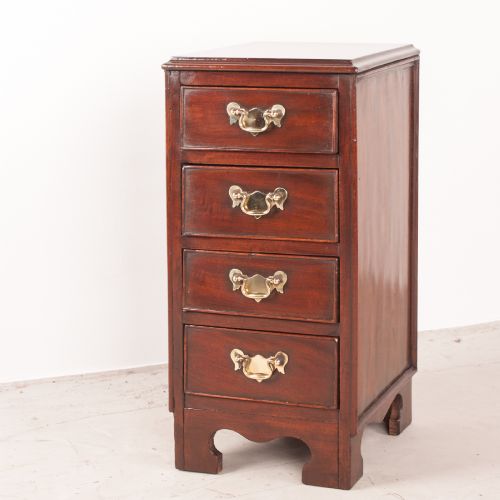
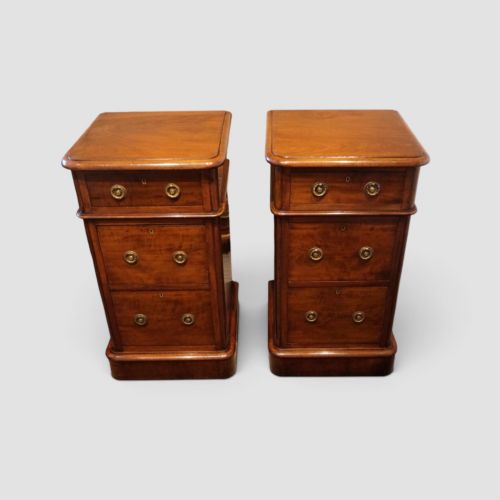
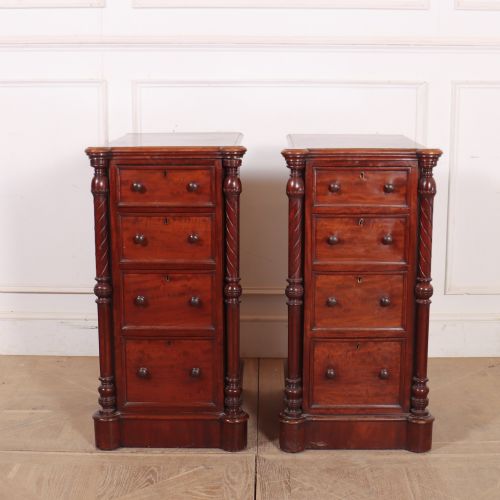
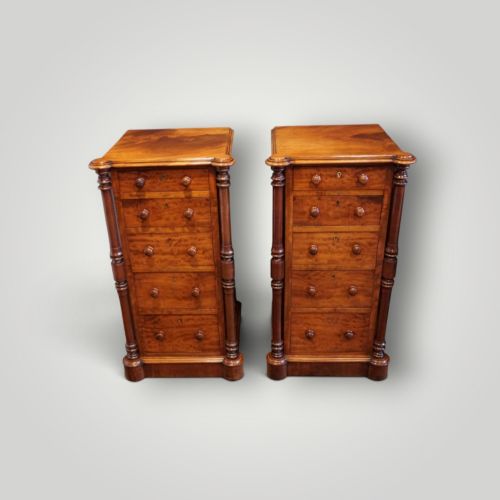
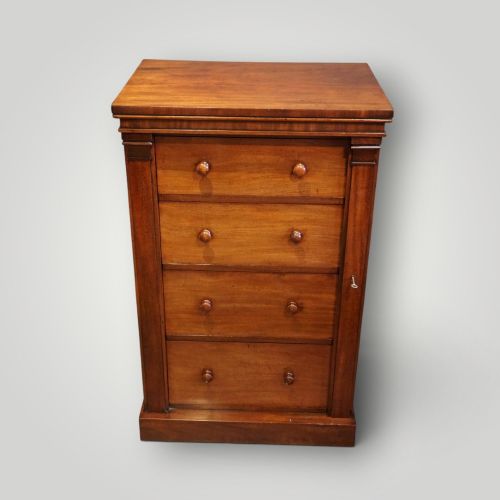
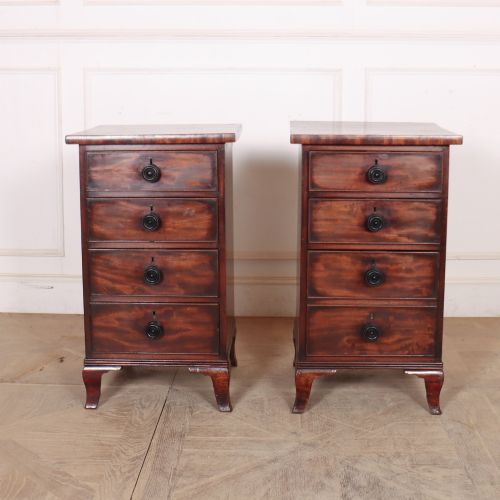
The versions most commonly met on this page are mahogany and burr walnut examples featuring three or four small drawers, frequently found as matching pairs. These chests reflect the domestic scale of the Victorian period, offering substantial timber construction in footprints suited to smaller spaces.
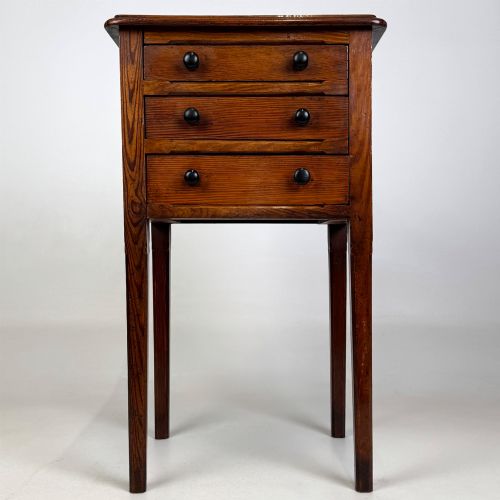
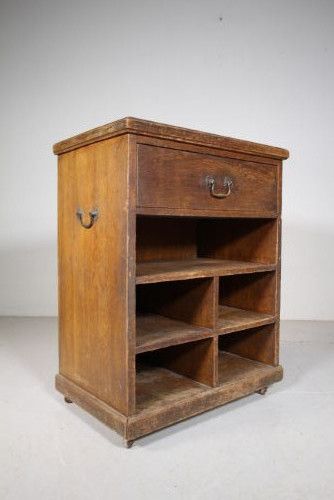
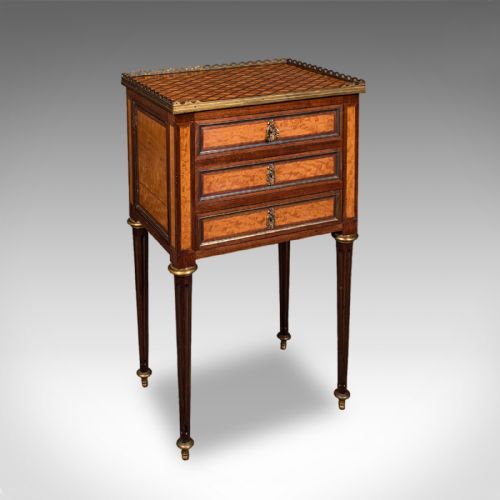
Beyond standard drawer configurations, the forms span bedside cupboards, pot cupboards, and open bookcases that functioned in nineteenth-century bedrooms. Variations include architectural Gothic Revival designs, French Louis XVI Revival influences, and campaign styles fitted with brass handles.
Materials and construction
Cabinetmakers constructed these chests predominantly from dense hardwoods such as mahogany and walnut, frequently utilising figured burr walnut veneers for decorative surfaces. Secondary timbers like pine appear on drawer linings and internal framing, while applied brass handles and escutcheons provide functional hardware.
Joinery techniques relied on dovetailed drawer construction and framed carcass assembly to withstand daily pulling and shifting. Timber was often hand-waxed to finish the grain, though painted and simulated wood finishes also occur across domestic examples.
Listings demonstrate that mahogany and burr walnut are the dominant timbers used for these nineteenth-century bedroom chests.
Judging quality
Quality in these small chests rests upon the choice of timber and the precision of the cabinetmaker's joinery. Superior pieces display carefully matched wood grain across drawer fronts and tight, hand-cut dovetails that hold the structure firm over decades of use.
Proportion and the retention of original hardware distinguish finer examples from altered pieces. The harmony between the carcass depth, drawer arrangement, and timber selection dictates the standing of any individual chest.
Warings Liverpool
The Victorian Bedside Chests Glossary
- Burr walnut
- A figured veneer harvested from the knotty growths of walnut trees. This material yields swirling, highly decorative grain patterns prized for cabinet fronts.
- Bowfront
- A curved cabinet front that swells outward in a convex arc. This shape softens the profile of a small chest and requires advanced woodworking skill.
- Wellington chest
- A tall, narrow chest of drawers secured by a hinged locking side stile. This form provides vertical storage in a compact footprint.
- Dovetail
- An interlocking joint formed by wedge-shaped tenons and pins. This construction method secures drawer corners without relying on metal fasteners.
- Campaign chest
- Portable furniture built in sections with recessed brass hardware. These pieces were designed for easy transport by military officers.
Victorian Bedside Chests: Frequently Asked Questions
What is the difference between a bedside chest and a nightstand?
A bedside chest incorporates functional drawers for enclosed storage, whereas a nightstand frequently relies on an open shelf or a simpler table format.
Victorian makers favoured enclosed drawer chests to keep personal items out of sight beside the bed.
Why are matching pairs difficult to find?
Bedside furniture was often built individually or split up over generations as houses were reorganized and furniture was divided.
Matching pairs from the nineteenth century represent survivors that remained together through multiple domestic moves.
How do I distinguish walnut from mahogany?
Mahogany displays a straight, reddish-brown grain that darkens gracefully with age and wax polishing. Walnut offers a deeper, cooler brown tone with prominent dark figuring and complex grain patterns.
Can I use a Victorian bedside chest with modern bed heights?
Nineteenth-century bed frames tended to sit lower than modern mattresses, meaning these chests often measure lower than contemporary bedside tables. Checking the exact height ensures the top surface aligns comfortably with a modern mattress.