

Traditional Bedside Cabinets
Traditional bedside cabinets are sturdy timber pieces designed for the bedroom, offering compact storage for night-time essentials alongside period character.
Traditional Bedside Cabinets
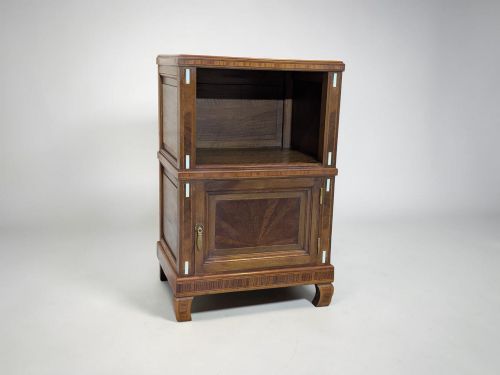
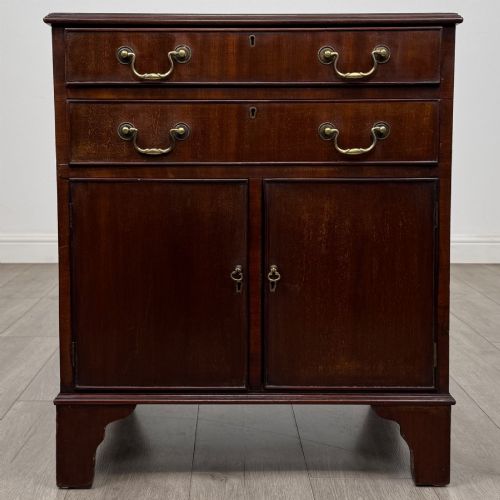
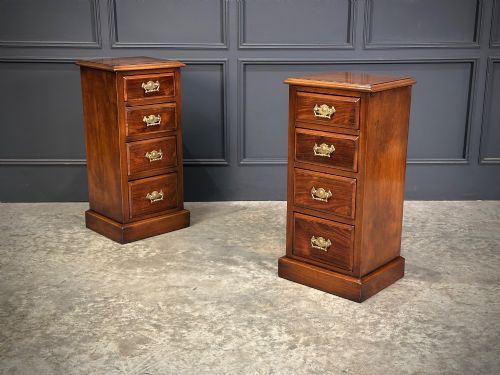
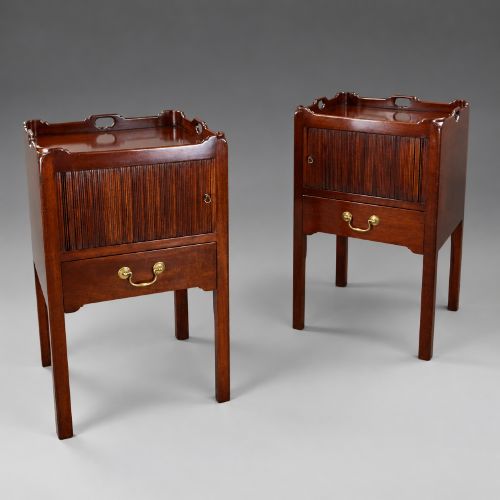
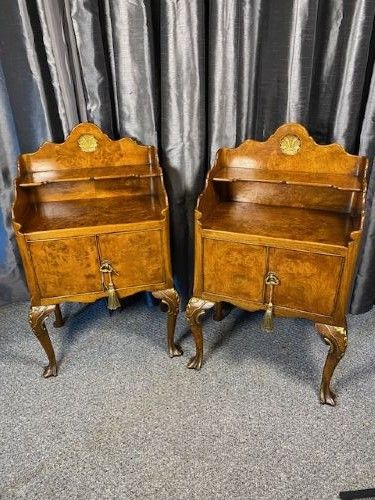
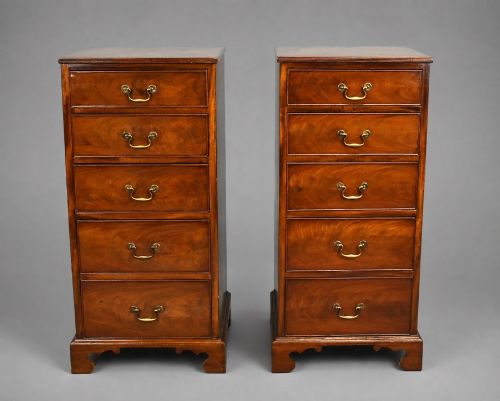
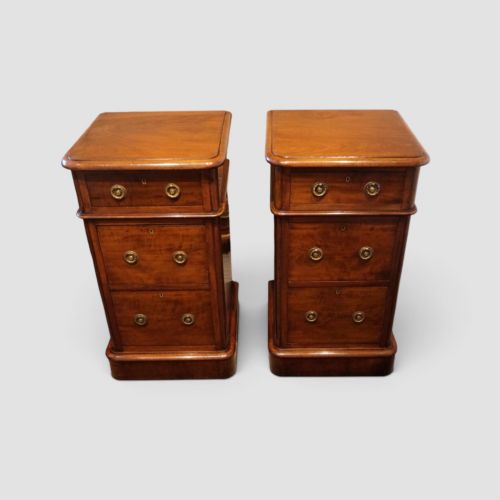
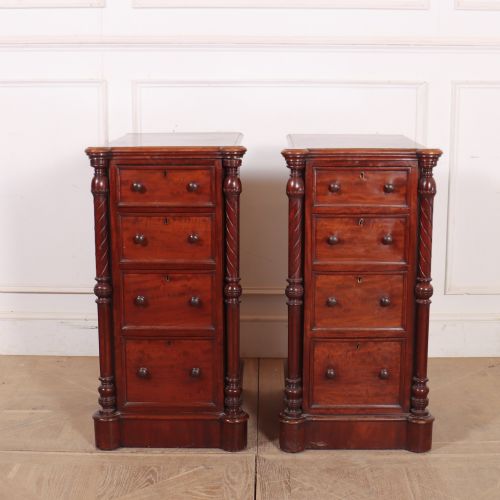
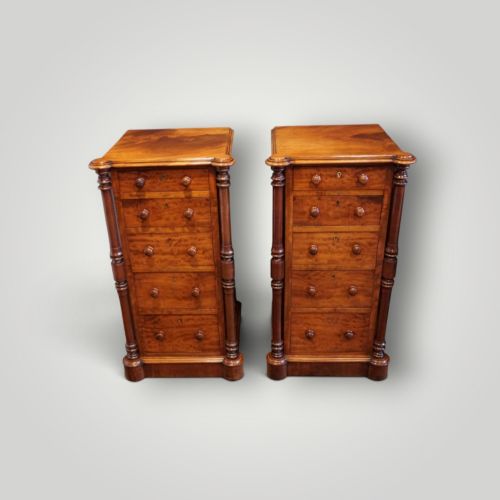
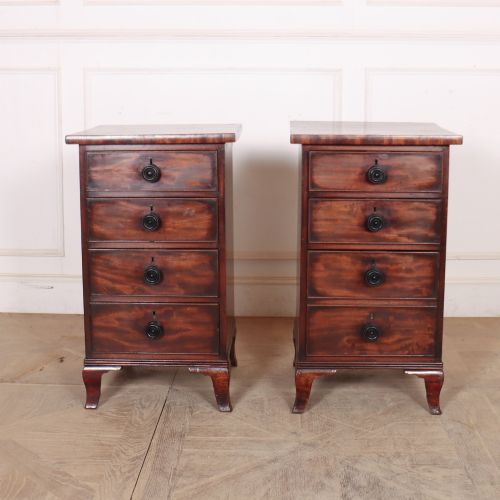
Traditional bedside cabinets span the Victorian and Edwardian eras down to the interwar decades of the 1930s, appearing alongside related forms such as bedside chests, cupboards and nightstands. The pieces on this page draw on Georgian, Queen Anne and Jacobean revival styles as well as French provincial designs. Buyers encounter solitary cabinets as well as matched pairs in mahogany, walnut and oak.
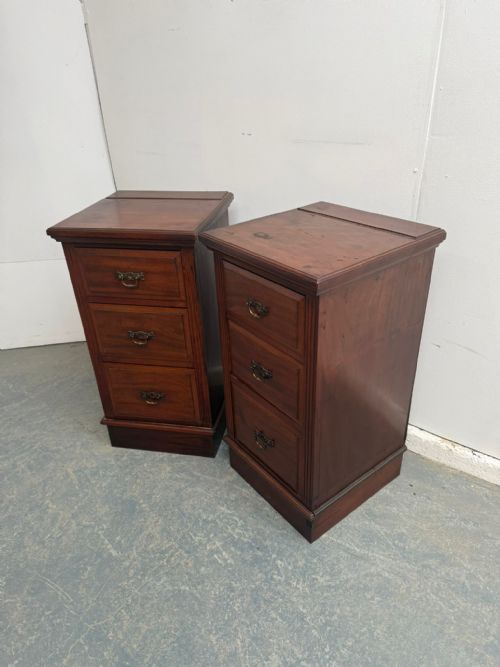
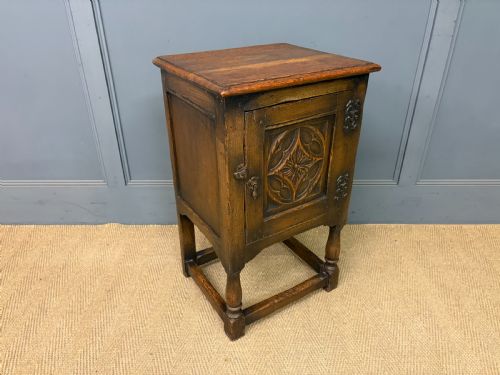
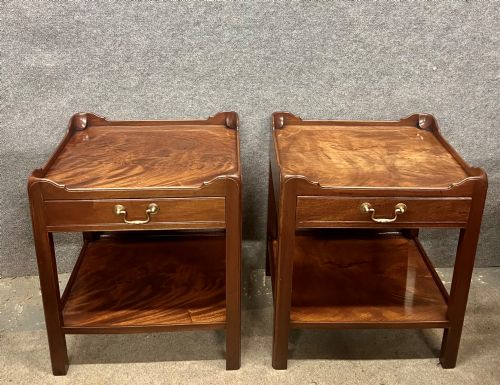
Forms vary from single-door cupboards and drop-flap cabinets to small chests fitted with three drawers. Some examples double as side tables or lamp tables, while occasional variants include painted pine finishes and Chinese apothecary chests. Proportions generally remain compact to suit placement beside a bed frame.
Materials and construction methods
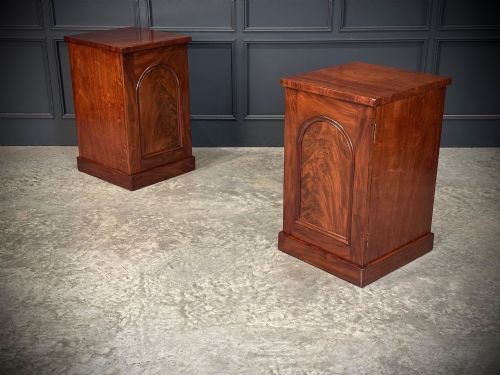
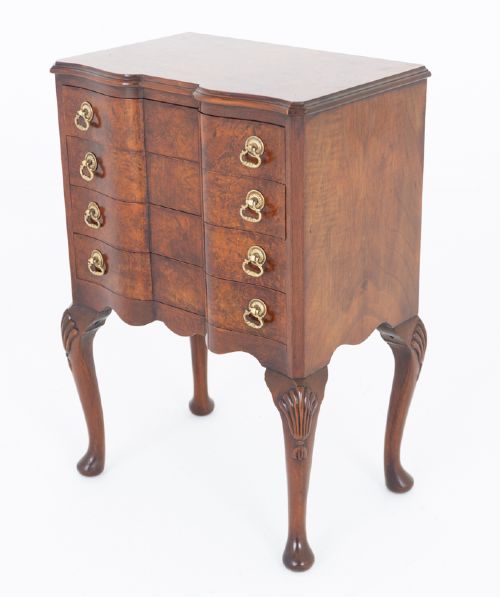
Makers utilised solid timbers and decorative veneers, relying heavily on mahogany, walnut, burr walnut and oak. Flame mahogany and burr walnut introduce striking wood grain patterns across door panels and drawer fronts. Carved details and brass hardware appear frequently on revival pieces.
Construction methods range from straightforward panel-and-frame joinery for oak cupboards to dovetailed drawer boxes in Victorian and Edwardian chests. Waxed finishes protect the timber surfaces while highlighting the natural colour and grain of the wood.
Keep an eye out for Chinese apothecary chests sneaking into the lineup among the traditional British mahogany.
Factors that distinguish the range
The degree of refinement in timber selection separates standard pieces from the finest examples. Matched pairs showing consistent grain patterns and high-figure mahogany or burr walnut command particular attention.
Execution of carved ornamentation and the integration of quality brass fittings determine the overall standard of a piece. Original surfaces and proportions that balance utility with decorative presence mark out superior items.
Warings Liverpool
The Traditional Bedside Cabinets Glossary
- Flame mahogany
- A veneer cut from timber where the branches join the trunk, producing a rippling, flame-like pattern. This decorative figuring appears on mid-Victorian and revival cabinets.
- Burr walnut
- Timber taken from a growth or burl on a walnut tree, yielding a swirling, highly textured grain. Cabinet makers utilised this prized veneer on upscale Edwardian and 1930s pieces.
- Nightstand
- An alternative term for a small bedside table or cabinet designed to hold a lamp and night-time items. These pieces match the height of traditional bed frames.
- Drop flap
- A hinged panel that folds down to reveal an interior compartment or shelf. This mechanism appears on select Edwardian bedside cabinets.
- Queen Anne style
- A decorative aesthetic characterised by subdued curves and polished timber surfaces, popular in revival cabinets from the early twentieth century.
Traditional Bedside Cabinets: Frequently Asked Questions
What is a traditional bedside cabinet?
A traditional bedside cabinet is a small timber piece of furniture designed to sit beside a bed, providing enclosed storage via a door or drawers. These items date from the Victorian and Edwardian periods through to the 1930s.
They reflect various historical styles, including Georgian and Queen Anne revivals, bringing period craftsmanship into modern bedrooms.
How were these cabinets used?
Historically, these cabinets held chamber pots, water jugs, books and personal items before modern plumbing and electrification altered bedroom habits. Today, they serve primarily to support bedside lamps and store nighttime essentials.
Their enclosed cupboards and drawers keep surfaces tidy while complementing the broader decor of a bedroom.
Are matched pairs common?
Yes, many listings feature pairs of cabinets or chests designed to flank a double or king-size bed symmetrically. These matching sets often originate from the Edwardian era and the 1930s.
Finding a matched pair remains a priority for buyers seeking balanced proportions on both sides of the bed.
How do I date a bedside cabinet?
Dating relies on observing the timber species, construction techniques, and stylistic revival influences present in the piece. Victorian examples often feature solid mahogany with hand-dovetailed drawers, while 1930s pieces may show different veneer applications and Georgian revival styling.
Hardware styles and wood finishes also offer clear clues to the decade of manufacture.