
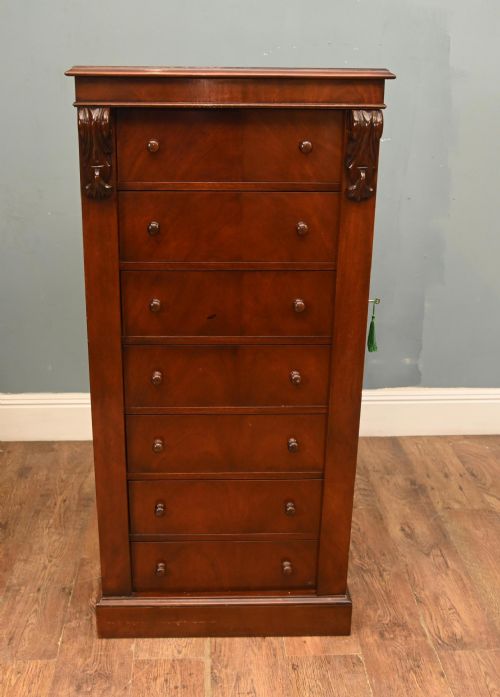


Victorian Semainier Drawers
These Victorian semainier drawers offer a clever way to keep your papers and small treasures orderly in a slender footprint.
Victorian Semainier Drawers
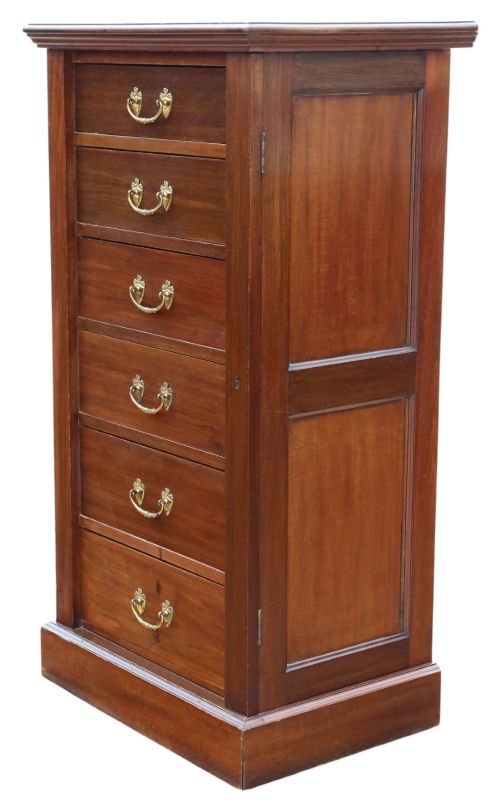
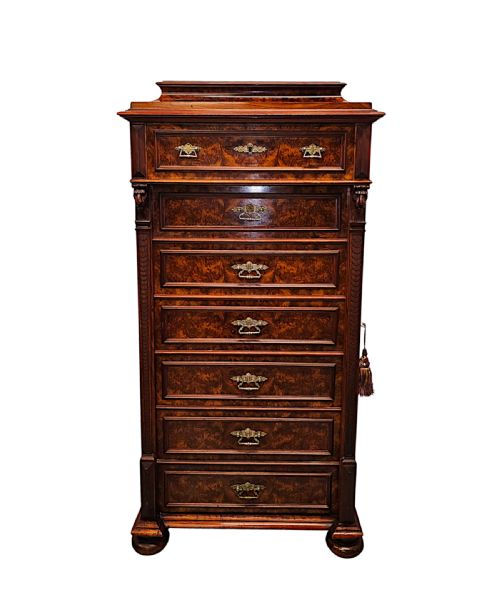
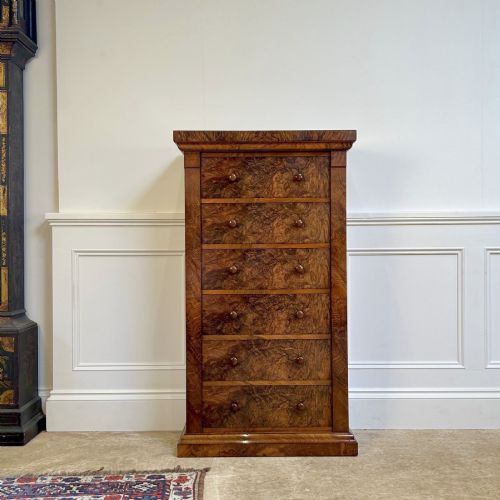
Victorian semainier drawers comprise tall, narrow chests built for individual daily use, commonly taking the form of Wellington chests alongside French and Continental variants. You will mostly encounter mahogany and walnut versions across this page, dating from the nineteenth century through the Edwardian period.
The defining characteristic is a vertical column of drawers, occasionally paired with a hinged fall or secretaire compartment. These pieces serve well in compact spaces where standard wide chests simply refuse to fit.
How they were made
Cabinet makers utilised solid mahogany, walnut, and burr walnut over pine carcases, frequently selecting flame mahogany and satinwood veneers to create rich figuration across the drawer fronts. Ormolu mounts and brass hardware add decorative contrast to the timber surfaces.
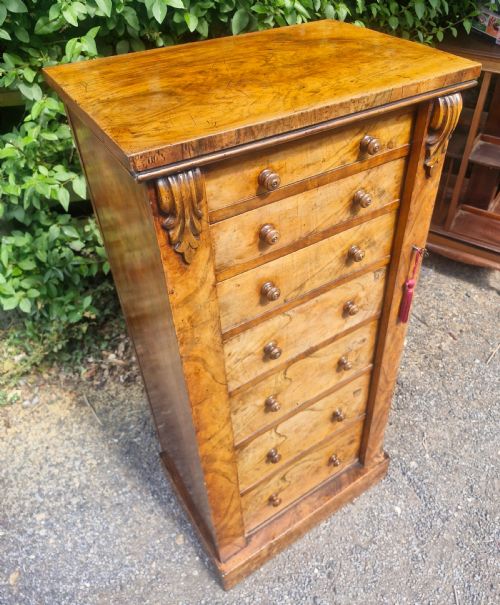
Many examples incorporate secret locking mechanisms via a hinged side pilaster that secures every drawer simultaneously. Construction relies on traditional joinery techniques to maintain structural stability within such a tall, narrow frame.
The listings here span mahogany, walnut, burr walnut, flame mahogany, satinwood, and satin birch across the nineteenth and early twentieth centuries.
What varies in quality
The choice of timber figure dictates much of the visual character, with matched burr walnut and flame mahogany standing apart from plain stock. Finer execution shows in the precision of the locking pilaster mechanism and the subtlety of marquetry detailing.
Proportion and scale also separate standard regional pieces from superior cabinet work. The crispness of the secondary wood selection inside the drawer boxes reveals the underlying standard of workshop production.
Gillows
The Victorian Semainier Drawers Glossary
- Semainier
- A tall, narrow chest traditionally featuring seven drawers, one for each day of the week. This form originated in France before influencing British cabinet making.
- Wellington chest
- A sturdy tall chest featuring a hinged locking side stile that secures the drawer stack. Legend associates the name with the first Duke of Wellington.
- Burr walnut
- A highly figured timber harvested from tree growths, prized for intricate swirling grain patterns. Cabinet makers applied it as veneer on high-status nineteenth-century case furniture.
- Ormolu
- Gilded bronze used for decorative mounts and furniture trim. It provides metallic highlight against dark walnut and mahogany surfaces.
- Secretaire
- A desk drawer fitted with a drop-front writing surface and small interior compartments. It conceals a functional writing space within the upper section of a tall chest.
Victorian Semainier Drawers: Frequently Asked Questions
What is a semainier chest?
A semainier is a tall, narrow chest of drawers originally designed in France to hold seven days of linen or stationery. The form translates closely to the British Wellington chest found throughout these listings.
These pieces use vertical space efficiently, making them practical for smaller rooms while providing generous storage across multiple slender drawers.
How do I use a Wellington chest?
Wellington chests operate with a hinged locking pilaster on one side of the frame. You unlock this side stile and swing it clear before any drawer can be opened.
This mechanism traditionally secured confidential papers and valuables. Today, it remains a reliable way to keep the stack safely closed.
Where should I place tall narrow drawers?
Their slender footprint suits tight corners, alcoves, and hallways where wide furniture blocks passage. They provide useful bedside or dressing room storage without dominating the floor plan.
Ensure you secure tall furniture to the wall to prevent tipping, particularly on older timber floors.
How do I date these chests?
Dating relies on timber choice, secondary woods like pine or oak, and construction methods. Nineteenth-century examples often feature rich walnut veneers or solid mahogany, while Edwardian pieces may show lighter satinwood.
Hardware style and the presence of hand-cut dovetails inside the drawers further clarify the period of manufacture.