


Verre Eglomise Framed Art
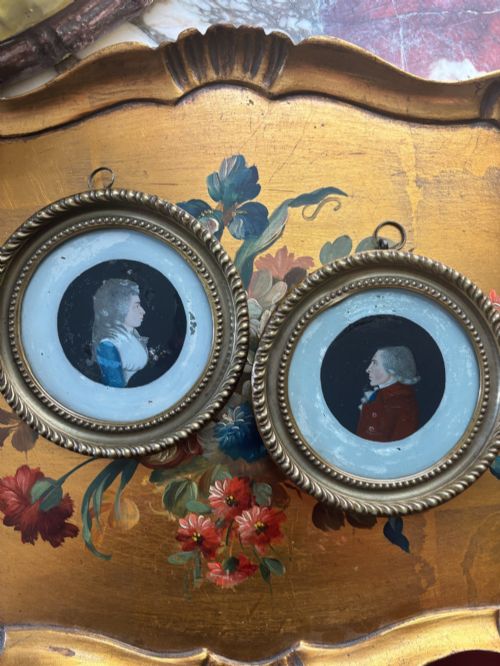
Verre eglomise framed art brings together reverse glass decoration and historic framing, offering rich visual depth through gilt, paint, and silhouetting.
Verre Eglomise Framed Art
When you search for verre eglomise framed art, you encounter a distinct gathering of historic decorative items that utilise glass, paper, and textiles within period frames. The selection on this page centres primarily upon reverse glass paintings, prints, and silhouettes from the Georgian and Regency eras, alongside needlework pictures and woolwork scenes.
Many examples showcase equestrian sporting art, portrait miniatures, and religious needlework, each secured behind glass panels that often incorporate gold leaf or ebonised wood borders. Pieces span the eighteenth and nineteenth centuries, with occasional twentieth-century reproductions appearing among the older works.
The forms vary from oval woolwork pictures of girls in gardens to sets of reverse glass engravings and detailed silhouette portraits. Buyers find both single framed pictures and grouped series, reflecting the diverse domestic display traditions of past centuries.
Materials and construction
Makers constructed these works using glass panels treated with paint, gold leaf, and print layers applied in reverse, creating a luminous surface when viewed from the front. Frames fashioned from giltwood and ebonised wood enclose the imagery, often complementing the delicate metallic details within the glass designs.
Textile elements such as silk, wool, and paper appear frequently, forming intricate embroidery, needlework pictures, and silhouette portraits set within protective framing. Painters and printmakers utilised mezzotint and engraving techniques on paper before mounting them behind glass or framing them alongside textile works.
One listed woolwork picture portrays a quiet garden scene featuring a young girl, preserved inside a decorative verre eglomise frame.
Assessing quality
The standard of a piece rests upon the crispness of the reverse glass painting, the intricacy of the gold leaf application, and the preservation of the underlying paper or silk. Finer works display meticulous brushwork in portraits and sporting scenes, where the reverse application demands precise control without room for correction.
The integrity of the frame matters equally, as original giltwood and ebonised surrounds contribute significantly to the historical coherence of the piece. Superior examples maintain the original relationship between the artwork and its housing, whereas altered or later mountings change the overall character.
Abraham Cooper·Henry Corbould·John Miers
The Verre Eglomise Framed Art Glossary
- Verre églomisé
- A process of applying gold or metal leaf to glass, combined with painting or etching, to create a decorative border or panel. The technique takes its name from the eighteenth-century French decorator Jean-Baptiste Glomy.
- Reverse glass painting
- An artwork painted directly onto the back of a piece of glass so that the final image is viewed through the transparent front. This method protects the pigment from dust and fading while producing a glossy finish.
- Silhouette
- A portrait profile filled in with a solid dark colour, usually black, cut from paper or painted on card or glass. Georgian examples often include fine detailing added in gold or white highlights.
- Silkwork picture
- An embroidery executed in silk threads upon a fabric ground, popular in the Georgian period for depicting pastoral or religious scenes. These works were typically glazed to protect the delicate threads from atmospheric damage.
- Giltwood
- Wood carved and coated with a thin layer of gold leaf, commonly used for eighteenth and nineteenth-century picture frames. The finish provides a bright, reflective border suited to interior display.
Verre Eglomise Framed Art: Frequently Asked Questions
What is verre eglomise?
Verre eglomise is a decorative technique involving the application of gold leaf and paint to the reverse side of a glass sheet. This method creates a reflective, polished border or background when viewed from the front.
Artists and framers utilised this process extensively during the Georgian and Regency periods to enhance portraits, prints, and mirrors with metallic brilliance.
How do I care for framed reverse glass art?
Protect these pieces from direct sunlight and high humidity, which can damage the delicate gold leaf and pigments applied to the glass. Dust the frame gently with a dry, soft cloth without applying moisture near the edges where the glass meets the wood.
Avoid using liquid glass cleaners, as fluid can seep behind the glass panel and lift the fragile reverse painting or engraving.
Are silhouette portraits common in these frames?
Silhouette portraits appear frequently within this category, often executed on glass or paper during the late eighteenth and early nineteenth centuries. Makers such as John Miers produced distinctive profiles that were frequently housed in specialised frames with painted glass mats.
These works range from simple black profiles to detailed pieces incorporating mottoes and gold highlights.
How do I date a framed glass picture?
Dating relies upon examining the construction of the wooden frame, the backing materials, and the style of the painting or print. Georgian and Regency pieces typically feature older hand-blown glass, subtle joinery in the frames, and characteristic period dress in portraits.
Needlework and woolwork pictures also offer chronological clues through their stitching materials and subject matter.