




Pair Silk Embroidered Pictures
Pair silk embroidered pictures bring needlework into rooms as matched wall art, valued for period textiles and framed decoration.
Pair Silk Embroidered Pictures
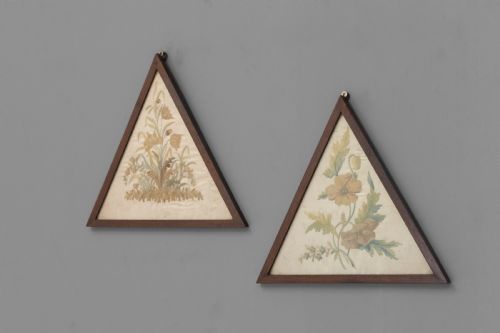
When you search for pair silk embroidered pictures, you encounter matched textile wall art designed to hang together in domestic interiors. These decorative panels range across periods from the eighteenth century through the nineteenth century, including Georgian, Regency, and Victorian eras.
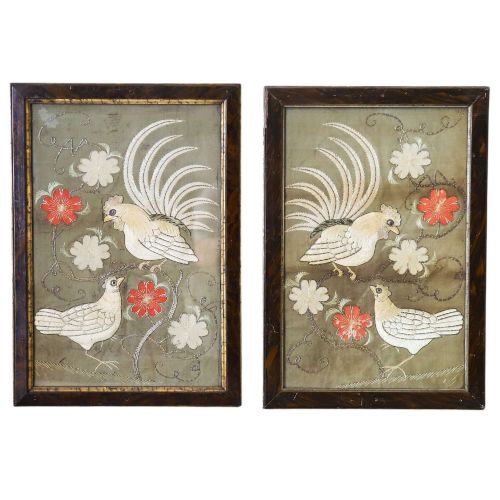
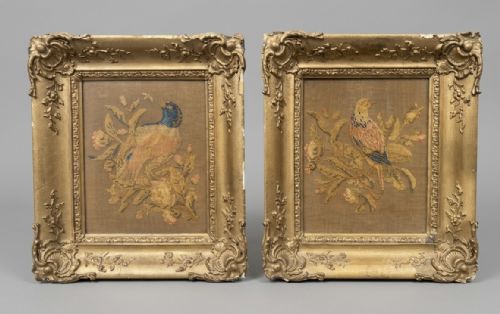
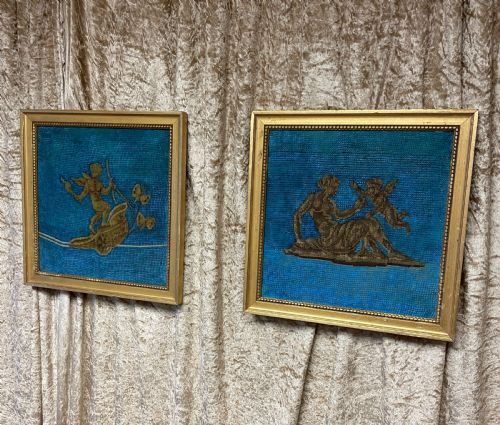
The subjects depicted on this page include birds, cockerels and hens, theatrical scenes, and Chinese Chinoiserie compositions. Most examples appear as framed pictures, textile art, and wall art housed behind glass in period frames.
You meet both English country house examples and French Napoleon III or Neoclassical interpretations. The forms vary from long stitch silk pictures to needlework panels set within giltwood, faux tortoiseshell, and water gilded oval frames.
How they were made
These textile pictures employ silk threads, wool, and fabric stitched onto a backing material by hand. Makers utilised long stitch and needlework techniques to build pictorial depth and texture within the embroidered panels.
The finished embroideries were protected behind glass and secured inside custom frames made from wood, giltwood, and gold leaf. Certain pieces feature specialised framing such as gilt Mezzotint frames or faux tortoiseshell surrounds.
Stitched poultry and exotic birds stare out from behind glass, guarding parlor walls for centuries.
What varies in quality
The distinction between ordinary and superior pieces rests upon the precision of the needlework and the preservation of the silk threads. Finer examples display meticulous long stitch execution that renders plumage and theatrical detail with clarity.
Original framing elevates an item, particularly when water gilded or faux tortoiseshell frames remain intact with the textile. The harmony between the pair and the survival of the early fabric under glass determine the overall merit of the artwork.
The Pair Silk Embroidered Pictures Glossary
- Long stitch
- An embroidery technique using parallel or staggered stitches of varying lengths to create smooth pictorial surfaces. This method allowed makers of Regency pictures to achieve pictorial shading quickly.
- Giltwood
- Wood carved and coated with gold leaf or metallic gilt paint to provide a reflective frame. This finish appears frequently on Georgian and nineteenth-century frames.
- Chinoiserie
- European theatrical interpretations of Chinese artistic motifs and styles. This style occurs in eighteenth-century silk embroidered pictures.
- Needlework
- General term for decorative sewing and embroidery executed by hand on a fabric ground. The practice created lasting pictorial wall art.
- Mezzotint frame
- A specialised picture frame style often associated with printmaking displays but utilised for framed textiles. These frames contribute distinctive moulding to needlework pictures.
Pair Silk Embroidered Pictures: Frequently Asked Questions
How were pair silk embroidered pictures displayed?
These matched textile artworks were designed to hang symmetrically on drawing room and parlour walls, often flanking a fireplace or architectural feature.
Their framed presentation behind glass protected delicate silk threads from atmospheric soot and dust in historic homes.
What subjects appear on these pictures?
Common subjects include avian life such as cockerels, hens, and exotic birds, alongside theatrical vignettes and Chinese Chinoiserie designs.
Needlework artisans also produced pastoral and neoclassical scenes rendered in fine silk threads.
How do you date a silk picture?
Dating relies upon the framing style, textile materials, and stitching techniques characteristic of periods like the eighteenth century, Regency, or Victorian eras.
Examining the backboards, glass types, and frame construction provides further chronological indicators.
Are these pictures always glazed?
Most surviving examples feature protective glass fronts to shield organic silk and wool textiles from environmental degradation over centuries.
Original glass panes often exhibit bubbles and uneven thickness typical of historic manufacturing methods.