
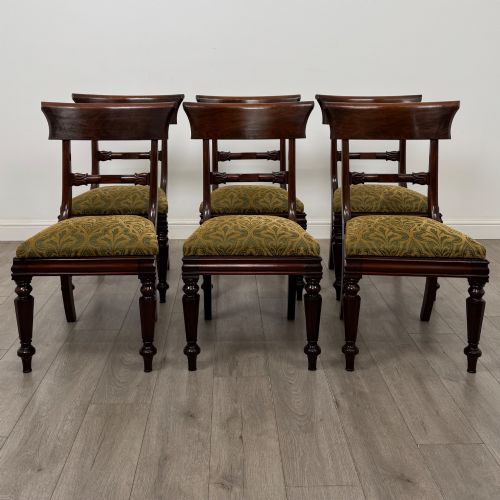
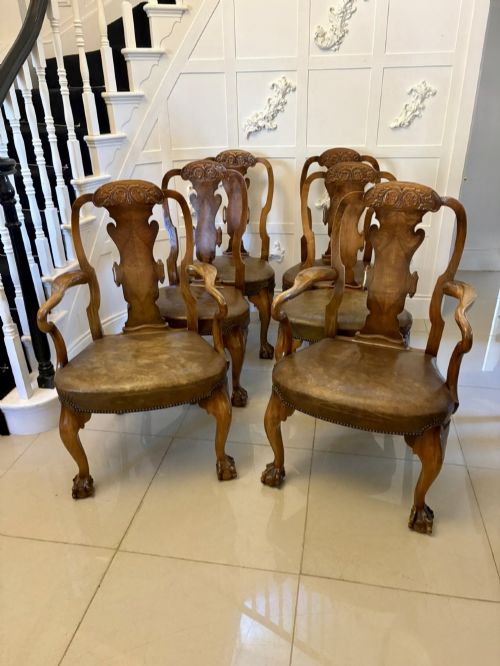
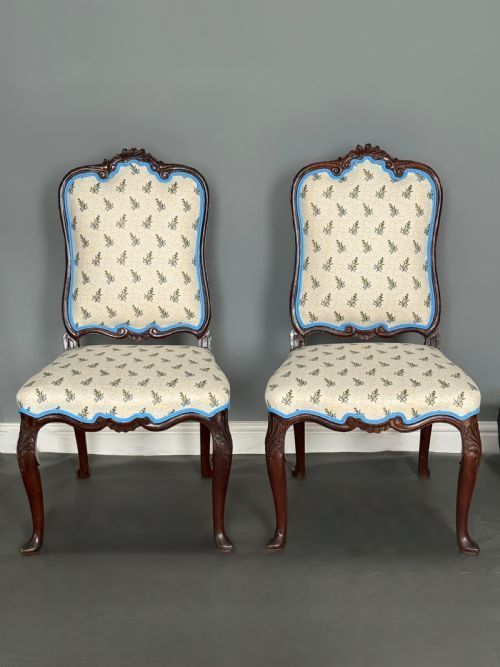
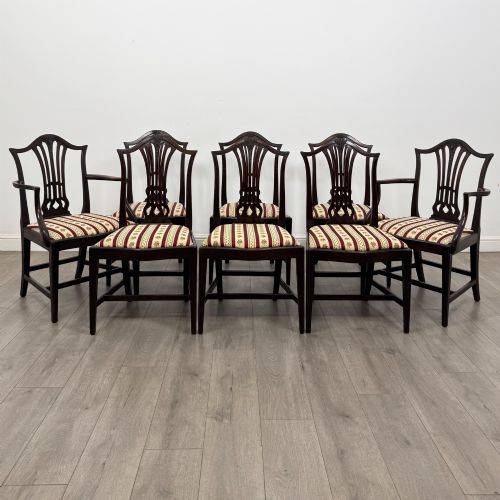
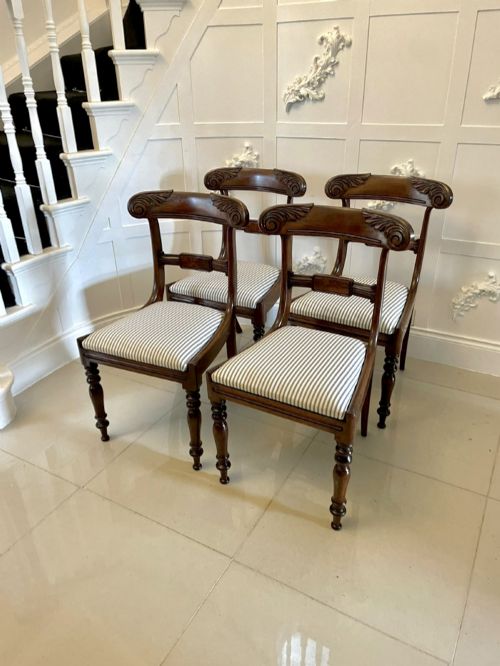
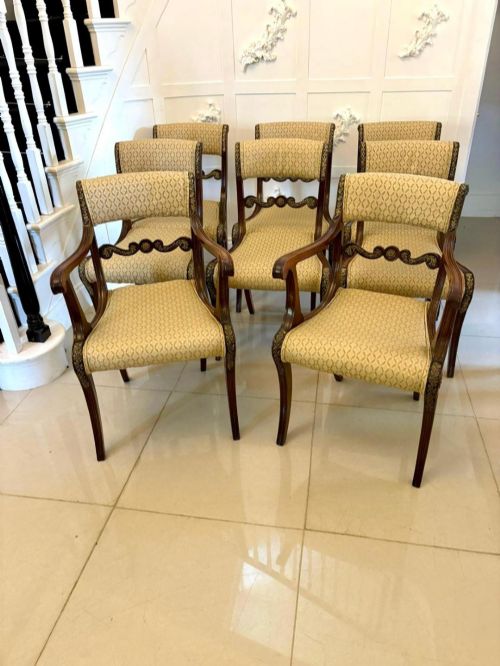
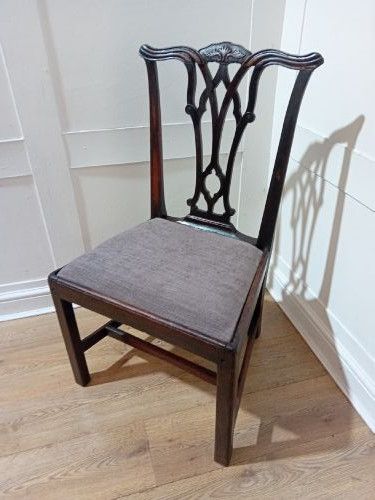


Upholstered Seat Side Chairs
These upholstered seat side chairs combine timber framing with padded textile surfaces for formal seating.
Upholstered Seat Side Chairs
Upholstered seat side chairs serve dining rooms, halls and parlours across several centuries of British and continental design. Buyers encounter forms ranging from compact Georgian and Regency seating to substantial Victorian sets in mahogany, walnut and oak.
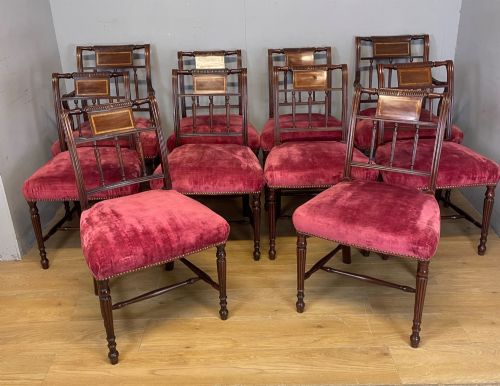
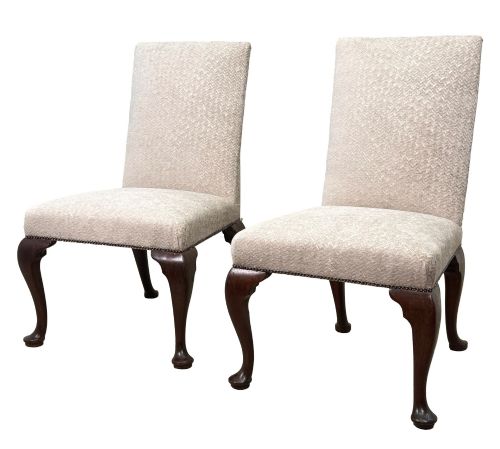
The selection includes dining chairs, hall chairs and salon seating reflecting periods from the eighteenth century through the Edwardian era. Many examples survive as matched sets spanning four to twenty pieces, alongside pairs and individual occasional chairs.
How They Were Made
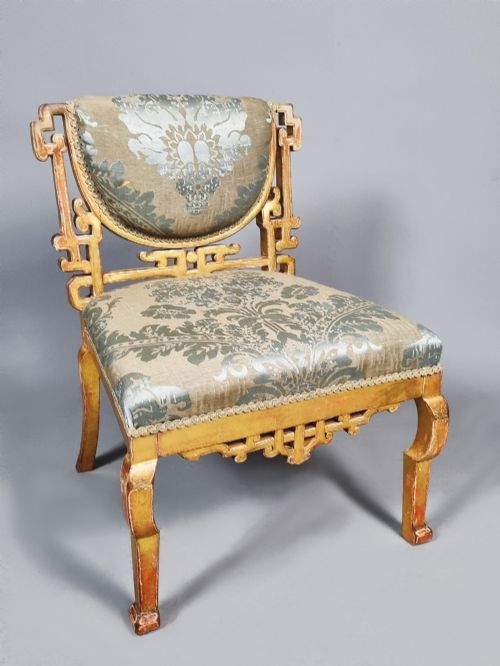
Cabinetmakers constructed the frames using dense timbers such as mahogany, walnut, oak and rosewood, often employing brass inlay, carving and gilding for decorative emphasis. Seat frames received webbing and stuffing covered in upholstery fabric or tapestry.
Joinery techniques included mortise and tenon joints to withstand daily weight and movement. Surface finishes relied on hand-applied polish or wax to seal the timber grain.
Listings span eight distinct periods from the eighteenth century through the twentieth century, featuring mahogany, walnut, oak, rosewood and brass.
What Varies in Quality
The standard of carving and the selection of figured timber distinguish standard commercial seating from exhibition pieces. Finer frames display crisp hand-carved details, balanced proportions and superior wood grain matching across sets.
Original integrity of the timber frame and the retention of period-appropriate upholstery methods influence the character of each set. Cohesion among larger sets of chairs indicates careful original manufacture.
Charles Tozer·W.A. Willcocks·Gillows·Maple and Co
The Upholstered Seat Side Chairs Glossary
- Side chair
- A chair without arms, designed primarily for dining or occasional use around a room. These pieces fit easily beneath tables or against walls.
- Balloon back
- A rounded, curved backrest shape popular during the Victorian period. This profile resembles the silhouette of a floating balloon.
- Shield back
- A backrest design shaped like a heraldic shield, frequently associated with eighteenth-century and revival styles. This form offers an open framework supporting the sitter.
- Carver armchair
- A matching armchair designed to accompany a set of side chairs at the head of a table. These pieces include supportive armrests.
Upholstered Seat Side Chairs: Frequently Asked Questions
How do I care for antique wood and fabric?
Clean wooden frames using a soft cloth and periodic application of beeswax to protect the surface finish. Vacuum upholstered textile surfaces gently with a brush attachment to remove dust.
Avoid placing chairs in direct sunlight or near heat sources to prevent timber splitting and fabric fading. Check joints periodically for stability.
Were these chairs used only for dining?
Upholstered seat side chairs served multiple domestic functions in halls, reception rooms and bedrooms as well as dining spaces. Lighter occasional and salon chairs moved easily around the home for entertaining.
Larger sets remained stationary around dining tables while smaller pairs functioned as hall or bedroom seating.
How do I distinguish Regency styles from Victorian pieces?
Regency designs draw inspiration from classical antiquity, featuring clean lines, sabre legs and brass inlay. These pieces date from the early nineteenth century.
Victorian seating tends to be heavier, incorporating carved walnut or mahogany with balloon backs or elaborate revival ornamentation. Proportions and decorative motifs shift from restrained classical forms to exuberant nineteenth-century carving.
Can I mix side chairs with carver armchairs?
Traditional dining sets frequently pair a set of side chairs with one or two matching carver armchairs placed at the table ends. The armchairs share matching timber, leg style and upholstery with the side chairs.
This arrangement provides balanced seating while offering arm support for hosts.