

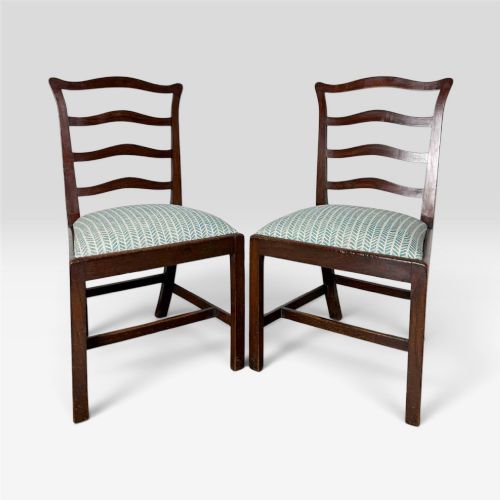
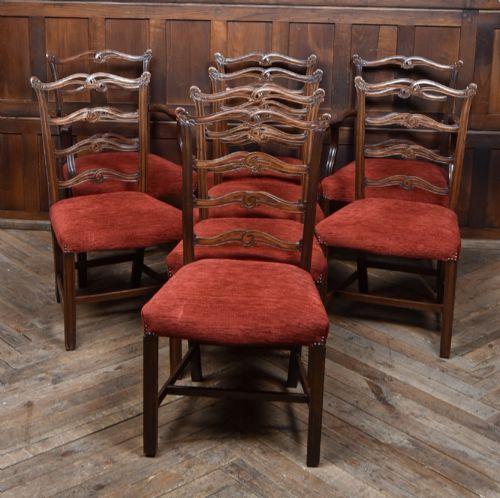


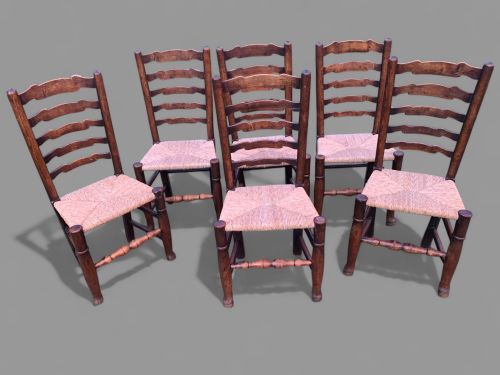


Georgian Ladderback Side Chairs
Georgian ladderback side chairs are robust timber seating pieces built for dining rooms and studies, prized for their supportive horizontal slats.
Georgian Ladderback Side Chairs
Georgian ladderback side chairs are functional timber seating designed for dining rooms, studies, and domestic spaces. They combine sturdy framing with horizontal back rails that offer robust support.
Buyers exploring Georgian ladderback side chairs frequently encounter pieces originating from the 18th century, Georgian period, and 19th century. Forms range from rustic farmhouse variants to formal dining chairs and desk chairs.
Construction relies heavily on regional timbers and traditional joinery rather than ornate carvings. The selection spans single examples, pairs, and large sets suited for communal dining tables.
How they were made
Cabinet makers built these chairs using solid timbers such as mahogany, elm, oak, and ash, selecting materials based on regional availability and structural demand. Hardwoods provided durable frames capable of enduring daily domestic use.
Seats incorporated traditional materials including woven rush, leather, fabric, and velvet, secured directly to the wooden rails. Metal details such as brass appeared selectively on specific desk chair variants.
Georgian Ladderback Side Chairs Retail Price Guide 2026
Typical asking prices for georgian ladderback side chairs among the pieces listed under this phrase on Sellingantiques today, from the lower quarter to the upper quarter. They describe what is for sale here now, not the wider market.
The listings combine formal mahogany dining sets from the Georgian era with regional elm and ash country chairs from the 19th century.
What varies in quality
The choice of primary timber establishes the foundational tier of the piece, with dense mahogany sitting alongside country timbers like elm, oak, and ash. Finer grain selection and timber preparation separate formal urban seating from rustic country variants.
The integrity of the construction and the execution of the horizontal ladder rails dictate the overall refinement. Superior examples display balanced proportions in the back uprights and tight, precise joinery across the frame.
The Georgian Ladderback Side Chairs Glossary
- Ladderback
- A chair back featuring a series of horizontal wooden slats or rails between the vertical uprights. This design developed to provide ergonomic lumbar support.
- Rush seat
- A seating surface woven from dried marsh grasses or sedges tightly packed over a wooden frame. This technique produces a resilient, textured platform common in country chairs.
- Side chair
- An upright chair without arms designed primarily for dining tables or occasional placement against walls. These pieces form the majority of seating sets.
- George III style
- Design characteristics reflecting the aesthetic conventions of the third George's reign. Furniture from this classification often emphasises classical proportions and refined timber surfaces.
- Chippendale revival
- Later interpretations of mid 18th century forms popularised by Thomas Chippendale. These pieces emulate historical joinery methods while dating from subsequent eras.
Georgian Ladderback Side Chairs: Frequently Asked Questions
What rooms suit these chairs?
These chairs function naturally around dining tables, serving both everyday family meals and formal gatherings. Their supportive slat construction also makes them practical for studies and libraries when configured as desk chairs.
Placing them in hallways or bedrooms introduces functional timber seating without overwhelming smaller floor plans. Their varied timber tones integrate smoothly into both traditional and transitional interior schemes.
How were rush seats maintained?
Rush seats were historically cleaned with dry brushing to remove dust and debris from the natural plant fibres. Excessive moisture was strictly avoided to prevent the dried marsh grasses from rotting.
Over decades of use, worn sections could be rewoven by local craftsmen using traditional rush materials. This modular maintenance helped extend the functional lifespan of country seating.
How do elm and mahogany differ?
Elm provides a dense, interlocking grain structure that resists splitting, making it a traditional choice for country and regional chair seats. Its organic figure gives each piece a distinct, rustic character.
Mahogany offers a finer, uniform grain that takes a smooth finish and suits formal urban dining sets. Cabinet makers utilised its stability to execute crisp mouldings and slender structural members.
Are ladderback chairs comfortable?
The horizontal rails are curved or angled to match the natural posture of the spine, providing solid lumbar support during meals. This ergonomic arrangement makes prolonged sitting surprisingly comfortable without requiring deep upholstery.
Adding fitted squab cushions allows users to adjust the seat height and softness according to personal preference. The open back design also keeps the seating visually light within the room.