





Ash Wood Dining Chair
An ash wood dining chair brings honest vernacular grain and robust provincial utility to the table, formed by country joiners who understood the natural strength of native timber.
Ash Wood Dining Chair
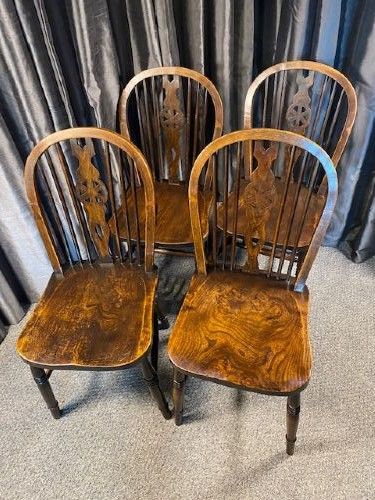
An ash wood dining chair is a vernacular seating form rooted in rural traditions, most commonly encountered here as English and Dutch country chairs dating from the Georgian, Regency, and Victorian periods. You will frequently find these pieces grouped in sets of varying sizes, originating from regional workshops that served farmhouses and kitchens.
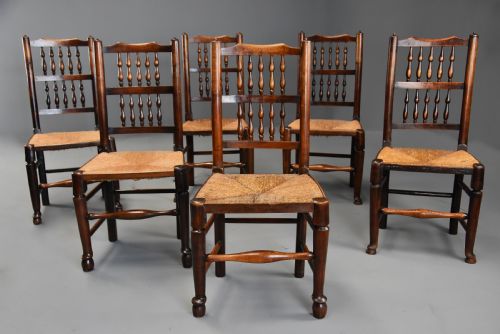
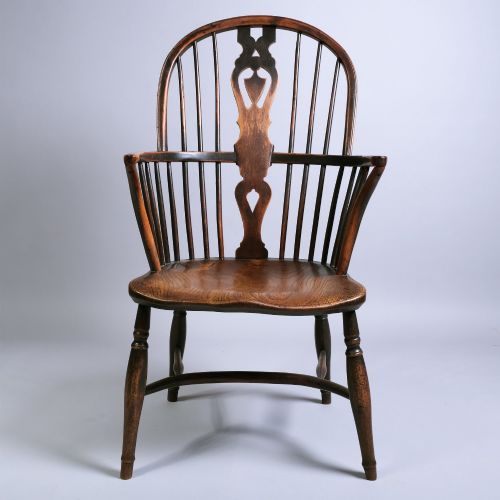
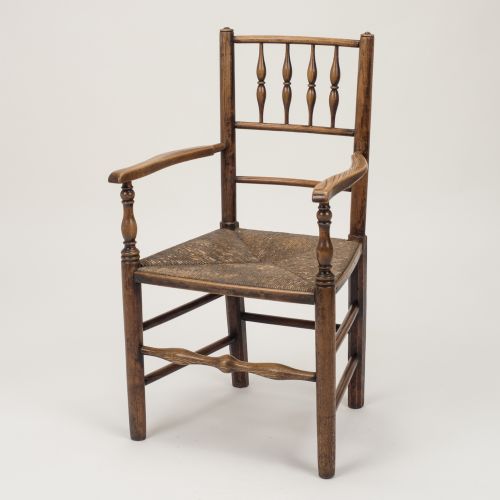
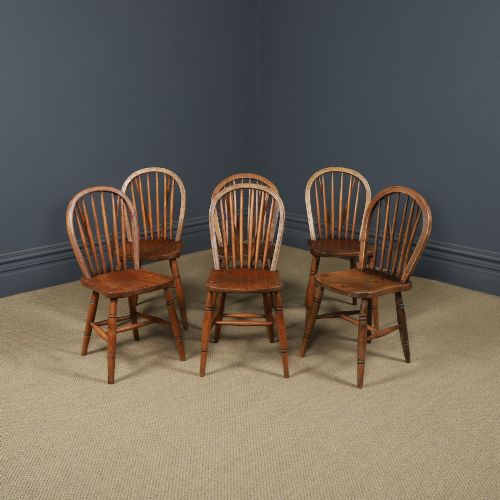
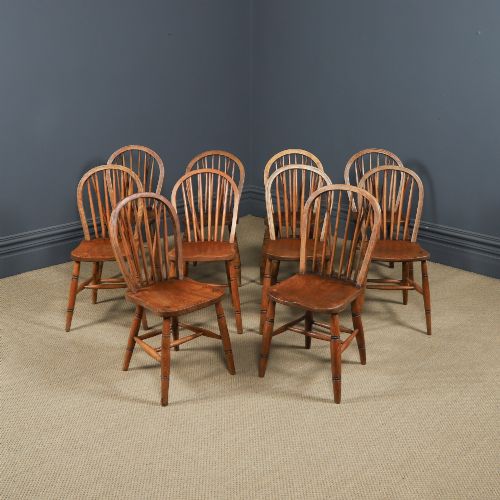
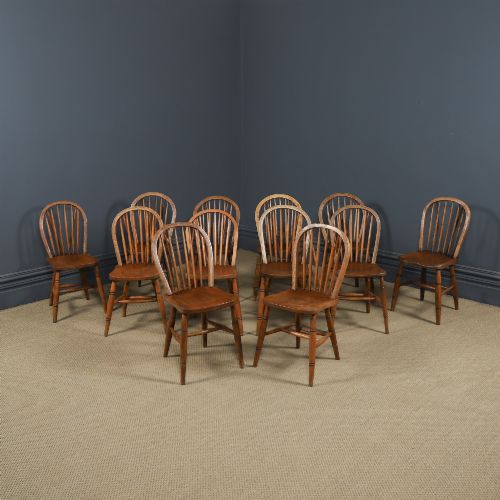
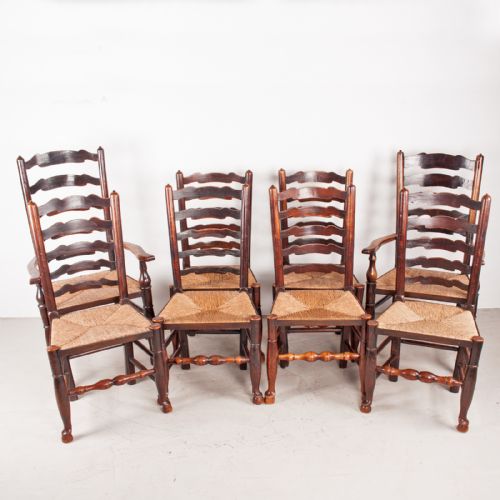
The prevailing forms on this page include Windsor hoop and stick backs, ladderbacks with rush seats, and spindle back carvers. These utilitarian seats combine sturdy frames with shaped wooden seats and woven rush or plaited straw bases.
The geographical spread ranges from English regional styles like Lancashire and Suffolk patterns to Dutch provincial ladderbacks and Irish súgán chairs. Each variant reflects local timber availability and domestic seating needs.
Materials and construction methods
Makers paired ash for flexible frames and spindles with elm for solid, resilient seats that resisted splitting under daily use. Secondary timbers such as alder, beech, oak, and yew appear in specific components like arms, hoops, and legs.
Joinery relied on traditional Windsor construction, steam bending, and turning, utilising the tensile strength of green wood. Seats were hollowed out using adzes and drawknives, then fitted with wedged through-tenons for enduring stability.
Ash Wood Dining Chair Retail Price Guide 2026
Typical asking prices for ash wood dining chair among the pieces listed under this phrase on Sellingantiques today, from the lower quarter to the upper quarter. They describe what is for sale here now, not the wider market.
Listings feature ash combined primarily with elm, rush, and alder across Georgian, Victorian, and Edwardian periods.
Distinguishing quality in provincial seating
Quality rests in the harmony of the timber selection and the retention of original surface patination. Chairs that retain matching sets of turned spindles and uncompromised rush or wooden seats represent the pinnacle of this craft.
Subtleties in the carriage of the arms, the rake of the legs, and the crispness of turnings separate standard kitchen seating from finer vernacular commissions.
The Ash Wood Dining Chair Glossary
- Windsor chair
- A chair built with a solid wooden seat into which the legs and back spindles are separately bored and wedged. This technique creates a light yet remarkably strong frame.
- Rush seat
- A seating surface woven from dried marsh rushes or similar reeds around a wooden frame. It offers a resilient, supportive platform for daily sitting.
- Spindle back
- A chair back constructed from multiple slender, turned wooden rods arranged vertically. These components distribute weight evenly while keeping the chair light.
- Carver chair
- An armchair designed to sit at the head of a dining table or serve as a desk chair. These examples often accompany larger sets of side chairs.
- Súgán chair
- An Irish traditional chair fitted with a seat woven from straw or hay ropes. This method utilises readily available agricultural materials for rustic comfort.
Ash Wood Dining Chair: Frequently Asked Questions
How do I care for an antique ash chair?
Maintain a stable indoor humidity level to prevent the native timbers from shrinking or cracking over seasonal changes.
Apply a microcrystalline wax sparingly to nourish the wood surface and preserve the historic patina without sealing the pores.
Can I use these chairs for everyday dining?
Most of these pieces were built for rigorous daily kitchen use and remain structurally capable of standard sitting.
Inspect the joints and rush seats periodically to ensure the historical construction remains secure under regular domestic weight.
What is the difference between a side chair and a carver?
Side chairs lack arms and were designed to line the sides of a dining table efficiently in groups.
Carver chairs feature wooden armrests and typically served as commanding seats at the head of the table or by the hearth.
How do I identify a regional style?
Regional variations show in the turning patterns of the legs, the height of the backrest, and the specific pairing of woods like ash and elm.
Local workshops developed distinct structural signatures, such as the Lancashire spindle back or the Irish súgán weave.