
Upholstered Barrel Chair
An upholstered barrel chair provides deep, enveloping seating that wraps the sitter in a continuous curved back, combining comfort with historic form.
Upholstered Barrel Chair
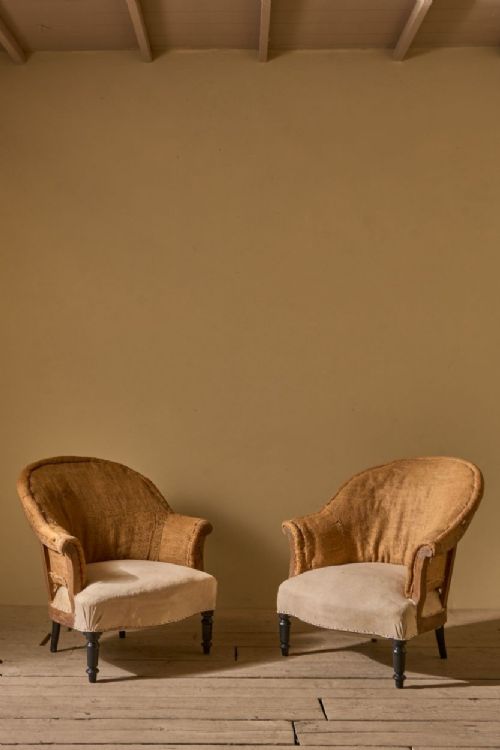
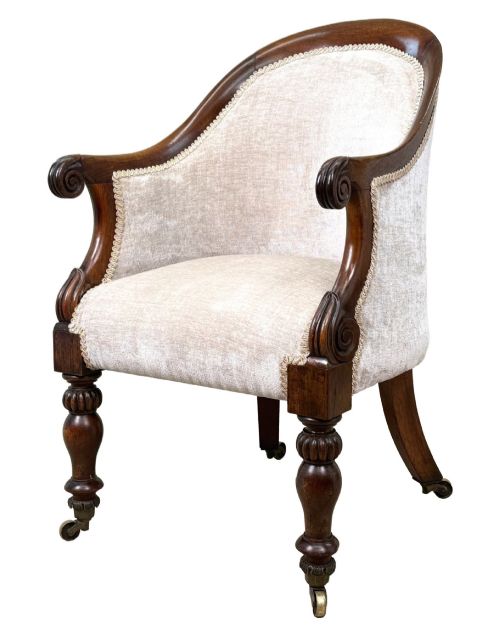
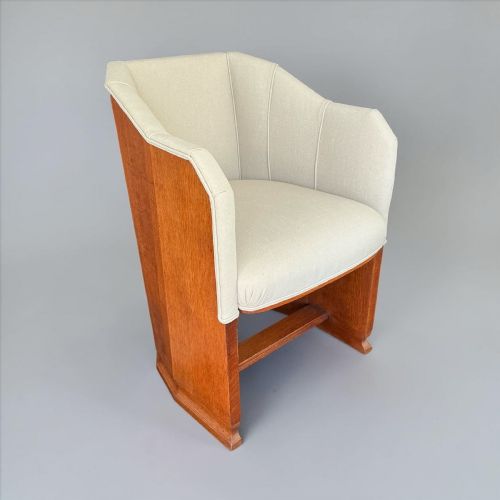
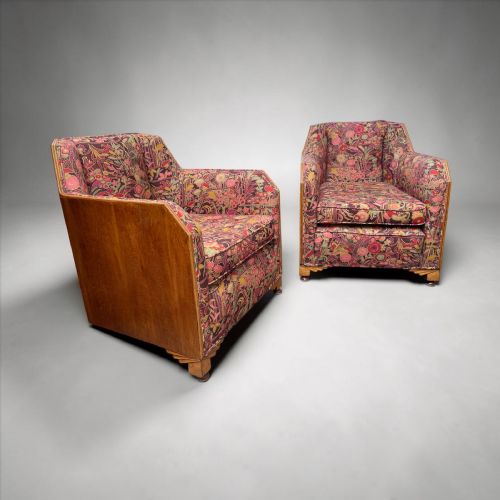
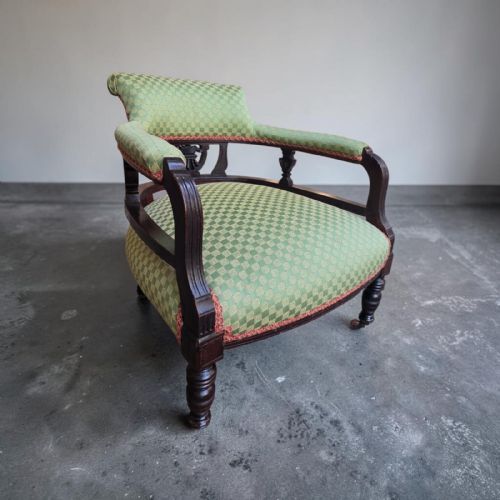
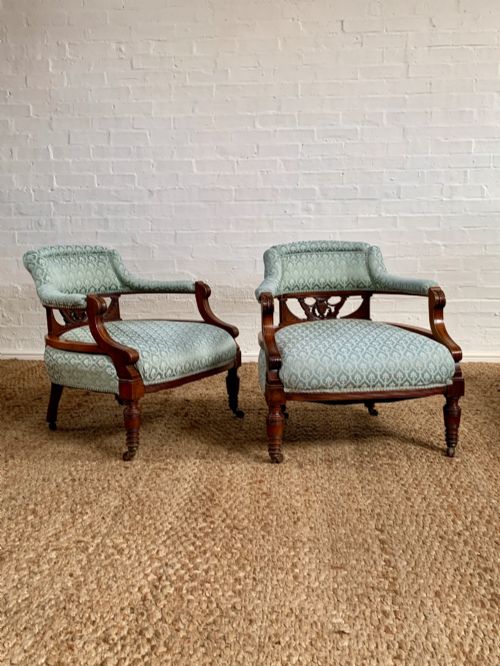
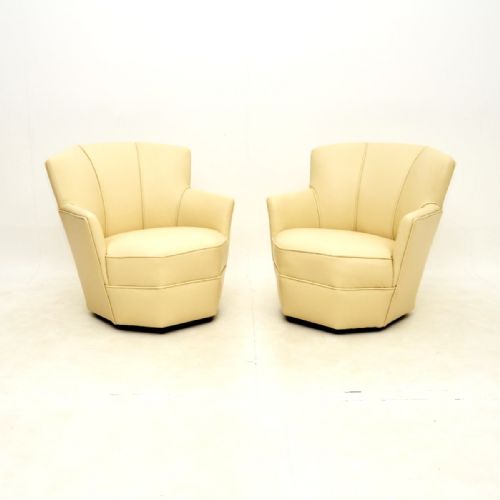
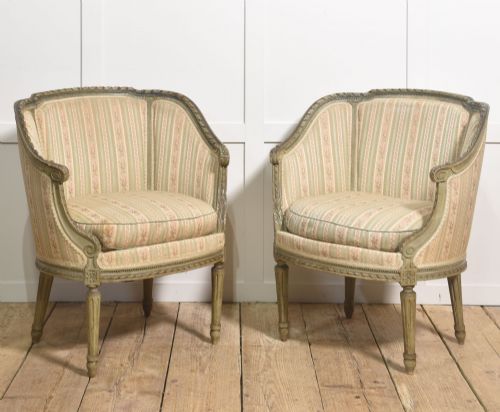
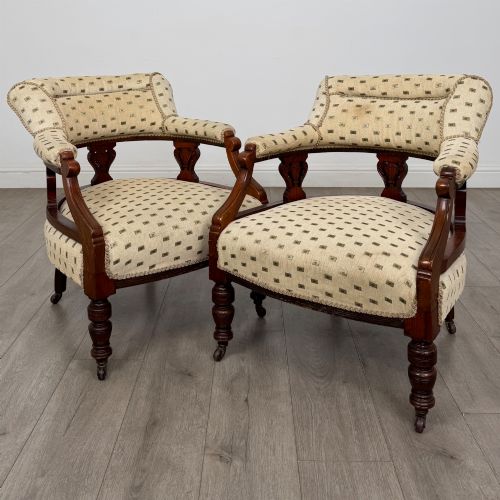
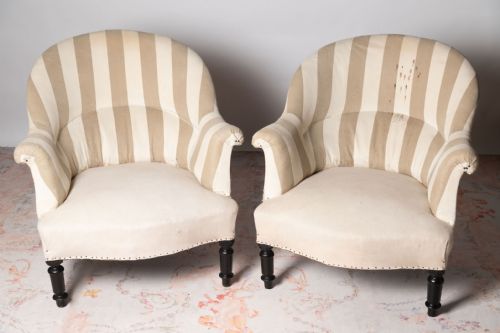
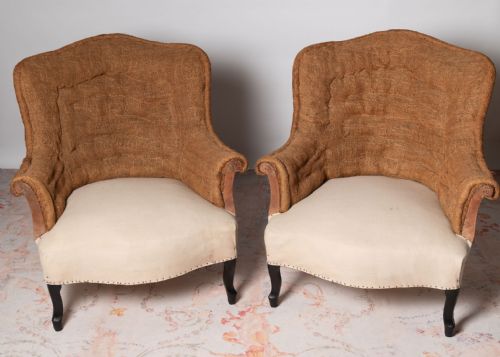
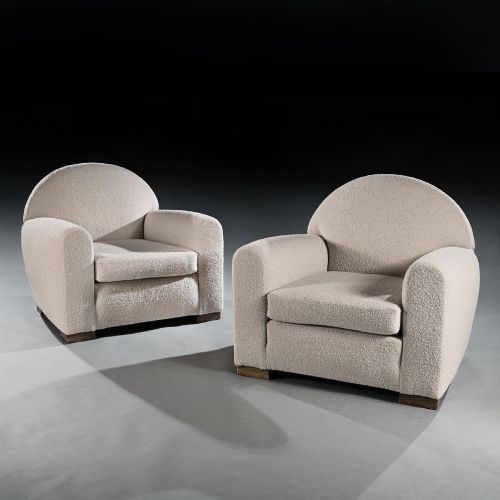
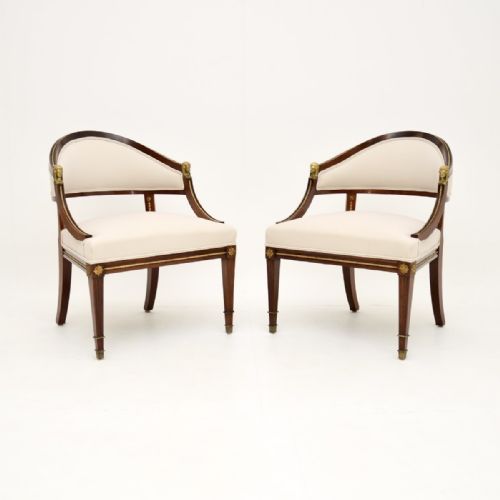
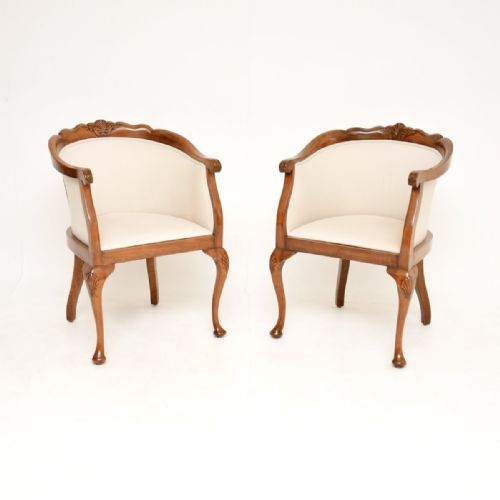
When searching for an upholstered barrel chair, collectors encounter a lineage spanning the Georgian, Victorian, and Edwardian eras, alongside Art Deco and mid-century interpretations. The pieces on this page take the form of tub armchairs, library chairs, and desk chairs, often found in pairs or standalone configurations.
The defining characteristic is the rounded, enclosed backrest that merges seamlessly into the arms. Examples range from nineteenth-century mahogany frames to early twentieth-century oak and walnut designs, capturing diverse stylistic influences from French neoclassical to Arts and Crafts.
Materials and construction
Frames rely on sturdy timbers such as mahogany, walnut, rosewood, oak, and hardwood, providing the structural integrity required to support the curved back. Brass details occasionally appear as castors or sabots on specific period pieces.
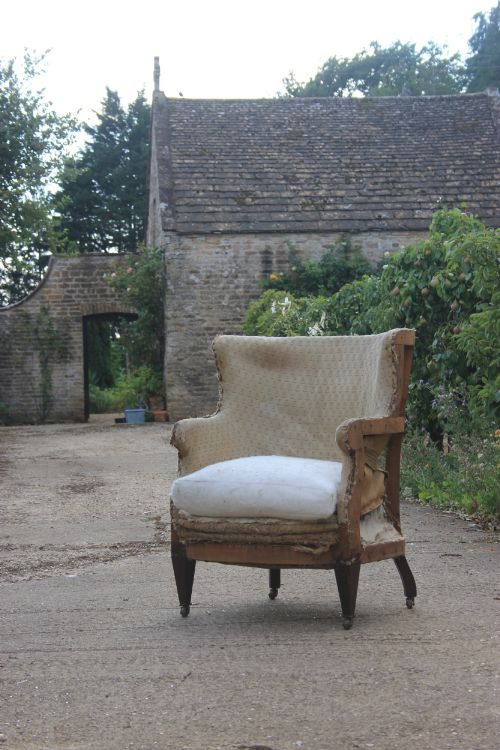
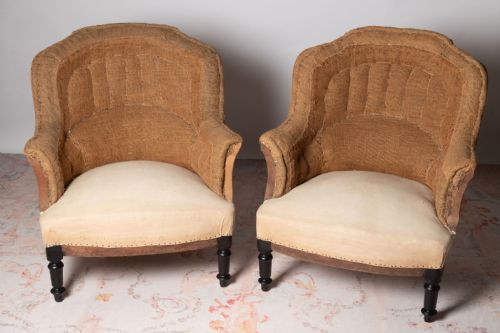
Traditional upholstery techniques utilise hessian foundations beneath varied coverings of fabric, velvet, leather, and cotton. Painted finishes also occur on selected French and continental pieces.
Upholstered Barrel Chair Retail Price Guide 2026
Typical asking prices for upholstered barrel chair among the pieces listed under this phrase on Sellingantiques today, from the lower quarter to the upper quarter. They describe what is for sale here now, not the wider market.
Some Edwardian barrel backs are described simply as very cute, proving that even Victorian-descended seating appreciates a bit of charm.
Assessing quality and craftsmanship
The distinction between tiers rests upon the precision of the timber frame's joinery and the grace of the curved backrest. Finer examples maintain structural rigidity and harmonious proportions without bulk.
Material selection and the execution of carved or polished details elevate certain pieces above standard seating. The integration of the upholstery with the wooden framework dictates the ultimate refinement of the profile.
Harrods, London·Anton Rosen
The Upholstered Barrel Chair Glossary
- Barrel back
- A chair featuring a semi-circular upholstered backrest that flows continuously into the arms. This design creates an enclosed, cocoon-like seat.
- Tub chair
- A deep-seated armchair with a rounded back resembling the shape of a halved cask. It offers supportive, enveloping comfort.
- Hessian
- A coarse woven fabric typically utilised as internal upholstery scrim and foundation support. It conceals and secures the internal stuffing of antique seating.
- Regency
- A British design period spanning the early nineteenth century noted for classical revival motifs. Furniture from this era often incorporates dark hardwoods and restrained brass ornamentation.
Upholstered Barrel Chair: Frequently Asked Questions
What is an upholstered barrel chair?
An upholstered barrel chair is a seating form characterised by a rounded, solid back that curves downward to form integrated arms. The continuous line creates an enclosed, supportive profile.
Such chairs appear across eighteenth, nineteenth, and twentieth-century periods, utilising timber frames of mahogany, walnut, or oak beneath varied fabric, leather, or velvet upholstery.
How were these chairs used historically?
These chairs served primarily in libraries, studies, and drawing rooms where comfortable, draft-excluding seating was desired. The curved back shielded the sitter from ambient room drafts.
Library chairs and desk variants facilitated long periods of reading or correspondence by offering ergonomic support through their enclosed sides.
How do I style a barrel chair at home?
Pairing a single period barrel chair with a reading lamp creates an immediate focal point in a study or corner. Pairs work effectively flanking a fireplace or positioned opposite a sofa.
Allowing the curved timber frame and upholstery texture to remain visible ensures the historic silhouette commands attention within modern interiors.
How can I tell the period of a chair?
Dating relies on observing the primary timber, leg configuration, and stylistic cues present in the frame. Georgian and Regency pieces show classical restraint, while Victorian and Edwardian examples often feature heavier proportions or button-tufting.
Comparing the secondary woods and upholstery methods provides further evidence for distinguishing nineteenth-century origins from later Edwardian or Art Deco revivals.