
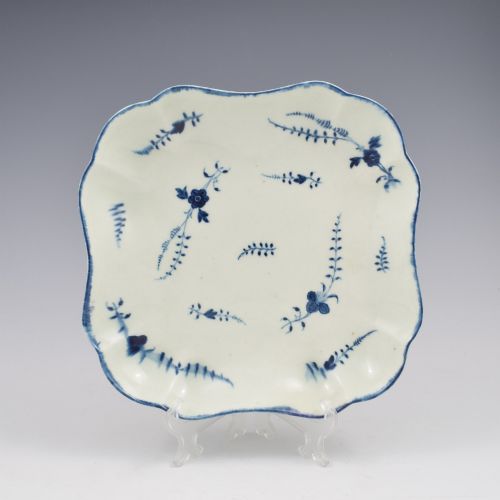
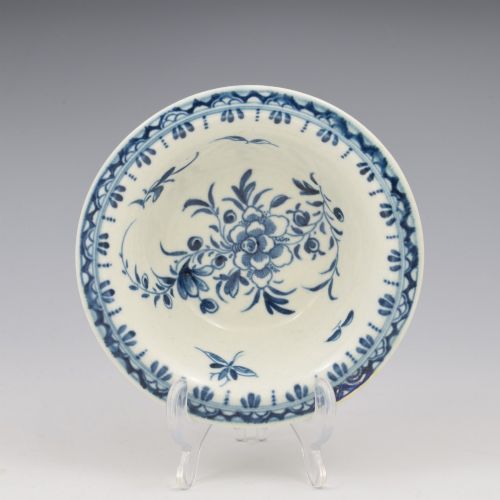
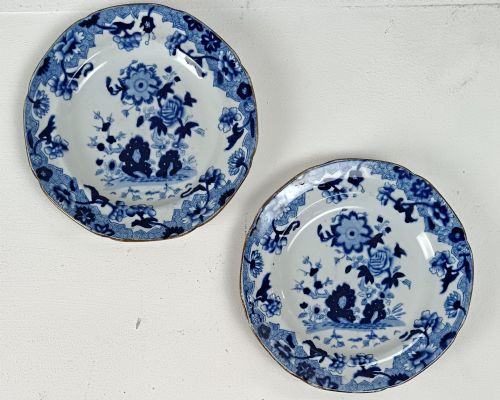
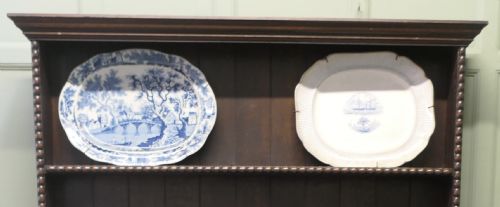


Underglaze Blue China Plate
Underglaze blue china plate selections unite centuries of cobalt decoration across English, Chinese and Japanese workshops for collectors of decorative ceramics.
Underglaze Blue China Plate
An underglaze blue china plate covers everything from eighteenth-century English porcelain dishes to nineteenth-century Staffordshire serving platters and nineteenth-century Japanese Imari chargers. These wares were produced for domestic dining, tea service and decorative display across multiple global markets.
The selections available bring together domestic earthenware, soft-paste porcelain and bone-ash enriched New Stone bodies from various periods including the Georgian and Victorian eras. Buyers encounter specific regional patterns such as the Spode Italian design, Chinese export motifs and Japanese Meiji period wares.
How they were made
Potters applied cobalt oxide pigments directly onto the unfired ceramic body before coating the piece in a transparent glaze and firing it at high temperatures. This technique allowed the blue pigment to fuse permanently with the glaze, creating a durable surface that resisted fading.
Some English and Asian examples incorporate additional surface detailing such as hand-painted enamel highlights or gold leaf applied over the initial glaze layer. The clay bodies varied from porous earthenware and soft-paste porcelain to denser stone china formulas developed during the nineteenth century.
Listings feature pieces spanning the Georgian and Victorian periods, alongside items dated to seventeen-fifty and nineteen hundred.
What varies in quality
The clarity and depth of the cobalt blue pigment distinguish finer plates from standard utilitarian wares, with superior examples showing crisp brushwork and minimal bleeding into the surrounding glaze. Pigment chemistry and kiln temperature control dictated whether the cobalt turned a bright sapphire or a muted grey-blue.
Moulding precision and the smoothness of the ceramic body also separate workshops, as early Worcester and Davenport pieces demonstrate refined potting techniques alongside delicate foot rims. The sophistication of the transfer-printed or hand-painted design layer reflects the skill of the original decorators.
Dr Wall Worcester·Spode·John Davenport
The Underglaze Blue China Plate Glossary
- Underglaze
- A decoration technique where pigment is applied to the raw ceramic body before glazing and firing. This ensures the design is permanently sealed beneath a glassy protective layer.
- Soft-paste porcelain
- A ceramic composition made from white clay mixed with ground glass and other frit materials rather than natural china clay. It was widely used by eighteenth-century English factories before true hard-paste porcelain became common.
- Cobalt blue
- A metallic oxide pigment capable of withstanding extreme kiln temperatures without losing its intense blue colour. It forms the foundation of nearly all traditional blue and white ceramics.
- New Stone
- A dense, durable ceramic body introduced by nineteenth-century English potteries like Spode to bridge the gap between earthenware and true porcelain. It offered high resistance to chipping during daily use.
- Charger
- A large decorative plate or platter traditionally used for ceremonial dining or serving jointed meats at the table. In many collections, these larger pieces serve primarily as wall or cabinet displays.
Underglaze Blue China Plate: Frequently Asked Questions
How do I clean an antique blue and white plate?
Wash antique ceramic plates gently by hand using lukewarm water and mild dish soap. Avoid soaking pieces with porous earthenware bodies or those featuring delicate gold leaf highlights.
Dry each plate immediately with a soft cloth to protect the glaze and prevent moisture from entering any historic hairline cracks or crazing.
Can I use these antique plates for serving food?
While many nineteenth-century earthenware and stone china plates were built for everyday dining, older soft-paste porcelain pieces are generally better suited for display. Historic glazes may contain trace impurities or show surface wear from centuries of use.
Hand washing is mandatory for all antique ceramics, as modern dishwashers use harsh detergents and abrasive heat cycles that ruin historic glazes.
How do I tell Georgian plates apart from Victorian ones?
Georgian plates often feature hand-painted chinoiserie motifs or early transfer-printed landscapes on creamware and soft-paste porcelain bodies. Victorian examples frequently utilise denser ironstone or stone china fabrics with more mechanically refined transfer-printed borders.
Examining the foot rim and the tone of the cobalt decoration helps reveal the manufacturing period and the specific pottery tradition involved.
What does underglaze mean on these plates?
Underglaze indicates that the blue pigment was painted or printed directly onto the raw clay body before the transparent glass coating was applied. The entire piece was then fired at high heat so the glaze melted over the design.
This process locks the cobalt permanently beneath the surface, protecting the decoration from scratching and fading over centuries of handling.