


Turquoise Enamel Dish
A turquoise enamel dish brings vibrant colour and meticulous detail to any room, offering a striking blend of metallic sheen and glassy depth.
Turquoise Enamel Dish
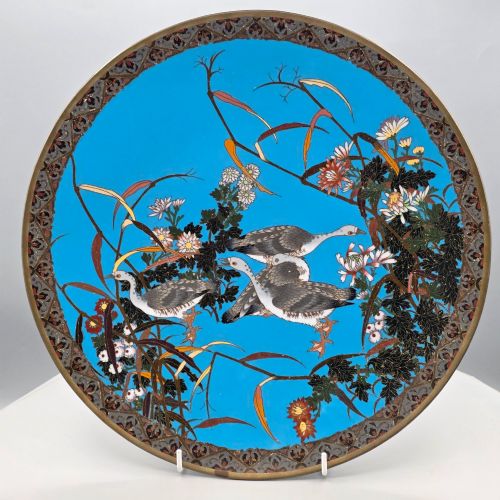
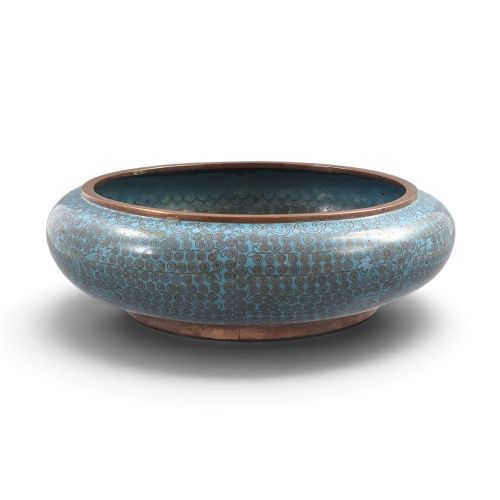
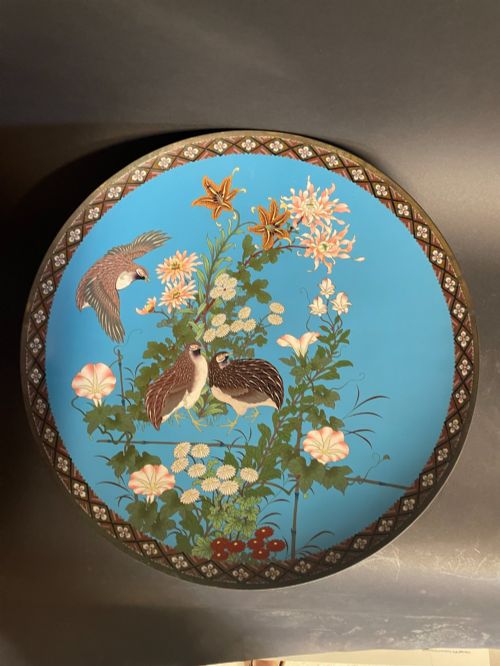
A turquoise enamel dish combines the luminous qualities of vitreous glass with sturdy metal or porcelain bases. When searching for a turquoise enamel dish, buyers primarily encounter pieces originating from Japanese Meiji period workshops, Chinese Qing dynasty kilns, and nineteenth-century European makers.
The forms span deep decorative bowls, flat chargers, rectangular trays, and smaller plates designed for display or specialised use. These pieces often feature natural motifs like birds, flowers, and dragons alongside traditional figural scenes.
Nineteenth-century examples dominate the selection, showing the global exchange of artistic techniques between East Asia and Europe during the height of the Japonisme movement. Each turquoise enamel dish reflects the aesthetic priorities of its specific place and decade of origin.
Materials and construction
Makers formed the core structures using copper, bronze, brass, or porcelain, shaping them into plates, bowls, and trays before applying the surface decoration. Copper alloy bases provided a stable foundation for intricate metalwork and subsequent glazing processes.
Cloisonné techniques involved soldering thin metal wires to the metal body to create compartmentalized cells, which workers then filled with coloured enamel pastes before firing. Porcelain versions relied on direct painting techniques using mineral pigments to achieve the characteristic blue-green palette.
Listings feature copper alloy, brass, bronze, and porcelain as the primary base materials for these decorative vessels.
Assessing quality and craftsmanship
Quality rests upon the precision of the metal wirework and the smoothness of the fired glass surface. Superior examples demonstrate uniform enamel thickness without pitting or cloudiness, while lesser pieces show irregular surfaces and misaligned wire cells.
Artistic execution dictates the upper tier of works, where shading, naturalistic detail, and composition reveal the hand of a skilled artisan. Signed pieces and those utilising complex pictorial subjects generally represent higher levels of workshop output.
Kinkozan·Louis Pierre Malpass
The Turquoise Enamel Dish Glossary
- Cloisonne Enamel
- A decorative technique where thin metal wires form raised barriers on a metal object to hold powdered glass pastes before firing. This method creates distinct cells of colour across the surface.
- Japonisme
- A nineteenth-century European artistic movement inspired by Japanese art and design. Western makers adopted these Eastern motifs and compositional styles in porcelain and metalwork.
- Charger
- A large ornamental plate or dish intended primarily for display on a wall or sideboard rather than for serving food. These items often feature the most elaborate decoration.
- Edo Period
- A historical division of Japanese history lasting from sixteen hundred and three until eighteen hundred and sixty-eight. Objects from this era often display traditional craftsmanship preceding Meiji modernisation.
- Qing Dynasty
- The final imperial dynasty of China, ruling from sixteen hundred and forty-four to nineteen hundred and twelve. Ceramics and metalwork from this period are noted for technical mastery.
Turquoise Enamel Dish: Frequently Asked Questions
What is a turquoise enamel dish made from?
These pieces consist of a metal base, typically copper or brass, decorated with fused glass powder known as enamel.
Some examples use porcelain instead of metal as the primary body before the glaze is applied.
How do I date a Japanese enamel dish?
Dating relies on stylistic markers, construction methods, and documentation linking pieces to specific periods like the Meiji era.
Earlier nineteenth-century items often exhibit heavier wirework and different mineral compositions in the turquoise ground.
Were these dishes used for food?
Most surviving decorative plates, chargers, and plaques served a purely ornamental function in homes and scholar's studios.
Certain bowls and trays held small objects or served as brush washers rather than acting as tableware.
How should I clean a vintage enamel dish?
Maintenance requires only a gentle wipe with a soft, dry cloth to remove accumulated dust from the surface.
Harsh chemical cleaners and abrasive materials must be avoided to protect the delicate glass glaze and metal wires.