




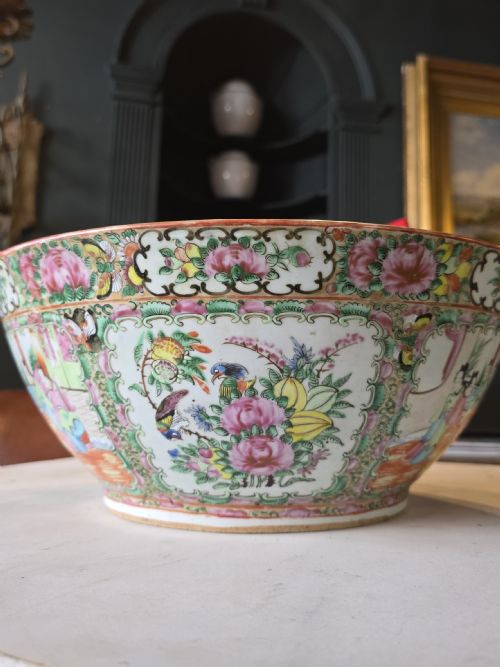
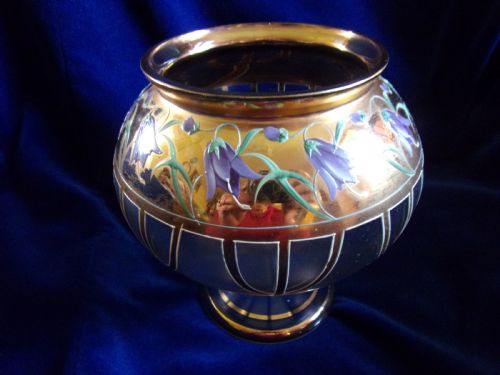


Decorative Enamel Bowl
Every decorative enamel bowl brings together intense colour and fine metalwork, offering a striking centrepiece for a room.
Decorative Enamel Bowl
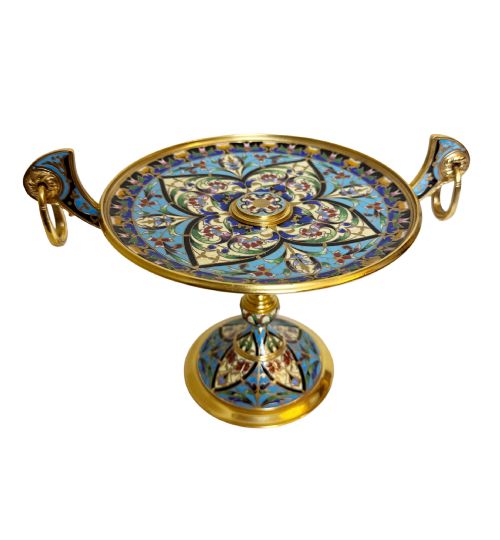
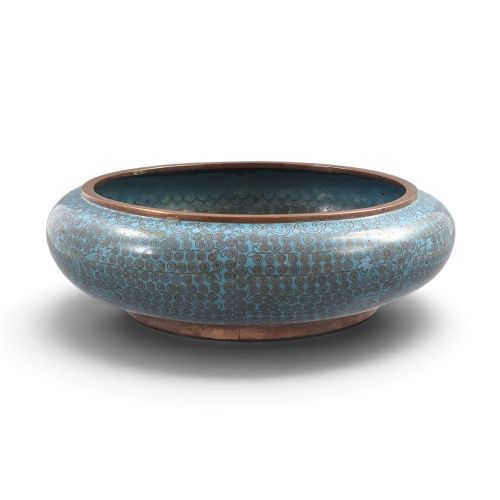
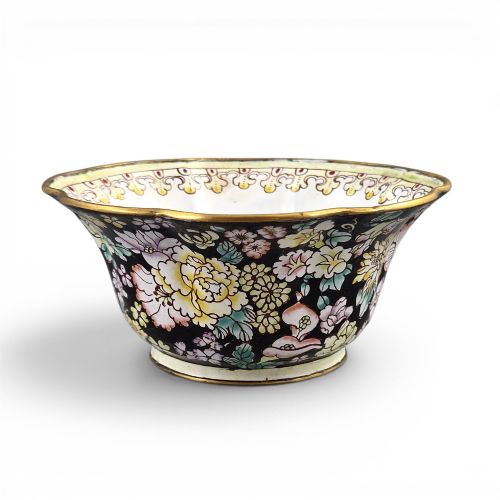
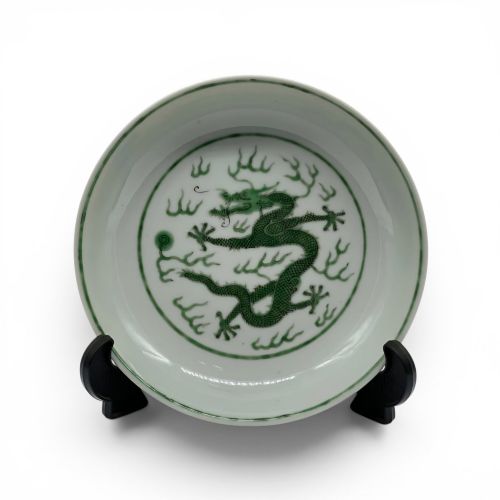
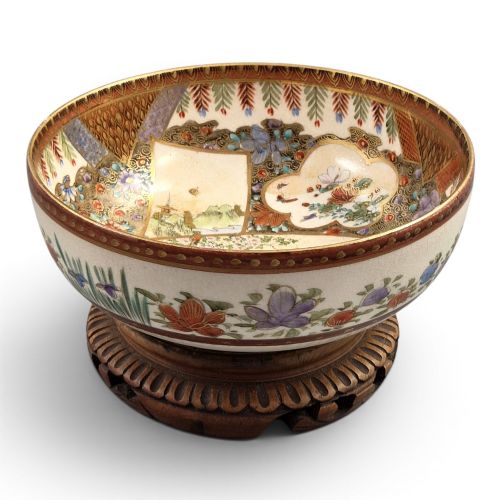
A decorative enamel bowl is a vessel designed primarily for display, taking the form of open dishes, deep chargers, footed tazzas, and large jardinieres. You will most frequently encounter nineteenth-century examples originating from China, Japan, and France.
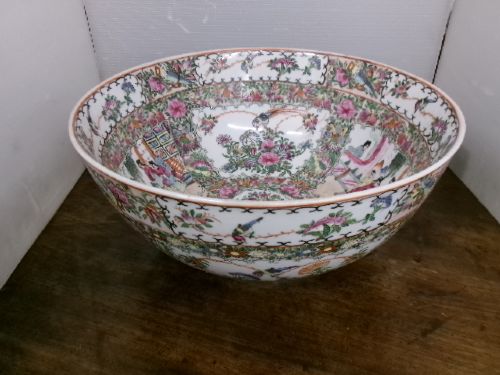
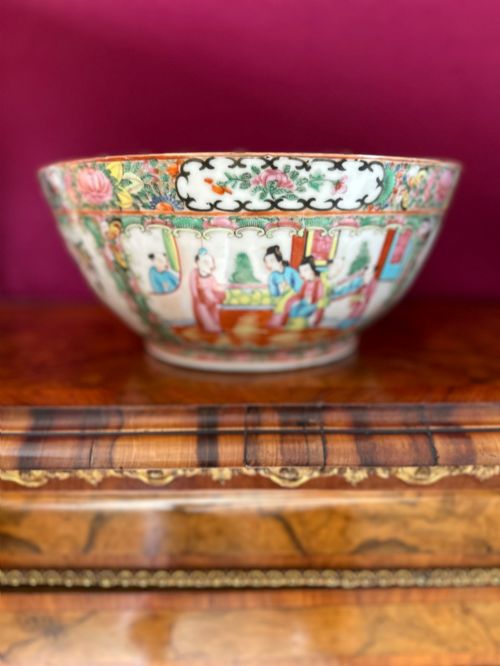
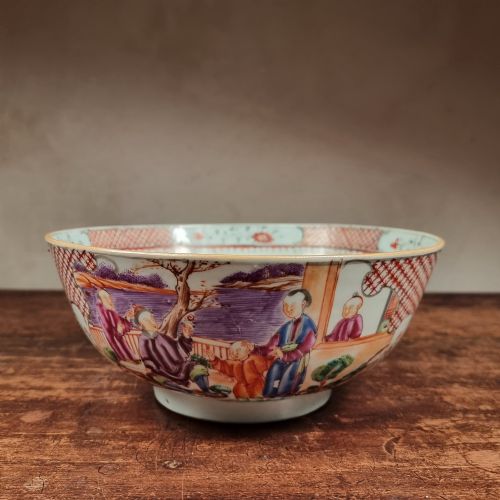
The selection ranges from large Cantonese punch bowls and Japanese cloisonné chargers decorated with birds and dragons to ornate French centrepieces combining enamel with gilt bronze and onyx. Pieces vary from utilitarian scholar's brush washers to substantial porcelain punch bowls and lidded vessels.
How they were made
Maker's workshops utilised copper, brass, and porcelain as foundations, applying powdered glass pastes into wired compartments for cloisonné or onto hollowed troughs for champlevé. These metal and ceramic bodies were then fired at high temperatures to fuse the vitreous enamel colours.
Many items incorporate additional decorative techniques such as hand-painted enamel-on-copper, gilding, gold leaf, and ormolu mounts. Glass variants from the arts and crafts tradition relied on enamelled cabochons set into hammered copper frames.
Clam shell dishes from the Edo period prove that seventeenth-century artisans looked closely to the shoreline for their tableware inspiration.
What varies in quality
The distinction between standard and superior examples lies in the crispness of the wirework or casting and the depth of the enamel palette. Precision in hand-painted detailing and the complexity of motifs, such as multi-layered floral scenes or detailed bird imagery, separate finer studio pieces from mass-produced items.
The integration of secondary materials dictates overall refinement, where heavy gilt bronze mounts, carved green onyx, or flawless porcelain bodies elevate a simple vessel into an elaborate centrepiece.
The Decorative Enamel Bowl Glossary
- Cloisonne Enamel
- A technique where thin metal wires are soldered to a metal base to create compartments, known as cloisons, which are then filled with enamel paste and fired. This method produces intricate linear patterns across bowls and chargers.
- Champleve Enamel
- A process in which troughs or cells are hollowed out of a thick metal plate, usually bronze or brass, and filled with vitreous enamel before firing. It frequently appears on nineteenth-century French tazzas and centrepieces.
- Famille Rose
- A palette of Chinese porcelain decoration dominated by opaque pink or rose enamel, introduced during the Qing dynasty. These bowls typically feature densely hand-painted figures and floral motifs.
- Imari
- A style of Japanese porcelain featuring a distinct colour scheme of underglaze blue, iron red, and gold highlights. These vessels were widely produced for export.
- Jardiniere
- A large ornamental pot or bowl designed to hold plants or flowers, often made of porcelain, bronze, or enamelled metal. They serve as substantial floor or table centrepieces.
Decorative Enamel Bowl: Frequently Asked Questions
How were decorative enamel bowls used?
These vessels served various functions depending on their origin and scale, ranging from practical punch service to scholar's desk accessories. Many were created strictly for display as chargers, centrepieces, or jardinieres to showcase wealth and taste.
Larger porcelain bowls held food or liquids during gatherings, while smaller cloisonné vessels were kept in studies for ink and brushes. Over time, their decorative qualities meant they were primarily displayed on tables and mantelpieces.
How do I care for a decorative enamel bowl?
Maintenance requires gentle handling to protect delicate glass surfaces, metal mounts, and applied gilding. Dusting with a dry, soft cloth is usually sufficient for regular upkeep.
Avoid using water, chemical cleaners, or abrasive materials, particularly on antique metalwork and exposed porcelain edges. Keeping pieces away from direct sunlight preserves the vibrancy of the enamels.
How can I distinguish between Chinese and Japanese pieces?
Distinguishing between the two traditions involves examining the specific motifs, background colours, and enamelling techniques used. Chinese pieces often feature dense famille rose or Canton painted panels with auspicious symbols.
Japanese examples, particularly from the Meiji period, frequently display precise cloisonné wirework depicting natural elements like single dragons, birds, and peonies against dark or monochrome fields.
What is the difference between a tazza and a centrepiece bowl?
A tazza is a shallow bowl elevated on a central foot or pedestal, giving it a distinct architectural silhouette. They are commonly fashioned from gilt bronze with champlevé enamel.
Centrepiece bowls generally sit flat or on low mounts, often accompanied by matching trays or stands. Centrepieces also tend to incorporate mixed media like onyx or Sevres porcelain.