



Oriental Enamel Tray
An oriental enamel tray brings rich polychrome colour and meticulous craftsmanship into a room.
Oriental Enamel Tray
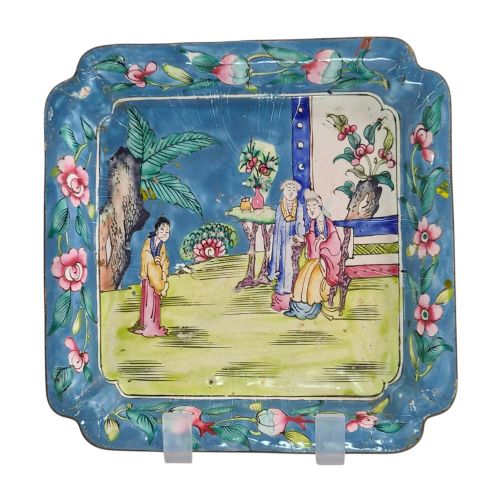
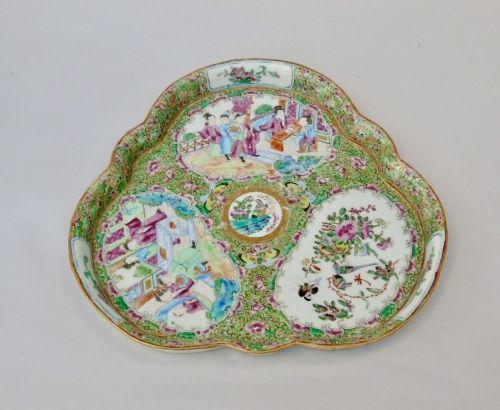
When you search for an oriental enamel tray, you are looking at decorative vessels and dishes originating from China and Japan across the eighteenth, nineteenth, and early twentieth centuries. These pieces encompass square dessert plates, octagonal trays, and trefoil dishes shaped for display rather than heavy domestic service.
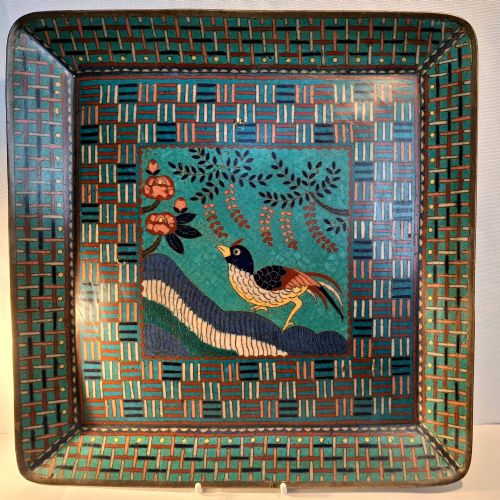
The objects frequently take the form of Chinese export canton enamel or Japanese cloisonne enamel, spanning periods from the Qianlong era up to the nineteen-thirties. You will often encounter specific motifs such as leaping koi, dragons, birds, and peony blooms rendered in vivid enamel colours.
Alongside flat trays, the selection includes related forms like hexagonal planters with drip trays and large bowls decorated with famille rose or famille verte palettes. Each item reflects distinct regional traditions of metalwork and ceramic painting handed down through generations of artisans.
Materials and construction
Many of these pieces employ copper as a foundational metal base for applying vibrant cloisonne enamel work, where thin wire compartments hold the coloured glass pastes before firing. Other examples utilise hard-paste porcelain decorated with overglaze enamel pigments and occasional applications of gold leaf.
The manufacturing process requires precise control of kiln temperatures to fuse the vitreous enamels smoothly to the metal or ceramic body without bubbling or cracking. Artisans then polished the finished surfaces to achieve either a glossy sheen or a refined matte texture depending on the desired aesthetic.
Oriental Enamel Tray Retail Price Guide 2026
Typical asking prices for oriental enamel tray among the pieces listed under this phrase on Sellingantiques today, from the lower quarter to the upper quarter. They describe what is for sale here now, not the wider market.
Listings feature items spanning the eighteenth century through to the nineteen-thirties, incorporating both copper-based cloisonne and hard-paste porcelain bodies.
Judging quality and execution
Superior quality in these pieces shows in the precision and fineness of the wirework in cloisonne items, where lines remain perfectly even and tight. In painted porcelain wares, the clarity of the overglaze enamel and the delicacy of brushwork on motifs like songbirds dictate the overall standard.
The complexity of the design layout also separates standard production from finer examples, particularly in geometric shapes like square or octagonal trays that demand exacting symmetry. Preservation of the original gilding and the smoothness of the enamel surface further distinguish the better pieces.
The Oriental Enamel Tray Glossary
- Cloisonne Enamel
- A metalwork technique where fine wires form small cells to hold coloured enamel pastes. Artisans fire the piece multiple times to fuse the glass to the metal base.
- Canton Enamel
- Painted copper enamelware produced in southern China primarily for export markets. The style is known for its bright polychrome palettes and detailed floral or figural scenes.
- Famille Rose
- A palette of opaque overglaze enamels dominated by pink or rose colours introduced during the Qing dynasty. This palette allowed for subtle tonal gradations in depicting flora and fauna.
- Famille Verte
- A transparent green-dominated overglaze enamel palette used extensively on Chinese ceramics. It relies on bright greens combined with iron red, yellow, and blue pigments.
- Hard-paste Porcelain
- A dense, durable ceramic material fired at high temperatures using kaolin and petuntse. It forms the impermeable white body underneath many export dishes and plates.
Oriental Enamel Tray: Frequently Asked Questions
What is an oriental enamel tray used for?
These trays served primarily as decorative display items rather than utilitarian serving pieces in traditional households.
Today, they function well as tabletop accents, wall decorations, or receptacles for small personal items in a curated interior.
How do I date a Japanese cloisonne tray?
Dating relies on examining the metal wires, the colour palette, and the complexity of the motifs depicted on the surface.
Pieces from the Meiji period often display meticulous wirework and dynamic subjects like dragons or koi against dark enamel grounds.
What is the difference between Canton enamel and cloisonne?
Canton enamel involves painting directly onto a beaten copper base with polychrome enamels without wire partitions.
Cloisonne relies on soldered metal wires to create distinct compartments that separate each colour of vitreous paste.
How should I clean an antique enamel tray?
Dust the surface gently with a soft, dry cloth to prevent scratching the delicate enamel or wearing down exposed metal edges.
Avoid using water, chemical solvents, or abrasive cleaners that might damage the historical glaze or underlying gilding.