





Turquoise Chinese Vases
Turquoise Chinese vases bring brilliant colour and intricate metalwork into a room, spanning early Ming examples to twentieth-century lamps.
Turquoise Chinese Vases
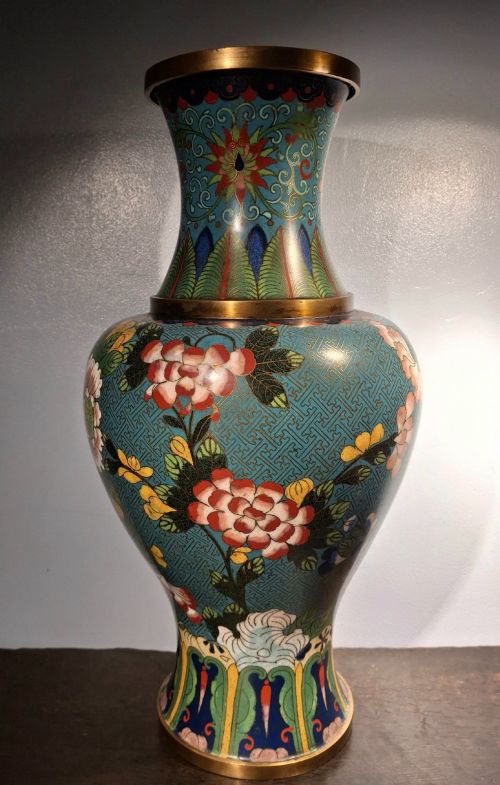
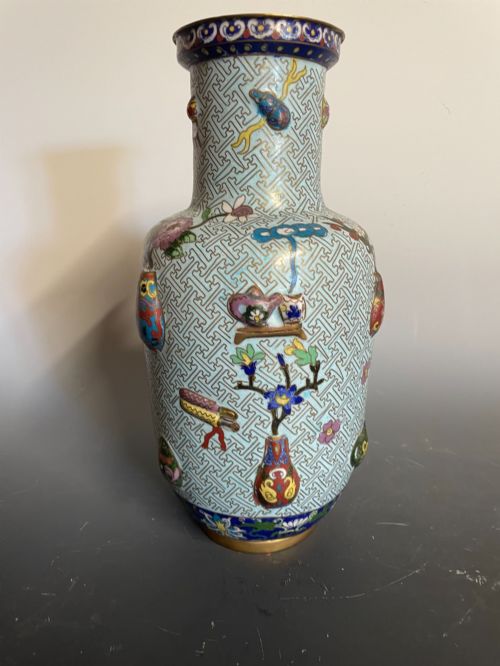
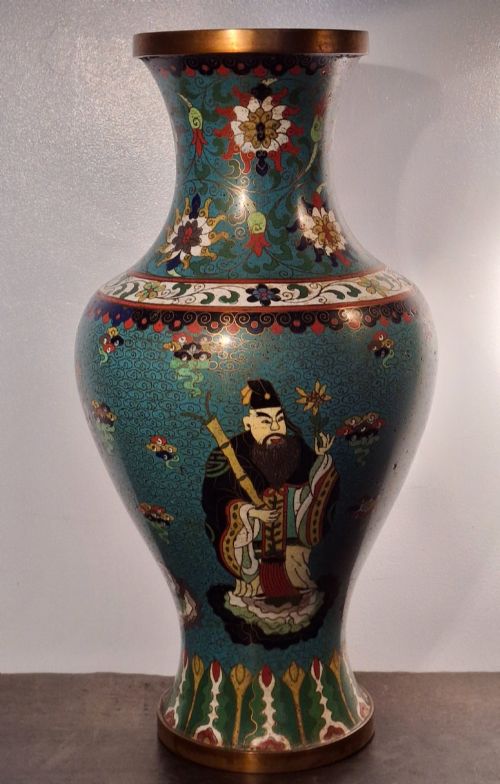
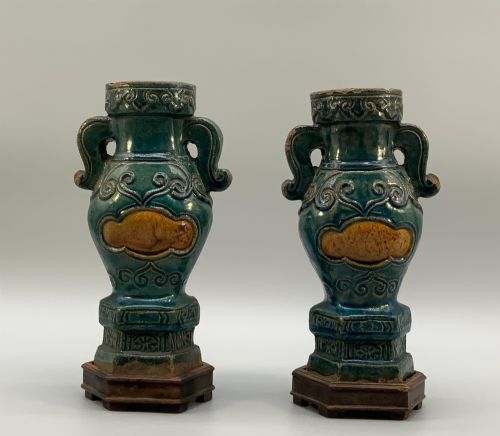
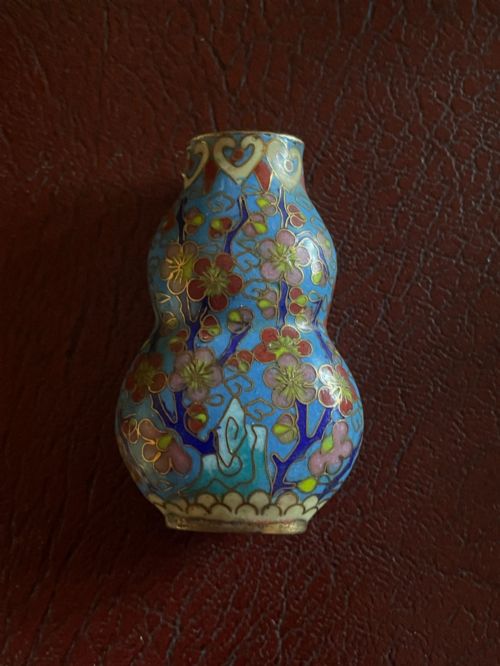
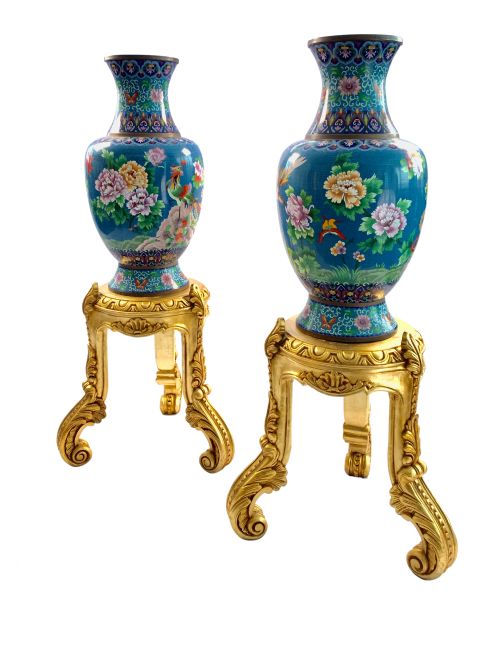
Turquoise Chinese vases encompass a rich variety of forms and materials, ranging from early Ming dynasty vessels to twentieth-century porcelain and cloisonne pieces. Collectors encounter diverse objects, including miniature vessels, large baluster shapes, cachepots, and moon flasks.
Many examples from the nineteenth and twentieth centuries arrive adapted as table lamps or mounted in ormolu, reflecting the varied tastes of past export markets. The selection includes monochrome porcelain incised with stylised peonies alongside vibrant enamel work.
Origins stretch across centuries, with pieces attributed to the seventeenth, nineteenth, and early twentieth centuries. Buyers frequently find matching pairs alongside individual decorative jars and lamps.
Materials and construction
Porcelain serves as another primary medium, seen in monochrome turquoise glazes and polychrome famille rose decoration. Wood mounts and gilt bronze or ormolu frequently complement the metal and ceramic bodies.
Turquoise Chinese Vases Retail Price Guide 2026
Typical asking prices for turquoise chinese vases among the pieces listed under this phrase on Sellingantiques today, from the lower quarter to the upper quarter. They describe what is for sale here now, not the wider market.
Several vases now moonlight as table lamps, proving that even centuries-old Chinese art enjoys a practical career change.
Evaluating the pieces
Quality rests upon the crispness of the enamel work, the precision of the surface wirework, and the clarity of the monochrome or polychrome glaze. Early ceramic pieces show depth in the incised peony details and richness in the turquoise and amber tones.
Metal mounts and subsequent conversions into lamps introduce another layer of distinction. Original ormolu mounts and careful preservation of the underlying vessel elevate the standing of nineteenth-century examples.
The Turquoise Chinese Vases Glossary
- Cloisonne enamel
- A metalworking technique where flat wires are soldered to a metal base to create compartments filled with enamel paste. Artisans then fire and polish the surface smooth.
- Champleve enamel
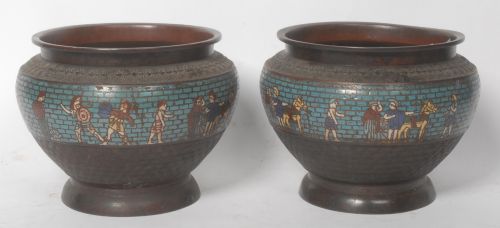
- A method where troughs or cells are carved directly into a metal surface to receive enamel colour. The piece is subsequently fired and ground flat.
- Famille rose
- A palette of opaque enamels introduced in Chinese porcelain decoration, characterised predominantly by pink or rose hues. The style flourished during the Qing dynasty.
- Cachepot
- An ornamental container used to hold a flowerpot. These vessels often double as decorative display items.
- Baluster vase
- A tall vase form with a rounded body that tapers toward a narrow neck and flares at the base. The silhouette resembles architectural balusters.
Turquoise Chinese Vases: Frequently Asked Questions
How are these vases dated?
Dating relies upon stylistic markers, material composition, and manufacturing techniques characteristic of specific periods like the Ming dynasty or the nineteenth century.
Comparison with documented examples helps establish the likely era of production.
Are lamps original?
Many nineteenth and twentieth-century vessels were converted into table lamps later in their lifespan to suit Western decorative interiors.
Fittings and mounts often reflect the period of conversion rather than the original date of the vase.
What is cloisonne?
Cloisonne involves soldering thin metal wires onto a bronze, copper, or brass base to form distinct compartments.
These cells are filled with vitreous enamel paste and fired multiple times before grinding.
How do I care for them?
Gentle dusting with a soft, dry cloth protects delicate enamel surfaces and metal mounts from unnecessary wear.
Avoid chemical cleaners and moisture, particularly on pieces with exposed metal or aged wood.