


Antique Turquoise Vases
Antique turquoise vases bring striking colour and historical weight into a room, spanning delicate porcelain and robust bronze across multiple continents and centuries.
Antique Turquoise Vases
When searching for antique turquoise vases, collectors encounter a diverse group of objects spanning the seventeenth century through to the early twentieth century. The selection ranges from Chinese export bronzes and Japanese cloisonné pieces to European ceramics created by factories such as Minton, Sèvres, and Doulton.
Forms vary considerably across the inventory, including lidded urns, cachepots, moon flasks, and baluster shapes. Many pieces from the nineteenth century onward were subsequently converted into table lamps while retaining their original ceramic or metal bodies.
Asian export wares and European revival styles dominate the available forms, reflecting global trade patterns and nineteenth-century historicism. Pieces originating from Chinese and Japanese workshops sit alongside French and English earthenware interpretations of classical designs.
Materials and Techniques
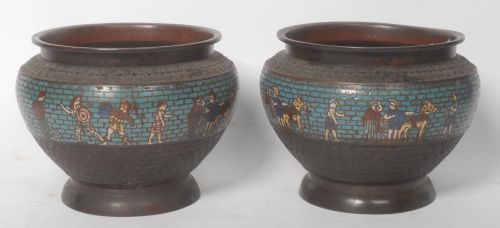
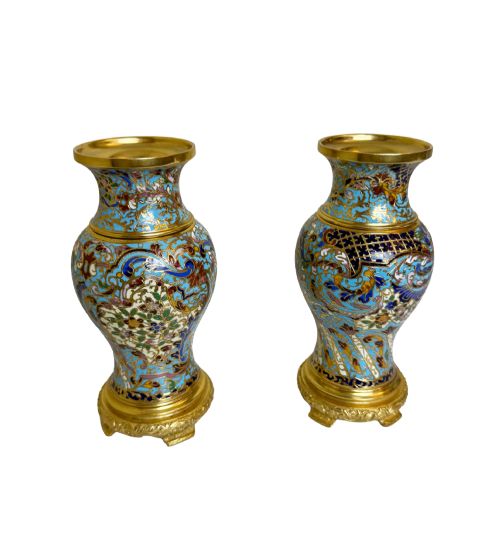
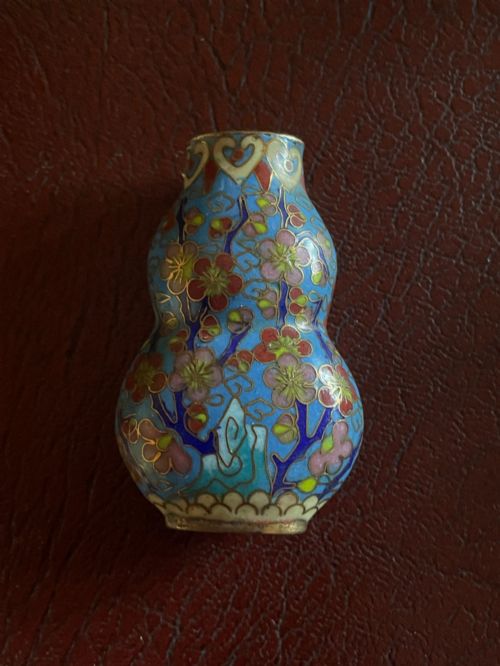
Enamel and cloisonné techniques involve soldering delicate metal wires onto a bronze or copper base to form cells, which are then filled with coloured vitreous paste and fired. This method produces intricate surface patterns defined by fine metallic outlines.
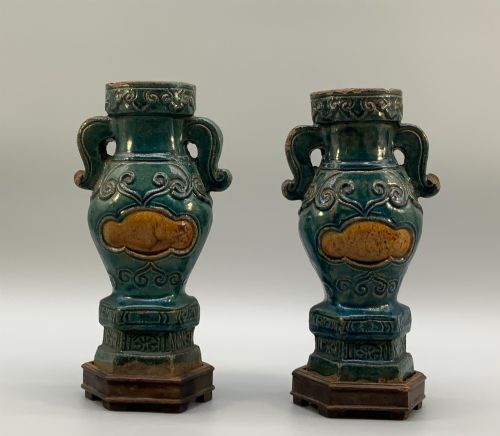
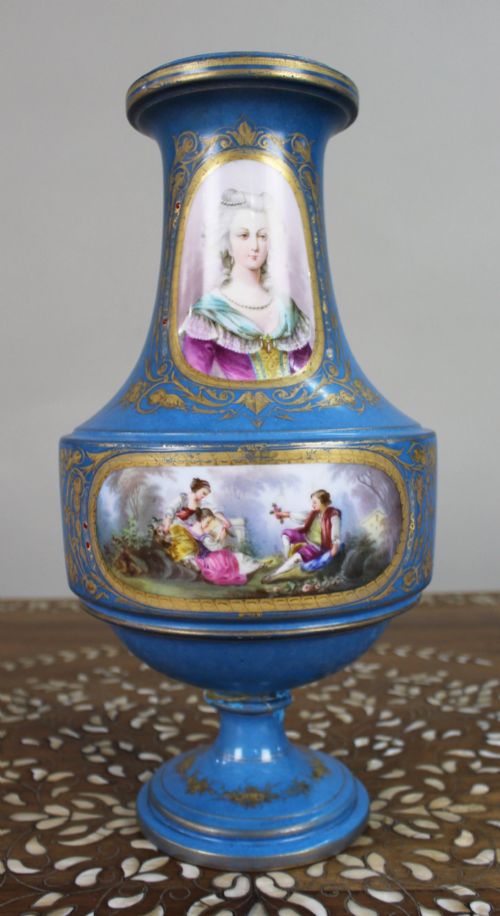
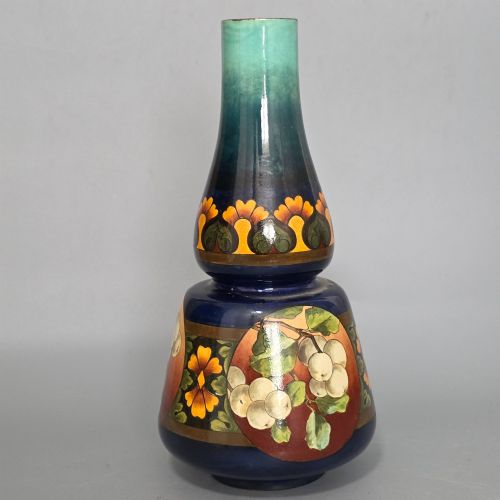
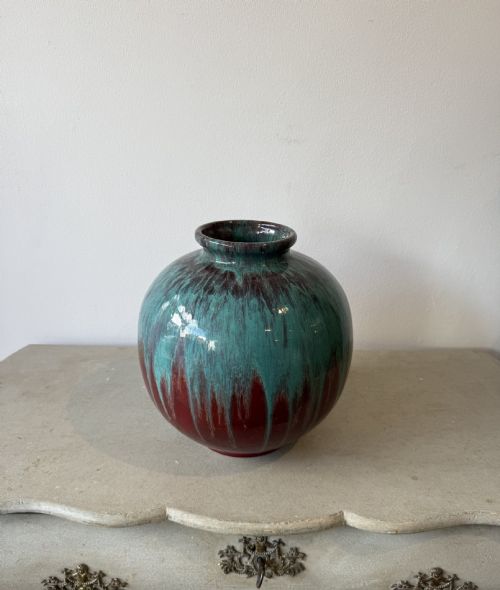
Ceramic pieces utilise earthenware, porcelain, or faience bodies shaped by hand or mould, then glazed in distinctive turquoise or bleu céleste tones. Majolica and faience applications allow for rich, textured surface glazes often paired with hand-painted pastoral scenes or floral motifs.
More than one nineteenth-century vase spent decades disguised as a reading lamp before anyone remembered it started life in an emperor's court.
Evaluating Quality
Quality rests upon the precision of the manufacturing process, whether in the crispness of cloisonné wirework or the evenness of a porcelain glaze. Finer examples display meticulous attention to detail in hand-painted scenes, gilt bronze mounts, and balanced proportions.
The integrity of the original material and the refinement of the decorative execution separate standard production items from exceptional studio pieces. Maker attributions and well-preserved surface finishes further distinguish superior specimens within each stylistic category.
Sèvres·Doulton Lambeth·Royal Doulton·Minton·Helena Wolfsohn Dresden·Samson Paris·Royal Worcester
The Antique Turquoise Vases Glossary
- Cloisonné
- An enamelwork technique where metal wire creates small compartments on a vase body to hold coloured pastes before firing. This method results in vibrant, patterned surfaces often seen in Asian export pieces.
- Bleu Céleste
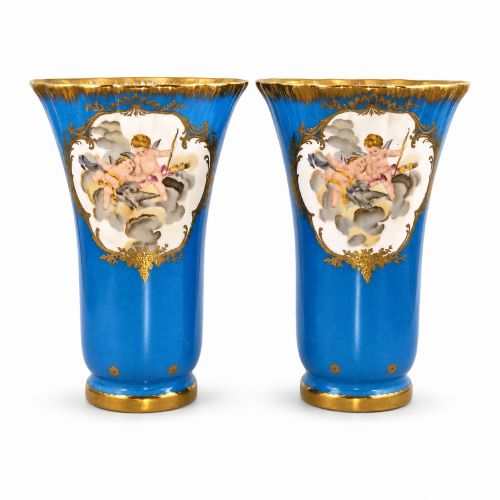
- A bright sky-blue ceramic glaze popularised by the Sèvres porcelain factory in France during the eighteenth and nineteenth centuries. European makers frequently adopted this specific hue to emulate royal wares.
- Cachepot
- An ornamental flowerpot container designed to hold a plain pot rather than plant soil directly. These decorative vessels appear frequently in bronze, enamel, and ceramic forms.
- Majolica
- A type of earthenware coated in an opaque tin glaze and painted with metallic oxide colours. English potteries like Minton produced notable heavy-relief examples during the Victorian era.
- Champlevé
- An enamelling method where troughs or cells are carved directly into a thick metal surface and filled with enamel. The resulting vessel shows deep, rich bands of colour integrated with the bronze or copper base.
Antique Turquoise Vases: Frequently Asked Questions
How do I identify a cloisonne vase?
Examine the surface under magnification to check for thin metal wires outlining the coloured enamel sections. These wires keep the vitreous pastes separated during the high-temperature firing process.
Traditional pieces show tiny imperfections within the enamel infill and a finished base that often reveals the underlying copper or bronze foundation.
Are converted lamp vases still collectible?
Many nineteenth-century ceramic and bronze vessels were fitted as lamps during their lifespan to serve domestic lighting needs. Collectors frequently accept these conversions provided the original body remains undamaged by the wiring process.
Assessing the piece requires looking past the electrical fittings to inspect the core glaze, metal mounts, and overall structural integrity of the antique container.
How do I date a Chinese export vase?
Dating relies on stylistic markers, base markings, and manufacturing techniques recorded across Qing dynasty and twentieth-century production periods. Archaic revival pieces often imitate earlier Ming aesthetics while utilising later technical standards.
Comparing the weight, metal composition of the base, and exact shade of turquoise enamel helps narrow the likely decade of manufacture.