
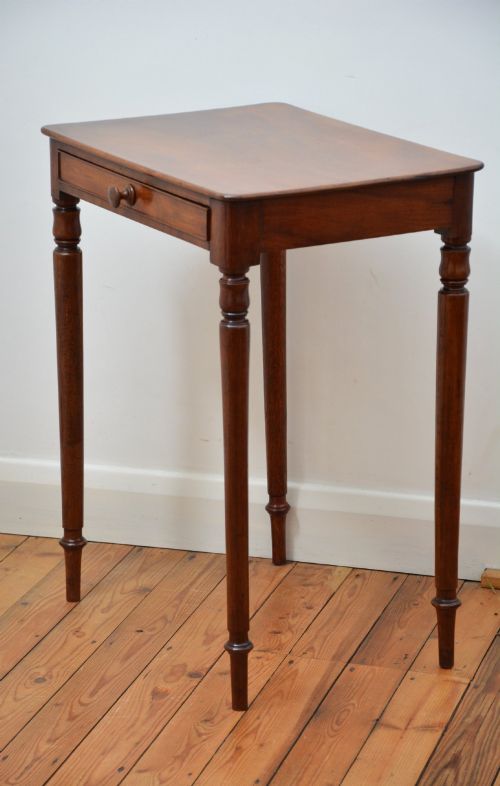


Turned Pedestal Tea Table
A turned pedestal tea table brings eighteenth and nineteenth-century craftsmanship into a room as a compact, movable surface.
Turned Pedestal Tea Table
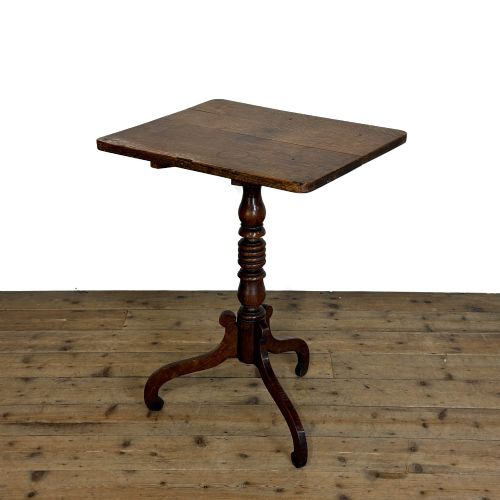
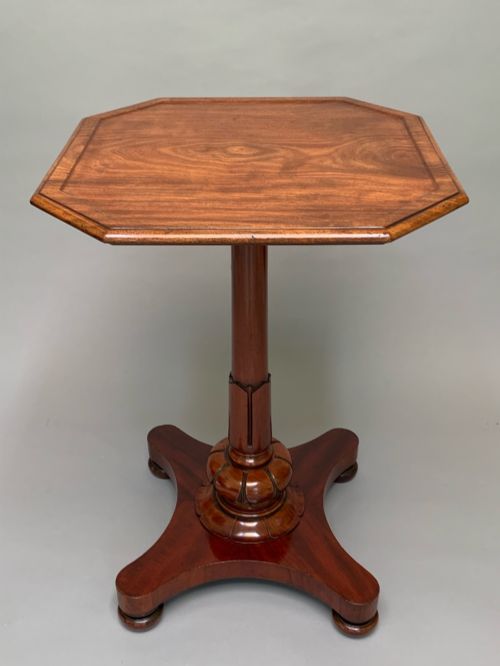
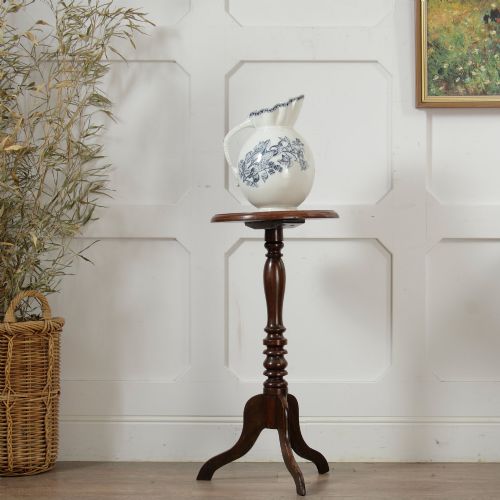
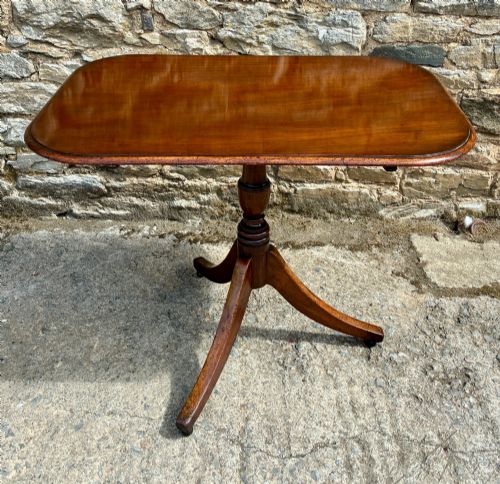
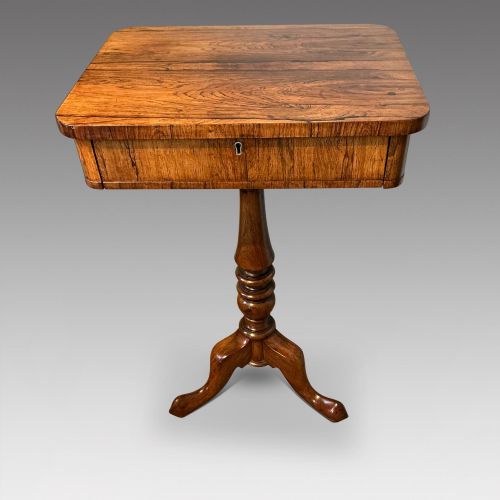
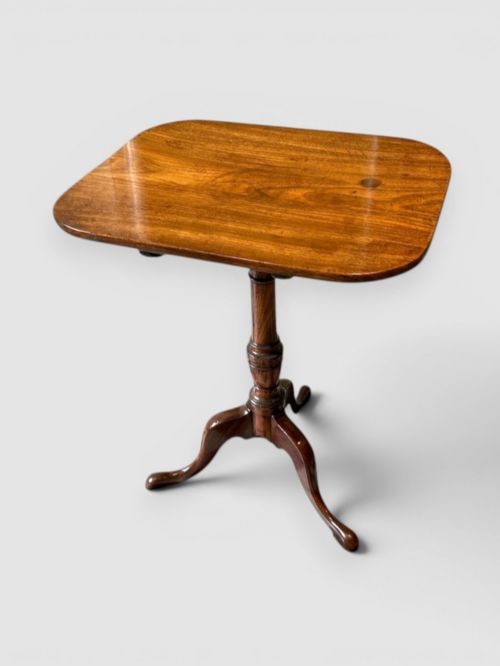
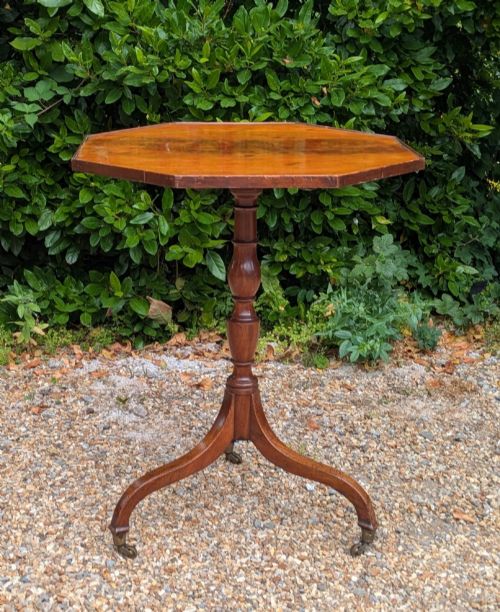
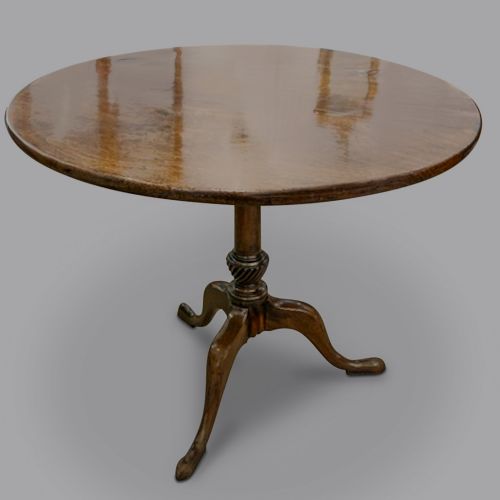
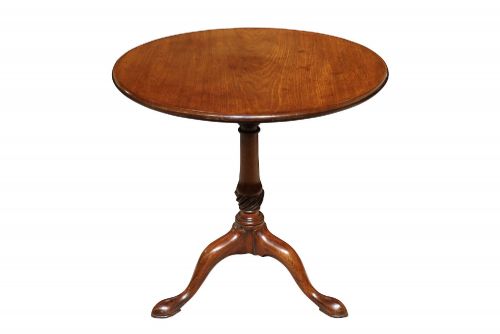
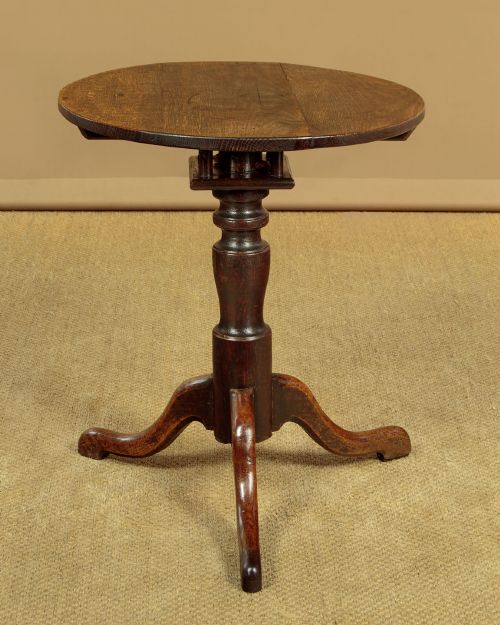
When you search for a turned pedestal tea table, you encounter compact occasional furniture designed primarily for social spaces. The selection relies heavily on mahogany, oak, and walnut examples spanning the Georgian, Victorian, and Regency periods. These pieces serve as functional stands that fit neatly beside seating or stand alone in a hallway.
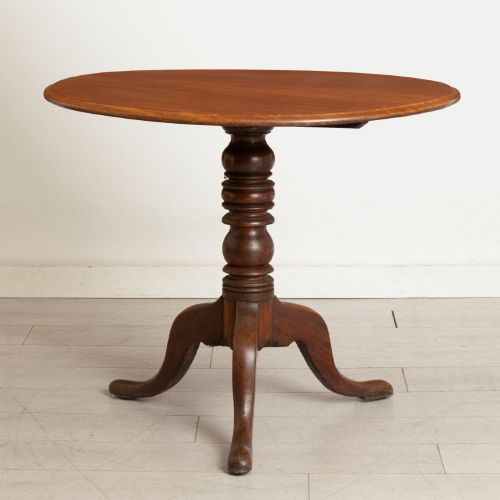
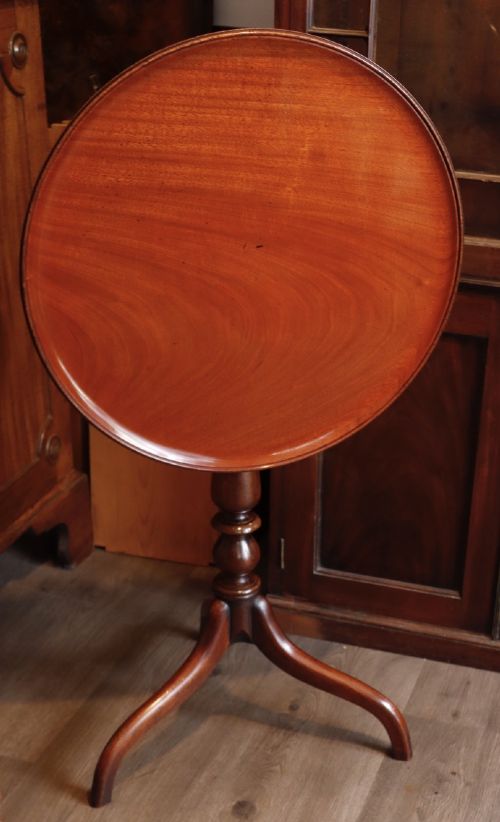
The most common formats on this page feature a single central column rising from a three-legged tripod base. Many of these surfaces incorporate a tilt-top action, allowing the top to pivot vertically when not in use. Occasional tables and wine tables frequently appear alongside traditional tea formats within the current selection.
How they were made
Cabinet makers utilised dense hardwoods such as mahogany, walnut, and rosewood for structural stability and fine finishing. Timber planks were selected for grain pattern and figure, then joined to turned central pillars using traditional carpentry methods. Metal elements such as brass castors or hinges appear on specific Regency and Victorian specimens.
Turned central pedestals were shaped on a lathe to create balanced vertical supports with ring or vase profiles. Tripod legs were typically dovetailed or tenoned directly into the base of the column to ensure firm contact with the floor. Surface treatments relied on French polishing or oil finishes to highlight the natural tone of the wood.
Materials documented across the selection include mahogany, oak, walnut, rosewood, brass, iron, and burr walnut.
What varies in quality
The choice of timber underpins the distinction between standard utilitarian items and finer parlour furniture. Plump figures in the grain, such as plum pudding mahogany or burr walnut, elevate the visual impact of the surface. Subtle turning work on the central column indicates the care invested by the original maker.
Structural integrity depends upon the tightness of the joint connecting the pedestal to the leg assembly and the reliability of the tilt mechanism. Original brass fittings and the absence of clumsy repairs preserve the historical character of an antique piece. Well-proportioned tripod legs maintain stability without appearing heavy or clumsy.
The Turned Pedestal Tea Table Glossary
- Tilt-top
- A hinged mechanism beneath the surface that allows the tabletop to pivot into a vertical position for storage or display against a wall.
- Tripod base
- A three-legged support structure radiating from the base of a central column, commonly found on eighteenth and nineteenth-century occasional tables.
- Birdcage
- A rotating wooden framework beneath the tabletop that permits both tilting and revolving actions on advanced pedestal tables.
- Plum pudding mahogany
- A dense variety of tropical hardwood featuring mottled, circular grain patterns resembling the surface of traditional baked desserts.
- Vernacular
- Describing utilitarian objects made by regional craftsmen using local timbers rather than following strict metropolitan stylistic conventions.
Turned Pedestal Tea Table: Frequently Asked Questions
How do I use an occasional table today?
An occasional table provides a convenient surface for lamps, books, or drinks in a sitting room or hallway. Their compact footprint allows them to fit into tight corners where larger furniture cannot go.
Because many period examples feature tilting mechanisms, you can also store them flush against a wall as a decorative panel when floor space is required.
How do I distinguish Georgian from Victorian pieces?
Georgian tables, particularly from the eighteenth century, tend to show restrained classical proportions with crisp pillar turnings and elegant pad or spade feet. Mahogany and oak dominate this earlier period.
Victorian pieces often display heavier proportions, darker finishes, and more elaborate carved or turned details. Walnut and rosewood became especially popular during the nineteenth century for parlour furniture.
What woods were used for these tables?
Makers relied heavily on durable hardwoods such as mahogany, oak, and walnut to withstand daily use. Figured varieties like burr walnut or plum pudding mahogany were reserved for finer reception rooms.
Secondary timbers such as pine or elm occasionally appear in concealed structural components like framework linings or internal blocks.