

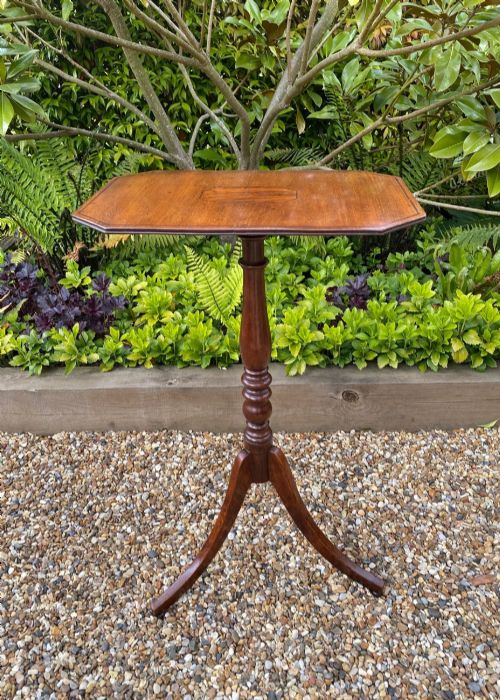
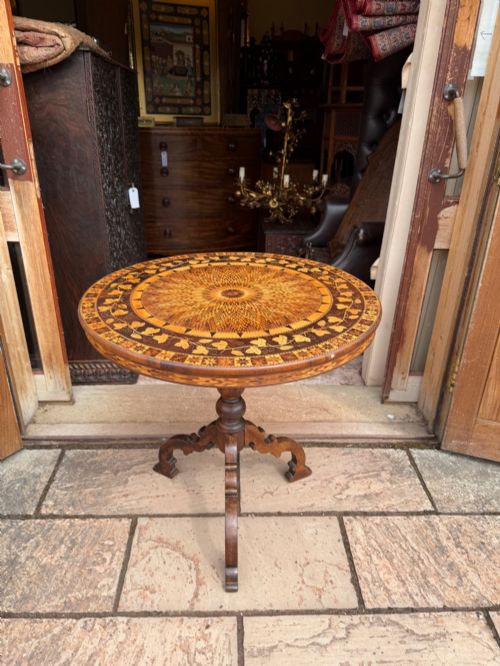
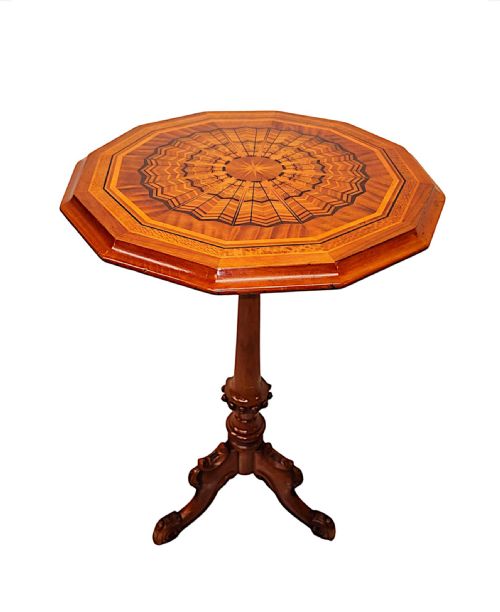
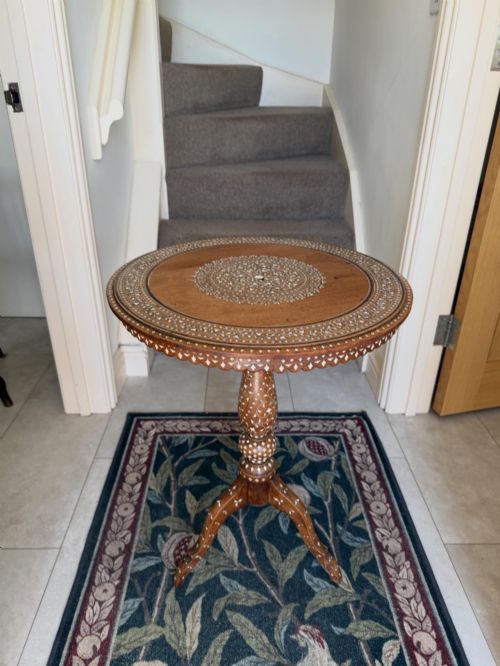

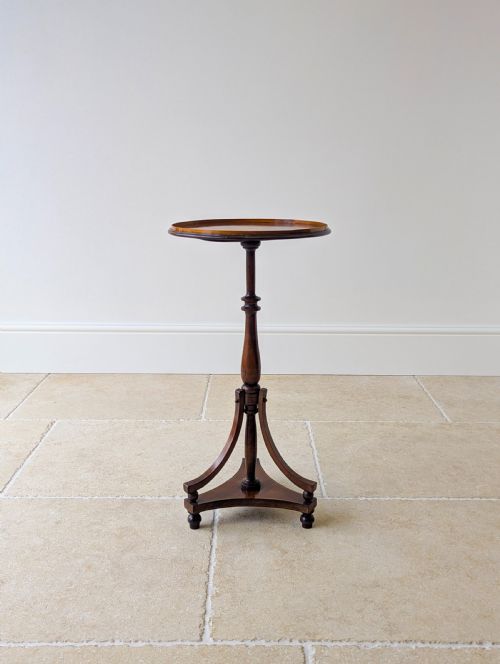


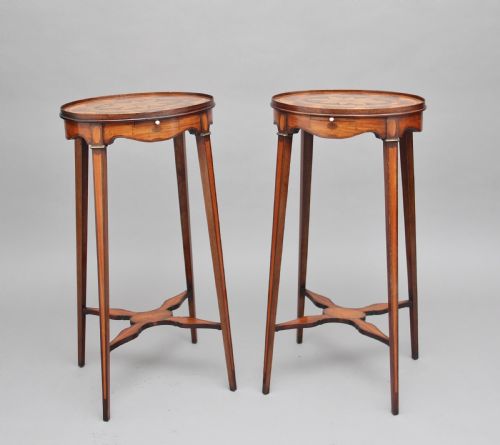


Inlaid Wooden Wine Table
An inlaid wooden wine table brings practical surface space and decorative detail to a room, drawing the eye with contrasting timbers.
Inlaid Wooden Wine Table
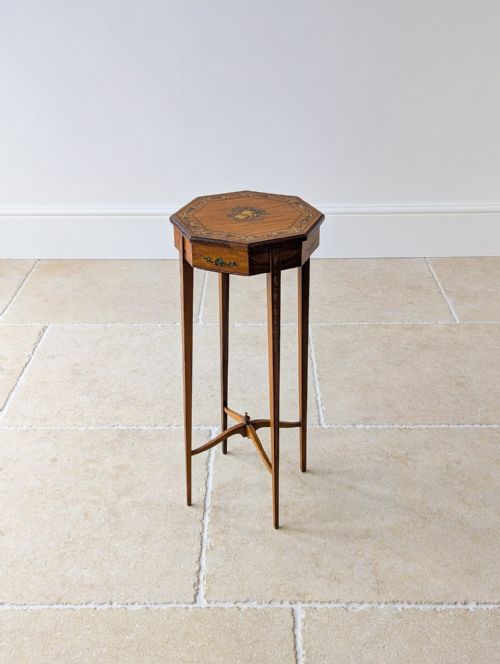
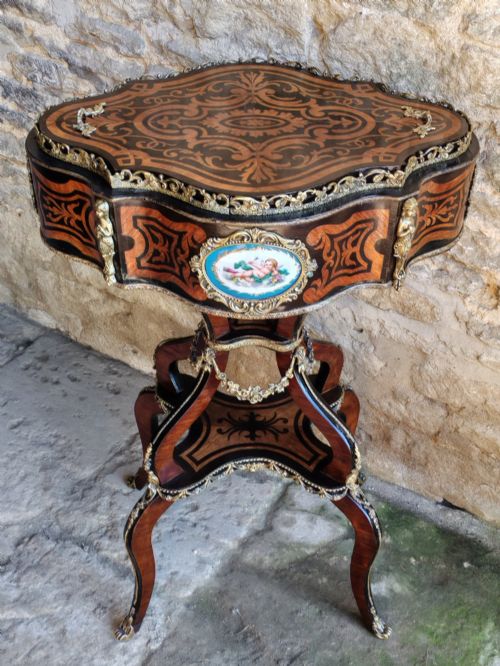
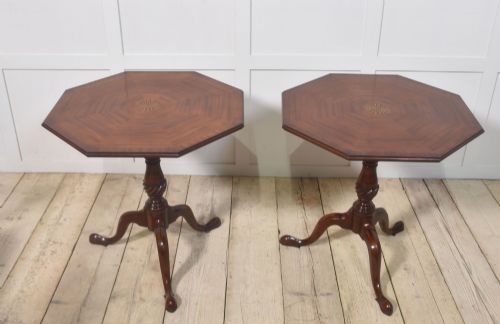
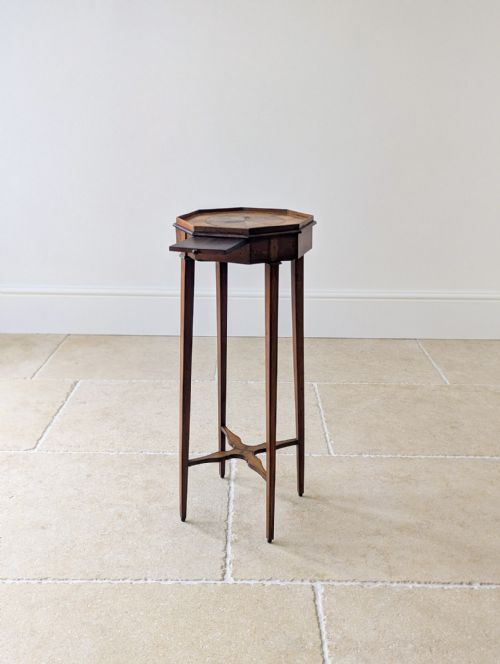
An inlaid wooden wine table is typically a small, portable stand designed for holding glasses or candles, appearing in forms such as tripod tables, urn stands, and occasional tables. Buyers searching for an inlaid wooden wine table encounter pieces spanning several periods, with Edwardian and nineteenth-century examples forming the core of the selection.
The materials vary across these centuries, utilising mahogany, satinwood, walnut, and rosewood as primary timbers. These tables often double as candle stands, kettle stands, or small lamp tables, reflecting how domestic habits shifted over time.
Origins stretch from British workshops influenced by the Sheraton revival to continental centres like Sorrento and further afield to Hoshiarpur and Anglo-Indian production. Walnut and mahogany examples dominate, frequently displaying detailed marquetry or stringing on the top surface.
How They Were Made
Cabinetmakers constructed these tables using solid timbers and veneers, applying contrasting woods for decorative effect. Mahogany and walnut served as common structural bases, while satinwood and lighter exotic species provided the contrasting surfaces for marquetry and inlay.
Makers cut thin sections of wood to form pictorial or geometric motifs, embedding them into recesses carved into the primary surface. Brass fittings, tripod bases, and turned pedestals offered structural support and mobility for smaller items like wine coolers and candle stands.
Some tables travelled far from home before reaching a British drawing room, including intricately carved examples from Hoshiarpur and New Zealand timber pieces.
What Varies in Quality
The refinement of the inlay work separates standard production from finer examples. Precise cutting of contrasting timbers and crisp execution of floral or geometric motifs demonstrate the skill of the original workshop.
Selection of timber grain and the integrity of the structural joinery also distinguish the range. Tables with balanced proportions, stable tripod bases, and well-figured burr walnut or satinwood veneers represent the upper tier of craftsmanship.
Gillows·Anton Seuffer
The Inlaid Wooden Wine Table Glossary
- Inlay
- The technique of inserting pieces of contrasting material into a recessed wooden surface to form a decorative design. This method creates flat, patterned surfaces across table tops.
- Marquetry
- Form of inlay using veneers arranged to form pictorial or decorative patterns, often featuring floral motifs. It differs from simple stringing by covering larger areas with complex designs.
- Tripod Table
- A small table supported by a central pillar resting on three legs. This construction allows the top to remain stable on uneven floors and frequently tilts for storage.
- Sheraton Revival
- A late nineteenth and early twentieth century style inspired by the designs of George Sheraton. These pieces utilise light woods, satinwood, and delicate inlay.
- Urn Stand
- A tall, slender table originally designed to hold a tea urn. They share similar proportions and uses with traditional wine and candle stands.
Inlaid Wooden Wine Table: Frequently Asked Questions
What is an inlaid wooden wine table?
An inlaid wooden wine table is a compact occasional piece designed historically to hold glasses, bottles, or candles near seating areas. These tables feature decorative wood-in-wood decoration, often utilising satinwood, mahogany, or walnut.
They appear in various forms, including tripod bases, urn stands, and small lamp tables, combining utility with decorative surface work.
How do I date an inlaid wooden wine table?
Dating relies on examining the timber species, construction methods, and stylistic influences present in the piece. Pieces from the Georgian era often show simpler, robust mahogany construction, while Sheraton revival and Edwardian examples utilise lighter satinwood and intricate marquetry.
Comparing the turning of the pedestal and the type of inlay against documented period styles helps narrow the decade of manufacture.
Where were these tables made?
These pieces originate from British workshops, continental European centres such as Italy, and international regions including India and New Zealand. British pieces often follow Sheraton or Victorian design traditions.
Imported examples from Hoshiarpur or Sorrento showcase distinct regional carving techniques and local timber varieties like teak or native timbers.
How should I care for an inlaid wooden wine table?
Maintenance involves keeping the wooden surfaces clean with a soft cloth and avoiding excessive moisture or direct sunlight. Wax polishing helps preserve the finish of vintage timbers like rosewood, walnut, and mahogany.
Care should be taken with the inlaid sections to prevent veneer lifting caused by sudden humidity changes in the room.