

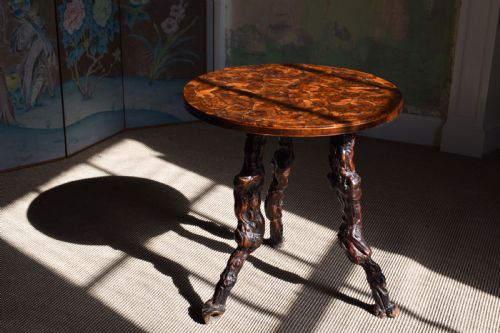
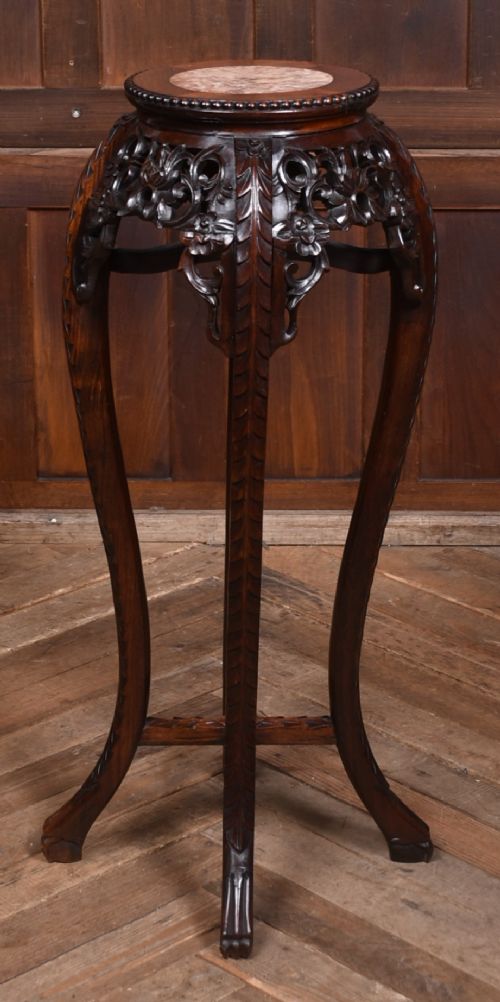

Carved Timber Pedestal Table
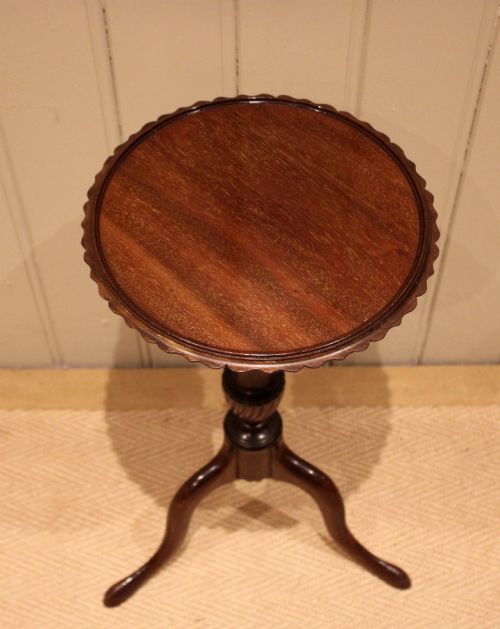
A carved timber pedestal table brings substantial character and rich grain to a room, functioning equally well as a plant stand or wine table.
Carved Timber Pedestal Table
When you search for a carved timber pedestal table, you encounter a diverse selection of nineteenth and early twentieth century furniture designed to elevate objects or provide a compact surface. These pieces range from tall jardiniere stands and wine tables to smaller occasional pieces spanning Victorian, Edwardian, and Regency eras.
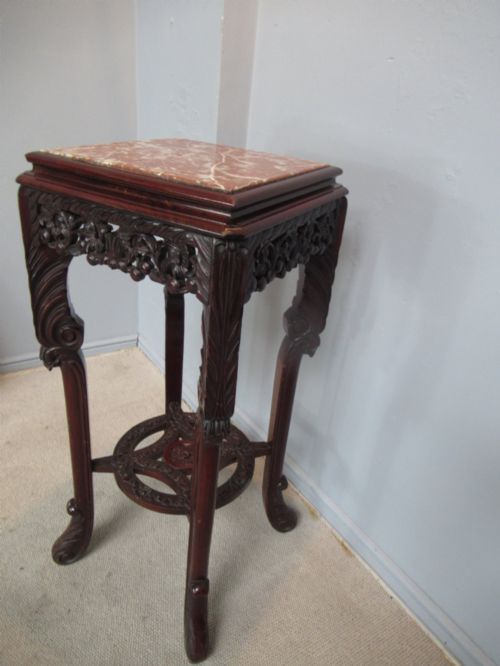
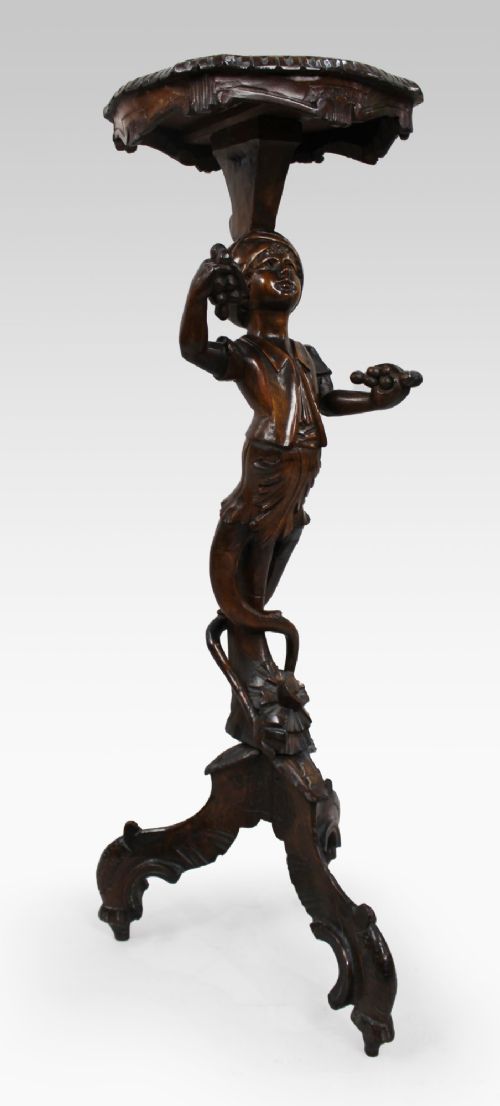
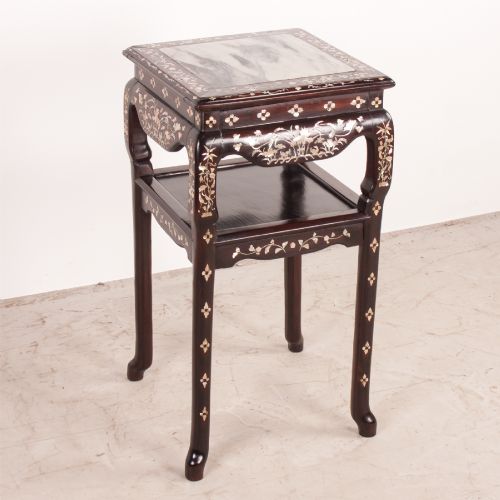
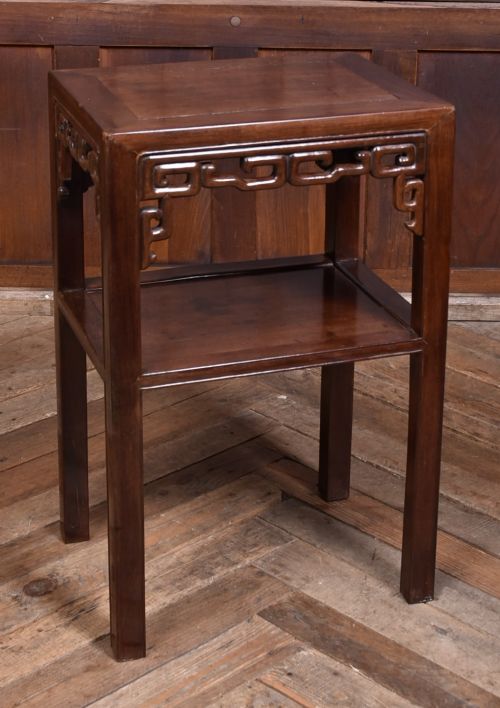
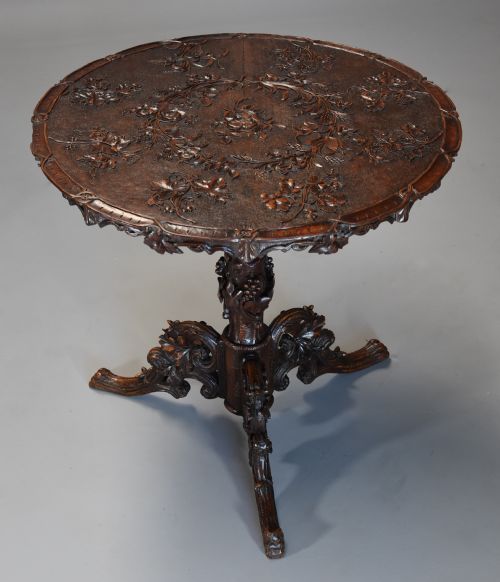
The assortment on this page draws heavily from global traditions, pairing domestic hardwoods like mahogany and walnut with Chinese export furniture and Black Forest linden wood carvings. You will frequently find forms incorporating marble tops, figural supports, and intricate relief work.
Makers utilised these sturdy stands for functional household duties, creating forms that support heavy vases, lamps, and tea services while maintaining a compact footprint on the floor.
How they were made
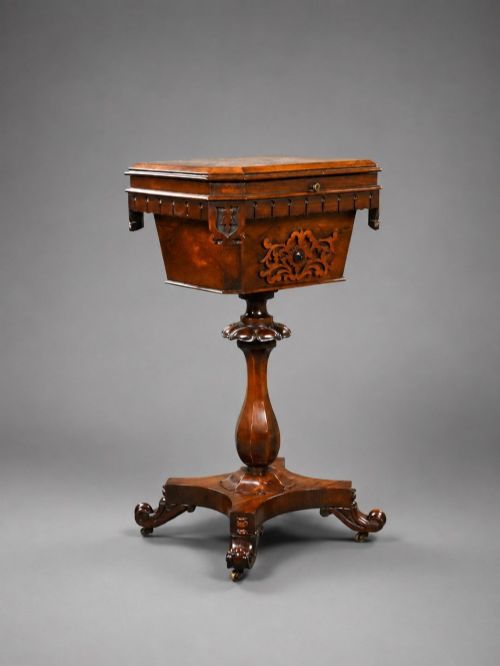
Craftsmen built these tables using dense timbers such as mahogany, walnut, rosewood, and exotic hardwoods, often selecting stock with pronounced grain figures. Structural integrity relied on traditional joinery to support central columns and heavy multi-legged bases.
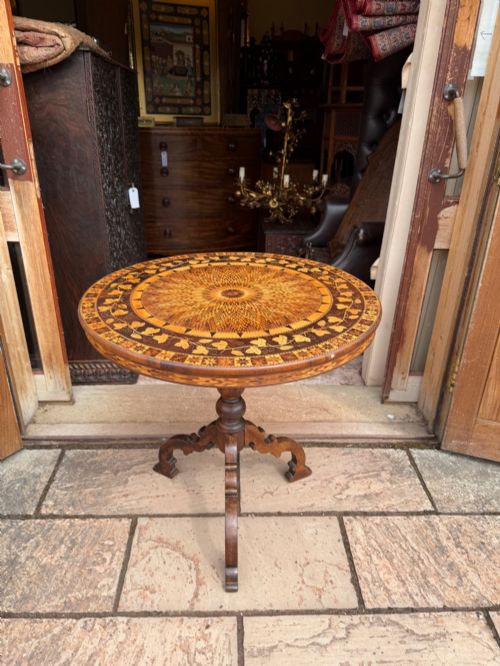
Surface decoration involved deep hand-carving, inlay with materials like mother of pearl, and the integration of inset marble tops. Cabinetmakers shaped the timber using chisels and gouges to create figural elements, scrolling foliage, and smooth serpentine edges.
Some nineteenth century artisans carved elaborate crouching figures and Blackamoor stands to hold up heavy tabletops with permanent expressions of exertion.
What varies in quality
The distinction between standard production and exceptional work rests on the depth and crispness of the hand-carving. Superior examples exhibit fluid lines in figurative elements and foliage, whereas lesser pieces rely on shallow, mechanical tool marks.
Material selection also dictates overall merit, with dense figured veneers, heavy marbles, and scarce exotic hardwoods elevating the stature of a piece. The integration of structural supports determines how firmly a central pedestal holds weight over decades of use.
The Carved Timber Pedestal Table Glossary
- Pedestal
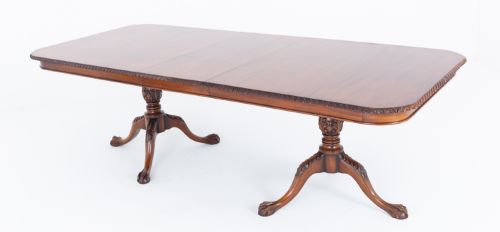
- A support structure beneath a table top, often comprising a central column resting on a tripartite or quadrupartite base. This design maximises legroom around the perimeter of the surface.
- Jardiniere
- A large ornamental pot or stand for plants and flowers. These raised containers often feature waterproof liners or inset stone surfaces to protect the timber.
- Inlay
- A technique where pieces of contrasting material, such as mother of pearl or lighter woods, are embedded into recesses in the timber surface to form decorative patterns. This ornamentation requires precise fitting by skilled hands.
- Tilt-top
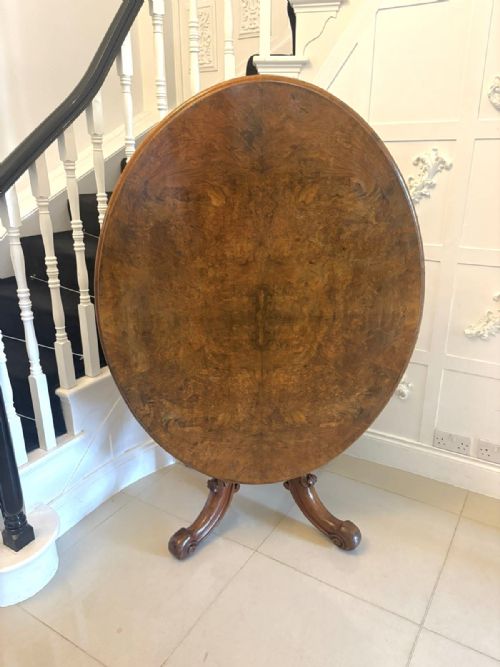
- A mechanism allowing the tabletop to pivot into a vertical position when not in use. This clever engineering enabled furniture to be stored flat against a wall in smaller period rooms.
- Hardwood
- Timber derived from broad-leaved angiosperm trees, valued for its density and durable grain. Examples include mahogany, walnut, and teak.
Carved Timber Pedestal Table: Frequently Asked Questions
What is a pedestal table used for?
These tables traditionally served multiple domestic purposes, acting as stands for heavy ceramic vases, lamps, and decorative plants. Smaller versions function effectively as wine tables or bedside surfaces.
The single central column design allowed occupants to pull the surface close to seating without obstructive legs interfering with movement.
How do I identify a Victorian piece?
Victorian furniture typically displays heavier proportions, dense dark timbers such as mahogany or walnut, and robust decorative carving. Stylistic influences often draw upon earlier Gothic, Rococo, or Renaissance revivals.
Examination of the timber underneath and inside structural joints often reveals period saw marks and traditional assembly methods.
What is Chinese export furniture?
This category encompasses items manufactured in China during the nineteenth century specifically for Western markets, frequently combining traditional local timbers with European furniture forms. These pieces often feature marble inserts and intricate hand-carved floral motifs.
The craftsmanship reflects a distinct fusion of Eastern woodworking techniques and Western interior tastes of the period.
How should I care for timber surfaces?
Maintain antique timber by keeping pieces away from direct heat sources and rapid humidity shifts that cause wood to split. Regular dusting with a dry lint-free cloth preserves the natural sheen of the polish.
Avoid applying modern silicone sprays, relying instead on traditional beeswax formulations sparingly applied when the finish appears dry.