
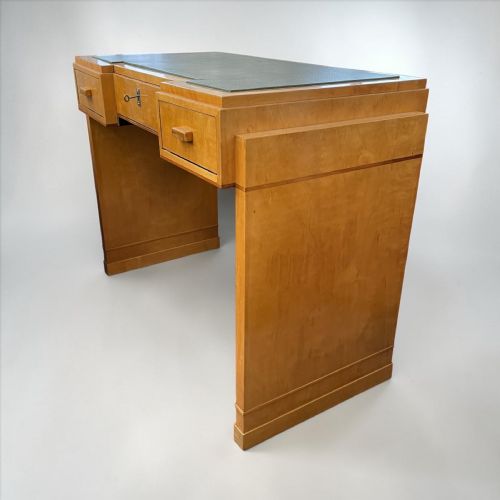
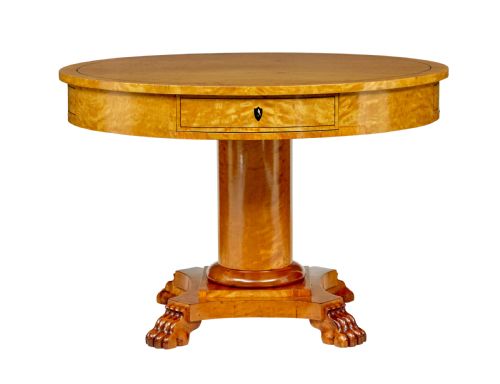
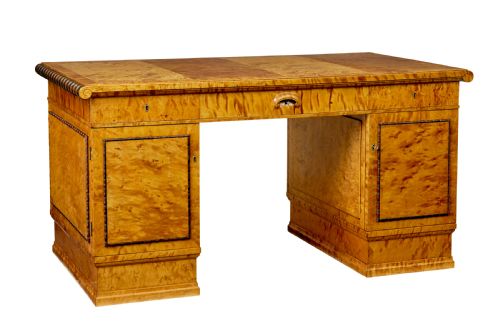
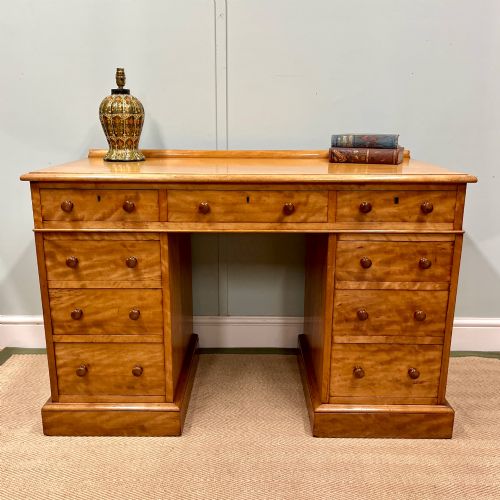
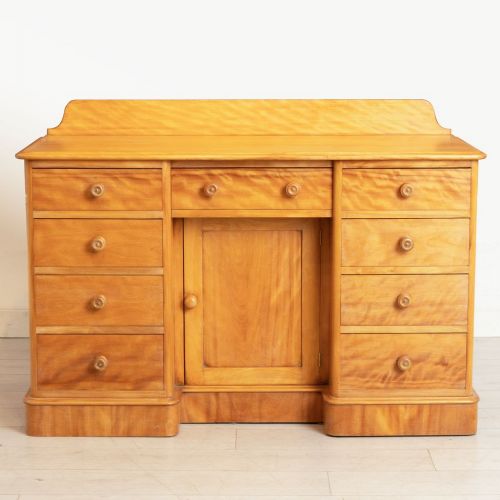


Birch Pedestal Table
A birch pedestal table brings warm grain and clean architectural lines to a room, drawing on nineteenth-century Scandinavian and Victorian craftsmanship.
Birch Pedestal Table
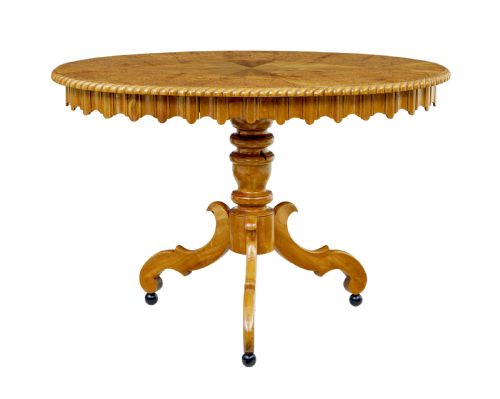
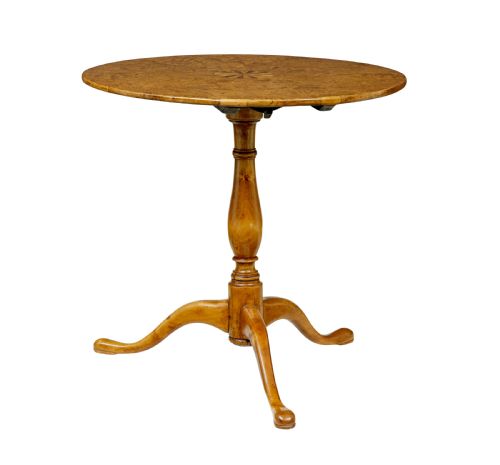
A birch pedestal table encompasses a wide range of antique forms designed around a central column or support, including occasional tables, breakfast tables, and drum tables. When searching for a birch pedestal table, buyers frequently encounter nineteenth-century Swedish examples alongside Victorian British pieces.
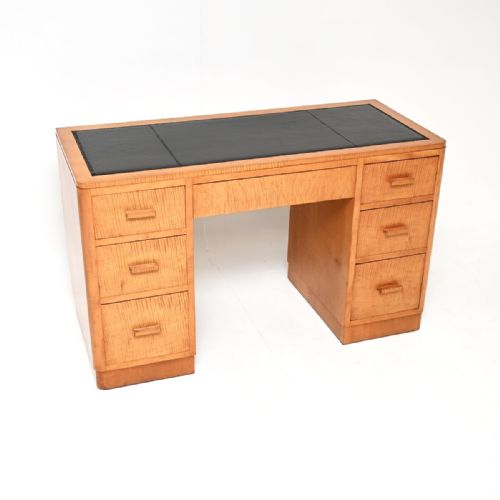
The selection extends to related pedestal formats such as desks and writing tables built from similar timbers. These pieces range from simple round occasional tables supported by tripod bases to more substantial inlaid centre tables.
How they were made
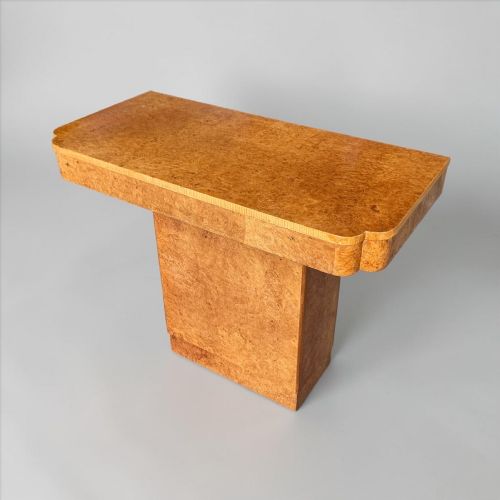
Cabinet makers utilised solid birch, satin birch, and burr birch veneer over secondary woods like pine, often selecting timber with highly figured grain patterns. Surfaces were frequently enriched with delicate inlay work, brass mounts, or leather inserts.
Construction methods combined traditional joinery for the central pedestals and leg assemblies with careful application of veneer to tabletops and desk lids to display the natural figuring of the wood.
Listings feature pieces spanning the nineteenth century through to Art Deco designs from 1930, utilising solid birch, satin birch, and burr birch.
What varies in quality
Quality rests primarily on the choice of timber and the natural figuring of the birch veneer. Highly burred or satin finishes paired with precise inlay demonstrate superior workshop execution.
Proportion and structural integrity also separate standard examples from finer pieces. A well-balanced pedestal and stable tripod or platform base ensure the table functions correctly as both a practical surface and a decorative object.
Heal and Son
The Birch Pedestal Table Glossary
- Satin Birch
- A variety of birch timber exhibiting a smooth, lustrous natural sheen resembling satin. It was widely utilised by Victorian and continental cabinet makers for high-quality desks and tables.
- Burr Birch
- Timber taken from the growth excrescences on a birch tree, showing intricate, swirling grain patterns. Highly valued for decorative veneer work on nineteenth-century tabletops.
- Pedestal Table
- Any table supported by a single central column or pillar rather than four corner legs. The column typically rests on a tripod base or a shaped plinth.
- Biedermeier
- A influential Central and Northern European design style spanning the early to mid-nineteenth century. It prioritised clean, functional lines and warm birch timbers over heavy ornamentation.
Birch Pedestal Table: Frequently Asked Questions
How do I care for antique birch furniture?
Keep wooden furniture away from direct heat sources and strong sunlight to prevent the timber and veneer from drying out.
Apply a traditional beeswax polish occasionally and buff gently with a soft cloth to maintain the natural lustre of the satin or burr birch surface.
What is the difference between satin birch and standard birch?
Satin birch refers to timber selected for its exceptionally smooth, reflective grain which catches the light in a distinct manner. Standard birch displays a paler, more uniform grain structure without that characteristic shimmer.
Both materials were used across the nineteenth century, though satin birch often appeared on higher-status writing desks and occasional tables.
Are these tables suitable for modern daily use?
These pieces were built using robust traditional joinery designed to withstand everyday domestic tasks such as writing or holding lamps. Using coasters and placemats helps protect the historical polish from moisture and heat marks.
Their compact pedestal footprints also make them practical for positioning beside seating or in smaller hallways.
How can I tell Swedish pieces apart from Victorian ones?
Swedish pieces often reflect Biedermeier or Empire Revival influences, featuring warm burr birch veneers and streamlined, architectural silhouettes. Victorian pieces from British workshops frequently lean towards heavier proportions and darker satin birch or applied decorative mouldings.
Examining the secondary woods, such as pine beneath the veneers, can also offer clues regarding regional workshop practices.