



Swedish Tripod Table
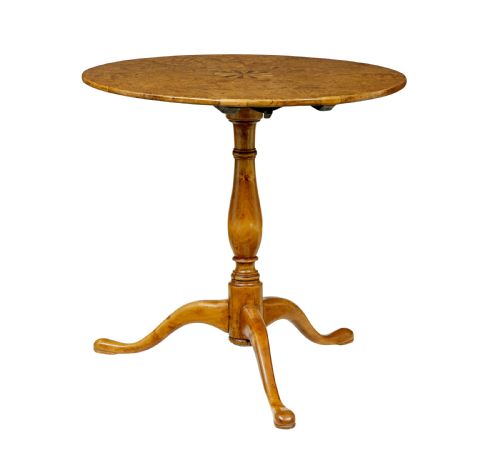
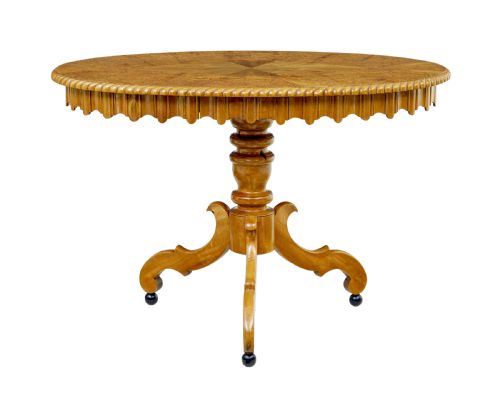
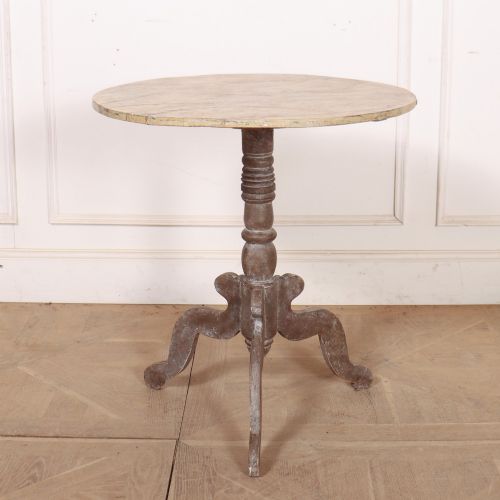
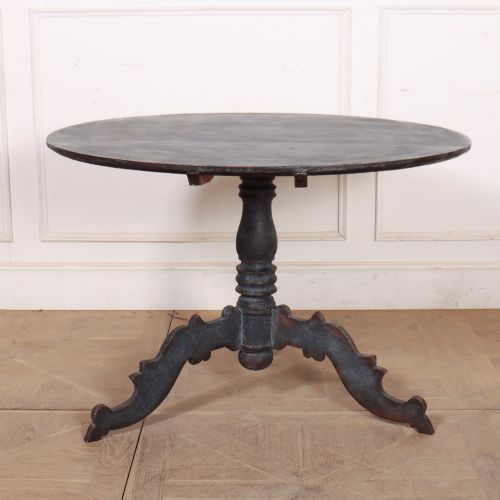
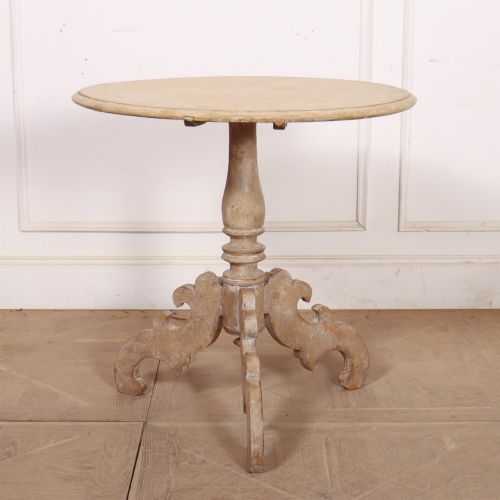
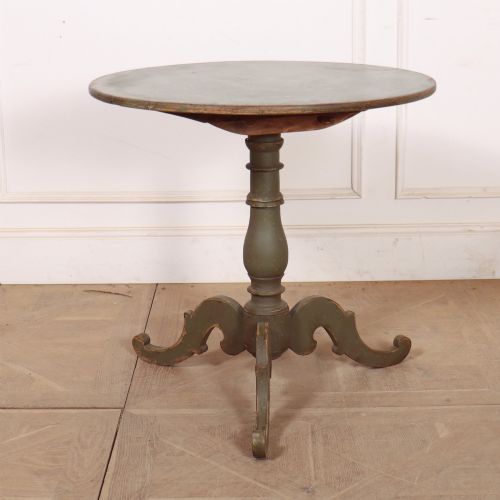
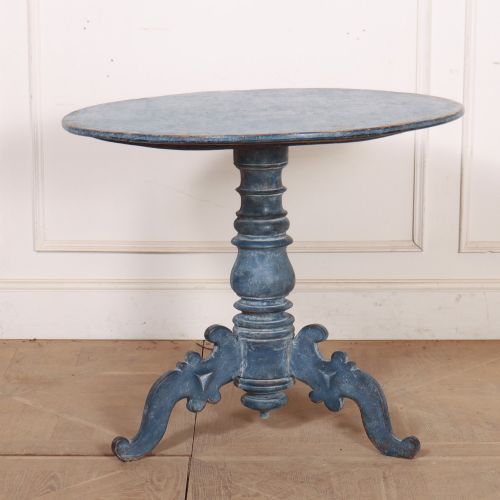
These pieces are a Swedish tripod table, bringing sculptural three-legged support and rich northern European timber figures to any corner.
Swedish Tripod Table
A swedish tripod table stands on a central pillar supported by three feet, serving as an occasional, lamp, or supper piece. These tables bring compact utility and distinct regional character to a room.
Most examples found here date from the nineteenth century and display either rich figured timber or painted surfaces. Forms range from round tilt-tops to oval occasional designs.
The aesthetic leans towards Scandinavian country simplicity and refined Biedermeier or Empire revival lines. Collectors choose them for their versatile scale and warm domestic presence.
Construction and Materials
Cabinetmakers utilised native northern hardwoods, turning to birch, burr birch, alder root, and pine for the main structures. These timbers were often selected for striking natural grain patterns.
Surfaces were frequently finished with paint or left to highlight the polished figure of the wood. Inlaid details and tilt-top mechanisms show practical ingenuity paired with decorative polish.
Swedish Tripod Table Retail Price Guide 2026
Typical asking prices for swedish tripod table among the pieces listed under this phrase on Sellingantiques today, from the lower quarter to the upper quarter. They describe what is for sale here now, not the wider market.
Several pieces feature alder root, giving tabletops a wonderfully animated texture that looks like frozen woodsmoke.
Evaluating Quality
Quality rests in the choice of timber veneer and the crispness of the turned pillar and legs. Burr birch and root woods with deep, lively figuring distinguish finer examples from plain softwood versions.
The integrity of the original painted surface or the warmth of the polished grain dictates visual success. Proportions between the top and the three-legged base create a balanced silhouette.
The Swedish Tripod Table Glossary
- Burr birch
- A wood featuring swirling knot formations that create a highly decorative pattern. It was a favourite of Scandinavian cabinetmakers for tabletops.
- Tilt-top
- A tabletop hinged to the central pillar so it can pivot vertically when not in use. This allowed the table to be stored flat against a wall.
- Tripod base
- A support structure consisting of three legs radiating from a central column. This design ensures stability on uneven floors.
- Biedermeier
- A Central and Northern European design style spanning the nineteenth century. It prioritises clean lines and utilitarian comfort over excessive ornamentation.
Swedish Tripod Table: Frequently Asked Questions
What is a swedish tripod table used for?
These tables function as small occasional surfaces for lamps, drinks, or displaying decorative objects. Their compact footprint makes them useful beside seating or in tight corners.
Historically, specific variations served as supper tables or games surfaces. Today they remain practical accent pieces for living spaces.
How do I identify the wood?
Birch and burr birch show pale golden tones with distinctive shimmering figures or swirling knots. Alder root provides a darker, intensely mottled grain pattern.
Softwood and pine are typically found beneath painted finishes rather than clear polish. Examining the grain under good light reveals the natural timber type.
Are painted tables original?
Many pieces retain their original painted decoration, which often appears in soft regional tones. Original paint shows expected wear and mellowing over time.
Country and provincial examples frequently utilised paint to protect simpler woods like pine. Inspecting the surface layers helps determine the age of the finish.
How do tilt-top tables work?
A catch or mechanism beneath the top allows the surface to release and pivot ninety degrees. This clever engineering saved valuable floor space in nineteenth-century homes.
When lowered, a wooden block or latch secures the top firmly to the pillar. The mechanism should operate smoothly without excessive wobble.
How do I style these in a room?
The warm tones of birch and painted wood blend easily with both traditional and modern interiors. Use a lamp table beside a reading chair or place an oval occasional table in an empty hallway.
Their restrained proportions ensure they do not overwhelm smaller spaces. They also work well paired with upholstered seating.