
Turned Mahogany Stand
A turned mahogany stand brings dependable support and quiet proportion to a room, whether holding a candle, a plant or a tray.
Turned Mahogany Stand
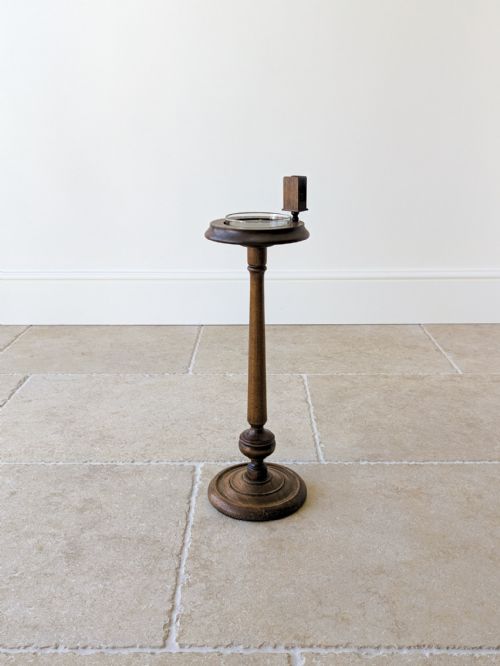
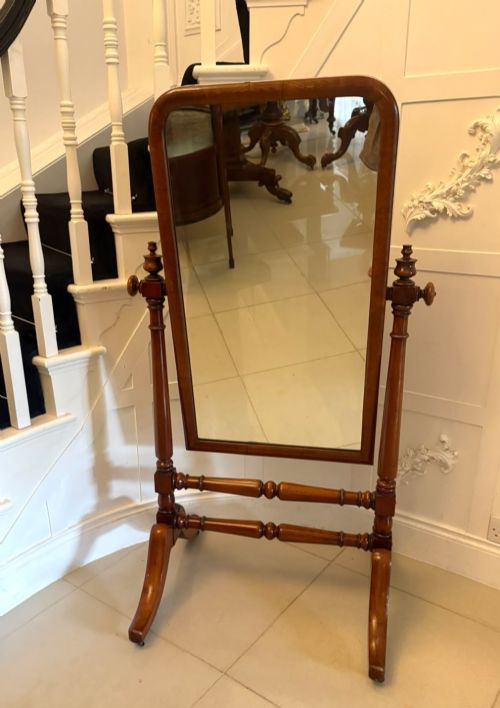
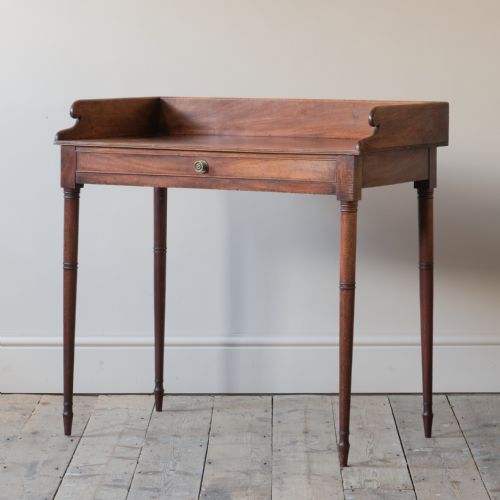
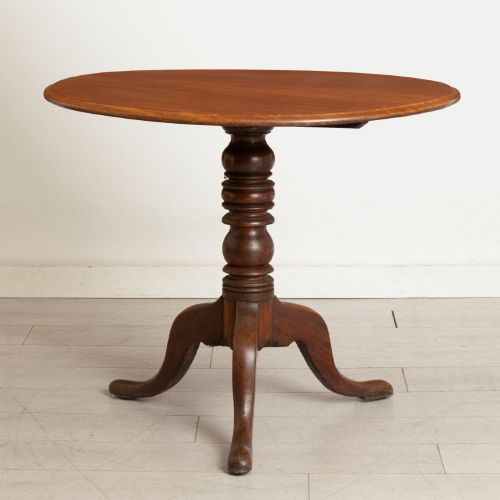
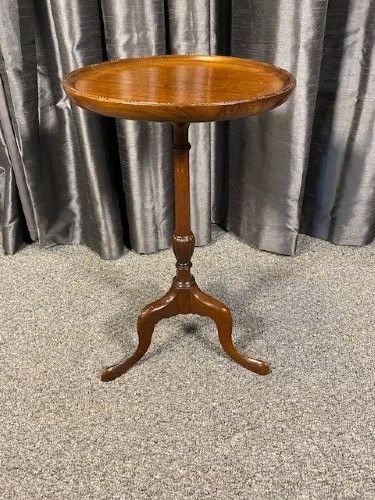
A turned mahogany stand encompasses a variety of compact occasional furniture designed for specific domestic tasks. The selections on this page span the Georgian, Regency and Victorian eras, alongside later Edwardian and twentieth-century examples.
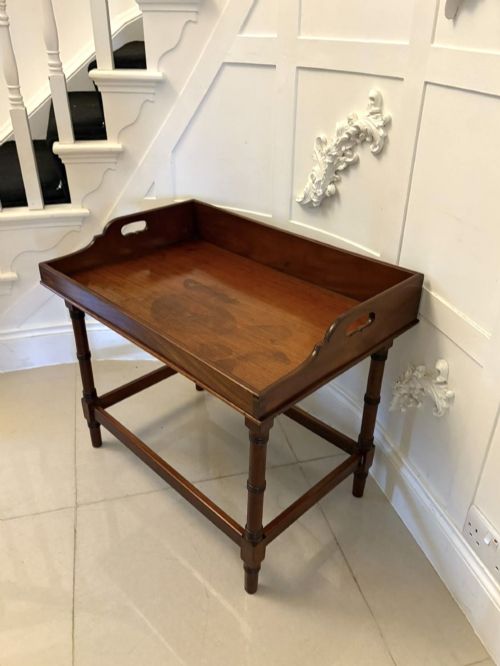
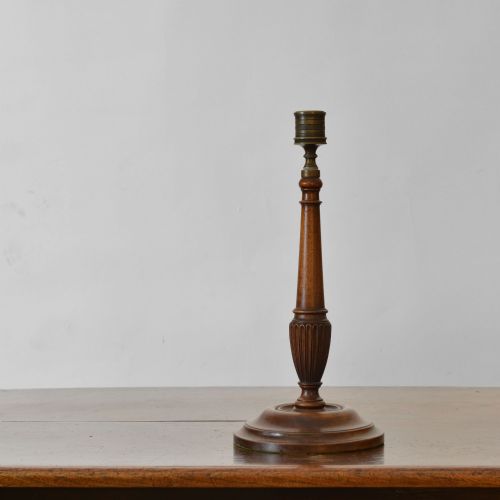
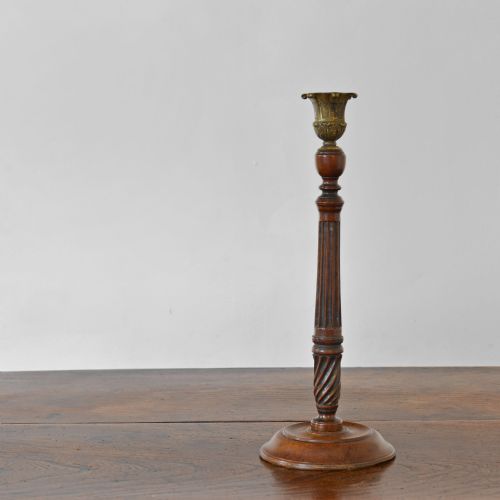
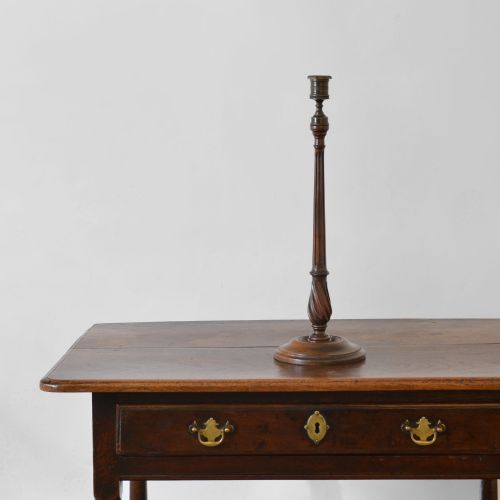
Buyers will most frequently encounter wine tables, candlesticks, plant stands and tray supports. These pieces served functional roles in period interiors, from holding illumination to carrying tea.
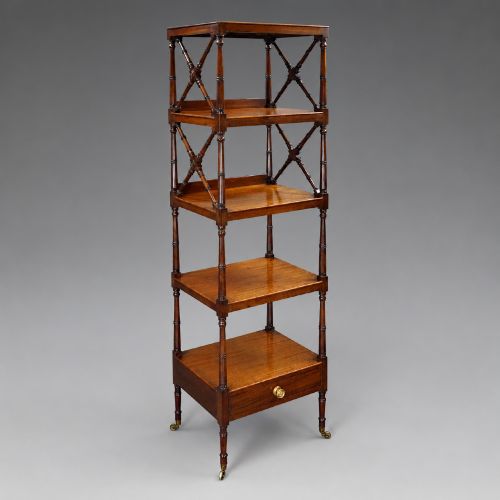
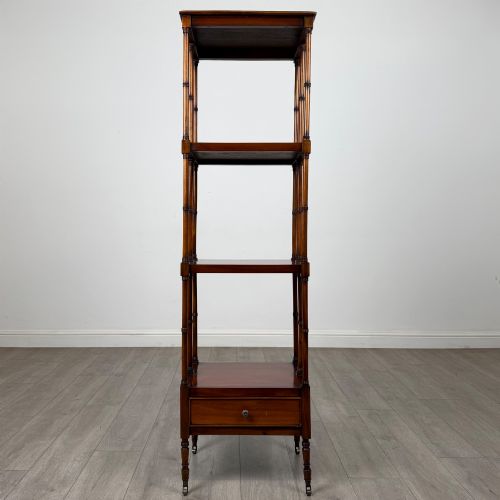
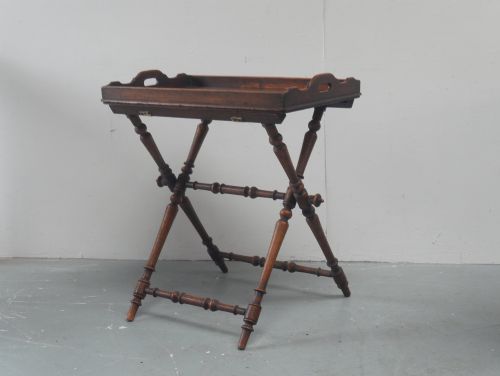
The forms range from diminutive tripod candle tables to multi-tiered whatnots and folding luggage racks. Each version relies on shaped timber supports to elevate objects off the floor with minimal footprint.
Distinctions in Execution
Quality reveals itself in the crispness of the lathe turning and the selection of the timber grain. Finer examples display sharp, well-defined mouldings and rich figure in the mahogany surface.
Proportion and stability separate standard production from superior work. A well-balanced base and slender, tapering legs indicate thoughtful design rather than hurried manufacture.
The integrity of historical repairs and original hardware influences the character of a piece. Retaining period fixings and tilt actions preserves the mechanical honesty of the furniture.
Listings on this page include mahogany, oak, brass and cherry wood, spanning periods from the eighteenth century to the twentieth century.
The Turned Mahogany Stand Glossary
- Tripod table
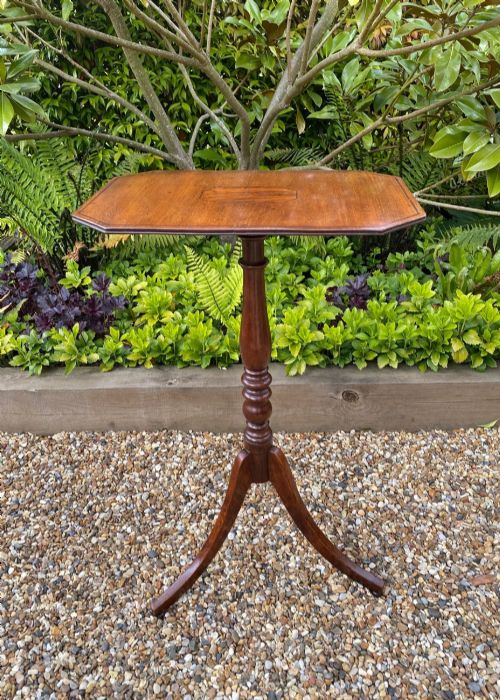
- A small occasional table supported by three legs radiating from a central turned pillar. This design prevented wobbling on uneven floors.
- Tilt-top
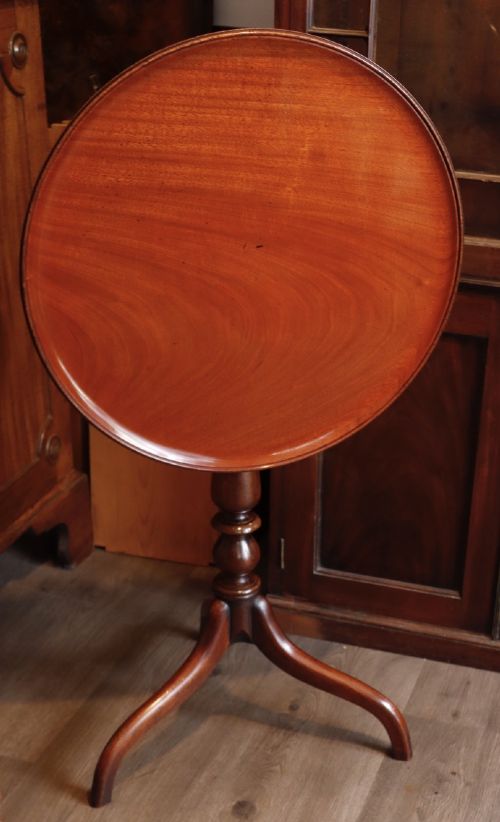
- A table mechanism allowing the surface to swivel and fold vertically when not in use. This saved space in smaller rooms.
- Whatnot
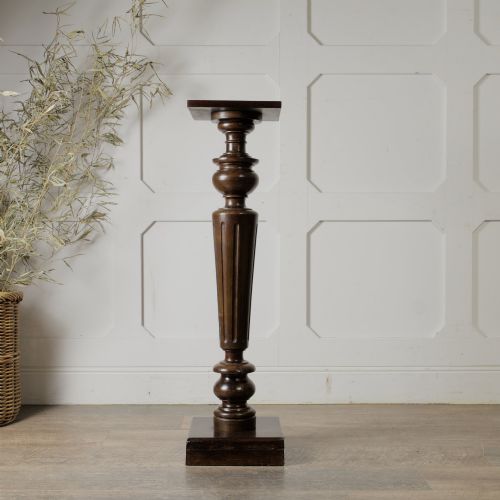
- An open set of tiered shelves used for displaying ornaments or holding books. The uprights are frequently turned columns.
- Canterbury
- A low stand with partitioned sections for holding sheet music or portfolios. Many examples feature slatted sides and turned corner posts.
- Treen
- Small handmade wooden domestic objects produced prior to the modern era. These items display simple utilitarian turning and handling wear.
- Plinth
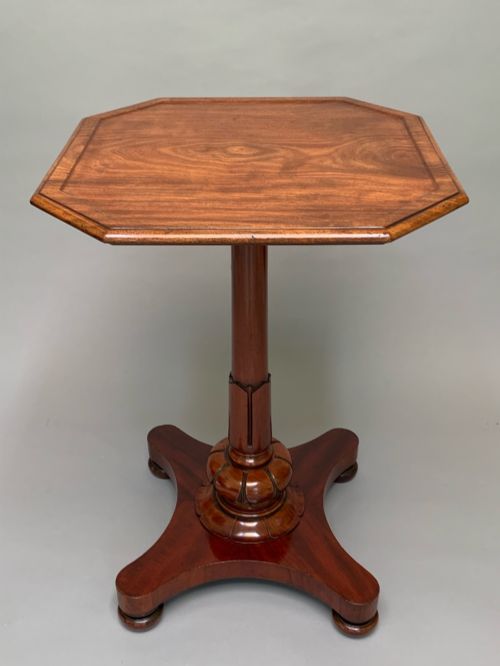
- A heavy solid base supporting a column, statue or plant stand. It provides a stable footing for vertical display.
Turned Mahogany Stand: Frequently Asked Questions
Where should I place a wine table?
These compact tables fit easily beside armchairs or sofas to hold a cup or a glass. Their small footprint allows them to occupy awkward corners without crowding a room.
Avoid placing them in areas of direct sunlight or intense heat to protect the polished mahogany surface from drying out.
How do I care for mahogany?
Dust the timber regularly with a soft, dry cloth to prevent dirt accumulation. Avoid silicone polishes, opting instead for traditional beeswax applied sparingly.
Keep the wood away from radiators and damp environments to prevent the joints from loosening and the timber from splitting.
What is a tilt-top mechanism used for?
The pivoting top allowed servants to tuck the table away against a wall when the room was cleared for other activities. It represents a space-saving innovation common in Georgian homes.
When living with one today, ensure the brass catch or wooden peg remains secure to prevent accidental tipping.
How can I tell a Georgian stand from a Victorian one?
Georgian pieces generally display lighter framing, finer turning and understated bracket or tripod feet. The timber often has a softer, mellow patina developed over centuries.
Victorian examples tend to be heavier in proportion, occasionally featuring bolder ring turning or revival details reflecting earlier historical styles.