
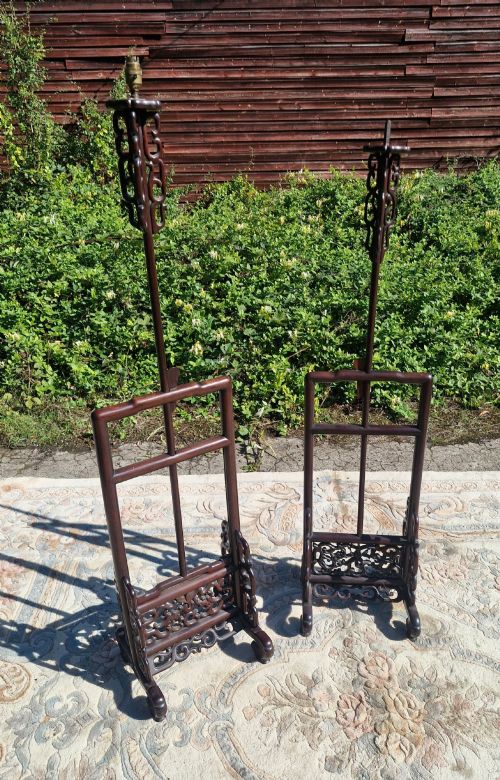
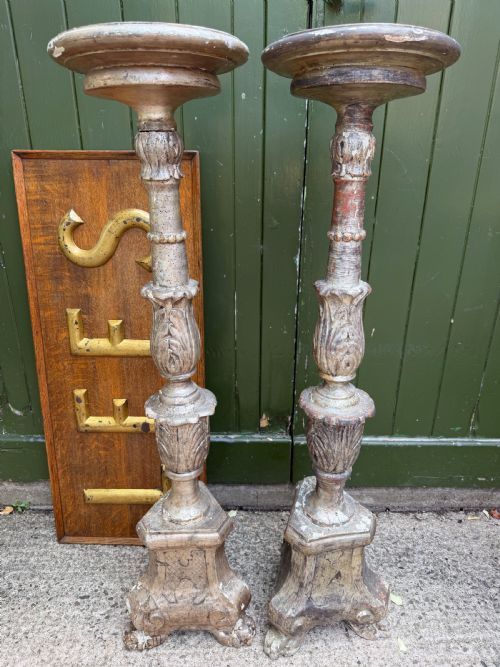
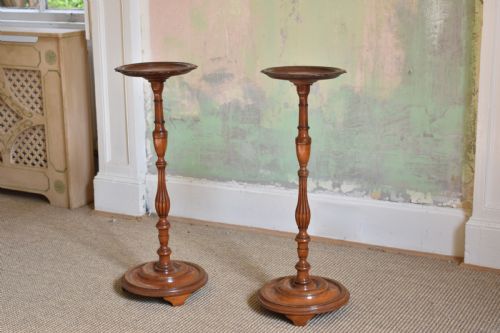
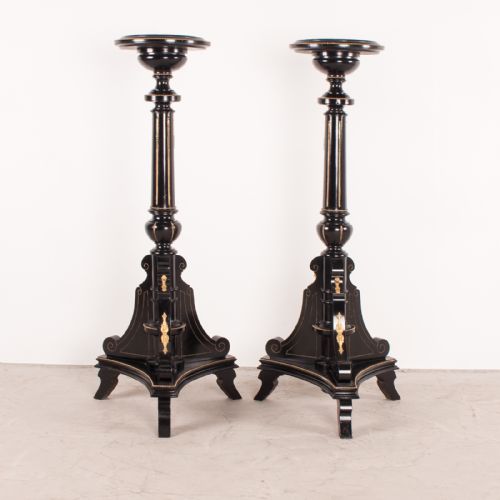

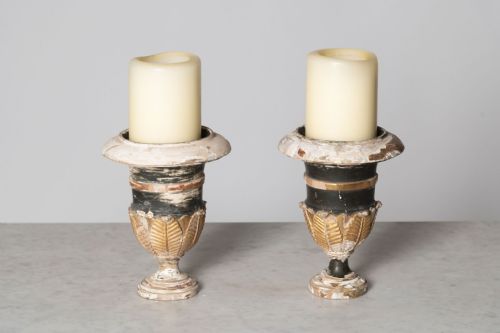

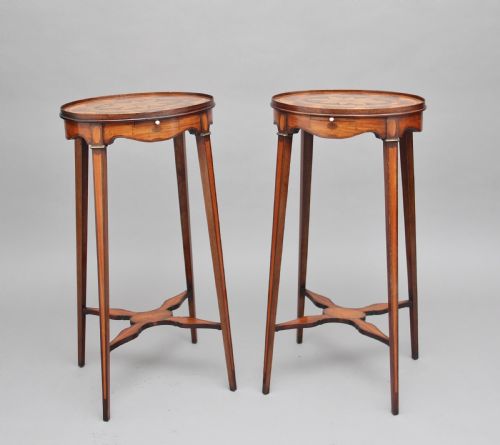


Wooden Candle Stands Pair
These wooden candle stands pair items together for symmetry, bringing traditional height and warm materials to room lighting.
Wooden Candle Stands Pair
A wooden candle stands pair brings together matched items designed to elevate candles or lamps, appearing across periods from the eighteenth century through to the early twentieth century. Buyers encounter forms ranging from tall torcheres and floor stands to compact table models and turned candlesticks.
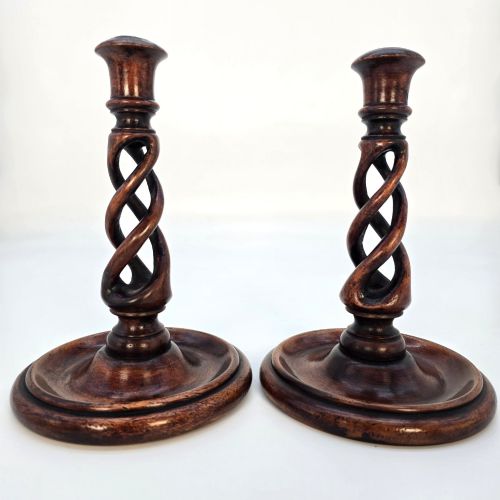
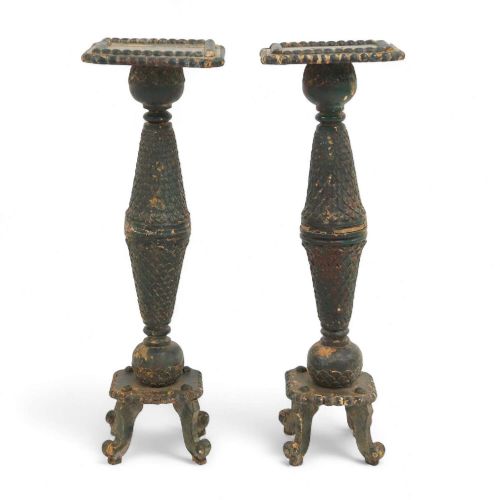
The selection includes specific regional styles such as Italian silvered pieces, French decorative holders, and English barley twist oak designs. Many function as architectural accents in rooms, supporting illumination or display items.
Makers utilised diverse timbers, incorporating mahogany, oak, walnut, and fruitwood alongside specialist items in treen and olive wood. These objects bridge utilitarian lighting and decorative carving.
Materials and construction methods
Carpenters and turners shaped timber on lathes to create spiral twists, bobbin forms, and tapered columns, often incorporating brass sconces or drip pans. Hardwoods like mahogany, oak, and walnut provide structural stability for slender shafts.
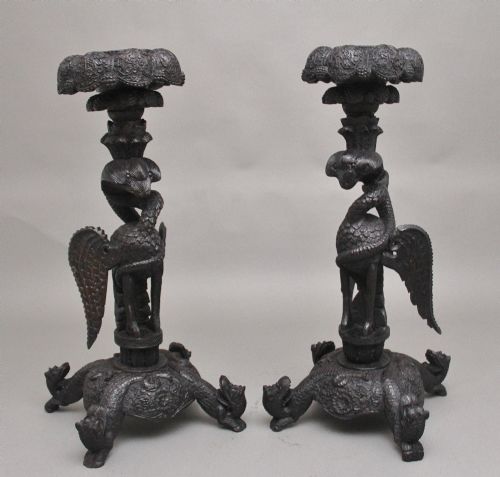
Surface finishes include original paint, silver leaf, giltwood, and polished wax over inlaid satinwood or fruitwood. Carvers applied detailed ornamentation by hand, producing folk art figures, fluting, and classical motifs.
Period styles represented include Georgian, Regency, Victorian, Edwardian, Arts and Crafts, and Louis XVI revival.
Evaluating craftsmanship and condition
Superior examples display crisp hand-carving and balanced proportions without clumsy timber replacements or structural sagging in the shafts. The integrity of the wood grain and the crispness of turned details define the grade of execution.
Original surface treatments, such as untouched green paint or patinated silver leaf, elevate the desirability over stripped or modernly refinished timber. The matching of the pair in height, timber grain, and wear patterns ensures visual harmony.
The Wooden Candle Stands Pair Glossary
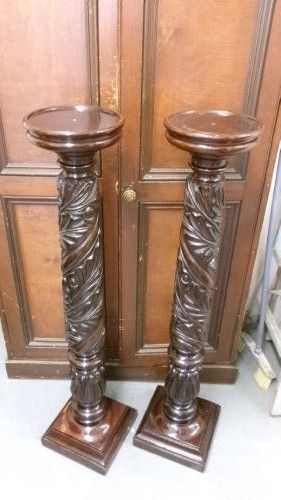
- Torchere
- A tall ornamental stand designed to hold a light or candle, frequently featuring a slender wooden column and raised base. These pieces often serve as corner accents in period interiors.
- Treen
- Small handmade wooden items produced from dense hardwoods, encompassing domestic objects and treen candlesticks. Collectors prize the smooth tactile quality of aged lignum vitae and boxwood.
- Barley Twist
- A spiral turning technique resembling a twisted rope, popular in seventeenth-century furniture revival pieces during the Victorian and Edwardian eras. This profile catches light effectively along the wooden shaft.
- Pricket
- A sharp metal spike set into the top of a candlestick to secure a candle, common in altar-style and continental designs. It differs from standard socket cups.
- Brighton Bun
- A small, portable turned wooden travelling candlestick that unscrews to store the candle safely inside. These compact items date primarily to the Edwardian period.
Wooden Candle Stands Pair: Frequently Asked Questions
How do I date an oak barley twist pair?
Examine the timber colour, tool marks inside any turned sockets, and the wear on the base. Seventeenth-century originals differ significantly in construction density from late Victorian or Edwardian revivals.
Check for hand-cut threads in adjustable mechanisms and the presence of old polish rather than modern varnishes.
Where should I place torcheres in a room?
Torcheres suit corners or flanking larger furniture items where their height draws the eye upward. They provide vertical balance in rooms with low ceilings.
Ensure they stand on level flooring to maintain stability when supporting heavy candles or lamps.
Are brass additions original to wooden candlesticks?
Many nineteenth and twentieth-century items combine turned timber with brass sconces or nozzles to catch wax drippings safely. Makers integrated brass components to protect the wood from direct heat.
Inspect the seating of the metal parts to verify they match the age and wear of the wooden base.
What maintenance do antique wooden candle holders require?
Keep wooden items away from direct heat sources and fluctuating humidity to prevent timber splitting or warping. Apply microcrystalline wax sparingly to nourish dry surfaces.
Avoid abrasive cleaners that strip historic patination and original painted or gilt finishes.