




Antique Millinery Stand
An antique millinery stand supports historical headwear with functional elegance, offering timeless utility for modern interiors.
Antique Millinery Stand
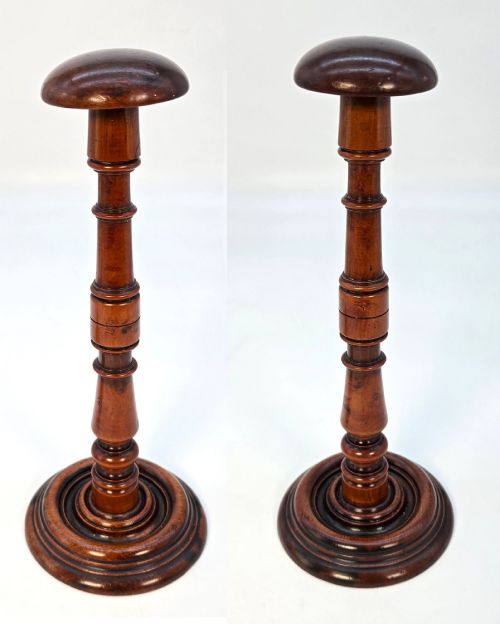
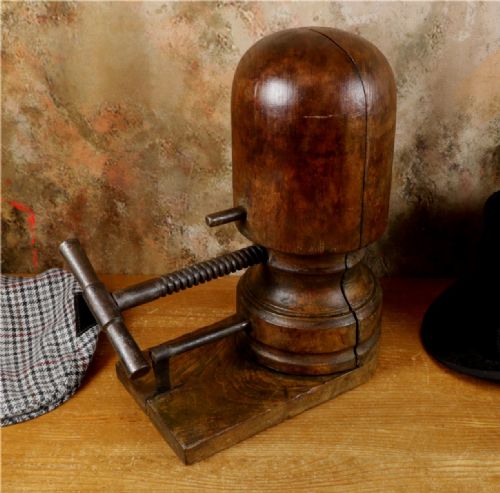
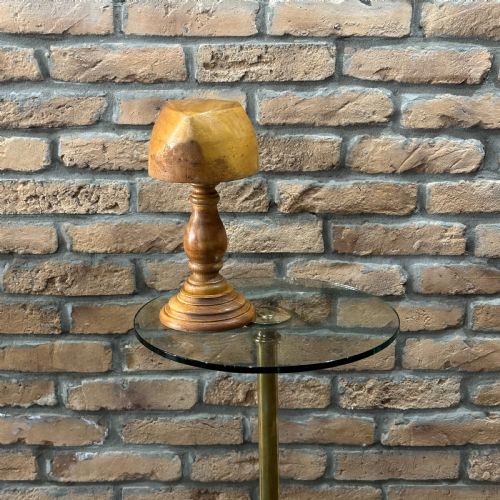
An antique millinery stand encompasses utilitarian forms designed for shaping, sizing, and displaying hats. Collectors searching this phrase encounter diverse objects including hat blocks, stretchers, wig displays, and countertop holders spanning from the Georgian period through the 1930s.
These items transition naturally from historic shop counters into domestic display spaces. They serve as sculptural objects that hold hats securely while adding period character to a room.
How they were made
Makers utilised dense timbers such as oak, beech, walnut, fruitwood, and mahogany, often shaping them by hand into precise cranial forms. Woodworking techniques included carving and joining solid blocks to withstand the pressure of stretching and forming hats.
Metal components combined cast iron and brass, utilised for adjustable display stems, weighted bases, and mechanical stretcher mechanisms. These robust materials ensured stability in bustling commercial haberdashery shops.
Antique Millinery Stand Retail Price Guide 2026
Typical asking prices for millinery stand among the pieces listed under this phrase on Sellingantiques today, from the lower quarter to the upper quarter. They describe what is for sale here now, not the wider market.
Carved folk art wooden heads retain the quiet gaze of silent shop assistants from past centuries.
What varies in quality
Quality rests in the sculptural integrity of the carved wooden form and the fidelity of the materials. Hand-carved folk art pieces and finely grained fruitwood display superior craftsmanship compared to plain utility items.
The proportion and weight of the base metalwork dictate the standard of display stands. Heavy cast iron and polished brass maintain better balance and structural honesty than lighter, utilitarian replacements.
The Antique Millinery Stand Glossary
- Hat block
- A shaped wooden form used by milliners to block and shape hats during creation. These forms dictate the final silhouette of the millinery.
- Hat stretcher
- A mechanical tool inserted into a hat crown to expand and adjust the size. They typically feature wooden segments operated by a central screw mechanism.
- Wig stand
- A pedestal or head form designed to support wigs and hairpieces when not in use. They share similar forms to millinery display stands.
- Haberdashery
- Items and fittings associated with dealers in small articles of haberdashery and clothing. Displays from this trade often feature robust iron and brass construction.
Antique Millinery Stand: Frequently Asked Questions
What is a millinery stand?
A millinery stand is a functional display piece or working tool used by hat makers and merchants. They support, shape, and exhibit historical headwear.
These items range from simple wooden countertop holders to adjustable metal display stems and carved head forms.
How were hat blocks used?
Hat blocks served as the primary wooden forms upon which wet felt or straw was stretched and dried to create a hat. Milliners relied on them to establish the correct crown size and shape.
Today, these blocks function primarily as sculptural decorative objects or displays for vintage collections.
Are these stands adjustable?
Some brass and cast iron display stands feature mechanical height adjustments designed for commercial shop counters. Other forms, such as solid wooden blocks and carved heads, remain fixed in their dimensions.
Buyers should examine the specific construction to determine if the height or mechanism moves.
How do I date a stand?
Dating relies on identifying the materials, joinery methods, and stylistic cues present in the wood or metal. Georgian and Victorian pieces show hand-tool marks and traditional timber selection.
Later 20th-century examples often incorporate industrial cast iron bases and machine-turned wooden components characteristic of Art Deco design.