
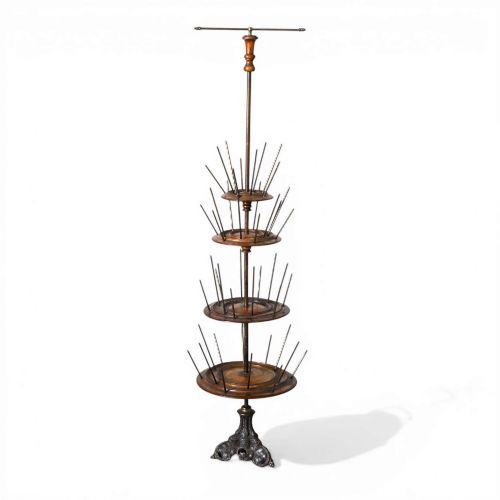


Brass Haberdashery Display
These brass haberdashery display pieces bring utilitarian shop fittings from the nineteenth and twentieth centuries into modern domestic interiors.
Brass Haberdashery Display
When you search for brass haberdashery display, you find functional commercial shop fittings designed for drapery shops, cotton merchants, and milliners. The pieces on this page span from Victorian and Edwardian examples to 1920s and 1930s commercial items.
The selection includes countertop needle drawer cabinets, cotton reel display trees, hat stands, and larger glazed display counters. These forms reflect the practical demands of retail trade before the era of self-service.
Most items combine brass framing or hardware with timber structures in oak or mahogany, frequently incorporating glass panels or cast iron bases. You encounter everything from revolving countertop hat stands to architectural display counters.
How they were made
Manufacturers built these retail fixtures to withstand heavy daily use in busy shops by combining durable metals with dense hardwoods. Brass provides structural framing and decorative trim, while cast iron frequently forms the heavy weighted bases of display stands.
Cabinets and counters utilise solid timber bodies in mahogany and oak, often paired with clear glass panels to showcase small wares like threads and buttons. Internal elements include mirrored backs and velvet linings designed to enhance the visual appeal of displayed goods.
Listings feature commercial items spanning from Victorian and Edwardian periods through to Art Deco styles of the 1930s.
What varies in quality
The distinction between standard commercial fittings and exceptional shop furniture lies in the Maker's mark and the refinement of the metalwork. Pieces produced by notable firms display superior casting quality in the brass components and more intricate joinery in the timber frames.
Originality of components also dictates the standing of a piece, particularly whether the glass, mirrors, and drawer pulls remain intact from the period of manufacture. Surviving maker plates and specialised retail hardware elevate the commercial interest of these items.
F. Sage & Co.·Saml. Elliott & Sons·Siegel
The Brass Haberdashery Display Glossary
- Draper’s counter
- A long shop table fitted with numerous small drawers or glazed display areas used for selling fabrics and sewing accessories. These counters formed the centrepiece of traditional textile shops.
- Cotton reel display tree
- A tiered metal stand designed to hold and display spools of sewing thread for customer selection. These rotating or stepped fixtures sat atop shop counters.
- Haberdashery cabinet
- A specialised piece of retail furniture featuring shallow drawers with glass fronts or pulls to organise small sewing goods. Collectors prize them for their modular storage design.
- Hat stand
- A vertical metal or wooden fixture designed to support millinery in shop windows or on counters. Refurbished brass examples often feature adjustable heights.
- Shop fitting
- Custom furniture and hardware built specifically for commercial retail premises during the nineteenth and early twentieth centuries. These items combined robust construction with functional display capabilities.
Brass Haberdashery Display: Frequently Asked Questions
What is a haberdashery cabinet?
A haberdashery cabinet is a specialised retail storage unit featuring multiple shallow drawers, often with glass fronts or brass pulls. They were originally used in drapery shops to organise small sewing notions such as buttons, ribbons, and threads.
Today, these cabinets work well in domestic settings for organising jewellery, stationery, or small collections while adding industrial character to a room.
How do I date a shop display stand?
Dating a display stand involves examining the materials, construction techniques, and stylistic markers such as Victorian ornamentation or Art Deco geometric lines. Heavier cast iron bases and ornate brass turning typically point to nineteenth-century manufacture.
Later pieces from the 1920s and 1930s often show more streamlined brass framing and simplified commercial designs associated with interwar shop architecture.
Where were these display pieces used?
These items originated in turn-of-the-century retail environments, including drapery stores, milliners, and cotton merchants. They stood on sales counters, in shop windows, or along the floor to present goods clearly to customers.
In modern interiors, collectors repurpose these commercial fixtures as freestanding display units in living spaces, kitchens, or retail boutiques.
Are the brass elements original?
Many pieces retain their original unpolished brass framework, handles, and cast fittings, showing patination acquired through decades of commercial use. Some items undergo professional refurbishment to restore the finish of the metal components.
Checking for consistent wear across the brass and iron parts helps determine whether the hardware matches the age of the wooden structure.