
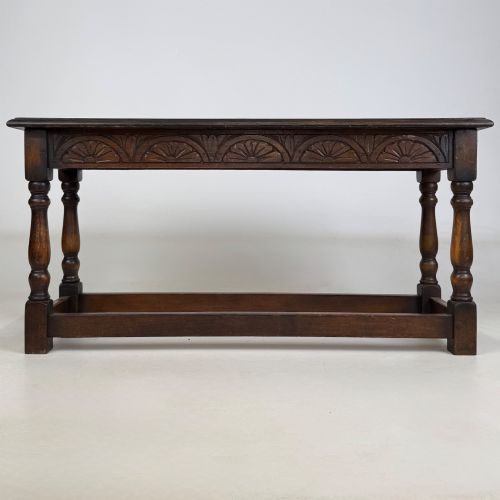
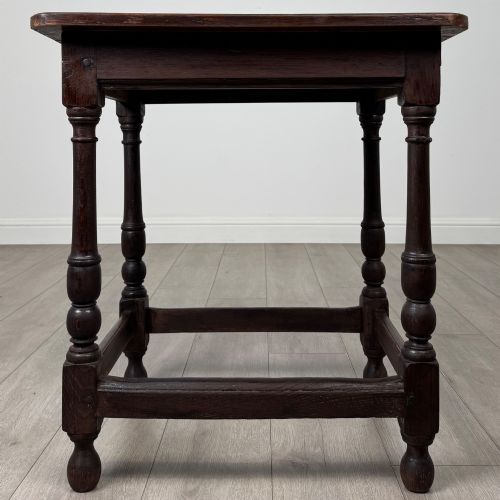
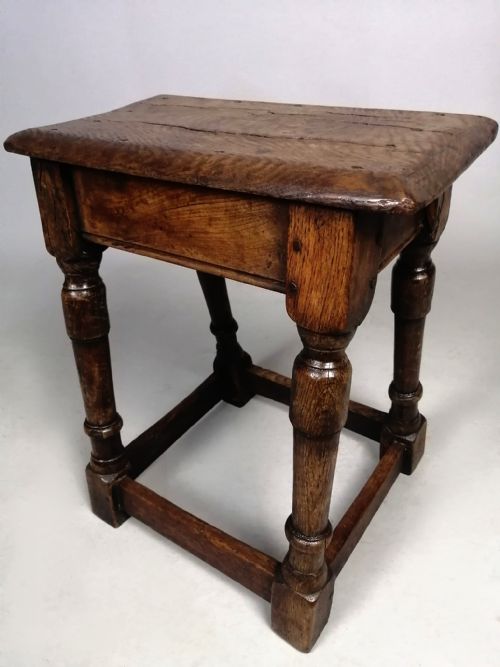
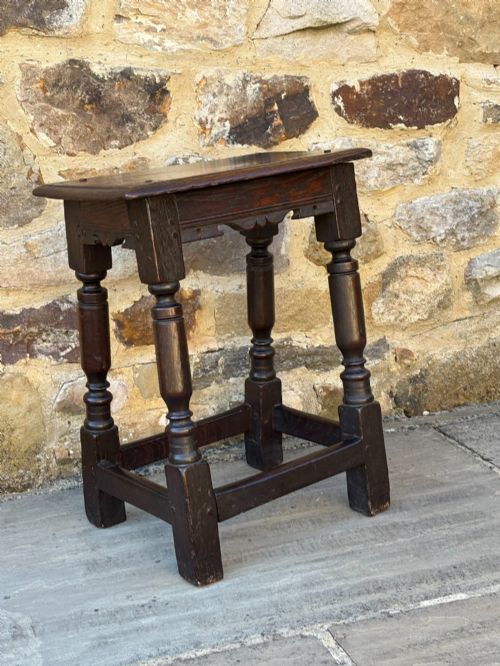

Turned Leg Joint Stool
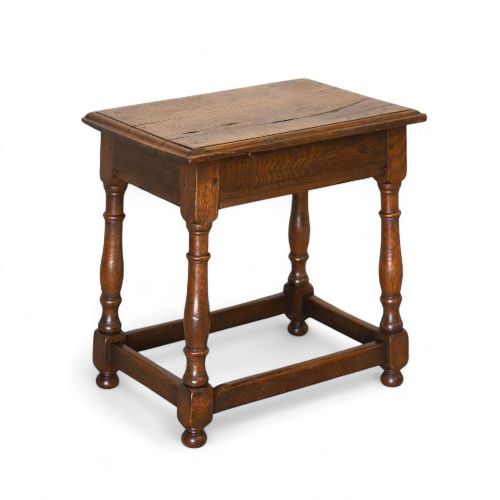
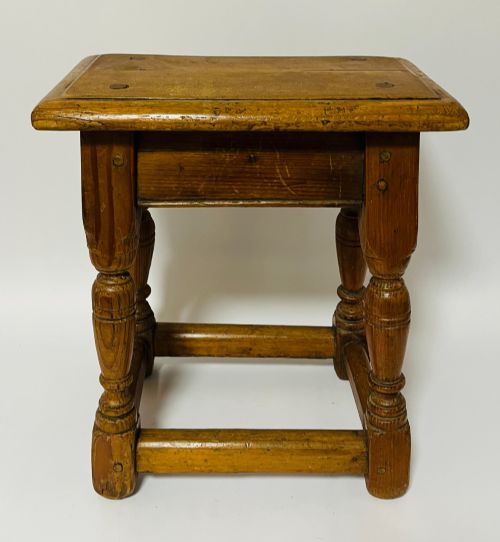
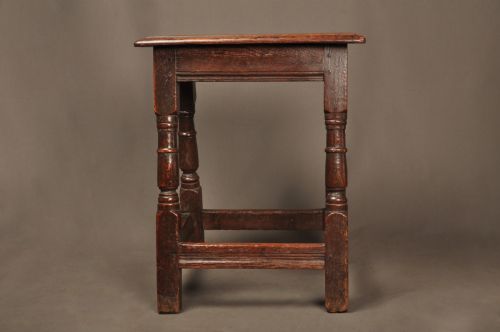
A turned leg joint stool is a rigid, pegged seat built to last generations, valued for its honest construction and architectural presence.
Turned Leg Joint Stool
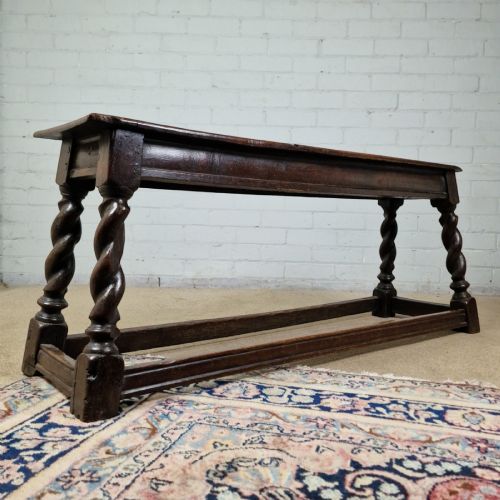
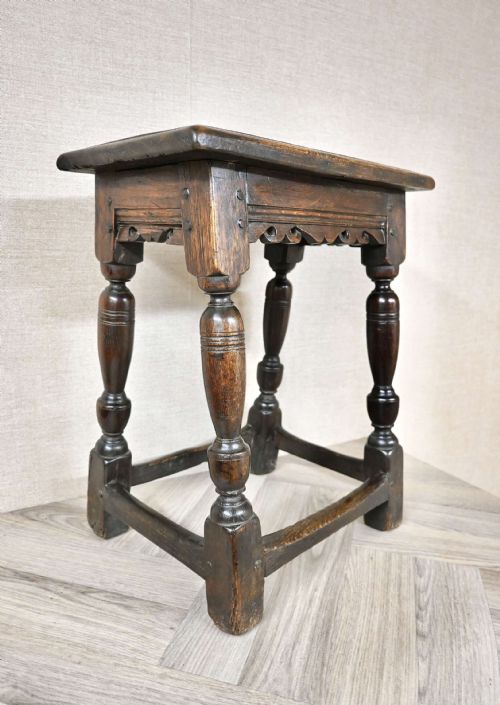
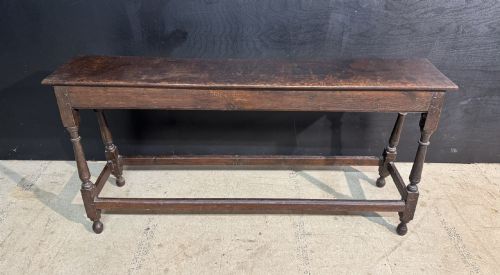
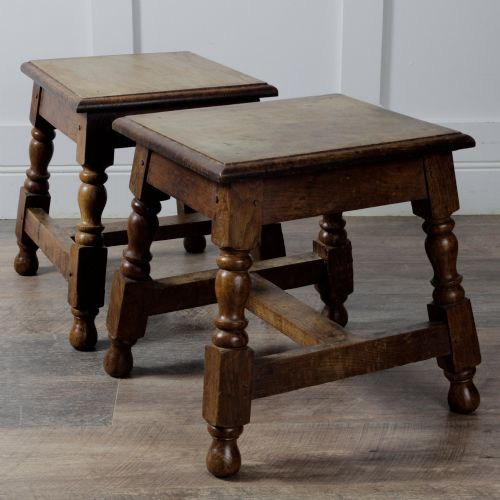
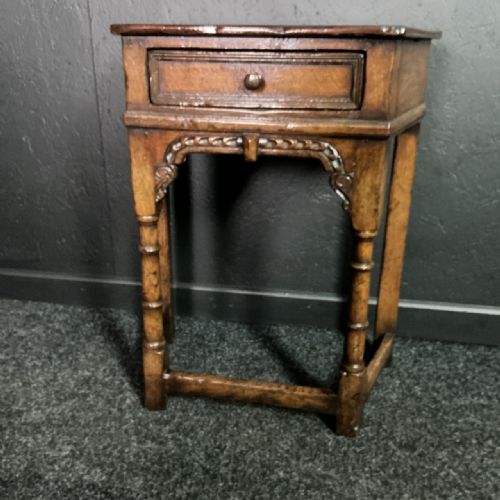
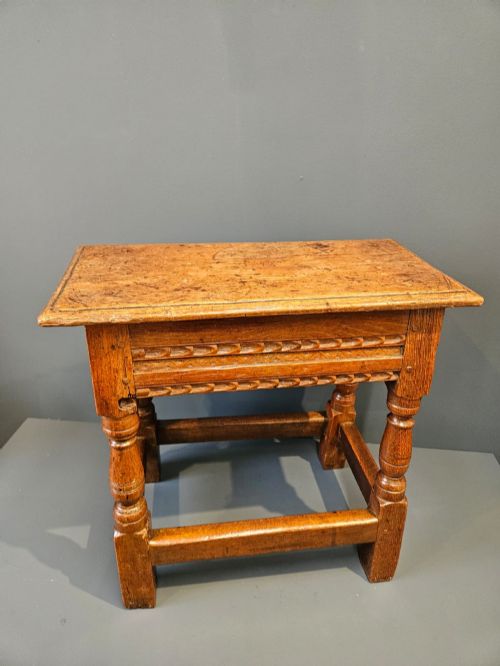
A turned leg joint stool represents a sturdy form of seating historically constructed using pegged mortise and tenon joints rather than glue. When buyers search for a turned leg joint stool, they encounter examples originating from the seventeenth century through to later revival periods in the nineteenth and twentieth centuries.
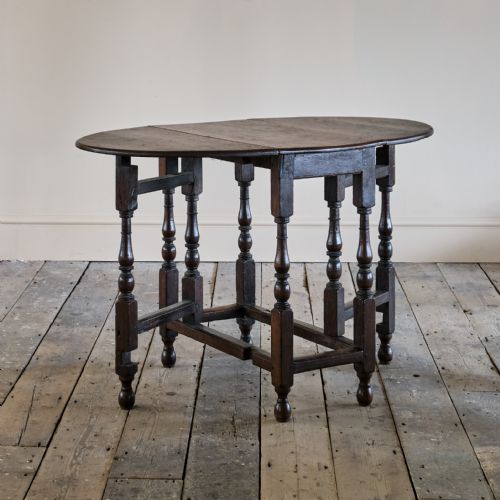
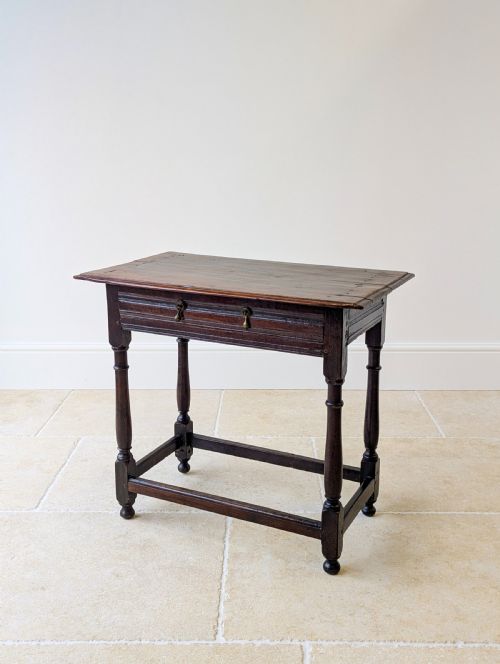
Originating as practical household furniture, these objects frequently double as low side tables or footstools in modern interiors. Provincial English workshops produced the majority of these pieces, utilising durable local timbers that have developed rich patinas over centuries of use.
What varies in quality
Quality in a turned leg joint stool rests upon the integrity of the original timber and the crispness of the turned leg details. Pieces retaining their primary structural pegs and untouched surface patinas command greater appreciation from collectors than those with heavy replacement parts.
Proportion and timber selection also divide the standard examples from the finer survivals, particularly where grain matching and secondary woods are concerned. Provincial pieces show distinct regional characteristics in their turning, reflecting the individual skill of the carpenter.
Several miniature versions appear among the listings, originally built to seat a beloved teddy bear or doll.
The Turned Leg Joint Stool Glossary
- Joint stool
- A wooden stool built with pegged mortise and tenon joints rather than traditional glued joinery. This construction method provides exceptional rigidity and strength to the frame.
- Mortise and tenon
- A joint connecting two pieces of wood where a protruding tongue fits tightly into a corresponding cavity. It forms the structural skeleton of early seating furniture.
- Turning
- The process of shaping wood on a lathe by rotating the material against cutting tools. It creates symmetrical ornamental profiles on the legs of tables and stools.
- Patina
- The surface sheen and colour acquired by wood over decades of handling, light exposure and polishing. A rich patina indicates age and continuous domestic use.
Turned Leg Joint Stool: Frequently Asked Questions
What is a joint stool?
A joint stool is an early form of domestic seating built by specialist carpenters using pegged mortise and tenon joinery. These sturdy pieces served various household functions well before chairs became common.
They gain their name from the joined timber framework rather than any folding mechanism. Today, they function as occasional seating, bedside stands or display surfaces.
How old is my joint stool?
Determining the age of a turned leg joint stool involves examining the tool marks, timber shrinkage and construction methods. Seventeenth-century examples typically display hand-split oak and vernacular turning.
Later revival pieces from the nineteenth and twentieth centuries often show mechanical saw marks and standardised turning patterns. Comparing the colour and wear patterns to documented period examples helps confirm the date.
Can I use a joint stool as a table?
These stools make excellent small side tables or bedside stands due to their flat tops and sturdy proportions. Their compact footprint allows them to fit easily into tight spaces.
Using them for display places minimal stress on the ancient timber frames. Ensure the surface remains protected from moisture to preserve the historic finish.
How do I care for antique oak?
Maintaining antique oak requires keeping the timber away from direct heat sources and rapid humidity changes. Natural beeswax applied sparingly helps nourish the dry wood.
Avoid modern liquid polishes that can build up sticky residues over the historic surface. Gentle dusting with a dry cloth keeps the patina clean and stable.