

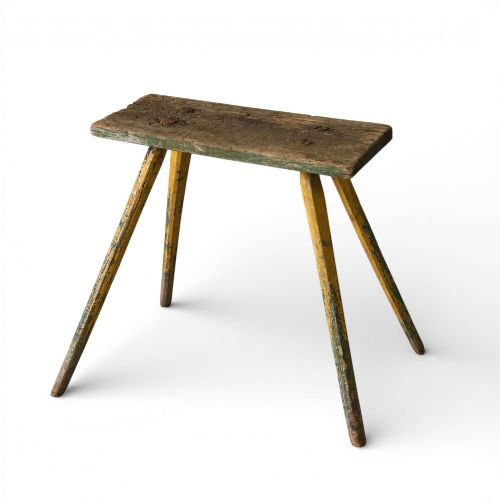
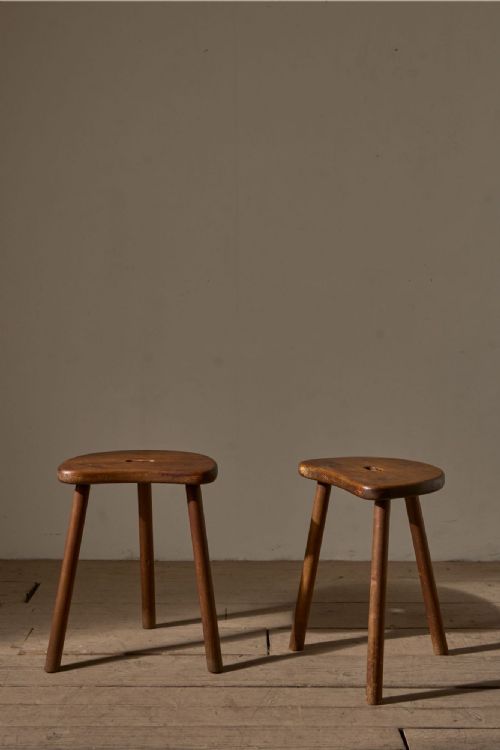


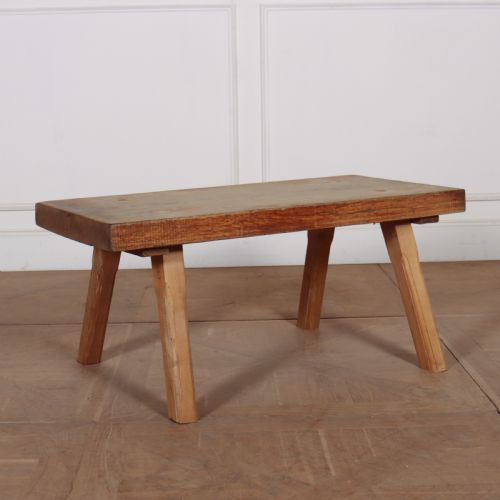
Rustic Pine Low Stool
A rustic pine low stool brings honest country character into a room with its simple, utilitarian form and weathered timber surface.
Rustic Pine Low Stool
When you search for a rustic pine low stool, you encounter low seating designed for functional utility rather than formal display. These pieces originate from the nineteenth century, encompassing vernacular designs from French, Eastern European, and British traditions.
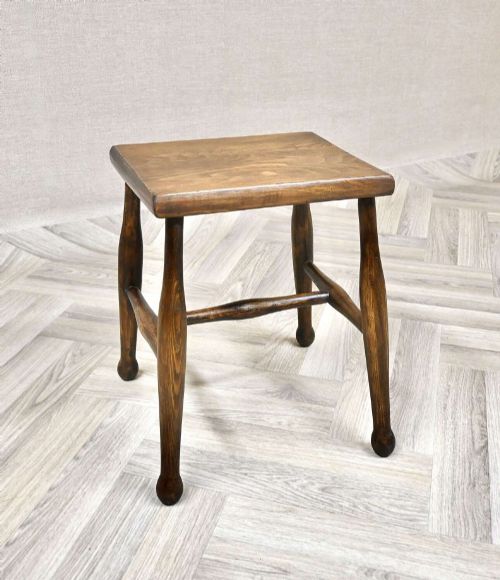
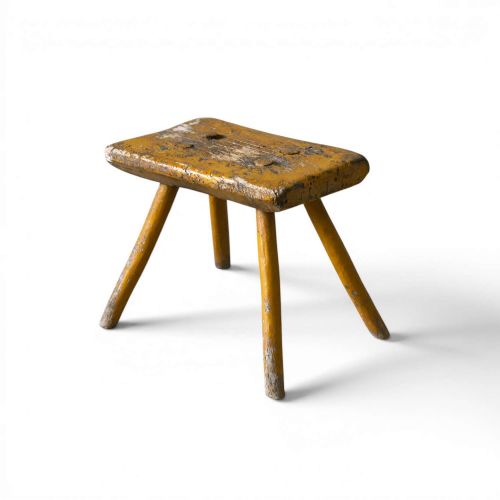
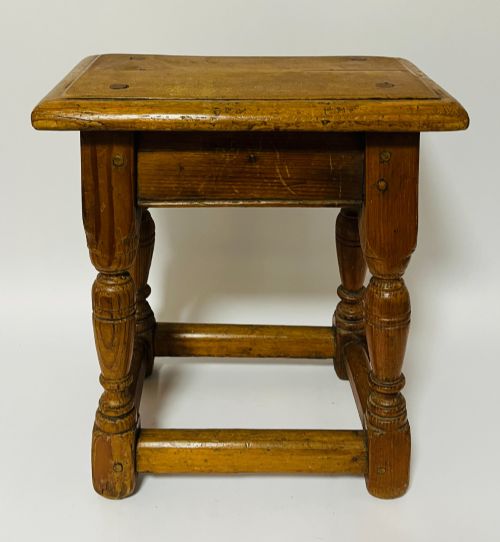
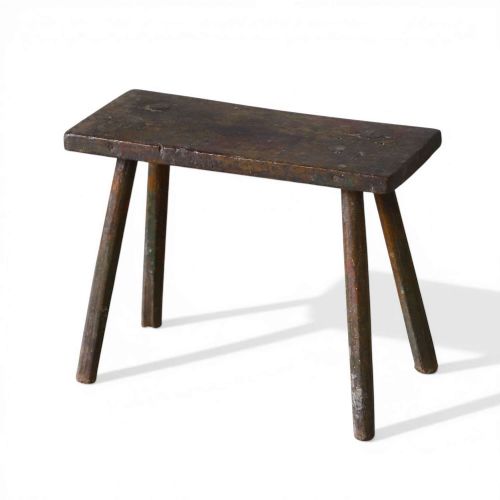
The selections available here lean heavily towards milking stools, joint stools, and hearth stools. Alongside these, you find occasional tables and coffee tables that share the same low, unpretentious aesthetic.
Most examples date across the nineteenth century and around nineteen hundred. They serve today as compact seats, side tables, or display surfaces in contemporary interiors.
How they were made
Constructed primarily from solid pine, elm, ash, and oak timber, these stools rely on straightforward carpentry techniques developed for daily agricultural and domestic labour. Makers turned legs on lathes or shaped them by hand, joining them directly to solid wooden seats.
Many surviving pieces retain their original surface treatments, including ochre paint, green paint, or aged clear finishes. These coatings protect the wood while recording decades of workshop or farmhouse use.
Rustic Pine Low Stool Retail Price Guide 2026
Typical asking prices for rustic pine low stool among the pieces listed under this phrase on Sellingantiques today, from the lower quarter to the upper quarter. They describe what is for sale here now, not the wider market.
A milking stool had to balance on three legs because four would wobble on a muddy barn floor.
What varies in quality
The distinction between standard utility items and finer examples rests upon the preservation of original finishes and the integrity of the timber. Pieces retaining untouched layers of early paint command greater interest from collectors.
The Rustic Pine Low Stool Glossary
- Milking stool
- A small, three-legged seat traditionally used by agricultural workers during milking. They typically feature a simple slab seat and splayed legs for stability on uneven floors.
- Joint stool
- A sturdy wooden seat constructed with mortise and tenon joints by traditional joiners rather than vernacular makers. These pieces usually display more formal turning on the legs.
- Vernacular
- Objects designed and built by local craftspeople for practical everyday use rather than following high-style academic design. This term covers regional country furniture made without architectural pretensions.
- Ochre
- An earth pigment used historically to create a warm yellow-brown paint finish. It appears frequently on Eastern European country pieces.
Rustic Pine Low Stool: Frequently Asked Questions
How were low stools used originally?
These low seats served practical domestic and agricultural tasks such as milking cows, tending hearth fires, or working low to the ground. Their compact height kept workers stable and mobile within farmhouses and barns.
Over time, these utilitarian objects transitioned from agricultural tools into decorative furnishings valued for their honest proportions and historic patination.
How do I style a low stool at home?
A low stool functions well as a compact seat, a bedside perch, or a small display surface for plants and books. Their modest scale allows them to fit easily into tight corners or beside larger upholstered furniture.
Pairing a painted or unpainted timber stool with modern interiors creates a deliberate contrast between sleek surfaces and historic textures.
How do I date a nineteenth century pine stool?
Dating relies on examining tool marks, construction methods, timber wear, and the composition of any remaining paint layers. Hand-sawn boards and old handmade fixings often point towards the nineteenth century.
Surface patination accumulated through decades of use provides further visual clues to the age and history of the piece.