

Antique Wooden Joint Stool
An antique wooden joint stool is a sturdy, pegged seat built to last centuries, combining utilitarian strength with period charm.
Antique Wooden Joint Stool
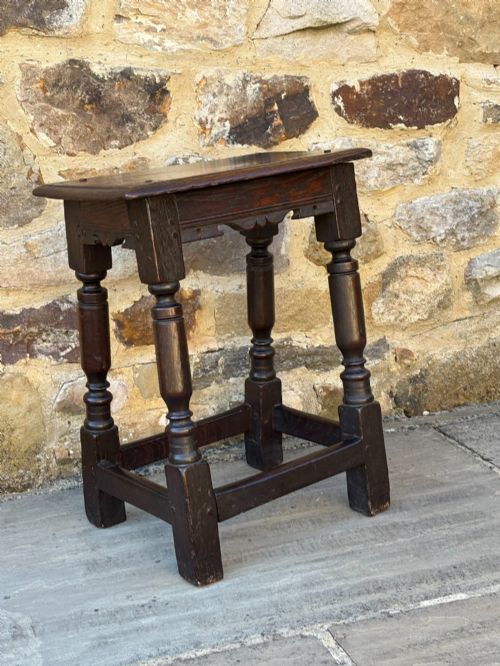
An antique wooden joint stool is a solid, timber-framed seat constructed with pegged joints rather than modern fasteners. When searching this phrase, buyers encounter examples spanning from the seventeenth century through to later revival periods.
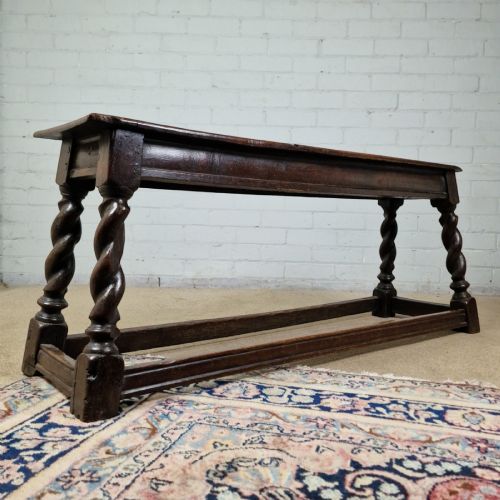
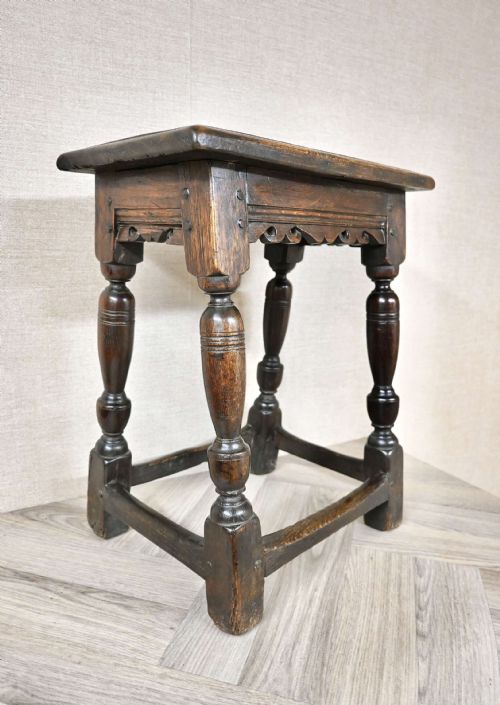
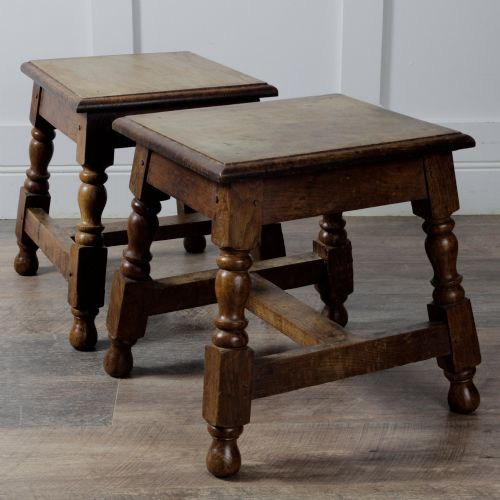
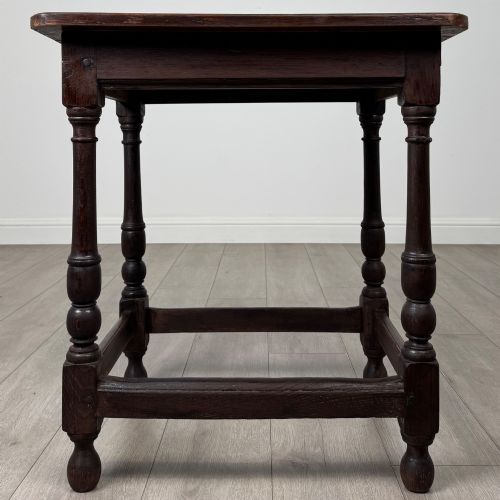
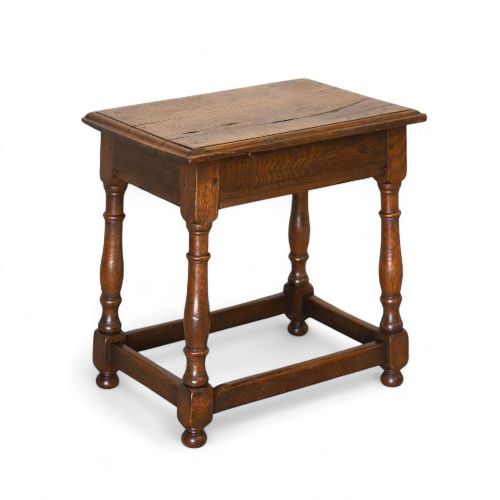
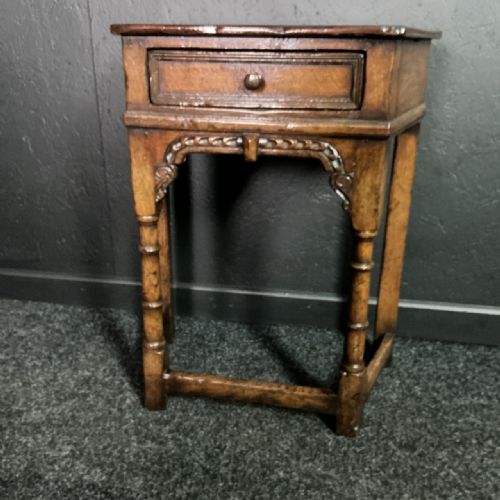
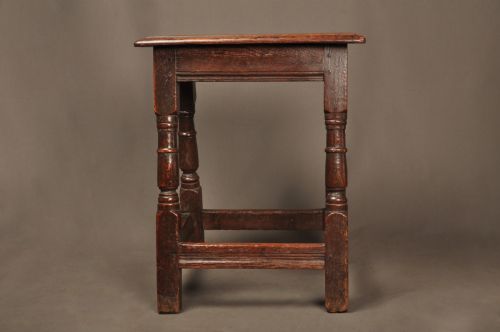
The most common form met here is the rectangular oak stool, often featuring turned legs and stretcher rails for stability. Pieces range from provincial seventeenth-century originals to nineteenth-century interpretations and later Jacobean revival pieces.
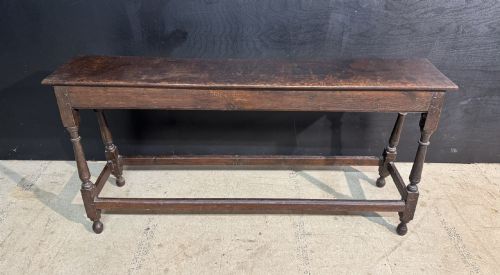
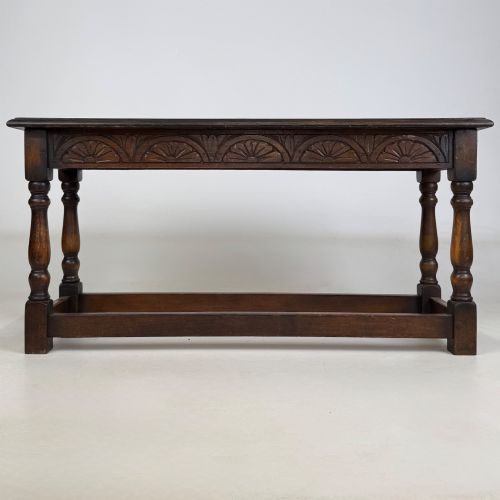
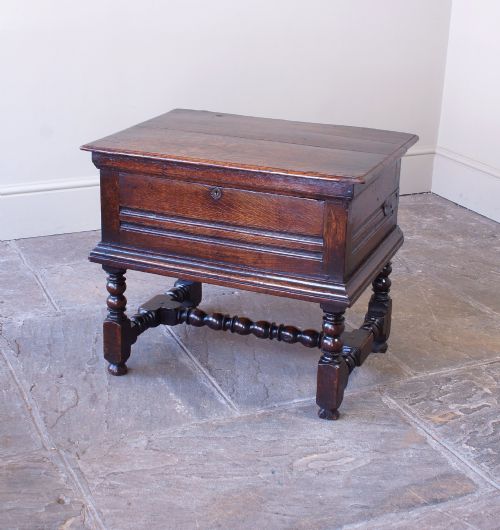
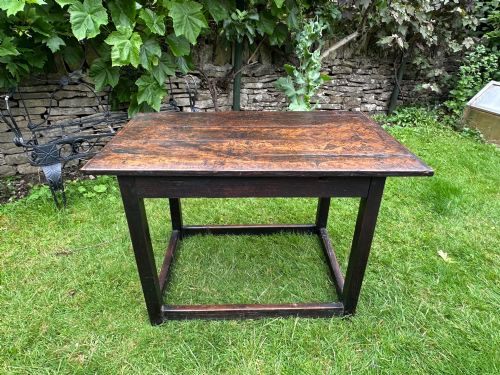
Beyond standard seating, variations include box stools, long stools, and occasional pieces incorporating elm or yew wood alongside the predominant oak. These items served diverse domestic roles in early English homes, functioning as seats or small tables.
Materials and construction
Makers relied principally on native timber, selecting oak for its density and durability, occasionally supplementing it with elm, yew wood, or pine. Planks were shaped using traditional hand tools, resulting in visible grain and surface texture.
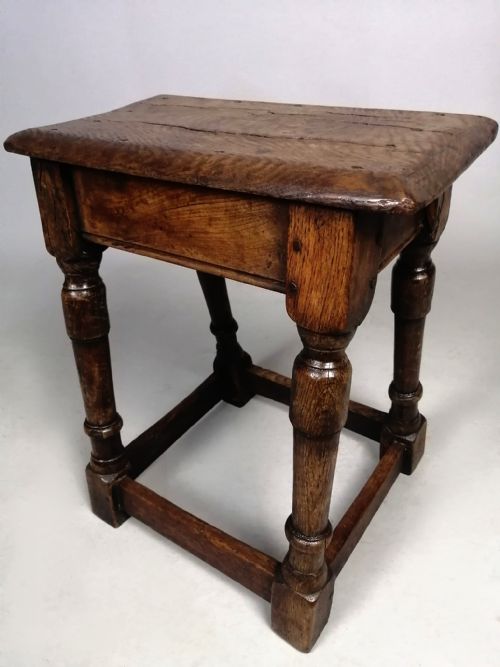
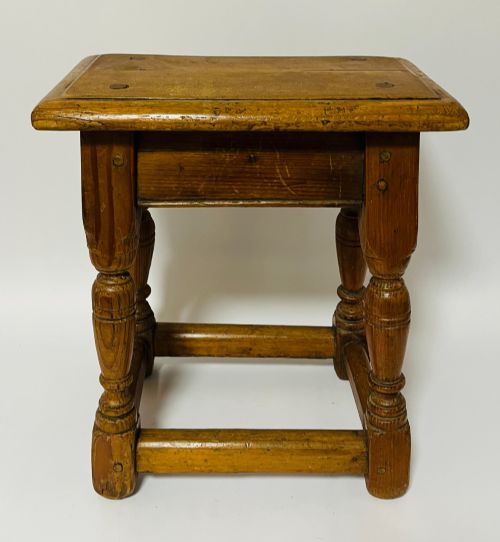
Construction depended upon pegged mortise and tenon joints, a method that locked the frame together tightly without metal nails. This rigid framing technique explains why many early examples survive intact today.
Several stools double as close stools, reminding us that early furniture often kept practical secrets hidden beneath the seat.
What separates examples
Quality rests in the proportion of the frame and the integrity of the original pegged construction. Earlier pieces display hand-turned legs and crisp architectural moulding that reflect the standards of their period.
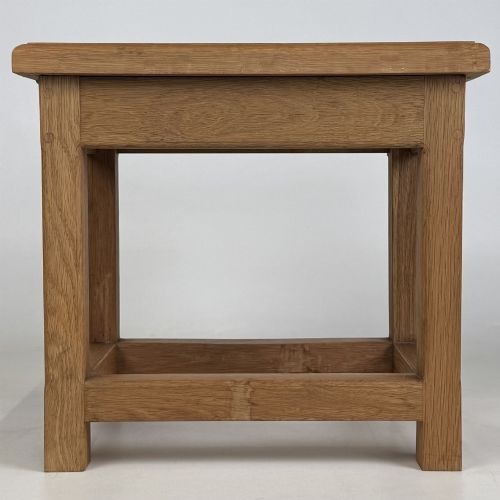
Surface finish and timber patination define the visual merit of each piece, with natural wear over centuries producing a rich depth. Later revival items show different degrees of craftsmanship, ranging from faithful historical copies to simpler decorative seating.
The Antique Wooden Joint Stool Glossary
- Joint stool
- A sturdy wooden seat joined by means of wooden pegs rather than glue or metal nails. The term derives from the joinery trade of the period.
- Mortise and tenon
- A traditional woodworking joint where a protruding peg fits tightly into a matching cavity. This method provides the structural rigidity found in period frames.
- Stretcher
- A horizontal rail connecting the legs of a stool to add stability and strength. On joint stools, these rails often double as footrests.
- Plank top
- A seat constructed from solid boards joined side by side. These tops show the natural grain and historic wear of the timber.
- Box stool
- A variant featuring a recessed compartment beneath the seat for storage. These pieces sometimes served dual purposes in the household.
Antique Wooden Joint Stool: Frequently Asked Questions
What is a joint stool?
A joint stool is an early form of wooden seating constructed by specialist joiners using tight mortise and tenon joints held together with wooden pegs.
Unlike chairs, which were scarcer in early households, these heavy timber stools provided portable seating or served as raised platforms for various domestic tasks.
How old are these stools?
The pieces available range from authentic seventeenth-century examples down to nineteenth-century provincial items and later revival interpretations from around nineteen hundred.
Dates are determined by examining the timber species, tool marks left during shaping, and the wear patterns accumulated across the wooden frames.
Were they used just for sitting?
While primarily built as seats, their flat tops and sturdy frames meant they frequently doubled as small side tables or stands for household objects.
Some variants included enclosed box sections underneath the seat, offering discreet storage for small valuables or domestic items.
What woods were used?
English oak forms the primary material for the vast majority of these pieces, valued for its strength and availability in early workshops.
Cabinet makers also incorporated elm and yew wood into specific components like seats and occasional tables, while pine appears in later or more provincial examples.
How do I care for antique oak?
Keep wooden stools away from direct heat sources and sudden temperature shifts to prevent the dry timber from splitting or warping.
Apply traditional beeswax occasionally to nourish the surface and maintain the natural patination built up over centuries of handling.