


Traditional Jointed Stool
A traditional jointed stool is a sturdy wooden seat built with mortise and tenon joints, offering solid domestic utility through centuries of British home life.
Traditional Jointed Stool
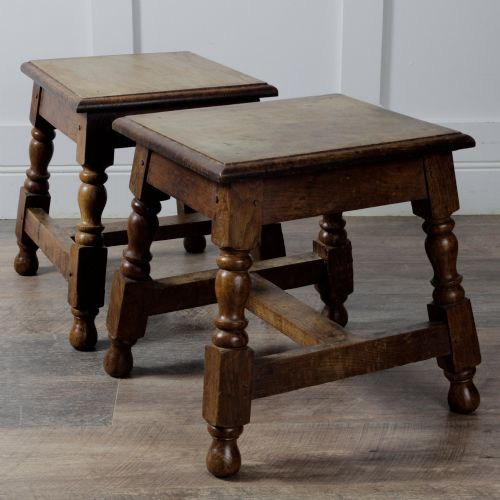
A traditional jointed stool is fundamentally a piece of utilitarian seating constructed from sturdy timber using pegged frames rather than glued joints. When exploring these listings, buyers encounter forms spanning from the seventeenth century through to the mid-twentieth century, with nineteenth-century and early twentieth-century interpretations appearing most frequently.
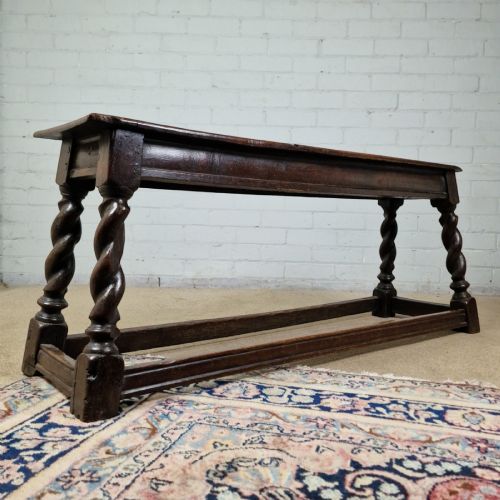
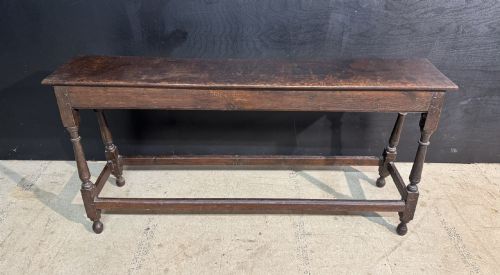
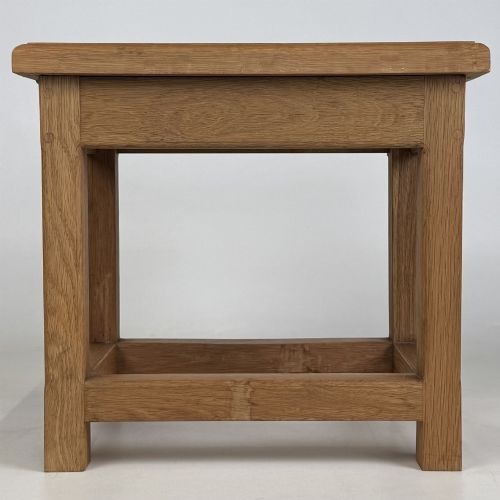
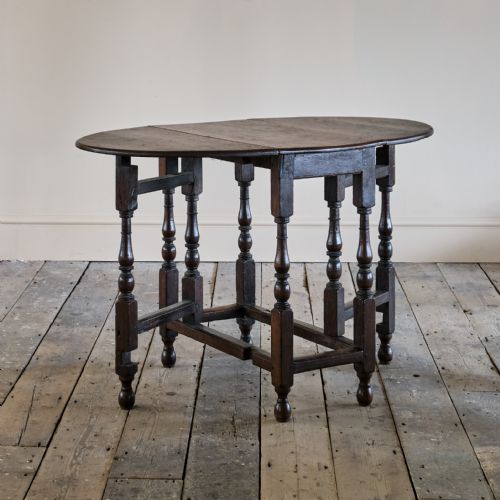
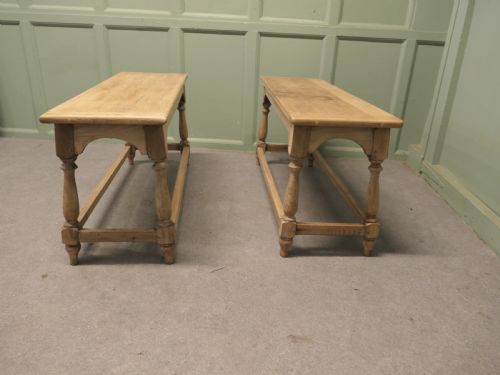
The material palette is dominated by various forms of oak, alongside occasional examples in yew wood, pine, and bleached oak. Alongside standard single-seat stools, the selection includes long benches, box stools with storage compartments, and low side tables sharing the same rigid construction methodology.
Materials and construction methods
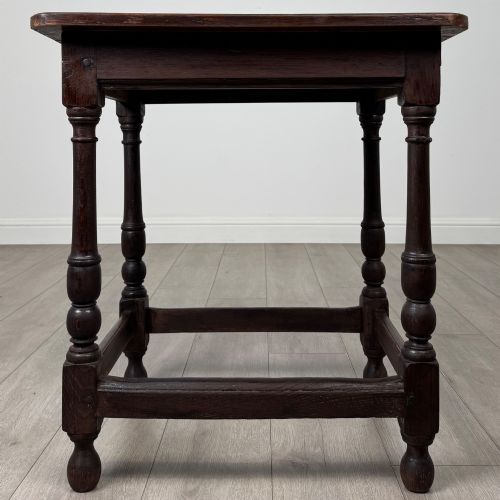
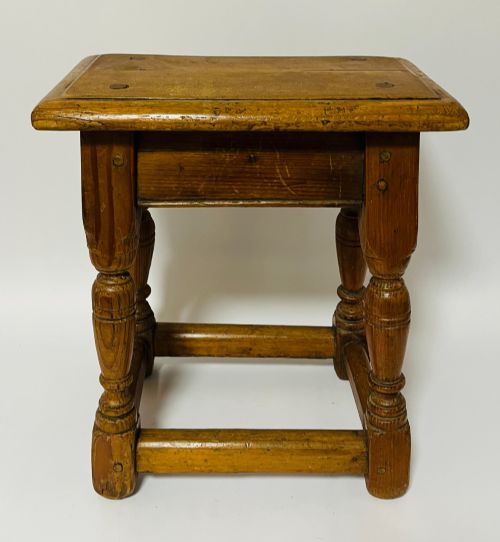
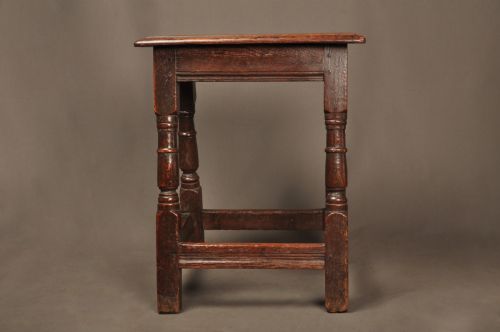
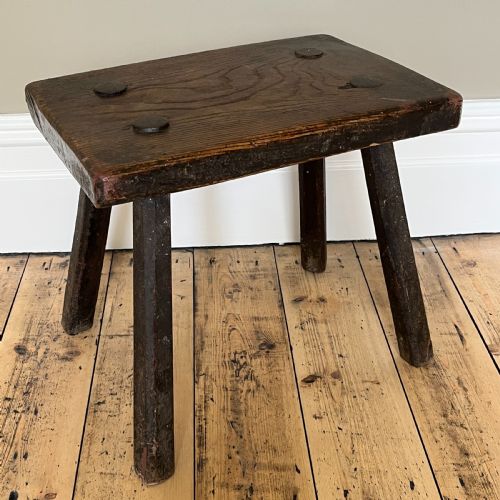
Makers relied heavily on solid English oak, yew wood, and pine, often utilising pegged construction to lock the mortise and tenon joints securely in place. This rigid framing technique eliminated the need for complex metal fasteners, relying instead on wooden dowels to withstand daily household wear.
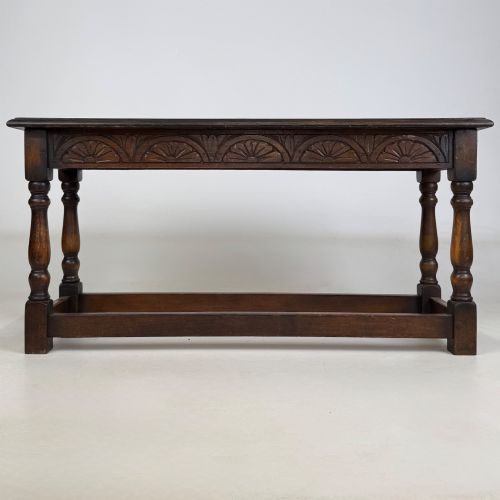
Surface detailing ranges from plain timber planks to carved friezes, sometimes supplemented by simple upholstery, fabric additions, or brass fittings. Bleached finishes and natural patination develop across the wood surfaces through age and exposure, preserving the direct character of country workshop production.
Listings feature solid oak, yew wood, and pine across periods from the seventeenth century to the mid-twentieth century.
Assessing build quality and period integrity
The distinction between ordinary utility pieces and finer examples rests on the crispness of the timber framing and the integrity of the pegged joints. Heavier scantlings of solid oak and balanced proportions elevate certain pieces above standard vernacular workshop output.
Judicious integration of period characteristics, such as authentic pegging and appropriate timber shrinkage, separates honest early examples from later revival pieces. The tactile quality of the wood surface, whether left plain or featuring restrained carving, dictates the overall character of the piece.
David Oakleafman Langstaff
The Traditional Jointed Stool Glossary
- Joint stool
- A wooden seat constructed with mortise and tenon joints secured by wooden pegs. This rigid method provides exceptional stability for domestic use.
- Pegged construction
- A method of joining timber components using wooden dowels driven through tightly fitted joints. This technique maintains structural strength without relying on modern adhesives.
- Five-plank stool
- A simple form of seat constructed from five separate pieces of timber joined at right angles. It represents an early, straightforward approach to utilitarian furniture making.
- Box stool
- A seat featuring an enclosed storage compartment beneath the top board. These pieces combined domestic seating with practical utility for small items.
- Jacobean Revival
- A nineteenth-century style replicating the heavy, rectilinear forms and carved decoration of the early seventeenth century. It frequently appears in nineteenth-century oak seating.
Traditional Jointed Stool: Frequently Asked Questions
What is a traditional jointed stool?
A traditional jointed stool is a rigid wooden seat assembled with mortise and tenon joints secured by wooden dowels. These pieces served versatile roles in early homes as seats, small tables, and portable stands.
Most surviving examples are constructed from solid oak or yew wood, reflecting centuries of practical vernacular furniture design across Britain.
How were these stools originally used?
These stools provided movable seating around the hearth or dining table before upholstered chairs became common household items. Their sturdy frames also allowed them to function as temporary step-ups or side surfaces for domestic tasks.
Box variations offered hidden storage for small household goods, combining utility with compact seating.
How do I identify seventeenth-century style from later revivals?
Seventeenth-century style pieces often feature characteristic geometric mouldings, turned legs, and hand-carved friezes. However, many examples seen today date from nineteenth-century revival periods replicating those earlier forms.
Examining the timber grain, tool marks, and peg construction helps determine whether a piece is an early original or a later homage.
How do I care for antique oak stools?
Antique oak furniture requires stable indoor humidity levels to prevent the solid timber from splitting or warping. Occasional application of bees-wax helps nourish the dry wood and maintain its natural lustre.
Avoid placing these pieces near direct heat sources or in strong sunlight to preserve the historic patina.