
Turned Leg Gateleg
Turned leg gateleg tables offer clever folding surfaces and sturdy frames, making them essential finds for flexible spaces.
Turned Leg Gateleg
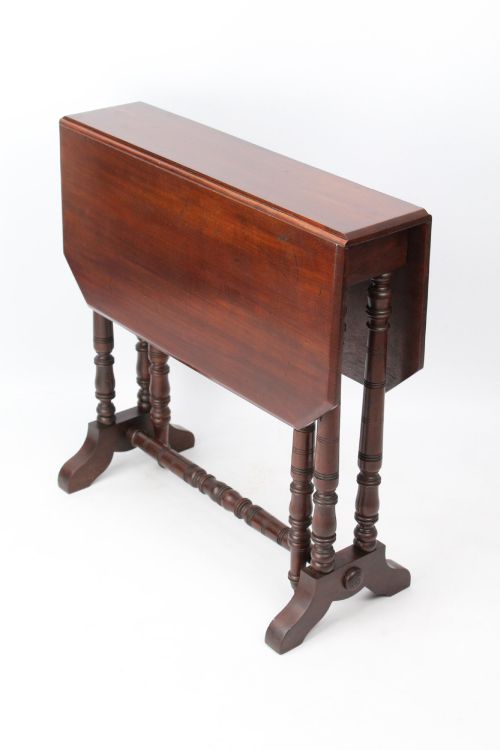
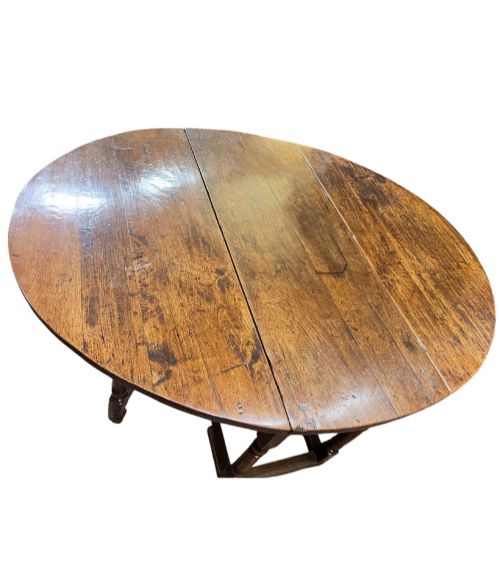
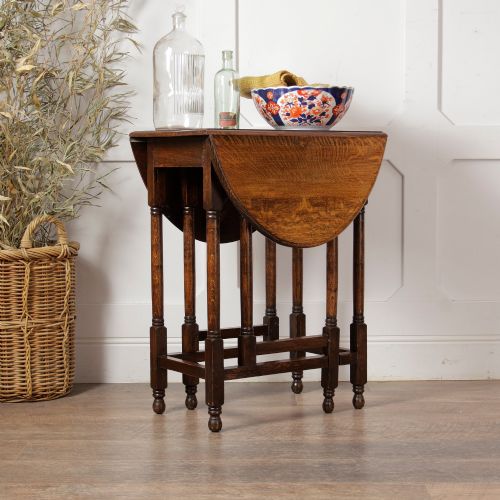
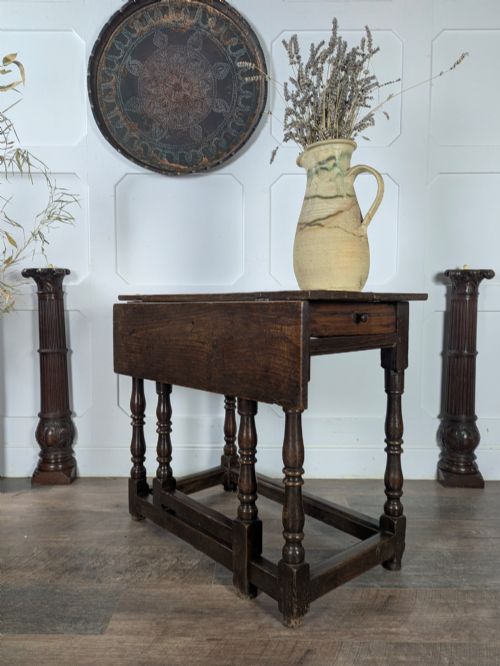
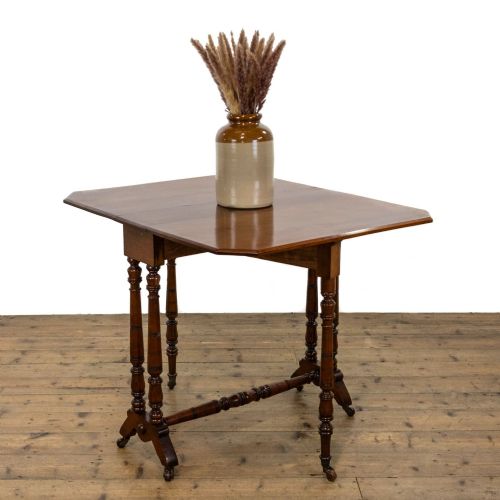
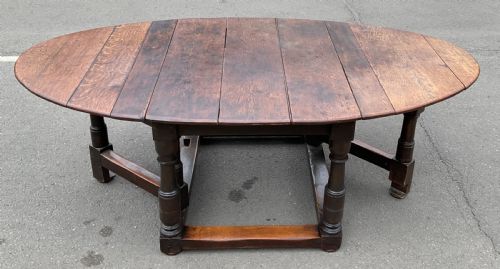
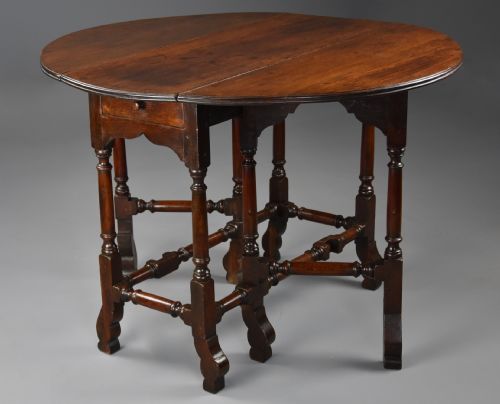
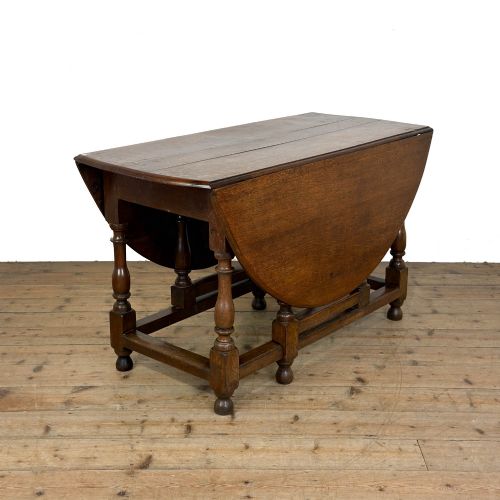
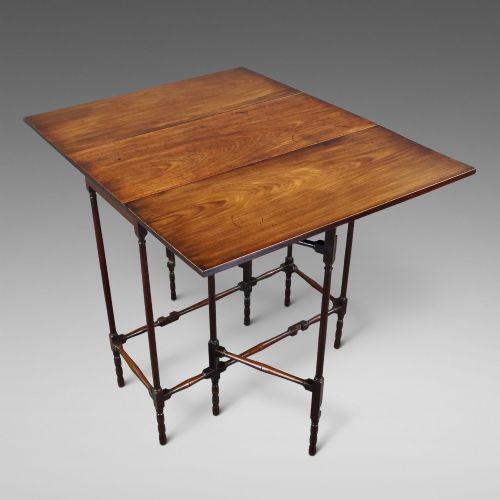
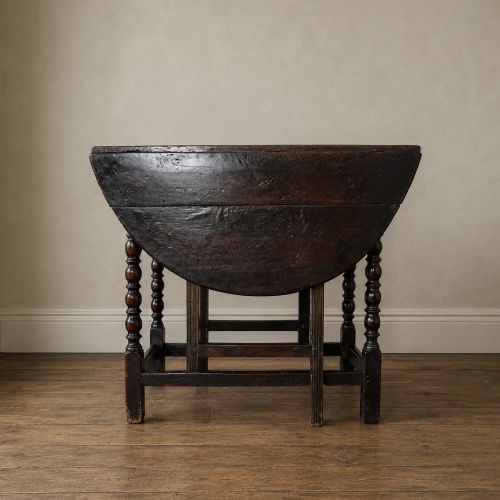
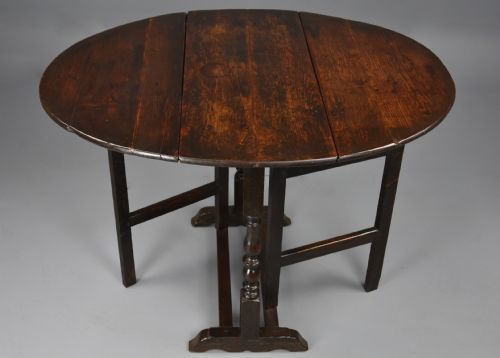
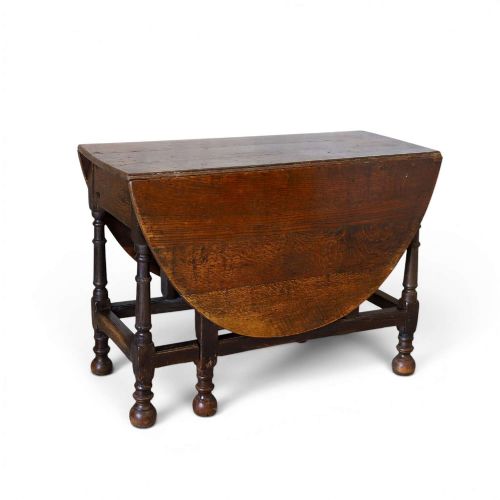
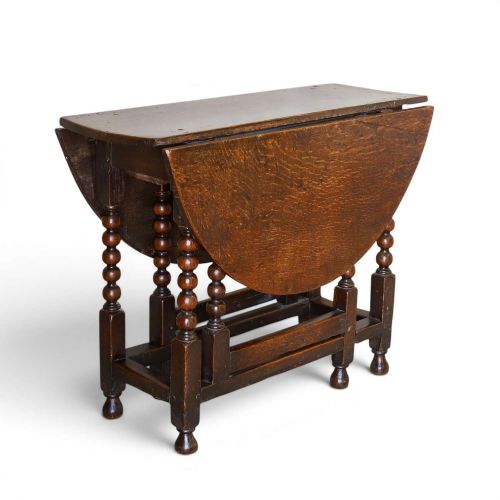
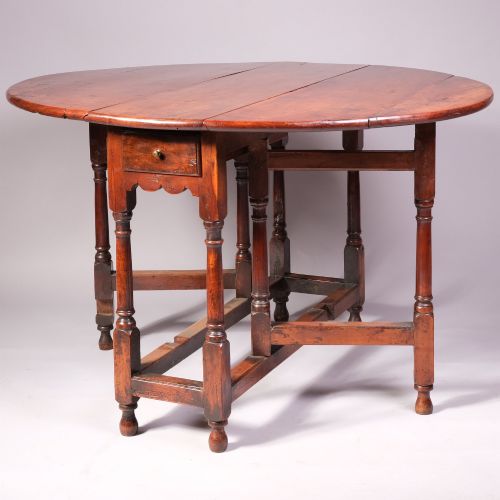
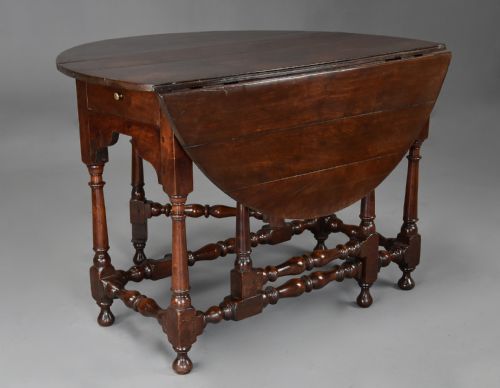
A turned leg gateleg table is a form of drop-leaf furniture where hinged flaps are supported by swinging legs. When you search for turned leg gateleg, you meet pieces primarily shaped from oak and walnut across the seventeenth, eighteenth, and nineteenth centuries. These tables range from compact side versions to large dining pieces designed to seat several guests comfortably.
The versions most common on this page date from the seventeenth and eighteenth centuries, frequently featuring robust oak frames and characteristic turned supports. Alongside these early pieces, you encounter later Victorian and Edwardian examples in mahogany and walnut. Forms span dining tables, side tables, and occasional tables with drop leaves.
Materials and construction
Cabinet makers utilised dense hardwoods such as oak, walnut, and mahogany to build these folding frames. Turnery methods shaped the legs into baluster, bobbin, or spider leg profiles, providing structural rigidity while the central frame remained fixed.
Hinges connected the drop leaves to the static top, allowing the flaps to lower when not in use. Swing legs pivoted outward from the gate mechanism to bear the weight of the extended leaves.
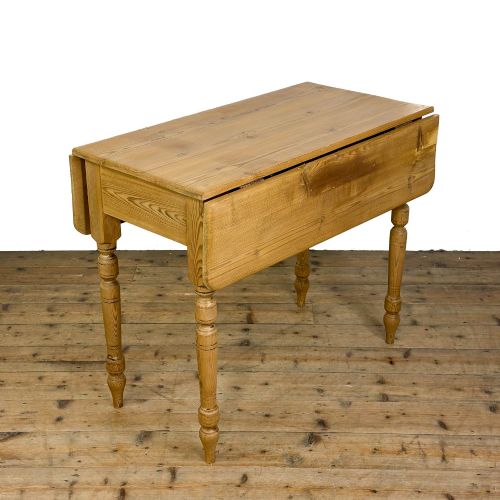
Table forms on this page include dining tables, side tables, occasional tables, and kitchen drop leaf variants.
Assessing quality
Quality rests in the harmony of proportions, the crispness of the turnery, and the integrity of the original timber. Early pieces retain deep natural patination on the surface gained through centuries of gentle use.
Finer examples display careful selection of grain, particularly in walnut and oak veneers, alongside original iron or brass hinges that show no signs of modern replacement.
The Turned Leg Gateleg Glossary
- Gateleg
- A table with hinged leaves supported by swing legs that pivot outward like a gate. This clever design allows the surface area to expand or contract as needed.
- Baluster turned
- A leg turned on a lathe to resemble a classical architectural column, swelling in the lower section. This form provides substantial support for seventeenth century dining tables.
- Bobbin turned
- A series of rounded wooden beads carved sequentially along the length of a leg. It appears frequently on seventeenth century examples.
- Drop leaf
- A hinged flap attached to a fixed table top that folds downward. It enables compact storage in small rooms.
- Patina
- The deep surface sheen developed on old wood through age, handling, and wax polishing. This quality marks untouched antique furniture.
Turned Leg Gateleg: Frequently Asked Questions
How do I use a gateleg table daily?
You keep the leaves dropped down against the sides to save floor space in a hallway or against a wall. When dining or working, you swing the supportive legs outward and lift the leaves into place.
The sturdy hinges and pivoting frame distribute weight evenly across the surface. This makes the table practical for regular meals or as a sturdy writing desk.
Are these tables suitable for modern dining?
Many of these pieces serve exceptionally well as dining tables because they adjust to different room sizes. You can seat extra guests by raising both leaves.
When the meal finishes, you drop the leaves to restore floor space. The solid oak and walnut construction handles daily use comfortably.
How can I tell a seventeenth century table from a later copy?
Early pieces exhibit distinct joinery methods, hand-cut peg fastenings, and timber shrinkage consistent with age. The turnery patterns on seventeenth century legs are hand-shaped rather than uniformly machine-tooled.
Examining the underside reveals the grain of the wood and the wear patterns on the swing gate mechanism. Original hinges and undisturbed patination offer further guidance.