
Vintage Folding Table
A vintage folding table offers practical space-saving utility through centuries of cabinetmaking traditions, ranging from simple campaign pieces to elaborate occasional designs.
Vintage Folding Table
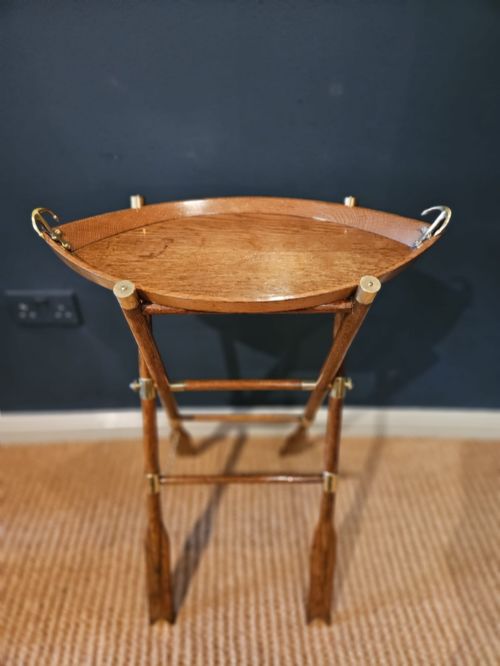
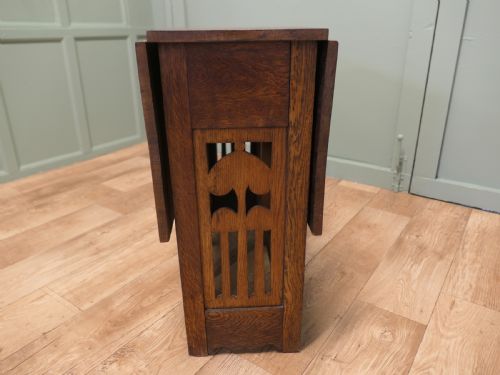
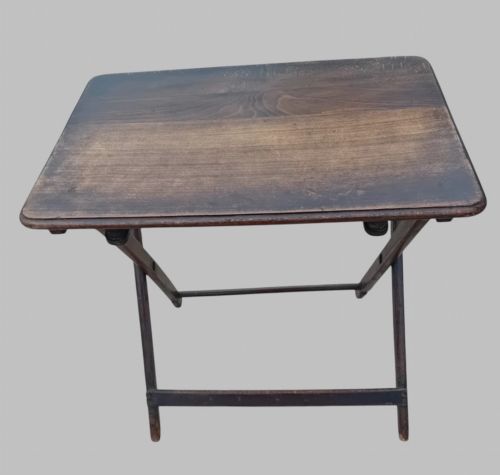
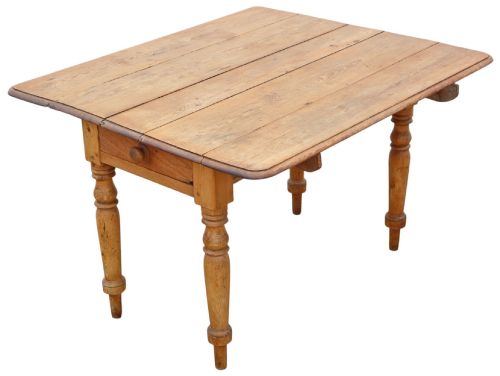
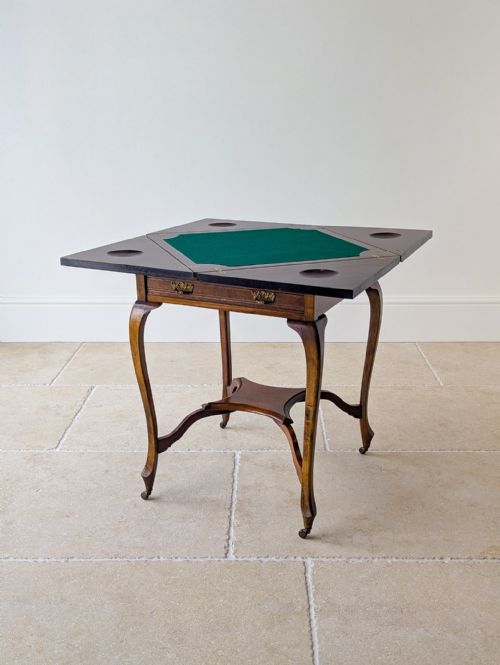
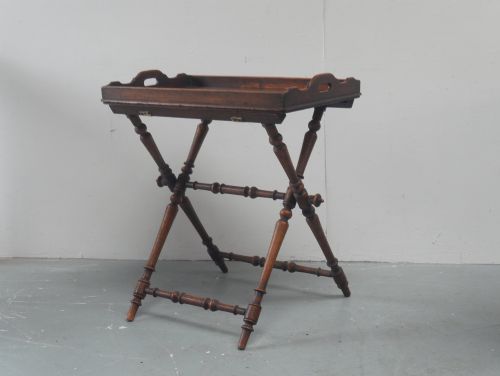
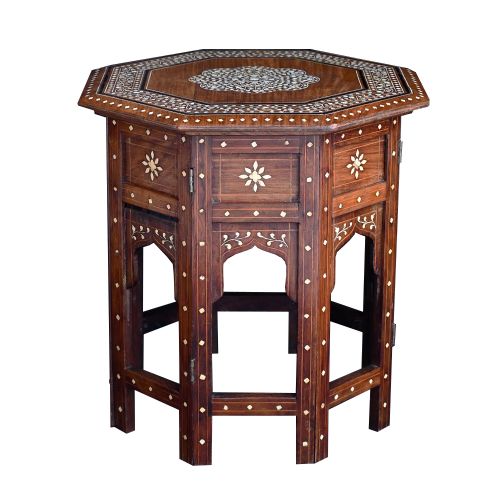
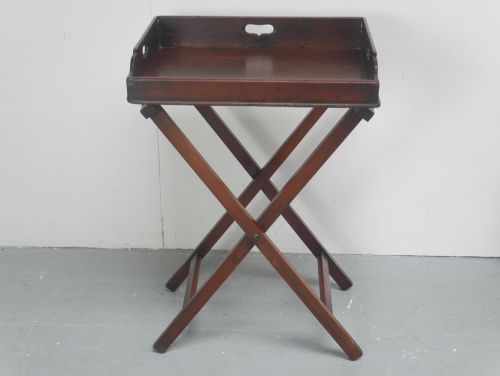
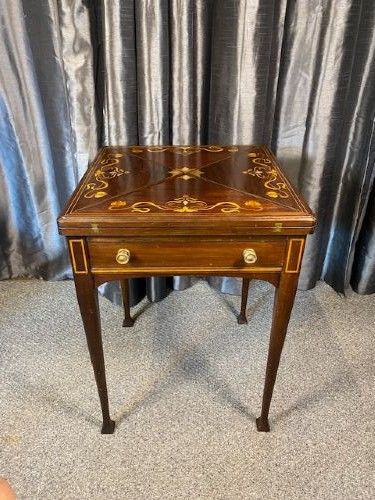
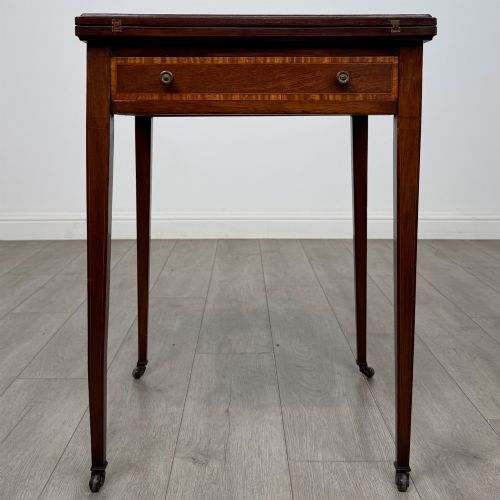
A vintage folding table spans numerous historical iterations designed for compact living, entertaining, and multi-use domestic spaces. These include gateleg dining tables, butler trays on stands, envelope card tables, and drop-leaf utility pieces.
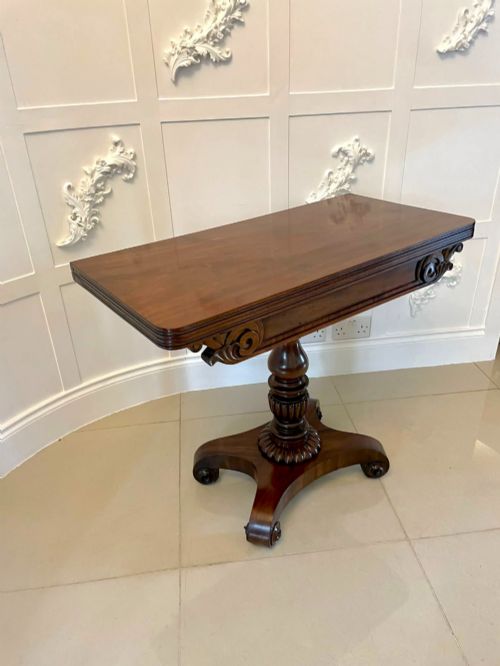
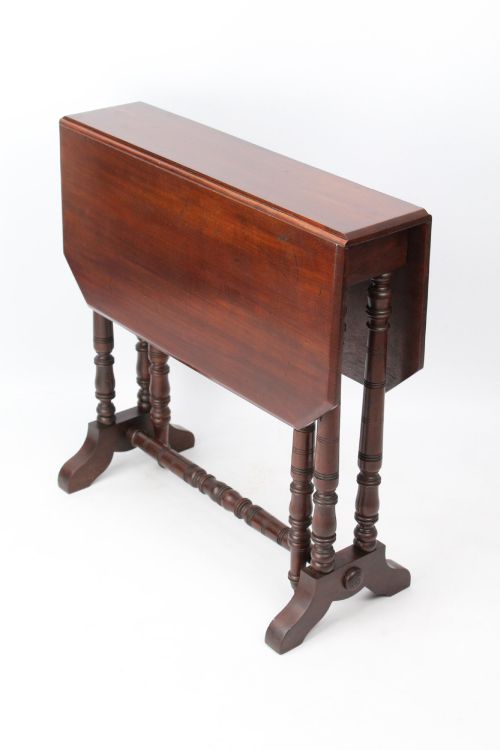
The selection ranges from sturdy oak gateleg designs originating in the eighteenth and early twentieth centuries to refined Edwardian mahogany card tables and campaign items. Buyers frequently encounter nineteenth-century walnut and mahogany Sutherland tables alongside regionally diverse inlaid occasional pieces.
Functionality defines the group, whether through hinged leaves, folding legs, or removable trays supported by collapsible stands. Each form responds to a historical demand for flexible furniture that packs flat or tucks against a wall.
Materials and construction
Cabinetmakers utilised robust timbers such as oak, mahogany, walnut, and beech to build frames capable of withstanding the stress of repetitive folding and unfolding. Grain selection, particularly figured mahogany and quarter-sawn oak, provided decorative surface movement on tops and leaves.
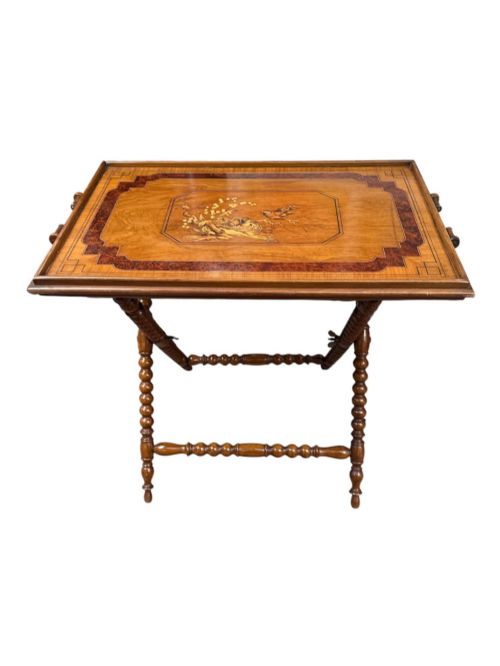
Complex joinery including hinges, rule joints, and turned barley twist supports allowed leaves and legs to operate smoothly without compromising structural rigidity. Inlaid examples incorporated satinwood, mother of pearl, and marquetry techniques like Sorrento ware to ornament the playing surfaces and trays.
Secret compartments in card tables occasionally still harbour stray nineteenth-century playing cards and counters.
Assessing craftsmanship
Quality rests in the integrity of the folding mechanisms and the tightness of the joinery where legs pivot or leaves drop. Superior pieces maintain alignment and stability whether opened for use or folded flat, showing minimal wear in the wooden hinges and pin joints.
The choice of secondary timbers, depth of hand-carving, and precision of surface inlay separate standard utility items from high-status examples. Finer tables exhibit careful timber matching across folding leaves and retain their original brass hardware and patinated finishes.
Heals
The Vintage Folding Table Glossary
- Gateleg table
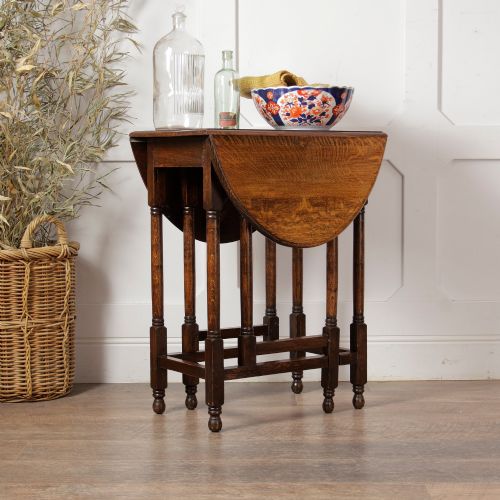
- A drop-leaf table featuring hinged legs that swing outward to support the raised leaves. This form dates back to earlier centuries and remains common in oak and walnut.
- Butler tray
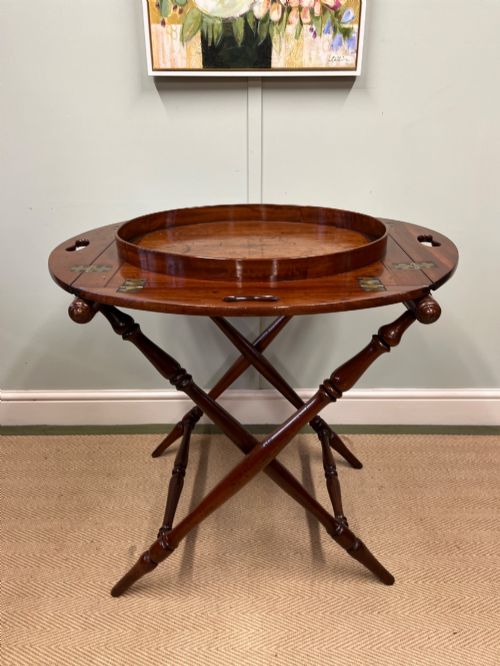
- A portable rectangular wooden tray with raised sides and cut-out carrying handles, traditionally set upon a separate folding X-frame stand. They appear frequently in nineteenth-century contexts.
- Sutherland table
- A narrow drop-leaf table with exceptionally slender leaves and a gateleg action designed to fold into a very flat profile when not in use. They are typically found in Victorian and Edwardian iterations.
- Envelope card table
- A square game table with a top composed of four triangular flaps that rotate and fold open to reveal a baize-lined playing surface. They gained popularity during the Edwardian period.
- Campaign style
- Portable furniture engineered to be easily dismantled or folded for travel and military deployment. These pieces often incorporate brass corners and recessed carrying handles.
Vintage Folding Table: Frequently Asked Questions
How do I maintain the hinges?
Keep moving metal parts clean and occasionally apply a tiny drop of light oil to the pivot points if they squeak. Avoid over-tightening screws into aged timber.
Regular dusting prevents grit from accumulating in the folding joints and scratching the surrounding wood during operation.
Were these tables used outdoors?
Most indoor pieces utilise cabinet timbers like mahogany and walnut finished with polish, which reacts poorly to moisture and temperature swings. Specialised garden furniture employs iron and treated wood for exterior resilience.
Check the timber type and finish before placing any folding table on a patio or lawn.
How do I date a folding table?
Examine the construction methods, screw types, and timber patination to estimate the period. Machine-cut screws and standardised hardware generally point toward the later nineteenth or twentieth century.
Stylistic markers such as Edwardian inlay or Victorian bobbin turning also provide reliable clues to the decade of manufacture.