



Large Gateleg Table
A large gateleg table provides ample dining capacity through hinged drop leaves supported by pivoting legs.
Large Gateleg Table
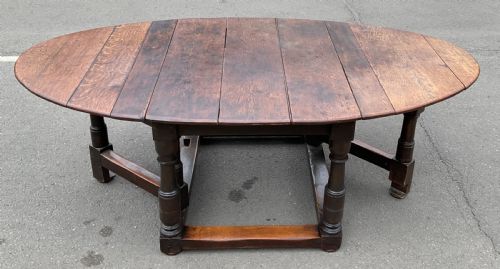
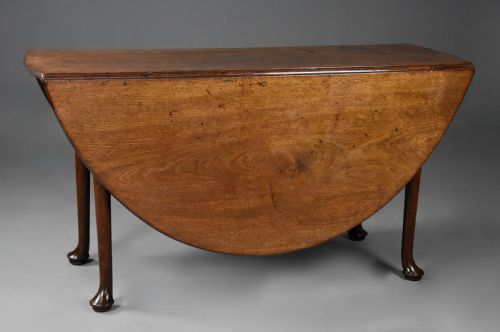
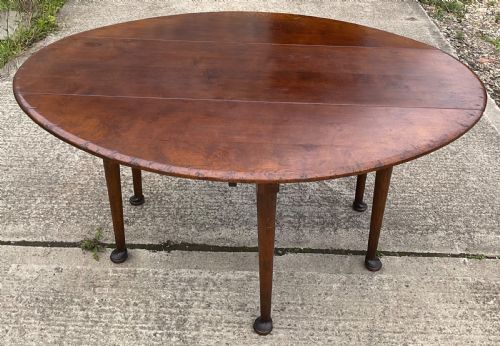
The most common versions met on this page date from the seventeenth and eighteenth centuries, constructed predominantly in oak with later mahogany and walnut examples. These tables range from rustic country pieces to formal Georgian designs capable of seating eight or more people.
How they were made
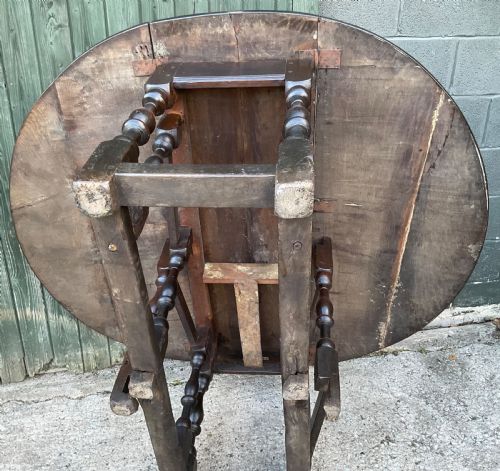
Makers utilised native timbers such as oak, walnut, and mahogany, shaped into solid boards for the top and sturdy framing for the base. Turning lathes produced structural components like bobbin-turned or columnar legs that swing on pivoting gate mechanisms.
Joinery relied on pegged mortise and tenon joints to bear the weight of the folding leaves. Surfaces received hand-planed finishes, sometimes featuring waxed treatments or painted coatings.
Certain antique oak examples hide clever swing actions sturdy enough to host family banquets for centuries.
What varies in quality
The distinction between tiers rests upon timber selection, structural integrity, and historical surface preservation. Superior examples exhibit dense, mature grain patterns with deep patination accumulated through centuries of use.
Engineering of the pivot action dictates functional success, where tight joints and well-balanced swing legs keep the extended leaves level. Finer pieces maintain original hardware and unwarped top boards without excessive replacement timber.
The Large Gateleg Table Glossary
- Gateleg table
- A table with hinged flaps supported by legs that swing out like gates.
- Drop-leaf
- A table top configuration featuring a fixed centre section and movable side flaps.
- Patina
- The surface sheen and colour developed on wood through age, wear, and polishing.
- Bobbin turning
- A type of lathe-turned leg ornamentation resembling a string of rounded beads or bobbins.
- Wake table
- An exceptionally large oval dining table designed to accommodate substantial gatherings.
Large Gateleg Table: Frequently Asked Questions
How many people do these tables seat?
Many large formats comfortably seat eight to ten guests when fully extended with both leaves raised. The swing leg mechanism provides adequate knee clearance around the perimeter.
Smaller gatherings can utilise the table with one or both leaves dropped against the central drop leaf section to save floor space.
How do I tell seventeenth century from later revivals?
Early pieces display hand-riven timber, pegged joinery, and heavy frame construction typical of the period. Tool marks and natural oxidation patterns offer key indicators of age.
Revival pieces from later eras often use machine-cut timbers and standardised fixings while copying earlier styles like Jacobean turning.
Are mahogany and oak tables from different periods?
Oak predominates in seventeenth and early eighteenth century examples, reflecting traditional British cabinetmaking before exotic hardwoods gained widespread favour. Mahogany and walnut appear more frequently in Georgian and later designs.
Regional workshops continued utilising local oak well into later centuries, particularly for country kitchen furniture.
How do I care for a historic wooden surface?
Maintenance involves regular dusting with a soft cloth and occasional applications of beeswax to nourish the dry timber. Direct sunlight and extreme humidity fluctuations should be avoided to prevent wood movement.
Hot items and liquids require protective mats to safeguard the polished or waxed finish from staining.