

Turned Drop Leaf Table
A turned drop leaf table offers flexible surface space through hinged flaps supported by pivoted legs, combining practical utility with centuries of traditional joinery.
Turned Drop Leaf Table
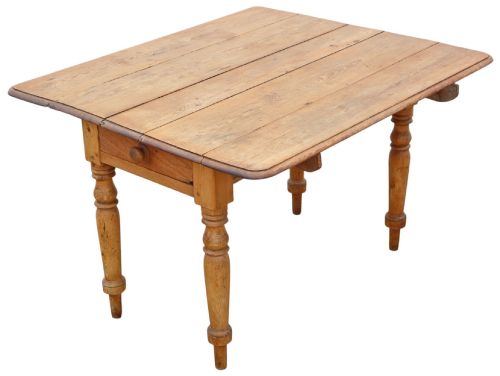
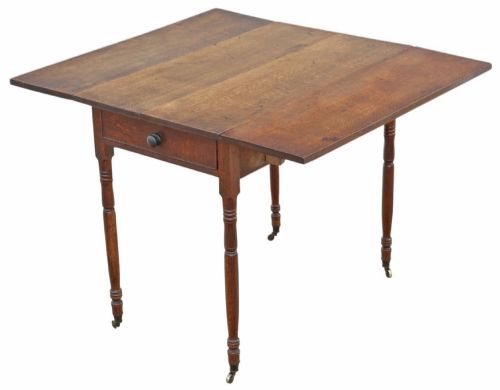
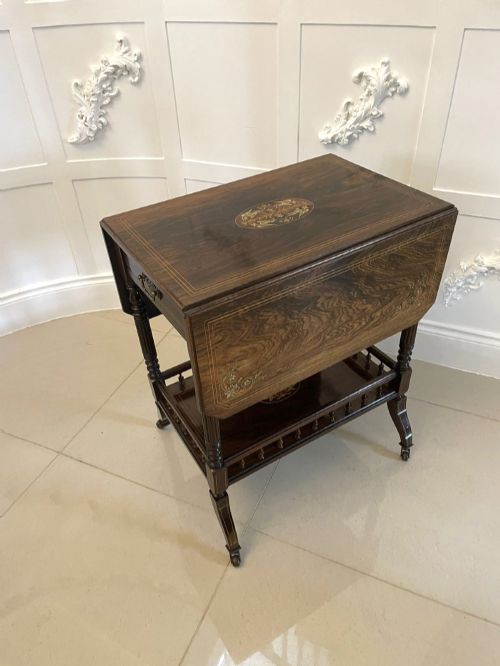
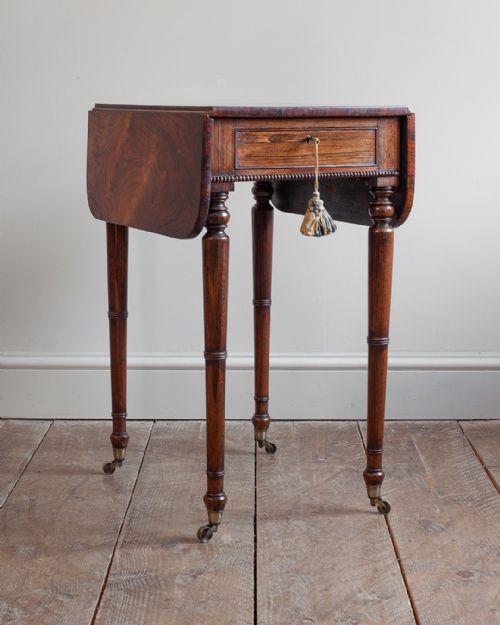
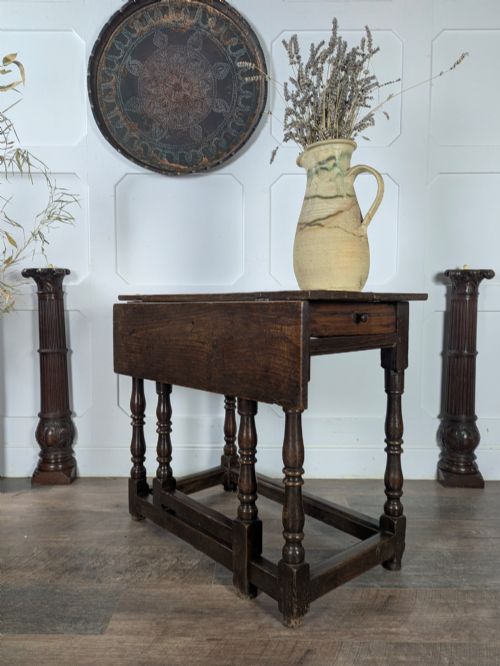
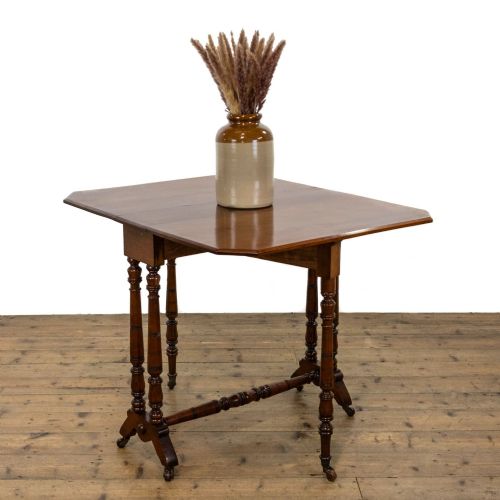
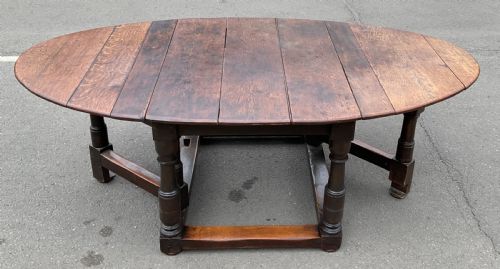
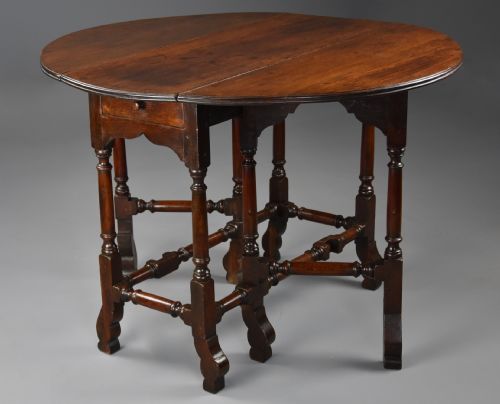
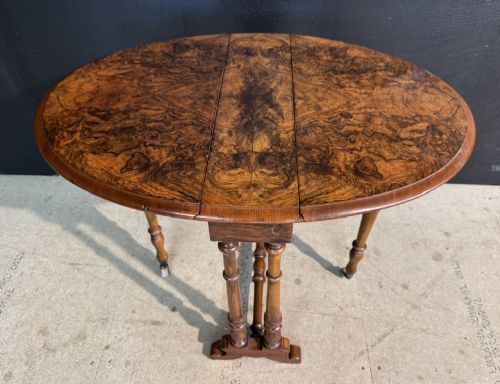
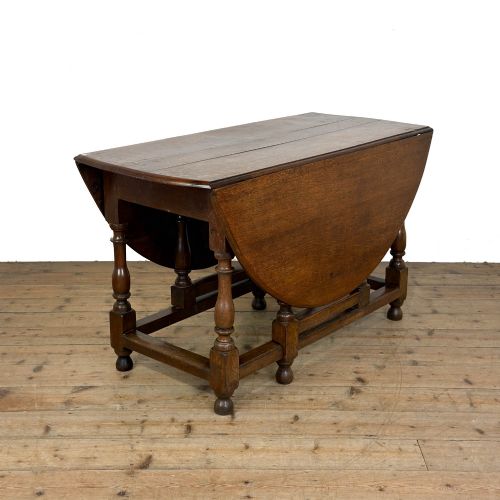
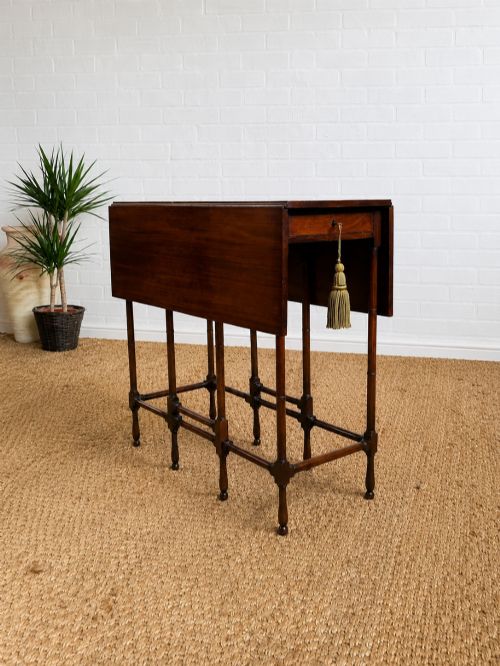
When you search for a turned drop leaf table, you encounter versatile furniture forms spanning from the seventeenth century through the Edwardian period. The selection on this page centres heavily on oak gateleg formats from earlier eras alongside mahogany and walnut Pembroke or Sutherland variants from Georgian and Victorian decades.
These pieces function primarily as dining tables, side tables, or occasional surfaces designed to expand when needed and fold compactly against a wall. The architectural framework relies on hinged leaves supported by pivoting or swinging turned legs.
The heavy presence of seventeenth and eighteenth century oak examples alongside nineteenth century mahogany pieces means buyers choose between robust rustic utility and refined formal parlour elegance. Each iteration deploys turned supports, ranging from early bobbin and baluster forms to later reeded and ring-turned columns.
How they were made
Cabinet makers and joiners utilised solid hardwoods including oak, mahogany, walnut, and rosewood, frequently pairing them with secondary pine components for interior framing and drawer linings. Construction methods depended on sturdy timber framing, tenon joints, and pivoting wooden or brass hinges to support the swinging drop leaves.
The distinctive turned legs were shaped on a lathe, producing profiles such as bobbin turnings, balusters, bamboo-turned details, and reeded or ring-turned columns. Finish work involved hand-applied wax or polish to highlight the natural grain and develop deep patinas over generations of use.
The listings span from the seventeenth century through the Edwardian era, featuring oak, mahogany, walnut, and rosewood across dining, side, and occasional table formats.
What varies in quality
Quality rests upon the selection of timber figures, such as burr walnut or figured mahogany, and the crispness of the lathe work on the turned legs. Superior examples retain original brass hardware, working locks on fitted drawers, and structurally sound pivot mechanisms for the drop leaves.
The integrity of the original surface patina separates untouched historic examples from heavily restored or later constructed pieces. Proportions also dictate desirability, with smaller proportions and balanced gateleg configurations commanding significant attention from collectors.
Johnstone and Jeanes
The Turned Drop Leaf Table Glossary
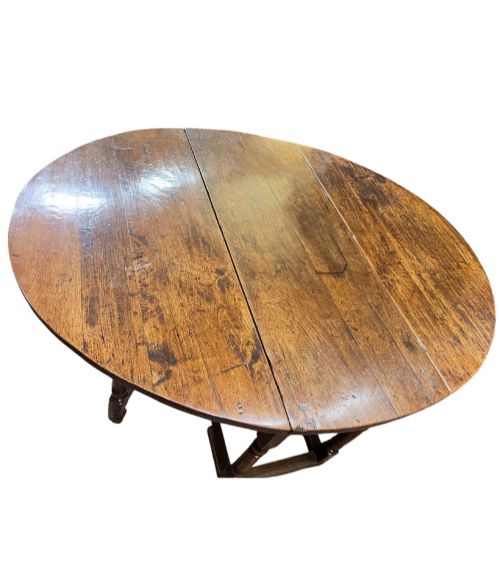
- Gateleg table
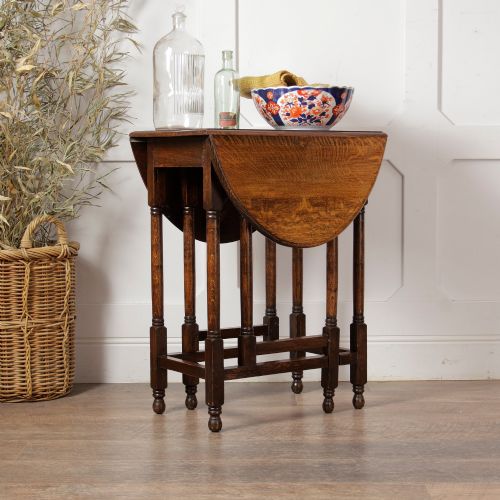
- A table with hinged flaps supported by legs that swing outward on gates to hold the leaves up. This format provides maximum surface area when open and minimal footprint when closed.
- Pembroke table
- A small rectangular table with two hinged drop leaves on opposing sides, frequently featuring one or two end drawers. It originated in the eighteenth century as a versatile breakfast or writing surface.
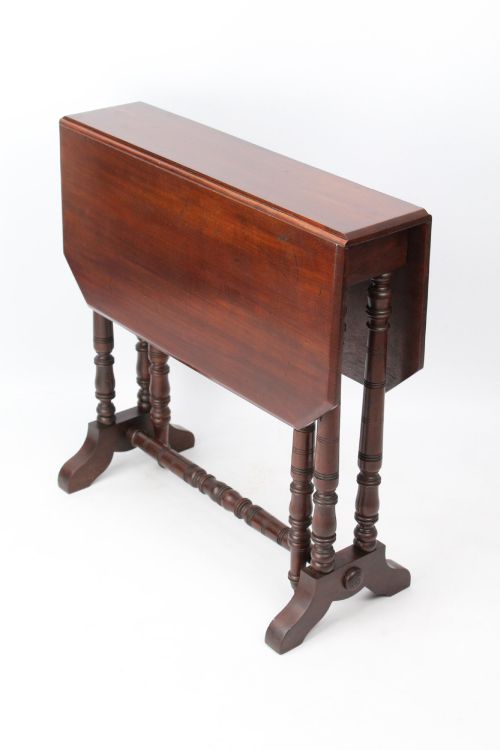
- Sutherland table
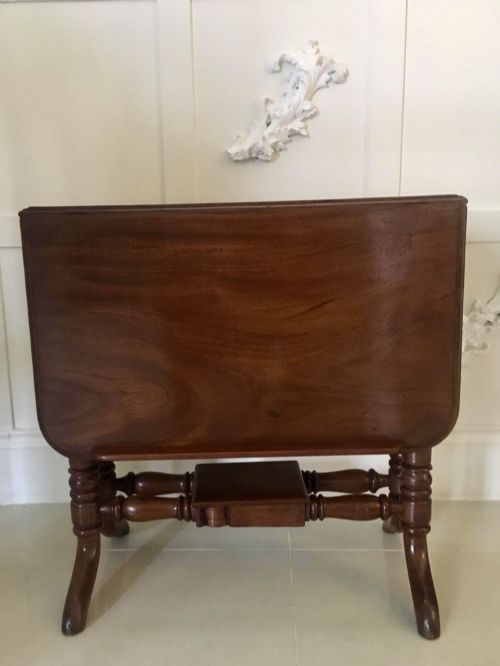
- A narrow drop leaf table invented in the nineteenth century featuring exceptionally slender flaps and low-profile folding legs. When closed, the leaves drop nearly vertical, allowing the piece to store in tight spaces.
- Patina
- The deep surface sheen and mellow colour developed by aged wood through decades of handling, exposure to light, and waxing. It serves as a primary indicator of authenticity and age.
- Bobbin turning
- A lathe-turned furniture leg style featuring a series of rounded spherical or spool-shaped segments resembling bobbins of thread. This decorative motif appears frequently on seventeenth-century pieces.
Turned Drop Leaf Table: Frequently Asked Questions
How do I use a drop leaf table daily?
You keep the leaves folded down against the wall or a sofa to save floor space, then raise the flaps and swing out the supporting legs whenever you need extra surface area for dining, working, or displaying items.
The sturdy pivoting mechanism takes the weight of daily tasks, making these tables practical for smaller rooms that require adaptable furniture layouts without permanent bulk.
How do I care for antique wood surfaces?
You maintain the wood by applying a natural beeswax polish occasionally and buffing it with a soft cloth to nourish the grain and protect the historic patina. Avoid placing tables near direct heat sources or strong sunlight, which can dry out the timber and cause splitting.
Using coasters and mats prevents water rings and heat damage from cups or dishes, ensuring the vintage finish remains intact for years.
How can I tell a seventeenth century table from a later revival piece?
Seventeenth century tables display structural tool marks, hand-carved joints, and timber shrinkage consistent with centuries of age, often utilising heavy solid oak with bobbin or baluster turned legs. Revival pieces made during later periods frequently exhibit machine-cut precision, cleaner standardised joinery, and less natural wear in the bearing points.
Examining the hinge types, underside construction, and the depth of the surface patina helps confirm whether a piece dates to the original era.