



Jacobean Bobbin Turned Table
A jacobean bobbin turned table brings 17th-century solidity and turned woodwork into a modern room.
Jacobean Bobbin Turned Table
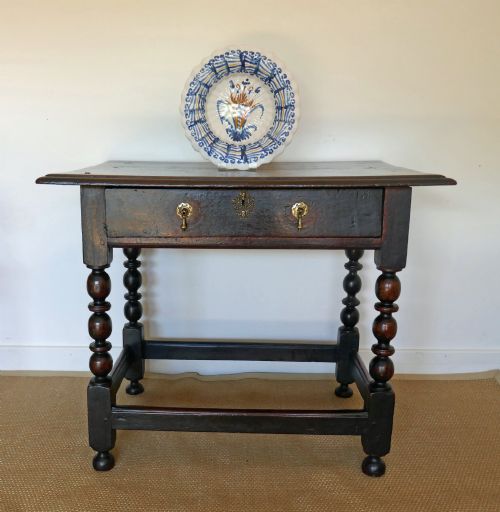
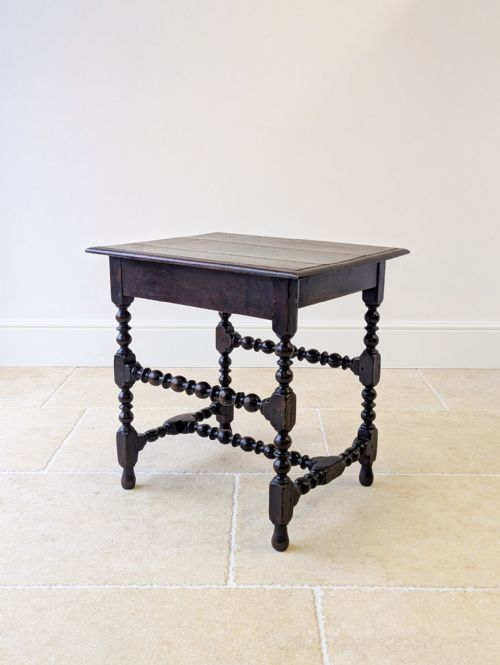
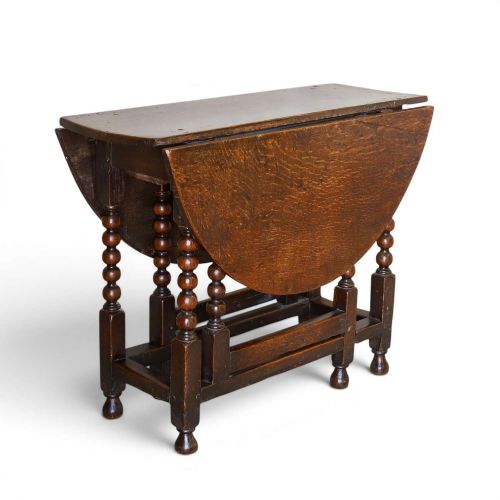
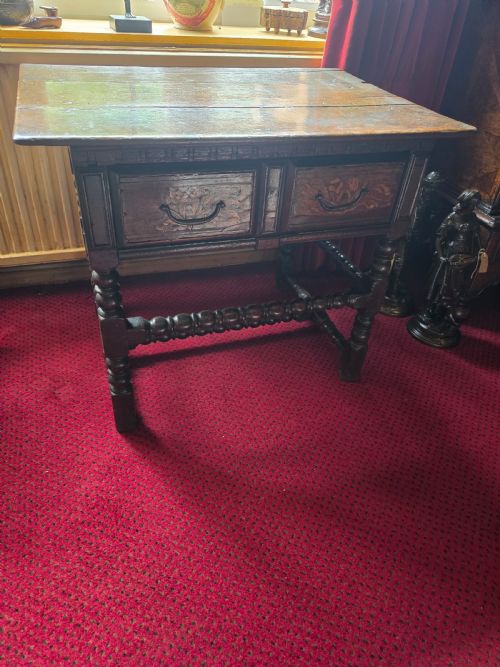
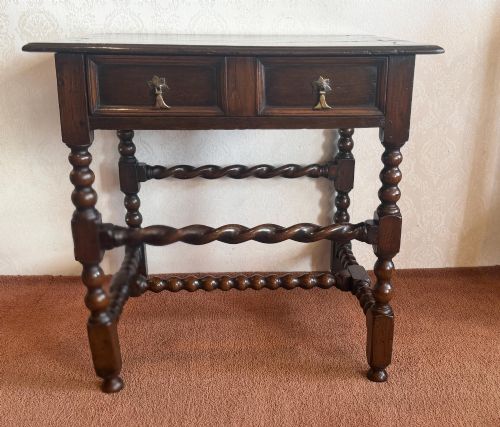
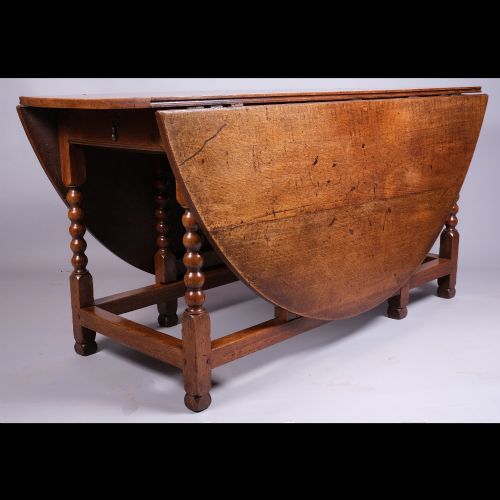
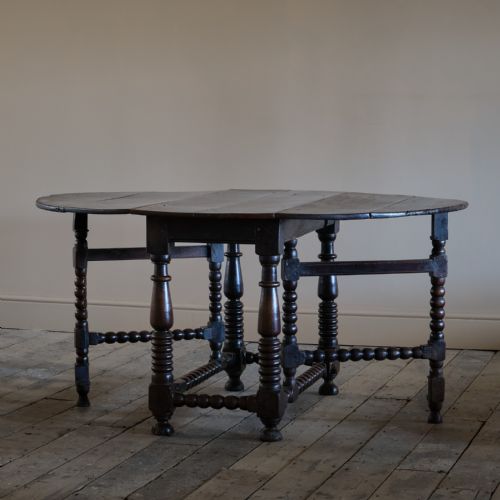
A jacobean bobbin turned table is primarily represented by side tables, gateleg tables, and dining tables originating from the 17th century or built in later revival styles. These pieces combine practical surfaces with the distinctive rounded ornamentation of early English cabinet making.
Buyers meet sturdy side tables and drop-leaf gateleg forms most frequently on this page. Oak dominates the selection, accompanied by occasional examples in yew wood and wood inlay.
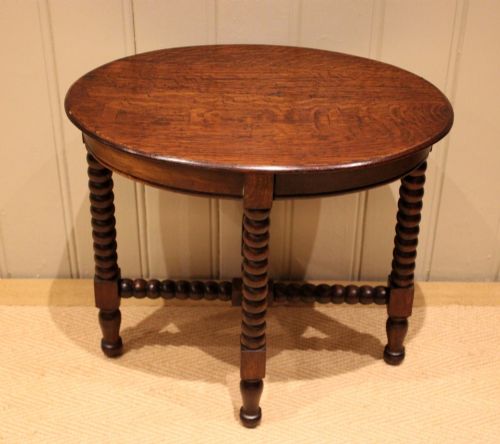
The periods span from authentic seventeenth-century craftsmanship through nineteenth-century Victorian interpretations up to early twentieth-century reproductions from 1900 to 1920.
Materials and Construction
Construction relies heavily on solid oak and yew wood, joined using traditional methods suited to heavy timbers. Blacksmiths provided iron and brass fixings such as hinges and drawer pulls.
The characteristic bobbin turned legs are shaped on a lathe to create symmetrical rows of rounded swellings. Wood inlay and carving occasionally accent the structural framework of drawers and table tops.
Listings feature pieces spanning from the 17th century through the Victorian era up to 1920, constructed mainly in oak and yew wood.
Assessing Quality
Quality rests on the crispness of the lathe work and the integrity of the timber. Bold proportions and well-figured grain distinguish superior examples from simpler utilitarian items.
The preservation of original joinery and authentic surface patination separates period originals from later revival pieces.
The Jacobean Bobbin Turned Table Glossary
- Bobbin turned
- A style of leg or stretcher shaped on a lathe to resemble a string of bobbins or spools. This ornamentation is characteristic of mid-to-late seventeenth-century English furniture.
- Gateleg table
- A drop-leaf table featuring hinged legs that swing out to support the folding leaves. They provide an expandable surface while remaining compact when closed.
- Side table
- A small functional table designed to stand against a wall. These pieces frequently incorporate single or double drawers beneath the top surface.
- Yew wood
- A dense, richly grained timber utilised for select tables in the listings. It offers a distinct warm tone compared to standard oak.
Jacobean Bobbin Turned Table: Frequently Asked Questions
How do I spot a real seventeenth-century table?
Authentic seventeenth-century pieces display period joinery methods, hand-turned timber, and natural surface wear accumulated over centuries. Examine the underside and drawer construction for tool marks and timber shrinkage.
Revival pieces from the Victorian era or the early twentieth century often present machine-turned consistency and cleaner interior surfaces. Comparing the timber patination helps clarify the age of the piece.
Where were these tables used originally?
These tables served various practical functions in seventeenth-century households as writing desks, dining surfaces, or hall furniture. Gateleg versions offered flexibility for smaller rooms by folding away when not in use.
Side tables stood against parlour walls to hold lamps or decorative objects. Their sturdy construction allowed them to withstand daily domestic demands.
Can I use a gateleg table daily?
Gateleg tables function reliably for daily dining or working provided the swing legs move freely on their original hinges. The drop leaves require careful support when extended.
Placing coasters on the historic timber protects the surface finish from moisture and heat rings. Regular dusting keeps the carved sections clean.
What is the difference between oak and yew wood?
Oak is a heavy, durable timber with a pronounced grain pattern that defines the majority of seventeenth-century English furniture. It provides exceptional structural strength.
Yew wood offers a finer, highly figured grain with varied colour tones ranging from deep amber to reddish brown. It appears in select regional tables.