
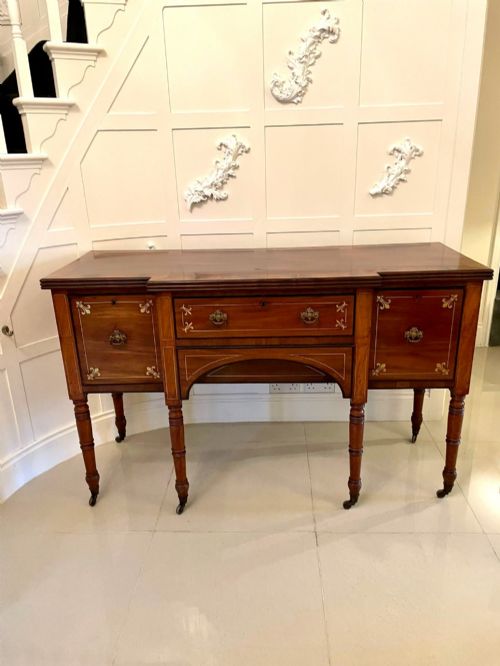
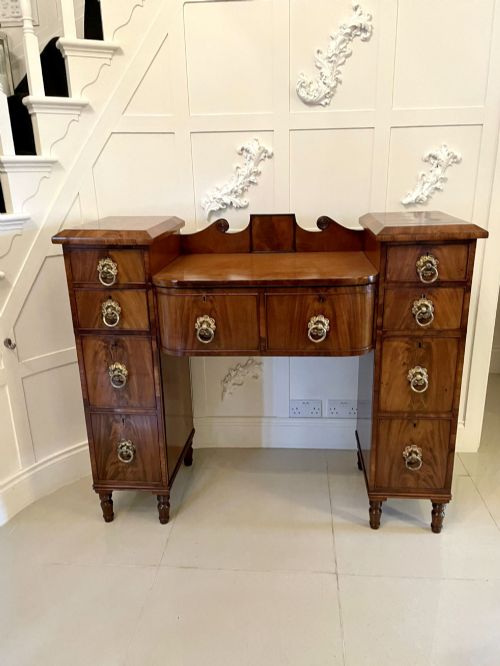
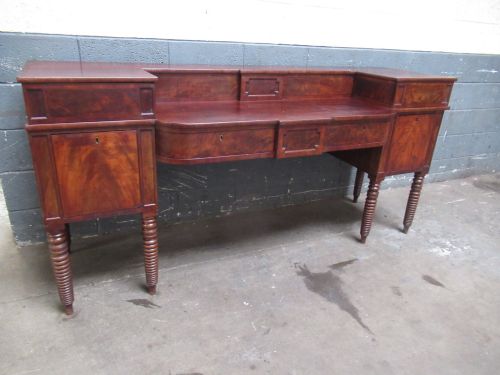
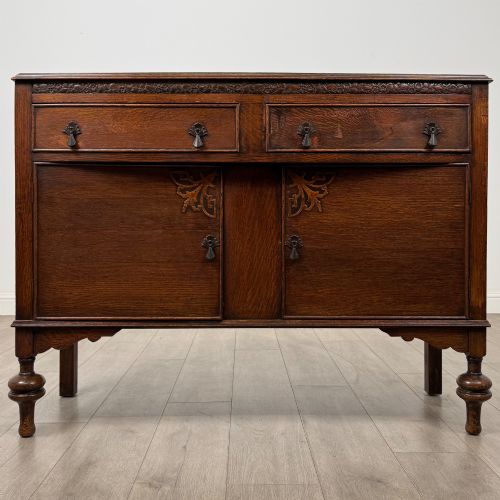
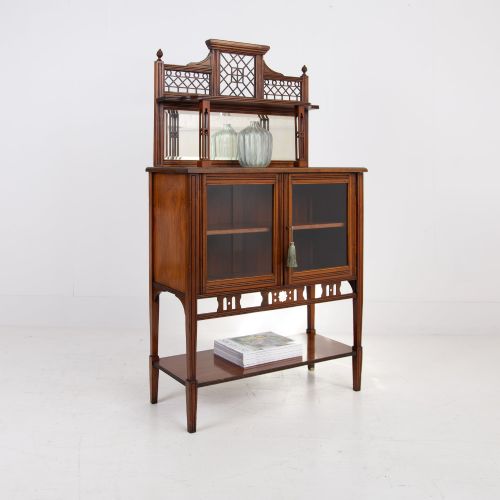
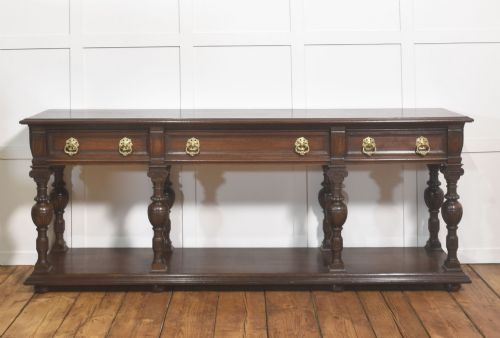
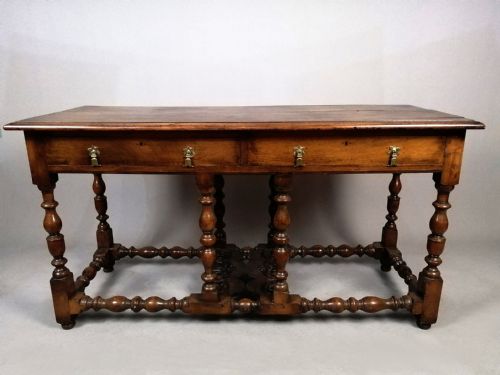
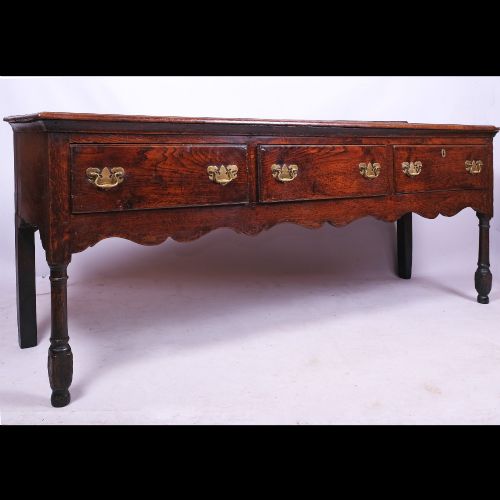
Turn of the Century Sideboard
A turn of the century sideboard provides substantial dining room storage, and these examples combine period timbers with practical surface space.
Turn of the Century Sideboard
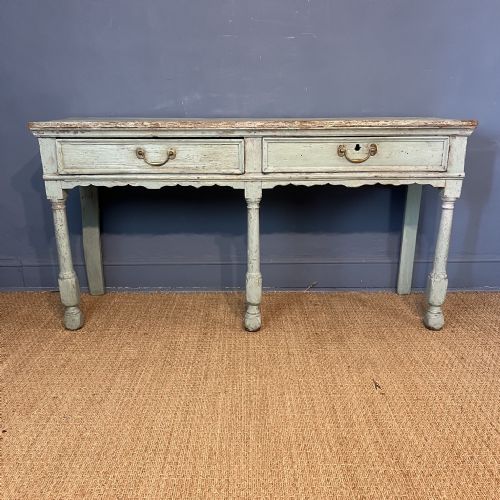
When buyers search for a turn of the century sideboard, they encounter substantial dining furniture originating primarily from the nineteenth and early twentieth centuries alongside earlier revival pieces.
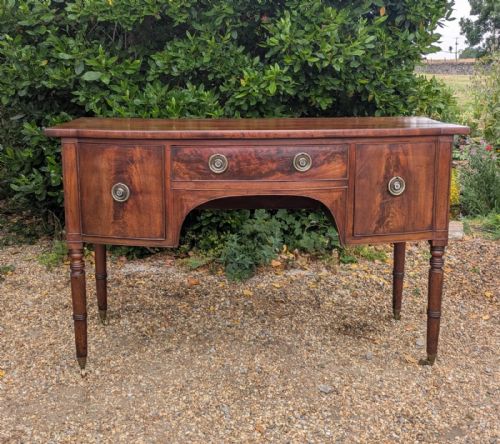
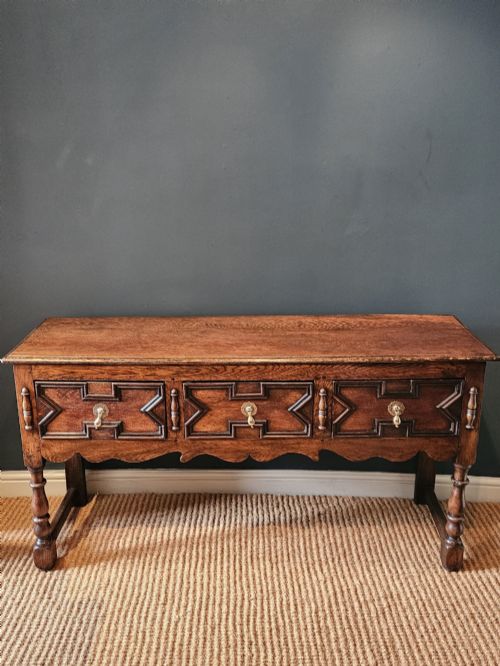
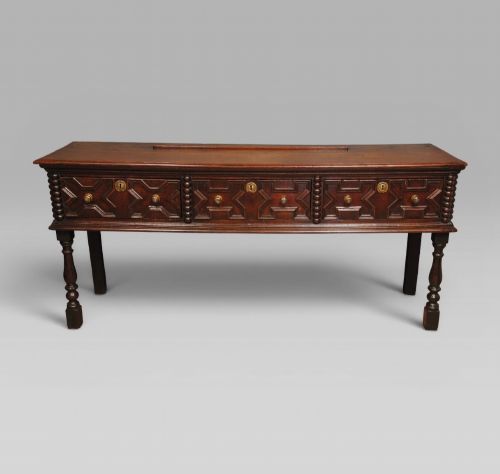
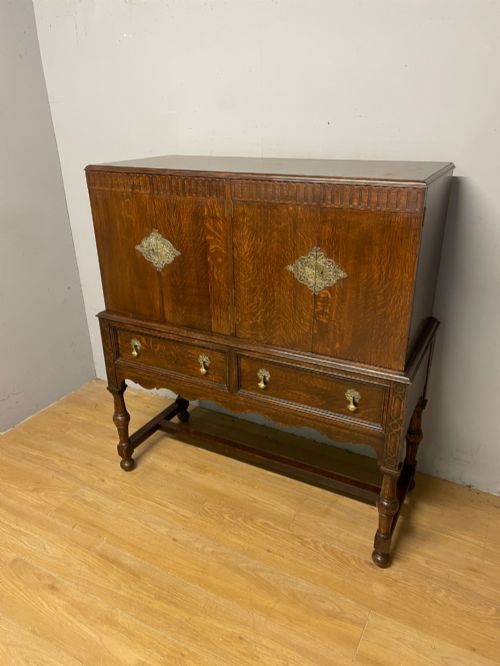
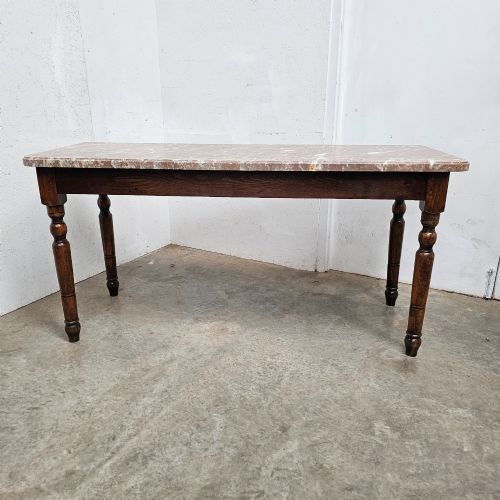
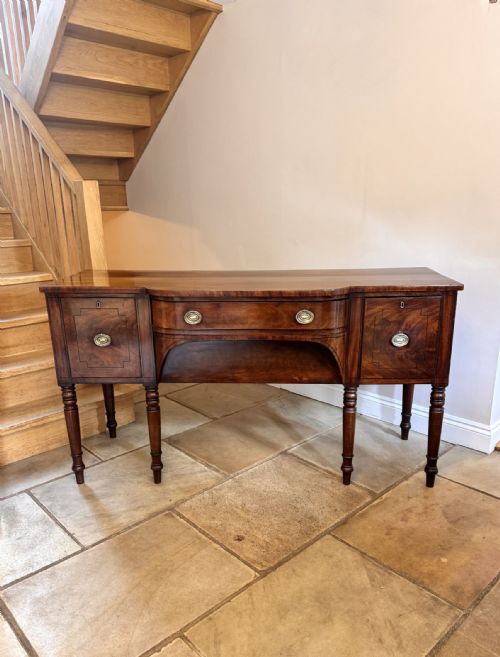
The selections on this page span diverse forms such as mahogany sideboards, oak dresser bases, and serving tables that reflect both formal dining rooms and country houses.
Mahogany and oak predominate, constructed in styles ranging from Regency and Georgian to Jacobean Revival and Edwardian interpretations.
Materials and construction methods
Cabinet makers utilised solid timbers including mahogany, oak, and pine, frequently applying flame mahogany veneer to primary surfaces for visual depth.
Decorative details rely on brass inlay, ebony stringing, carved geometric mouldings, and turned legs rather than applied synthetic ornaments.
Structural integrity depends on traditional joinery methods suited to heavy service timbers, with secondary woods supporting internal drawer construction.
Several pieces include hidden cellaret drawers designed specifically for cooling wine bottles beside the dining table.
Distinguishing quality factors
Superior pieces demonstrate exceptional timber selection, such as closely matched flame mahogany veneers or dense, well-figured Welsh oak.
Refinement of detail distinguishes finer examples, visible in crisp carved mouldings, precise brass inlay, and intact original hardware.
Proportion and scale dictate desirability, where smaller proportions or neat breakfront formats indicate higher design ambition.
The Turn of the Century Sideboard Glossary
- Dresser base
- A low cabinet featuring drawers and occasionally a lower shelf or pot board, designed for serving food and storing dining utensils in the main room.
- Breakfront
- A cabinet facade where the central section projects forward from the flanking wings, creating visual depth and architectural presence.
- Flame mahogany
- A highly figured timber veneer sliced from the branch junctions of mahogany trees, producing a characteristic flickering flame pattern.
- Pot board
- An open lower shelf fitted between the legs of an oak dresser base, originally intended for storing heavy pots and dishes.
- Stringing
- Thin inlaid lines of contrasting timber or ebony set into the primary wood surface to create a decorative border.
Turn of the Century Sideboard: Frequently Asked Questions
What is a turn of the century sideboard?
A turn of the century sideboard is a substantial dining room storage piece dating around nineteen hundred, often combining historical revival styles with practical drawer and cupboard space.
These forms serve as central serving surfaces and storage cabinets in traditional dining rooms.
How do I date an oak dresser base?
Dating an oak dresser base involves examining the construction marks, timber grain, and joinery style, comparing the piece against known seventeenth and eighteenth-century vernacular furniture.
Revival pieces from later periods often mimic earlier geometric mouldings and turned legs while retaining machine-cut interior elements.
Where were mahogany sideboards placed?
Mahogany sideboards stood against dining room walls to hold serving dishes, cutlery, and glassware during large family meals.
Their finished backs and polished timber surfaces suited formal entertaining spaces.
Are these sideboards made of solid wood?
Many examples utilise solid timbers like oak and pine for structural frames, while finer formal pieces apply decorative veneers over secondary woods.
Flame mahogany surfaces typically feature thin veneers laid over stable underlying timber bases to prevent warping.