


Painted Mirror Cabinet
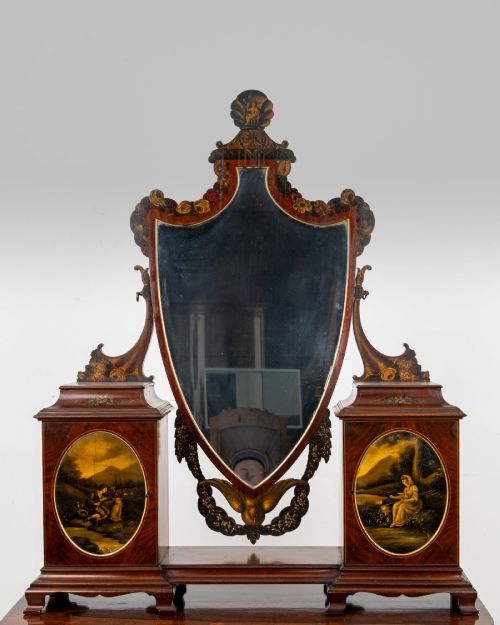
These painted mirror cabinet pieces combine reflective glass and decorated timber, offering both practical utility and decorative presence.
Painted Mirror Cabinet
A painted mirror cabinet unites painted woodwork with mirrored glass, spanning wall-hanging display units, side cabinets, and tabletop dressing mirrors with drawers. These pieces emerge across periods from the Georgian era through the Edwardian years and the early twentieth century.
The versions most frequently met on this page include Aesthetic Movement ebonised forms, French Rococo Revival wall étagères, and Edwardian mahogany tabletop cheval mirrors with integrated jewellery compartments. Makers utilised diverse regional styles, ranging from Venetian painted side cabinets to red lacquered Queen Anne style bureau bookcases.
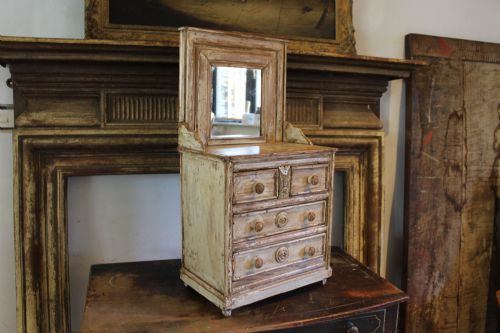
Every example demonstrates how cabinetmakers integrated reflective surfaces into painted or gilded carcases. Buyers encounter items varying from large satinwood wall-hanging display cabinets to miniature apprentice chests of drawers.
How they were made
Craftsmen built the carcases using woods such as mahogany, satinwood, and ebonised timber, applying painted finishes, lacquer, and parcel gilding directly to the surfaces. Majolica panels and inlay work occasionally supplemented the painted decoration on select pieces.
Mirrored glass and brass hardware were fitted into the timber structures, supporting both wall-mounted and floor-standing forms. Carved cartouches and gilt highlights frequently ornamented the frames and crests of French and English examples.
Listings feature items spanning the Georgian era, 19th Century, and early 20th Century up to 1920.
What varies in quality
The refinement of the painted decoration and gilding sets apart the superior examples from standard production. Skill in handling satinwood, lacquer, or ebonised surfaces dictates the visual depth of each piece.
The integration of original mirror glass and the crispness of carved wooden details establish the grade of the cabinet. Finer specimens maintain the integrity of their majolica panels, brass fittings, and structural joinery.
Pauly et Cie
The Painted Mirror Cabinet Glossary
- Aesthetic Movement
- A late nineteenth-century design style emphasising visual beauty over narrative content, often featuring ebonised woods and gilt highlights. This aesthetic prioritised form and decorative harmony.
- Parcel Gilt
- A technique where selective areas of an object are partially covered with gold leaf or gilt. This highlights specific carved details or mouldings against a painted background.
- Cheval Mirror
- A freestanding, full-length mirror suspended on a frame that allows it to tilt. Tabletop variants often incorporate small drawers and jewellery compartments beneath the glass.
- Bureau Bookcase
- A dual-purpose furniture form combining a sloping desk flap with upper shelving or cabinet space. These pieces frequently exhibit lacquered or figured wood surfaces.
Painted Mirror Cabinet: Frequently Asked Questions
Where were painted mirror cabinet pieces placed?
These cabinets served multiple domestic functions, appearing in bedrooms as dressing table mirrors or in reception rooms as wall-hanging display units and side cabinets. Their reflective surfaces helped brighten darker corners of period interiors.
Larger variations stood on the floor or hung on walls to showcase small decorative objects, while smaller tabletop versions held jewellery and personal items.
How do I care for painted wood and mirror glass?
Maintenance requires gentle dusting with a soft, dry cloth to protect delicate painted finishes, lacquer, and parcel gilt surfaces from abrasion. Moisture should be kept away from both the timber and the edges of the mirror glass.
Positioning pieces away from direct sunlight prevents the painted decoration and wood tones from fading over time.
How do I distinguish between Victorian and Edwardian examples?
Victorian pieces often favour heavier ebonised mahogany finishes and Aesthetic Movement detailing, alongside ornate French Rococo Revival carving. These items lean towards dramatic contrast and rich surface ornamentation.
Edwardian and later twentieth-century pieces frequently display lighter satinwood, inlaid mahogany, or brighter painted palettes that reflect a shift toward airier interior schemes.
Are all mirrored cabinets wall mounted?
Mounting styles vary significantly across the inventory, encompassing wall-hanging display cabinets, wall étagères, and floor-standing shelves. Some pieces function as side cabinets or tabletop cheval mirrors.
Buyers find both compact designs meant for hanging and substantial standing furniture like bureau bookcases and armoires.