
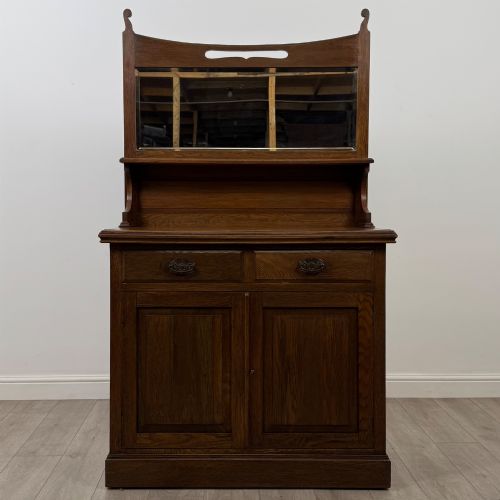
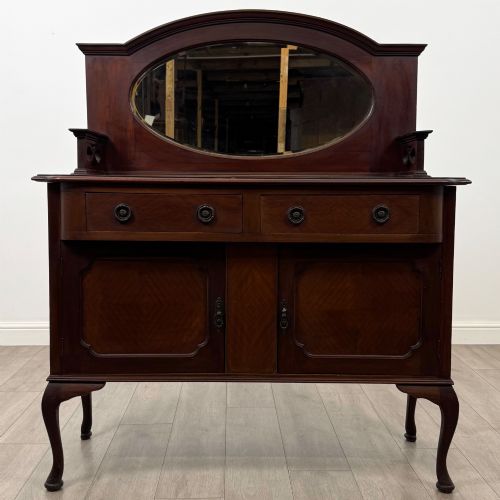
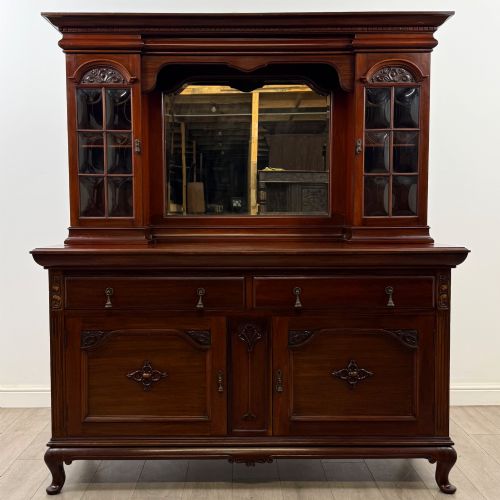
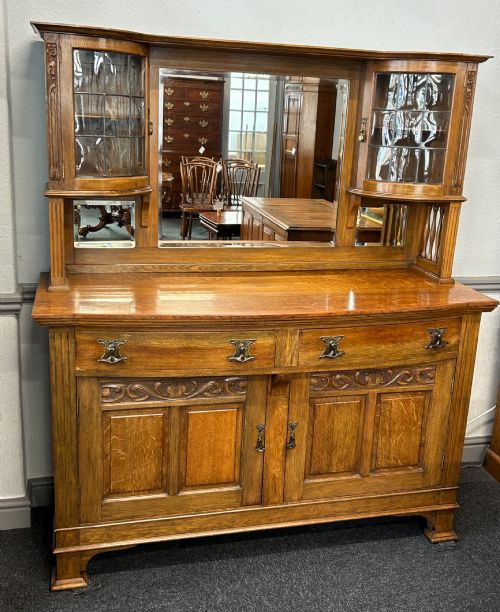
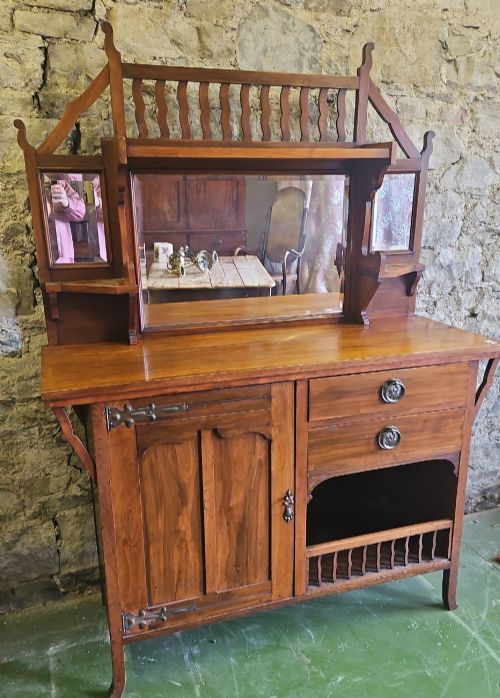


Vintage Mirror Back Dresser
These vintage mirror back dresser pieces combine practical storage with reflective glass, bringing light and presence into a room.
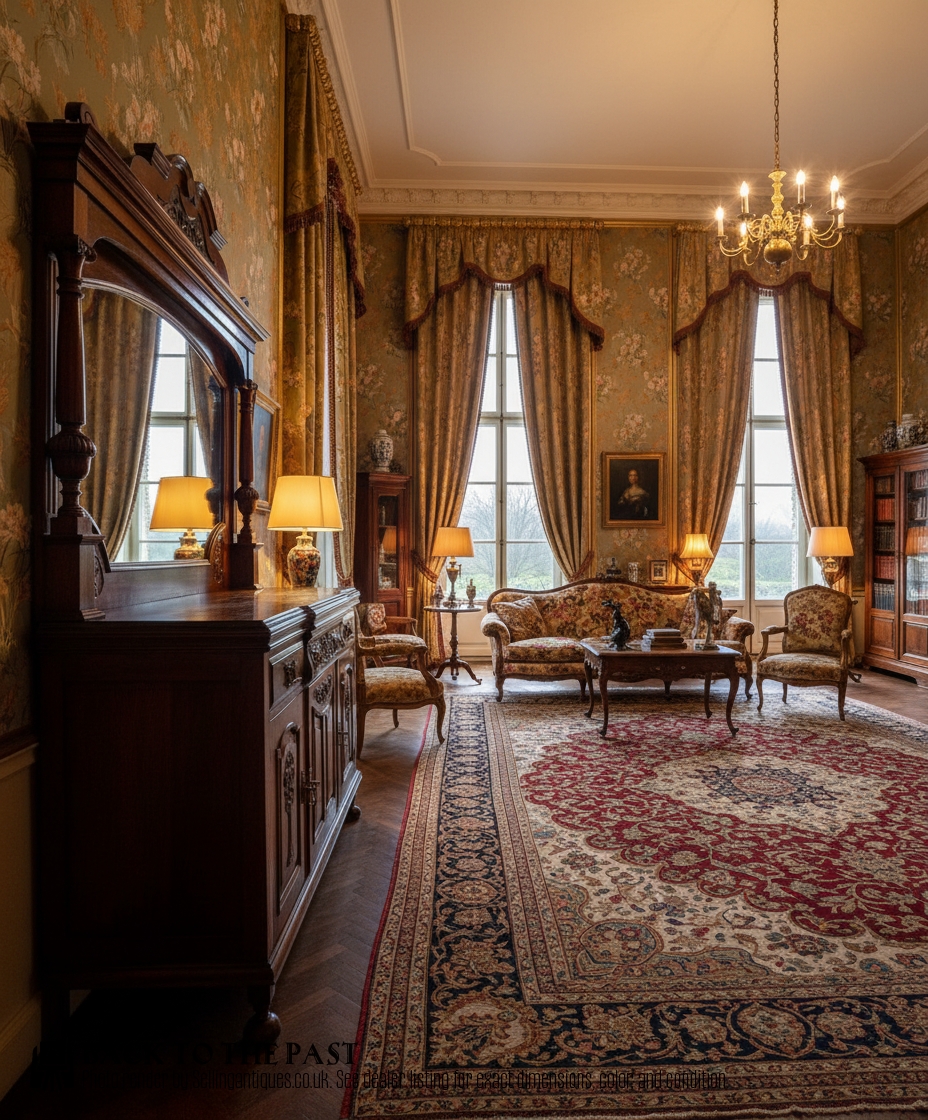
Vintage Mirror Back Dresser
A vintage mirror back dresser functions as a substantial storage cabinet or sideboard topped with an integrated glass mirror. The pieces available span the Victorian, Edwardian, and Arts and Crafts periods, alongside later nineteenth and early twentieth century examples.
Most items take the form of sideboards, buffets, or display cabinets incorporating mirror glass. Buyers will frequently encounter Edwardian and Victorian oak or mahogany versions featuring carved woodwork.
Design influences range from Art Nouveau and Victorian Renaissance Revival to clean Arts and Crafts lines. Many incorporate decorative panels, brass hardware, and boxwood inlay alongside the central mirror.
How they were made
Makers constructed these cabinets using solid timber frameworks, predominantly oak and mahogany, often enhanced by decorative elements like pollard oak and boxwood inlay. Metal components such as brass handles and iron fixtures secured the doors and drawers.
The decorative surfaces display hand carving, bleaching, and painted details, sometimes incorporating majolica panels alongside fitted mirror glass. Construction methods combined traditional joinery for the heavy sideboards with specialised framing to hold the large mirrors safely in place.
Design styles span Art Nouveau, Arts and Crafts, and Victorian Renaissance Revival across sideboard and display cabinet forms.
What varies in quality
The refinement of the timber carving and the choice of materials set individual cabinets apart. Pieces utilising figured mahogany, pollard oak, or detailed boxwood inlay display a higher level of craftsmanship than plain versions.
Proportion and decorative cohesion also differentiate the range. Examples that integrate Art Nouveau motifs, majolica panels, or balanced brass hardware show a superior design execution.
The Vintage Mirror Back Dresser Glossary
- Mirror glass
- Flat reflective plate glass fitted into the upper wooden superstructure of the cabinet. It creates a sense of depth and reflects light across the room.
- Pollard oak
- Timber taken from trees that have been pollarded, producing a distinctive clustered grain pattern. Cabinetmakers valued this wood for its decorative surface figure.
- Majolica
- Opaque tin-glazed earthenware decorated with colourful metallic oxide glazes. These ceramic panels occasionally appear inset into wooden cabinet fronts.
- Boxwood inlay
- Contrasting pale wood inserted in thin strips into recesses cut into darker timbers. This technique forms geometric patterns and fine border details.
Vintage Mirror Back Dresser: Frequently Asked Questions
Where should I place a mirror back sideboard?
These large cabinets suit dining rooms, large hallways, or living spaces where their substantial proportions and reflective glass can brighten the interior. Position them against a sturdy wall with adequate clearance for the doors and drawers to open fully.
Ensure the room lighting complements the reflective glass surface. Placing the cabinet opposite a window will help bounce natural light back into the space.
How do I clean the wooden surfaces?
Dust the mahogany or oak regularly with a soft, dry cloth to prevent dirt accumulation. Avoid modern silicone sprays, which can build up a sticky film over time.
Feed the timber periodically with appropriate beeswax or furniture polish to maintain the finish. Apply sparingly and buff gently with a clean cloth for a natural sheen.
How do I care for the mirror glass?
Clean the integrated mirror using a soft cloth and a minimal amount of glass cleaner, taking care not to let liquid seep behind the wooden frame. Moisture trapped at the edges can damage the silvered backing over time.
Check the fixings that secure the mirror into the sideboard superstructure occasionally. Keeping the frame stable prevents vibration and stress on the glass plate.
Can I store heavy items inside?
The solid timber construction of these sideboards accommodates heavy tableware, linens, and bottles within the cupboards and drawers. Distribute the weight evenly across the internal wooden shelves to maintain balance.
Avoid overloading single drawers or leaning heavily on open drop-front sections. Sound joinery supports everyday storage when loaded sensibly.