
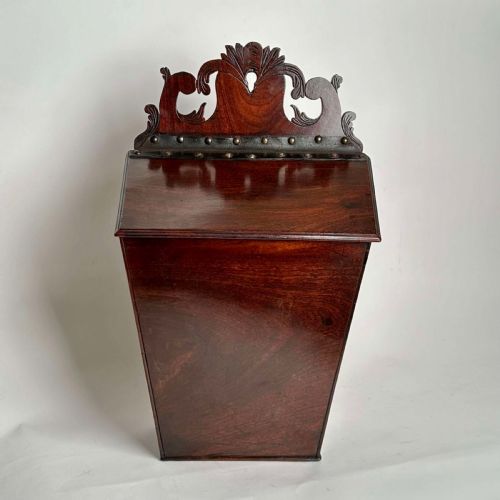


Traditional Mahogany Dining Storage
Traditional mahogany dining storage brings classic timber forms and practical server space into a room, offering grand sideboards and compact chiffoniers for your home.
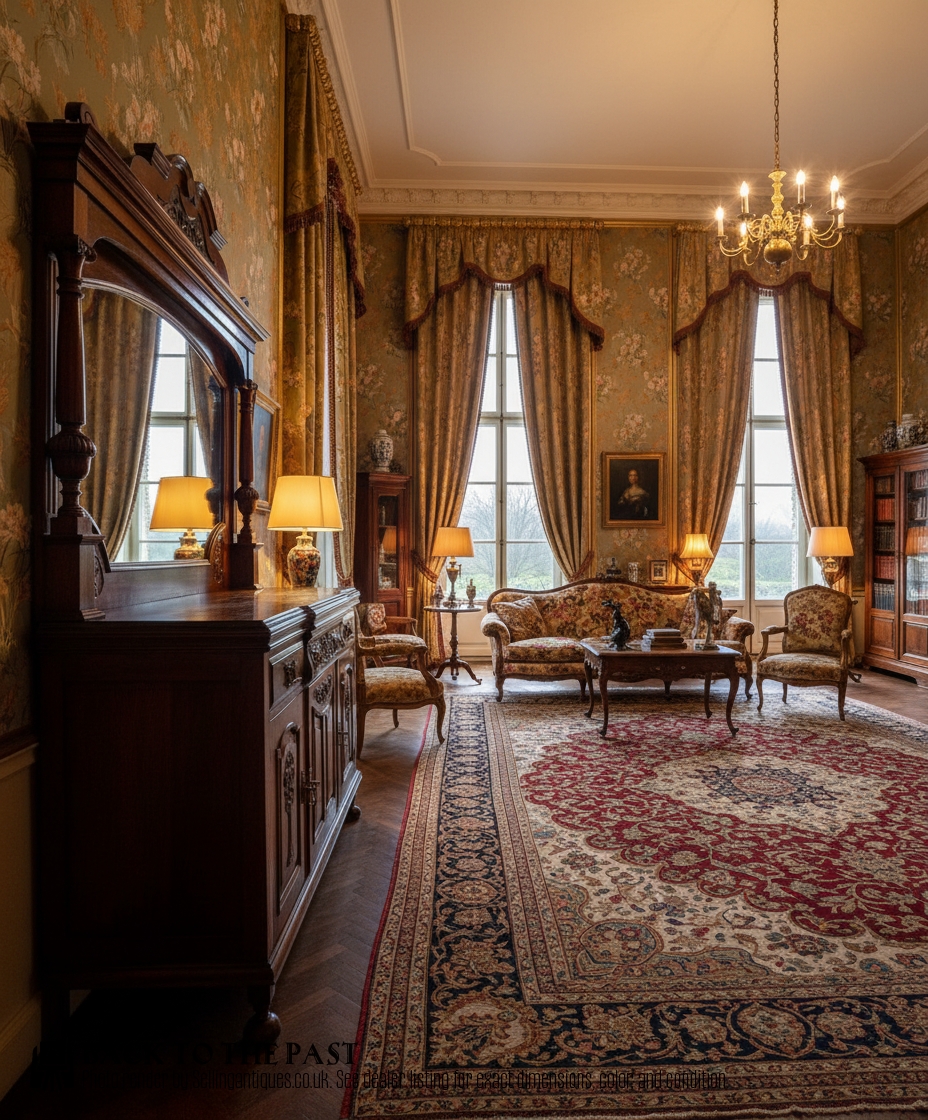
Traditional Mahogany Dining Storage
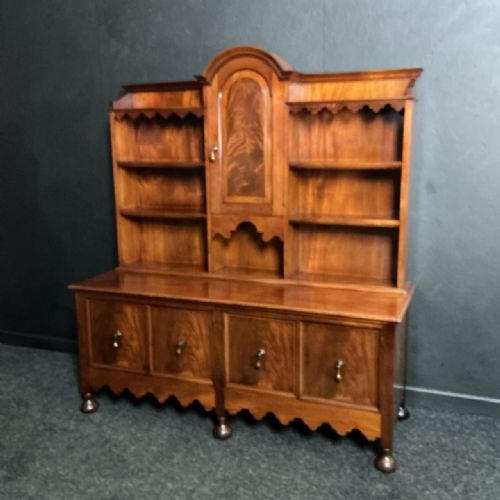
Traditional mahogany dining storage covers the heavy server furniture used in formal rooms, ranging from grand multi-door sideboards to smaller chiffoniers and dressers. You will most frequently meet Victorian and Edwardian examples on this page, alongside Georgian style pieces from around nineteen hundred.
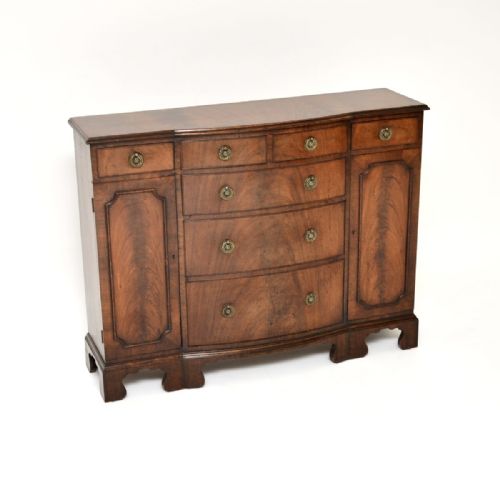
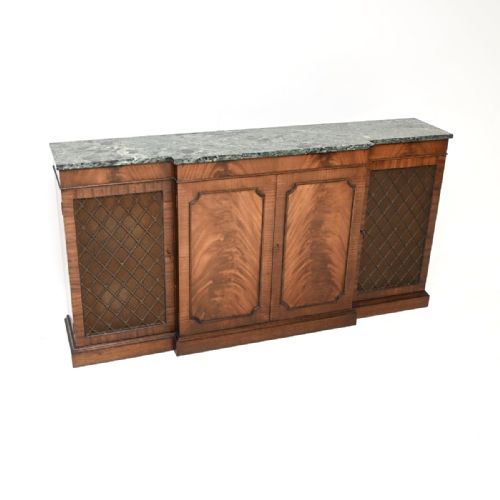
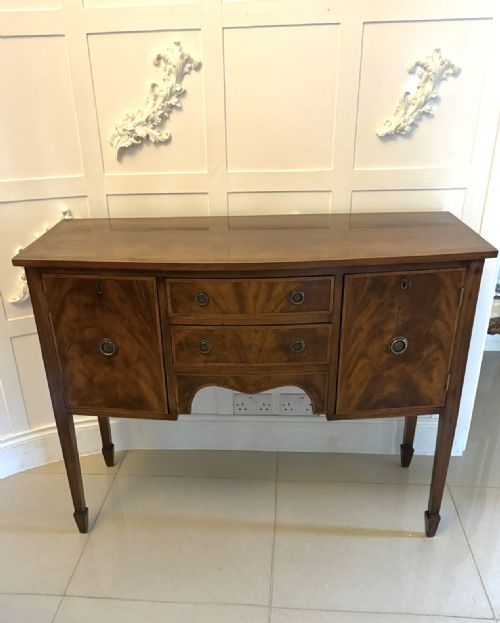
The forms span low bow front cabinets, breakfront sideboards, and pieces featuring raised mirror backs or marble tops. These items were built to house dining silver, linen, and glassware while anchoring the room with dark timber presence.
How they were made
Maker construction relies heavily on solid mahogany and figured flame mahogany veneers laid over secondary timbers to create rich grain patterns across the front doors and drawers. Cabinet makers utilised brass hardware for handles and escutcheons, occasionally incorporating copper accents or glass doors.
Carved detailing, curved bow fronts, and fitted mirror glass elements required specialised joinery techniques common to the nineteenth and early twentieth centuries. Marble tops were added to specific serving surfaces for durability and a contrasting finish.
Some Victorian sideboards include specialised cellar drawers lined to keep your vintage dining claret cool.
What varies in quality
Quality in traditional mahogany dining storage rests in the selection of the wood, particularly the depth and movement in flame mahogany veneer panels. Superior examples display careful grain matching across multiple doors and drawers.
The crispness of carved wooden details and the weight of the brass fixtures also distinguish finer pieces from simpler utilitarian storage cabinets.
Maple & Co
The Traditional Mahogany Dining Storage Glossary
- Chiffonier
- A compact sideboard, often featuring a low shelf or mirrored superstructure above a small enclosed cabinet. These pieces suit dining rooms with limited wall space.
- Breakfront
- A cabinet design where the central section projects forward from the flanking outer cupboards. This layout creates visual depth on large sideboards.
- Flame mahogany
- A veneer cut from the fork of the tree where branches meet the trunk, producing a distinctive flickering flame pattern. Cabinet makers reserved this timber for principal drawer fronts and doors.
- Bow front
- A convex, curved cabinet front that softens the rectilinear appearance of heavy dining furniture. It requires skilled woodworking to shape the doors and drawers to the radius.
Traditional Mahogany Dining Storage: Frequently Asked Questions
What is a chiffonier?
A chiffonier is a smaller relative of the sideboard, typically equipped with lower cabinet storage and sometimes an upper shelf or mirror. It served a similar purpose in the dining room or parlour for holding serving items.
These pieces emerged strongly during the nineteenth century as homes required practical furniture with a modest footprint.
How do I spot a Georgian style piece?
Georgian style pieces found on this page often date from around nineteen hundred rather than the actual eighteenth century. They emulate the cleaner lines, balanced proportions, and understated bracket feet of earlier decades.
Cabinet makers in the Edwardian era frequently revived these classical eighteenth century motifs for contemporary dining rooms.
What is flame mahogany?
Flame mahogany is a highly figured wood veneer harvested from the junction where a branch meets the main trunk of the tree. The grain swirls in a pattern resembling flickering firelight.
This decorative veneer was prized by nineteenth century makers for the most prominent parts of a sideboard or cabinet.
How do I clean mahogany storage?
Mahogany surfaces respond best to regular dusting with a soft, dry cloth and occasional treatment with traditional beeswax. Avoid modern silicone sprays that can build up a cloudy residue over the timber.
Keeping the wood away from direct heat sources prevents the timber and its delicate veneers from drying out or cracking.