




Warm Brown Mahogany Buffet
These warm brown mahogany buffet selections bring rich timber tones and practical storage to a room, offering the classic sideboard and serving forms collectors seek.
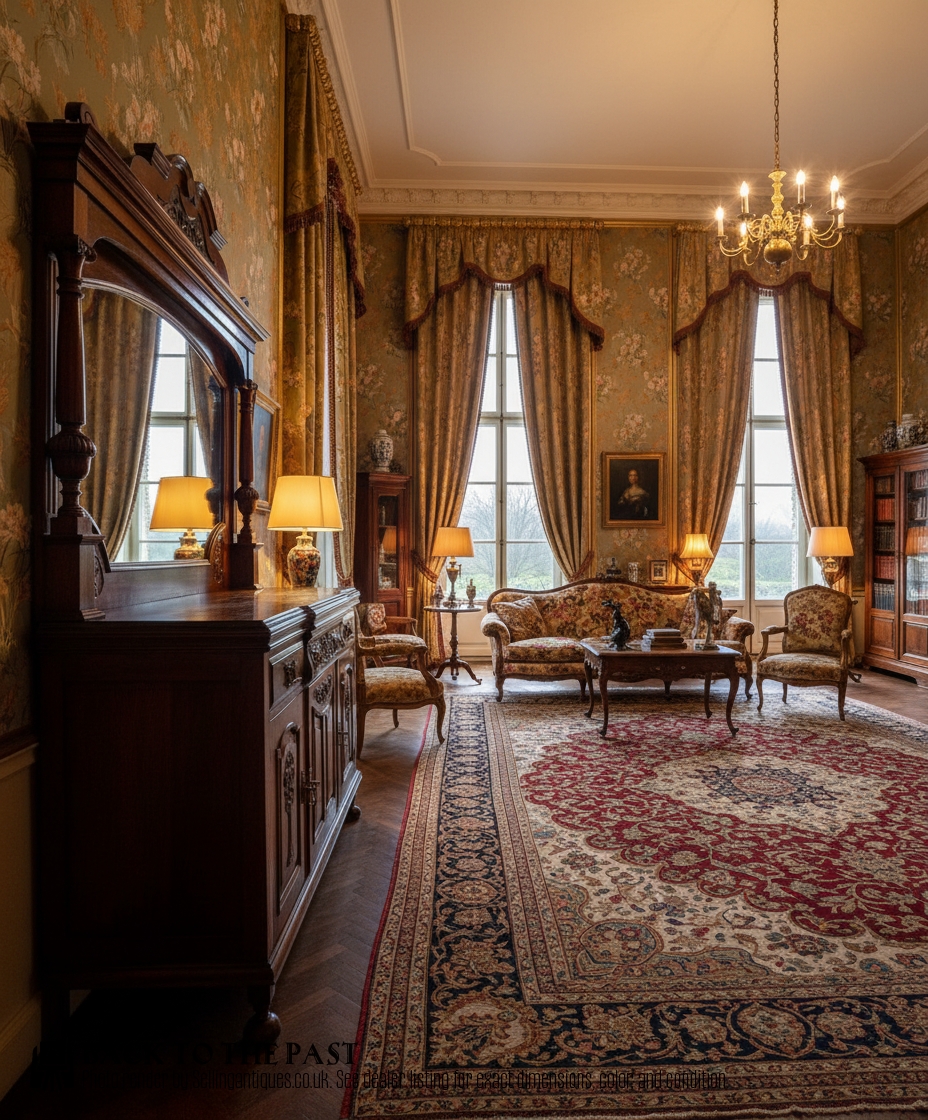
Warm Brown Mahogany Buffet
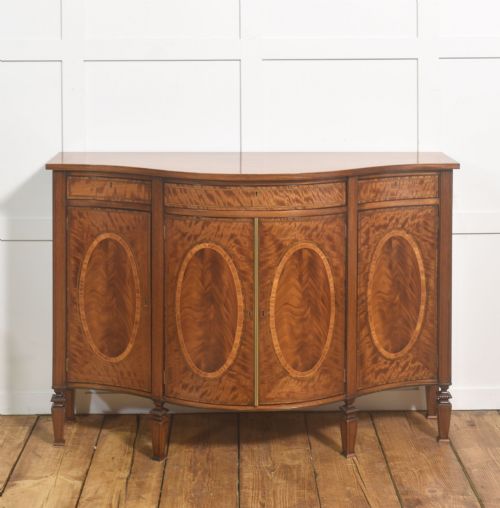
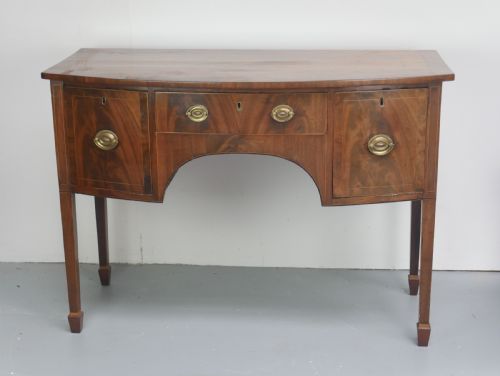
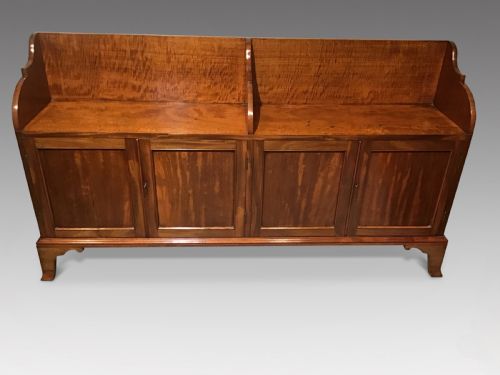
When searching for a warm brown mahogany buffet, buyers encounter a variety of substantial dining room and serving furniture, predominantly sideboards, side cabinets, and chiffoniers. These pieces span several distinct periods including the Georgian era, the Regency period, the Victorian age, and the Edwardian epoch.
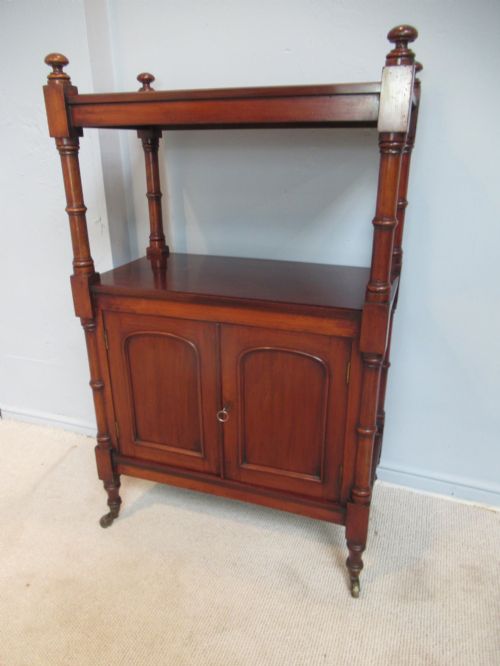
The items listed on this page encompass formal dining storage forms such as breakfront sideboards alongside tiered serving tables and dumb waiters. Such pieces serve as functional storage cupboards and serving surfaces while displaying deep timber colour.
Originating across the 18th, 19th, and early 20th centuries, these items show regional and stylistic shifts from George III designs through to Sheraton Revival interpretations and Art Nouveau details. The forms remain anchored by mahogany construction, often paired with contrasting stringing and inlay.
How they were made
Cabinet makers utilised solid mahogany and flame mahogany veneer applied to secondary carcase timbers, achieving rich figured surfaces across doors and drawer fronts. Satinwood and boxwood inlays provided sharp linear contrast and geometric banding.
Metal fittings such as brass handles, knobs, and backplates accompanied functional hinges and locks. Glass doors appeared on specific cabinet variations, while copper details occasionally supported structural or decorative elements.
Materials recorded across the selection include solid mahogany, flame mahogany veneer, satinwood, boxwood, brass, glass, and copper.
What varies in quality
The degree of figuration in the timber grain distinguishes standard production from finer examples, particularly where flame mahogany veneer is matched across drawer fronts and cupboard doors. Crisp execution of inlay work, including satinwood and boxwood stringing, indicates the skill invested by the maker.
Proportion and architectural balance dictate the visual success of each piece, from simple country house dumb waiters to large breakfront sideboards. The preservation of original brass hardware and the integrity of structural joints further separate routine utility items from superior cabinet work.
The Warm Brown Mahogany Buffet Glossary
- Chiffonier
- A low sideboard or cabinet featuring enclosed shelving storage beneath a surface, popular during the Victorian period. They often incorporate panelled doors and occasionally mirrorbacks.
- Dumb waiter
- A tiered serving table featuring multiple graduating circular or rectangular shelves supported on a central pillar or columns. These allowed discrete service during meals without constant servant attendance.
- Breakfront
- A cabinet or sideboard design where the central section projects forward from the flanking outer sections. This architectural arrangement creates depth and shadow across the front elevation.
- Inlay
- A decorative technique where contrasting materials such as satinwood or boxwood are inserted into recesses carved into the mahogany surface. This creates sharp geometric borders and decorative motifs.
- Flame mahogany veneer
- A thin slice of timber cut from the fork of the mahogany tree, displaying a characteristic flickering flame-like grain pattern. Cabinet makers laid this across prominent surfaces for dramatic visual effect.
Warm Brown Mahogany Buffet: Frequently Asked Questions
What is a warm brown mahogany buffet?
A warm brown mahogany buffet is a dining room storage or serving piece, typically encompassing sideboards, side cabinets, and tiered serving tables.
These items provide enclosed cupboard space and surface area while exhibiting the deep, rich timber tones characteristic of mahogany furniture.
How were dumb waiters used?
Dumb waiters functioned as multi-tiered serving tables positioned beside dining tables to hold dishes, glasses, and silverware.
Their stacked tray design maximised vertical space for efficient service during formal meals.
How do I identify a Georgian sideboard?
Georgian sideboards typically display restrained classical proportions, elegant tapering legs, and precise mahogany veneer work.
They frequently incorporate subtle stringing lines and original brass hardware without the heavy ornamentation seen in later Victorian pieces.
What is the difference between a chiffonier and a sideboard?
A chiffonier is generally a more compact low cabinet with enclosed storage, often associated with Victorian domestic interiors.
Sideboards tend to be larger, broader dining room pieces designed for extensive storage and serving duties.
How do I care for mahogany furniture?
Mahogany furniture benefits from stable indoor humidity and protection from direct sunlight to preserve the warm brown colour of the timber.
Regular dusting and occasional applications of appropriate polish maintain the natural lustre of the polished surface.